
Namaste NRIs! In 2026, a new buzzword is transforming how software gets built worldwide — and it’s creating both exciting opportunities and serious questions for the Indian tech diaspora.
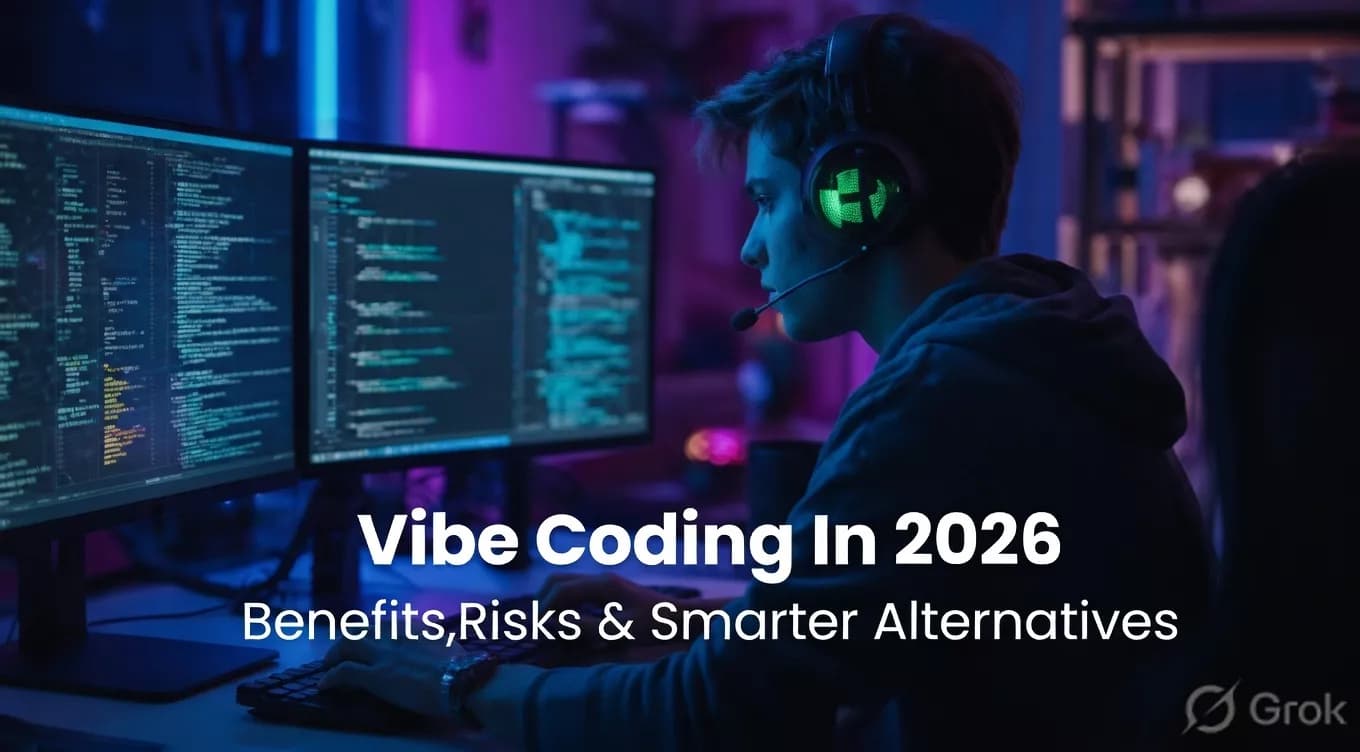
Coined by AI pioneer Andrej Karpathy (former Tesla AI head and OpenAI co-founder), vibe coding means describing your app idea in simple English and letting powerful AI tools (like Cursor, Claude, or advanced agents) generate the actual code. No need to write every line manually — just “vibe” the outcome and iterate through conversation.
For NRIs balancing high-paying tech jobs in Silicon Valley, New York, London, Toronto, or Dubai with family responsibilities and side projects back home, this trend is especially relevant. Here’s a detailed, balanced look at the pros and cons of vibe coding tailored for the Indian global community.
What is Vibe Coding? A Simple Explanation for NRIs
Traditional coding requires deep knowledge of programming languages, frameworks, and debugging. Vibe coding shifts the focus: you describe what you want (“Build a simple expense tracker app with Indian Rupee support, UPI integration, and family sharing”) and AI handles the how.
By 2026, over 90% of developers worldwide (including many Indian-origin engineers) use AI coding tools daily. It’s particularly popular among NRIs who want to build quick prototypes for startups, personal projects, or even apps to support family businesses in India.
Pros of Vibe Coding – Why Many NRIs Are Embracing It
- Super-Fast Prototyping & Idea Validation What used to take weeks can now be done in hours or days. NRI entrepreneurs in the US or Canada can quickly test app ideas for the Indian market (like fintech, edtech, or health apps) without spending heavily on a full development team. This speed helps validate concepts before investing big — perfect for risk-averse NRI founders.
- Lower Barrier for Side Hustles & Non-Tech NRIs Many NRIs (doctors, bankers, consultants, or homemakers) have brilliant ideas but limited coding skills. Vibe coding democratizes tech creation. You don’t need a CS degree from IIT or MIT anymore — just good prompting skills. This opens doors for family-oriented side businesses or apps that solve desi problems (e.g., wedding planning tools or NRI remittance trackers).
- Huge Productivity Boost for Experienced Indian Developers Senior NRI engineers in FAANG companies or startups report 3–5x faster output by letting AI handle repetitive boilerplate code. This leaves more time for high-level architecture, innovation, and family — reducing burnout common in high-pressure Western tech jobs.
- Cost Savings & Faster Time-to-Market In expensive countries like the USA or UK, vibe coding helps stretch savings or startup capital further. Many NRIs are building internal tools, MVPs, or even small SaaS products for Indian clients at lower costs, creating extra income streams while working remotely.
- Creative Freedom & Learning Opportunity It feels fun and less intimidating — more like brainstorming over chai than grinding syntax. For the next generation of NRI kids growing up abroad, it makes tech more accessible and exciting.
Cons of Vibe Coding – The Risks NRIs Should Not Ignore
- Code Quality & Hidden Technical Debt AI often delivers 80% good results, but the remaining 20% can be messy or inefficient. Many projects built purely on “vibes” become hard to maintain after a few months. For NRIs working on long-term products or enterprise solutions, this can lead to costly refactoring later.
- Security Vulnerabilities – A Big Concern Studies in 2026 show AI-generated code has significantly higher rates of security flaws (up to 2-3x in some cases). For apps handling sensitive data like banking, health, or UPI-linked payments popular among NRIs and families in India, this is risky. Compliance with US/EU regulations (HIPAA, GDPR) or Indian data laws becomes challenging.
- Scalability & Maintenance Challenges Vibe coding works great for small prototypes or internal tools but struggles with complex, large-scale systems. As your app grows (common when an NRI idea takes off in India), lack of clean architecture can cause headaches during scaling.
- Debugging Becomes Trickier If you don’t fully understand the underlying code, fixing issues turns into guesswork. Many developers end up spending extra time debugging AI output — negating some time savings.
- Impact on Skills & Job Market While vibe coding boosts productivity, there are concerns about skill erosion among junior developers. For the vast Indian tech talent pool (including freshers and mid-level NRIs), over-reliance on AI might affect deep foundational knowledge. However, seniors who combine vibe coding with strong engineering skills are commanding premium salaries in 2026.
Vibe Coding vs Traditional Coding: Quick Comparison for NRIs
- Best for Vibe Coding: Rapid prototypes, MVPs, side hustles, internal tools, and weekend projects.
- Best for Traditional/Expert Coding: Secure fintech apps, large enterprise systems, scalable products, and mission-critical software.
- Smart Hybrid Approach (Recommended): Use AI for speed and creativity, but always review, test, and refactor with human expertise — especially important for NRIs building professional or India-focused products.
Many successful NRI-led startups in 2026 follow this balanced path: vibe for ideation, engineer for production.
The Bottom Line for NRIs in 2026
Vibe coding is a powerful tool that aligns well with the Indian entrepreneurial spirit — enabling faster innovation, lower costs, and broader participation in tech. It’s especially useful for NRIs who want to build bridges between their host countries and India through apps and digital solutions.
That said, the cons around quality, security, and long-term maintainability are real. Blindly following the “vibe” without oversight can lead to rework, compliance issues, or lost opportunities.
Pro Tip for NRIs: Invest time in mastering prompt engineering, always conduct code reviews and security checks, and combine AI speed with solid software engineering principles. The most successful Indian tech professionals in 2026 will be those who use AI as a smart assistant while keeping strong technical judgment.
Have you tried vibe coding yet? Are you using it for a side project, startup idea, or at your day job abroad? What pros or cons have you experienced? Share your thoughts in the comments below — let’s discuss how this trend is shaping NRI careers and opportunities!
Stay tuned to NRIGlobe.com for more tech trends, career advice, and NRI success stories from around the world.
Continue reading — NRI Globe pillar guide: H-1B Complete Guide for Indians 2026
Related NRI Globe Coverage
- Software & Tech Layoffs in the USA (Week of September 13, 2026) — Uber, Apple, PayPal, Amazon Cuts & NRI Impact
- Uber Layoffs 3,300 Jobs Sept 2026 — NRI Tech Impact + H-1B Playbook
- Cloudsoft AI, Cloud + Cybersecurity Demo — Recording + Live Session 10:30 IST
- WSJ Ghost Jobs Report 2026 — Fake Postings + NRI Job Seeker Guide
- NRIs Returning to India 2026: Jobs, Salaries, Cities, and the Honest Reality Check
- Tech Careers for NRIs in the USA 2026: In-Demand Skills, Salary Ranges, and Positioning Playbook
- Best US States for Indian Immigrants in 2026: California, Texas, New Jersey, Washington Compared
- Best AI Tools for NRI Students in USA and UK 2026: Academics, Jobs, Visa and Wellness
Fresh from NRI Globe
- YouTuber Nandu's World (Rama Nandana) UK Visa & Job Fraud Case: Full Details + Key Lessons for NRIs (2026)
- Dussehra / Vijayadashami 2026 Events Country-Wise — Global NRI Directory (Ram Lila, Ravana Dahan, Durga Puja Pandals, Ayudha Puja Venues + Booking)
- Diwali 2026 Events Country-Wise — Global NRI Directory (White House, Leicester, London Trafalgar, Toronto, Auckland, Sydney Parramasala, Fiji, Mauritius, Trinidad, South Africa and More)
- Diwali / Deepavali 2026 Country-Wise NRI Celebrations — Complete Global Guide (USA, UK, Canada, Australia, Fiji, Mauritius, Trinidad, South Africa, UAE and 30+ Countries)