
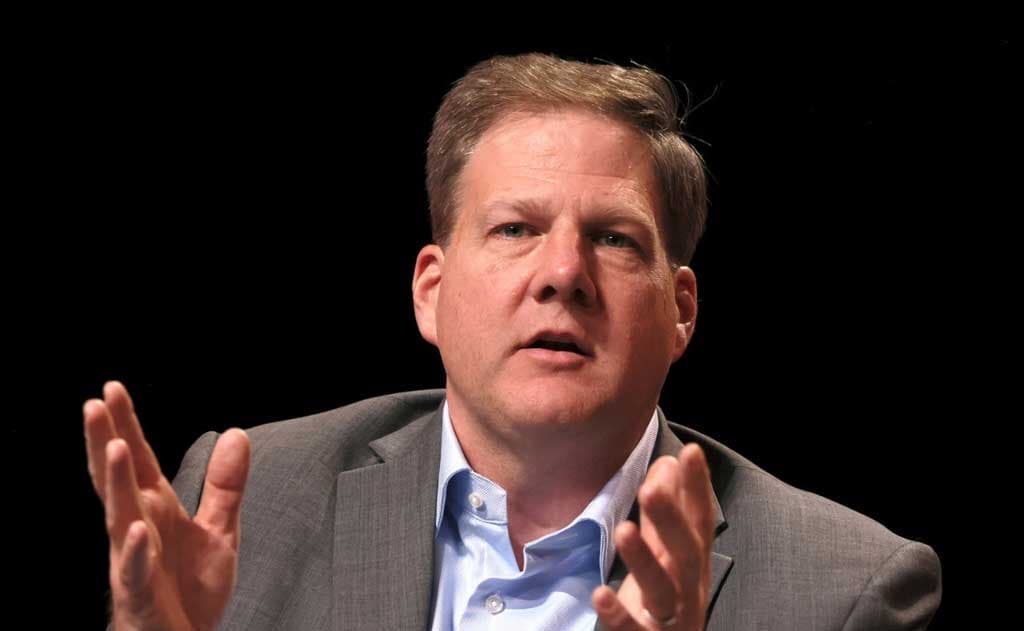
In a striking rebuke of U.S. President Donald Trump’s trade policies, former New Hampshire Governor Chris Sununu has publicly criticized the administration’s decision to impose a 25% tariff on Indian goods, warning that it is “scaring American manufacturers the most” and risks alienating a key ally. Speaking on August 6, 2025, Sununu emphasized India’s growing global influence, stating, “India is going to be the global powerhouse of the future,” and urged the U.S. to avoid straining ties with “our strongest ally India.” The comments, widely shared across platforms like X, have ignited a debate about the economic and geopolitical fallout of Trump’s tariff strategy, particularly for the Indian diaspora and U.S.-India relations. For NRIGlobe.com readers, this story underscores the critical role of India as a partner and the potential consequences of trade tensions on both nations’ economies.
A Bold Critique from a Republican Voice
Chris Sununu, a prominent Republican figure and former governor known for his pragmatic approach, made headlines with his sharp critique of Trump’s tariff move, announced on July 30, 2025, and set to take effect on August 21, 2025. The 25% tariff on Indian exports, coupled with an unspecified penalty for India’s continued purchase of Russian oil, targets key sectors like textiles, footwear, gems, jewelry, and pharmaceuticals, which account for nearly 55% of India’s $83.6 billion in exports to the U.S., its largest trade market. Sununu’s remarks, reported by Times of India and amplified on X, highlight the anxiety among American manufacturers who rely on Indian supply chains. “Tariffs on India are scaring American manufacturers the most,” he said, pointing to the ripple effects on industries like healthcare and technology that depend on affordable Indian goods.
Sununu’s warning extends beyond economics, framing India as a critical ally in the U.S.’s strategic competition with China. “If you’re dealing with others, then don’t alienate your strongest ally India,” he urged, emphasizing India’s trajectory as a “global powerhouse of the future.” His comments come as India’s economy is projected to surpass Germany’s to become the world’s third-largest by 2030, driven by its young workforce, technological innovation, and manufacturing growth under initiatives like Make in India. For the Indian diaspora, Sununu’s defense of India as an indispensable partner resonates deeply, reinforcing pride in their homeland’s rising global stature.
Trump’s Tariff Strategy: A High-Stakes Gamble
The 25% tariff on India, announced via executive order, is part of Trump’s broader trade war targeting nearly 70 countries, including allies like Canada, Brazil, and the European Union. Citing India’s high tariffs on U.S. goods and its energy ties with Russia, Trump has positioned the levies as a tool to boost American manufacturing and reduce trade deficits. Speaking alongside Apple CEO Tim Cook at the White House on August 6, 2025, Trump claimed the tariffs would encourage domestic production, noting that companies like Apple, which pledged an additional $100 billion in U.S. investments, would be exempt if they manufacture locally. “If you’re building in the United States of America, there’s no charge,” Trump said, highlighting a new Kentucky facility producing iPhone glass as a model for American manufacturing.
However, the tariffs have sparked alarm among U.S. businesses. India is the largest supplier of generic medicines to the U.S., exporting $8 billion annually in non-patented drugs that companies like Sun Pharmaceutical Industries, Cipla, and Dr. Reddy’s Laboratories rely on for 30% of their revenue. Sanjaya Mariwala, Executive Chairman of OmniActive Health Technologies, warned that the tariffs could “inflate U.S. drug costs, stall treatments, and put greater pressure on American healthcare budgets.” The U.S. Chamber of Commerce echoed these concerns, stating that the tariffs “threaten thousands of livelihoods” and could disrupt critical supply chains, impacting workers and manufacturers alike.
India’s Defiant Response and Geopolitical Context
India has strongly condemned the tariffs as “unfair, unjustified, and unreasonable,” with Commerce Minister Piyush Goyal asserting that national interests, particularly in agriculture and dairy, will not be compromised. “India has risen from the 11th largest economy to one of the top five, driven by our reforms and the hard work of our farmers, MSMEs, and entrepreneurs,” Goyal said, highlighting India’s progress toward becoming a self-sufficient (Atmanirbhar) economy. New Delhi has launched anti-dumping probes into Chinese products, like solar cells and mobile components, to shield domestic industries, but the U.S. tariffs threaten to undermine India’s export-driven growth.
The tariffs are seen by some as geopolitical maneuvering rather than purely economic policy. Market analyst David Woo suggested that India could gain leverage by holding firm, noting, “If the Indians hold out, they might find that Trump will chicken out. Trump has no appetite for higher oil prices.” Posts on X, such as one by @TimesAlgebraIND, amplified Sununu’s critique, framing the tariffs as a misstep that could push India closer to other global partners like Europe and ASEAN. Others, like @hvgoenka, saw opportunities for India to pivot toward “Make in America” joint ventures or strengthen trade with alternative markets, turning pressure into opportunity.
Economic and Strategic Implications
The tariffs pose significant risks for both nations. For the U.S., economists estimate that Trump’s trade policies could raise household costs by $1,300 annually in 2025, with potential price hikes in electronics, pharmaceuticals, and consumer goods. American manufacturers, already grappling with supply chain disruptions, fear that higher costs for Indian imports could erode competitiveness. For India, the tariffs threaten a 9% decline in key exports like steel, mirroring losses from Trump’s 2018-2019 metal tariffs, and could dampen GDP growth. However, experts like Kaushik Basu argue that India’s low-cost manufacturing and young workforce could attract companies diversifying from China, provided trade ties are renegotiated swiftly.
Geopolitically, the tariffs strain a vital partnership. The U.S. and India have deepened ties through initiatives like the Quad and defense collaborations, positioning India as a counterweight to China. Sununu’s call to avoid alienating India reflects concerns that trade tensions could weaken this alliance, especially as India navigates its energy imports from Russia amid global sanctions. The breakdown in U.S.-India trade talks, with Trump rejecting India’s refusal to open its agriculture and dairy sectors, underscores the challenges of aligning economic and strategic goals.
A Call for Unity and Resilience
For NRIGlobe.com readers, Sununu’s outspoken defense of India is a powerful reminder of the Indian diaspora’s contributions to the U.S. and the importance of strong bilateral ties. His warning that tariffs are “scaring American manufacturers” highlights the interconnectedness of the two economies, from pharmaceuticals to technology. As India stands firm, with leaders like Goyal emphasizing self-reliance and global competitiveness, the diaspora can take pride in their homeland’s resilience and growing influence.
This moment calls for unity and dialogue to preserve the U.S.-India partnership. Sununu’s vision of India as a “global powerhouse” resonates with the diaspora’s aspirations, urging both nations to find common ground. As trade talks are set to resume on August 25, 2025, the path forward lies in collaboration, not confrontation, ensuring that the bonds between these two democracies remain unbreakable. For now, the Indian community and its allies stand united, inspired by leaders like Sununu who see India’s potential and advocate for a future where both nations thrive together.
Related NRI Globe Coverage
- How Trump's 2026 Tariffs & Greenland Row Affect India
- Trump's Tariffs and Trade Wars in 2026: How They Affect NRI Families
- Federal Appeals Court Strikes Down Trump’s Tariffs as Illegal Overreach: A Blow to Trade Policy
- Trump’s Tariffs: Revenue Surge, Rising Costs, and What It Means for NRIs
- The Ripple Effect of Trump’s Tariffs on NRIs: Direct and Indirect Impacts
- Elon Musk Slams Trump’s Domestic Policy Bill: What’s in the ‘Big Beautiful Bill’ and Why It’s Controversial
- US Midterms 2026 Key Issues Affecting NRIs — H-1B Reform, Tariffs, Taxes, Immigration, Tech Jobs
- US News Weekly NRI Briefing — September 9, 2026 (Tariffs, Jobs, Gas Prices, H-1B, Visa, Diaspora)
Fresh from NRI Globe
- YouTuber Nandu's World (Rama Nandana) UK Visa & Job Fraud Case: Full Details + Key Lessons for NRIs (2026)
- Dussehra / Vijayadashami 2026 Events Country-Wise — Global NRI Directory (Ram Lila, Ravana Dahan, Durga Puja Pandals, Ayudha Puja Venues + Booking)
- Diwali 2026 Events Country-Wise — Global NRI Directory (White House, Leicester, London Trafalgar, Toronto, Auckland, Sydney Parramasala, Fiji, Mauritius, Trinidad, South Africa and More)
- Diwali / Deepavali 2026 Country-Wise NRI Celebrations — Complete Global Guide (USA, UK, Canada, Australia, Fiji, Mauritius, Trinidad, South Africa, UAE and 30+ Countries)