
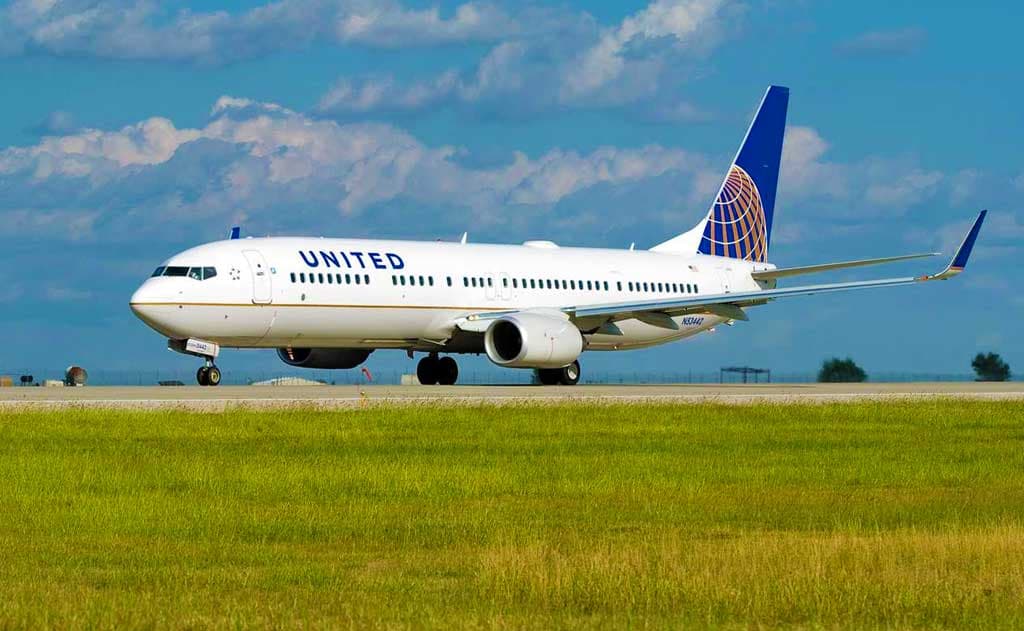
On the evening of August 6, 2025, United Airlines, one of America’s largest carriers, faced a significant disruption as a “technology issue” grounded its mainline flights across the United States, stranding thousands of passengers at major hubs including Chicago, Denver, Houston, and San Francisco. The unexpected outage, which began shortly after 6:00 p.m. ET, prompted the Federal Aviation Administration (FAA) to issue ground stops at United’s key airports, halting departures and causing widespread delays. For NRIGlobe.com readers, this story highlights the challenges of modern air travel, the resilience of affected passengers, and United’s commitment to restoring normalcy while prioritizing safety.
A Nationwide Disruption Unfolds
The trouble began when United Airlines identified a critical issue with its weight and balance computer system, a vital component for ensuring safe takeoffs by calculating aircraft load and distribution. The airline swiftly issued a statement: “Due to a technology issue, we are holding United mainline flights at their departure airports. Safety is our top priority, and we’ll work with our customers to get them to their destinations.” The FAA responded by implementing ground stops at United’s major hubs, including Chicago’s O’Hare International Airport, Denver International Airport, Houston’s George Bush Intercontinental Airport, San Francisco International Airport, and Newark Liberty International Airport, among others.
The outage, which lasted several hours, affected hundreds of flights, with FlightAware reporting that 870 United flights—28% of its schedule—were delayed by 9:25 p.m. ET, and 1% were canceled. Passengers took to social media to share their frustrations, with one traveler at Houston’s airport lamenting, “My plane was supposed to take off 5 hours ago, and no other United Airlines planes are leaving the tarmac. This is crazy.” Another passenger, Angela Jeffers, stuck on a flight from Nashville to Denver, recounted the pilot’s announcement: “We’re missing some numbers we need to take off, so we can’t take off yet and don’t have a time estimate of when we’ll be able to.”
Impact on Travelers and Airports
The ground stops created a ripple effect across United’s network. At Chicago’s O’Hare, a major hub, travelers packed terminals as delays mounted, with four cancellations and 68 delays reported by 11:16 p.m. ET. Denver saw two cancellations and 108 delays, while other hubs like Newark and San Francisco faced similar disruptions. Flights already in the air were unaffected, continuing to their destinations, but planes on the ground were stuck at gates or returned after waiting on the tarmac. Some passengers arrived at their destinations only to find gates blocked by immobilized aircraft, further complicating operations.
For passengers like Angela Jeffers, the experience was frustrating but met with some relief. After a two-hour delay in Nashville, she received an update around 9:30 p.m. ET that boarding had resumed for some flights, though traffic congestion slowed progress. United offered to cover hotel costs and rebook her on a flight the next day, demonstrating efforts to mitigate the inconvenience. Her sister, Jessica Jeffers, was coincidentally delayed at Denver’s airport due to the same issue, highlighting the outage’s widespread impact.
United’s Response and Resolution
By just before 9:00 p.m. CT (10:00 p.m. ET), United announced that the technology issue had been resolved, allowing flights to resume. “We are working with customers to get them to their destinations after a technology disruption on Wednesday evening. The underlying technology issue has been resolved, and, while we expect residual delays, our team is working to restore our normal operations,” a spokesperson told NBC Chicago. The airline emphasized that the outage was unrelated to recent cybersecurity concerns in the industry, addressing potential passenger fears.
Despite the resolution, residual delays persisted into the night as United worked through the backlog. The FAA noted that ground stops remained in effect at Denver and Newark until 11:00 p.m. ET, reflecting the complexity of restoring normal operations. United’s regional flights, operated by smaller jets, were not directly impacted but faced delays due to traffic congestion caused by the mainline ground stops.
A Broader Context of Airline Challenges
This incident follows a separate disruption on July 24, 2025, when United grounded its entire U.S. fleet due to a fire alarm at its Network Operations Center, as reported on X. While unrelated, these events underscore the vulnerability of airlines to technological and operational hiccups. Posts on X also highlighted recent issues with other carriers, such as an American Airlines Boeing 737 MAX 8 evacuation at Denver due to a tire maintenance issue, reflecting broader industry challenges.
For United, the focus remained on safety and customer support. The airline’s swift communication and offers of compensation, like hotel vouchers, aimed to ease passenger frustrations. The FAA supported United’s recovery efforts, stating, “We’re aware United experienced a technology issue disrupting their operations and offered full support to help address their flight backlog.”
A Call for Resilience and Improvement
For NRIGlobe.com readers, this disruption serves as a reminder of the complexities of modern air travel, where technology underpins every takeoff and landing. While the outage caused significant inconvenience, United’s commitment to resolving the issue and prioritizing safety offers a silver lining. Passengers like Angela and Jessica Jeffers, though delayed, found solace in the airline’s efforts to make things right, reflecting the resilience of travelers and the industry alike.
As United works to prevent future disruptions, this incident highlights the need for robust technological systems and contingency plans. For now, the skies are clearing, and United is focused on getting travelers to their destinations, proving that even in the face of setbacks, the spirit of connection and progress endures.