
Introduction
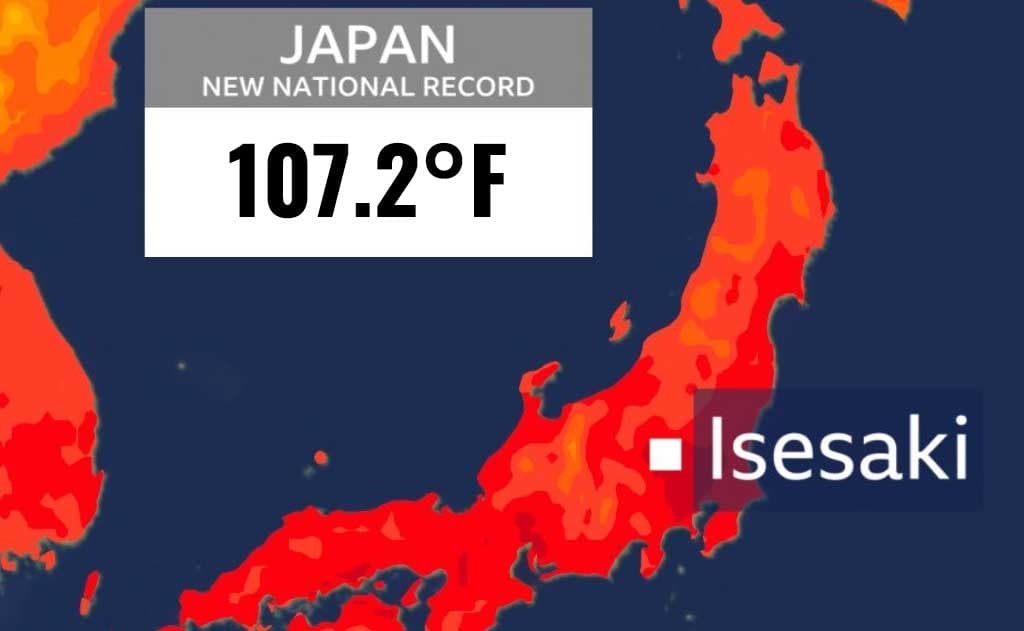
On August 5, 2025, Japan recorded its highest-ever temperature of 41.8°C (107.2°F) in Isesaki, Gunma Prefecture, marking a historic milestone in the nation’s ongoing battle with extreme heat. This new record, confirmed by the Japan Meteorological Agency (JMA), surpassed the previous high of 41.2°C (106.2°F) set just a week earlier in Tanba, Hyōgo Prefecture. As Japan swelters through its third consecutive record-breaking summer, the scorching temperatures have triggered widespread heatstroke alerts, strained agricultural systems, and raised urgent concerns about the impacts of climate change. This article, prepared for www.nriglobe.com, explores the details of this unprecedented heatwave, its consequences, and the broader implications for Japan and beyond.
A Scorching Milestone
The record-breaking temperature of 41.8°C (107.2°F) was recorded at 14:26 local time on August 5, 2025, in Isesaki, a city in southern Gunma Prefecture. Earlier that day, Isesaki also logged a temperature of 41.6°C (106.8°F), making it the second time in a single day that Japan’s national heat record was broken. According to the JMA, at least 14 locations across the country exceeded 40°C (104°F) on August 5, the highest number ever recorded in a single day. This extreme heat followed a blistering July, during which Tanba, Hyōgo, set a then-record high of 41.2°C on July 30, surpassing previous records of 41.1°C from 2018 and 2020.
The heatwave is part of a broader trend of rising temperatures in Japan, with July 2025 marked as the third consecutive record-hot July, averaging 2.89°C (5.20°F) above the 1991–2020 baseline. June 2025 was also the hottest on record since 1898, with over 200 weather stations reporting highs of 35°C (95°F) or more. The JMA attributes these extreme conditions to a persistent Pacific high-pressure system, exacerbated by human-induced climate change, which is driving increasingly erratic and intense weather patterns across the globe.
Health and Societal Impacts
The extreme heat has taken a significant toll on public health. The Fire and Disaster Management Agency reported that over 53,000 people were hospitalized for heatstroke this summer, with more than 10,800 cases in the week leading up to August 5 alone—a sharp increase from the 5,309 cases the previous week. At least 16 heat-related deaths were recorded in the same period. The elderly, who make up a significant portion of Japan’s population—the second-oldest in the world after Monaco—are particularly vulnerable to heatstroke, prompting authorities to issue urgent warnings to stay hydrated, use air conditioning, and avoid outdoor activities during peak heat hours.
In Tokyo, temperatures have consistently exceeded 35°C, with some areas like Nerima Ward reaching 38.6°C (101.5°F) in June. The capital’s residents, like office worker Mayomi Saito, expressed concerns about global warming while relying heavily on air conditioning to cope. “I’m really concerned about global warming, but I can’t live without turning on the air conditioner,” Saito told AFP, highlighting the dilemma faced by many. Heatstroke alerts were issued for 33 of Japan’s 47 prefectures, with the JMA warning of even hotter days ahead.
Agricultural and Environmental Challenges
The record heat, combined with record-low rainfall, has severely impacted Japan’s agricultural sector, particularly rice production. July 2025 was among the driest on record in several rice-growing prefectures along the Sea of Japan coast, with Yamagata Prefecture receiving only 8 mm (0.31 inches) of rain—about 4% of the normal July total—and Niigata recording just 3.5 mm (0.14 inches). Key reservoirs, such as the Naruko Dam in Miyagi Prefecture and the Hanamaki Dam in Iwate Prefecture, are at critically low levels, forcing irrigation cutoffs to paddy fields. Farmers have reported slowed rice cultivation due to the sizzling heat and lack of water, compounded by a surge in stink bug infestations that damage rice kernels. The Ministry of Agriculture issued 33 pest warnings across 27 prefectures by July 30, one of the highest tallies in a decade.
The early end of the rainy season—three weeks ahead of schedule in western Japan—has further exacerbated water shortages, threatening the quality and supply of rice, a staple food in Japan. Last year’s heatwave in 2023 caused an acute rice shortage, leading to historically high prices and a national crisis, a situation that could worsen in 2025 without immediate action. Farm Minister Shinjiro Koizumi emphasized the need for swift measures to mitigate crop damage, stating, “We need to act with speed and a sense of crisis.”
Climate Change and Global Context
Japan’s record-breaking temperatures are part of a global pattern of extreme heat driven by climate change. In 2025, Western Europe experienced its hottest June on record, while South Korea recorded its second-hottest July, with Seoul enduring 22 consecutive “tropical nights” where temperatures did not drop below 25°C. Northern Vietnam also reported record highs, with Hanoi exceeding 40°C for the first time in August. Globally, May 2025 was the second-warmest May on record, with 34 nations or territories setting monthly heat records. The European Copernicus Climate Change Service noted that global temperatures have repeatedly exceeded 1.5°C above pre-industrial levels, a threshold critical to climate agreements.
In Japan, the JMA reported that 2024 was the hottest year on record, surpassing 2023, with average temperatures 1.48°C above the 30-year mean. The trend of rising temperatures, coupled with early cherry blossom blooms and delayed snowcaps on Mount Fuji, underscores the accelerating impacts of climate change. Scientists warn that heatwaves are becoming more intense and frequent worldwide, with Japan’s 2025 summer potentially on track to be the hottest ever, following the record-breaking summers of 2023 and 2024.
Government and Societal Response
Japanese authorities have implemented several measures to address the heatwave’s impacts. Heatstroke alerts urge residents to use air conditioners and cooling fans properly and stay hydrated. New workplace safety regulations, effective June 1, 2025, require employers to monitor conditions when temperatures exceed 31°C or the Wet Bulb Globe Temperature (WBGT) surpasses 28°C for over an hour, with penalties for noncompliance. Public cooling centers and air conditioner subsidies have been expanded, and schools have updated policies to protect students. Energy grid operators are maintaining reserve margins above 7% to handle increased demand from air conditioning.
On social media platform X, posts reflect public concern about the heat, with users like @UnseenJapanSite noting record temperatures in Hokkaido, typically one of Japan’s cooler regions, where cities like Kitami reached 39.0°C in July. The sentiment underscores the widespread impact of the heatwave, even in northern areas unaccustomed to such extremes.
Looking Ahead
With August typically being Japan’s hottest month, the JMA has warned that temperatures may rise further, raising fears of additional records and increased strain on public health and agriculture. Long-term forecasts suggest above-average temperatures through September, potentially rivaling the record-breaking summers of 2023 and 2024. While some respite is expected by the weekend, the ongoing heatwave underscores the urgent need for climate adaptation and mitigation strategies.
Conclusion
The record-breaking temperature of 107.2°F in Isesaki on August 5, 2025, marks a critical moment in Japan’s struggle with extreme heat and climate change. The heatwave’s toll on public health, agriculture, and infrastructure highlights the need for robust adaptation measures and global action to address rising temperatures. As Japan navigates this unprecedented summer, the record heat serves as a stark reminder of the escalating climate crisis and its far-reaching consequences.
This article is published for www.nriglobe.com to inform readers about the impacts of extreme heat in Japan and the urgent need for climate awareness and action.
Related NRI Globe Coverage
- Japan's Centenarian Population Surpasses 100,000 for the First Time in History
- Labor Day 2026 Gas Prices Hit Record High — How It's Affecting NRI Travel Plans Across the USA
- Major US News This Week (September 14-15, 2026): Supreme Court Blocks Trump Mail Voting Rules, AI Debate Explodes, Space Weapons Confirmed
- US Gas Prices on Track to Top $4 Per Gallon on Labor Day 2026 for the First Time Ever
- Hormuz Crisis: How NRIs Worldwide Could Be Hit
- GCC News This Week: April 2026 – Under Siege in the Strait of Hormuz Crisis, Rising Oil Prices, and Urgent Calls for Global Action
- Iran War Latest Updates April 2026: US Fighter Jet Shot Down, Trump Warns of More Strikes, Strait of Hormuz Crisis Deepens
- Rupee May Hit 100/USD Amid Iran Oil Crisis
Fresh from NRI Globe
- YouTuber Nandu's World (Rama Nandana) UK Visa & Job Fraud Case: Full Details + Key Lessons for NRIs (2026)
- Dussehra / Vijayadashami 2026 Events Country-Wise — Global NRI Directory (Ram Lila, Ravana Dahan, Durga Puja Pandals, Ayudha Puja Venues + Booking)
- Diwali 2026 Events Country-Wise — Global NRI Directory (White House, Leicester, London Trafalgar, Toronto, Auckland, Sydney Parramasala, Fiji, Mauritius, Trinidad, South Africa and More)
- Diwali / Deepavali 2026 Country-Wise NRI Celebrations — Complete Global Guide (USA, UK, Canada, Australia, Fiji, Mauritius, Trinidad, South Africa, UAE and 30+ Countries)