
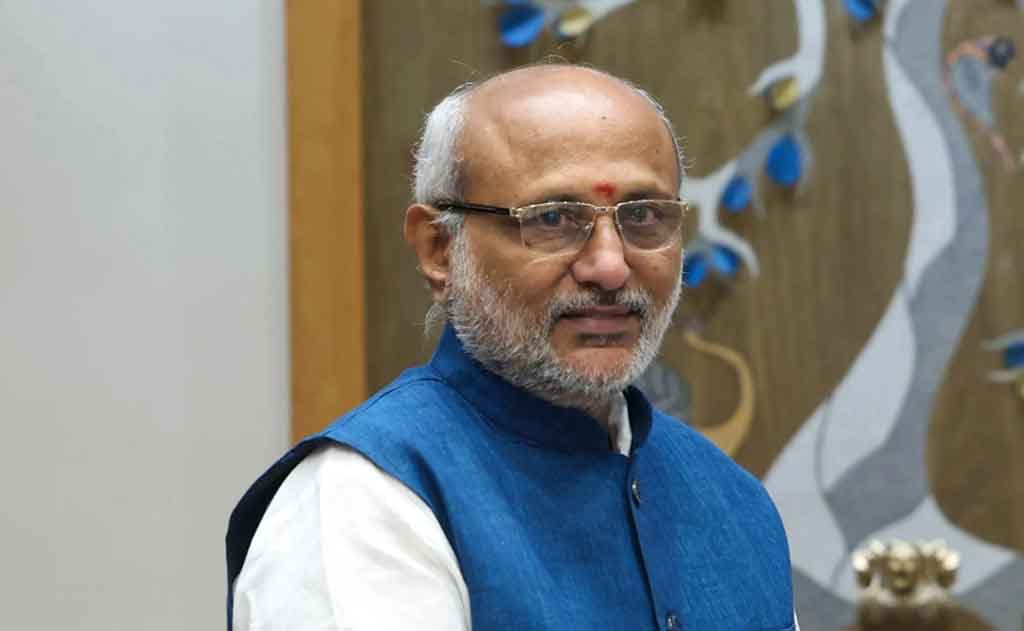
Senior BJP leader and former Tamil Nadu state president CP Radhakrishnan has been elected as the 15th Vice President of India. Contesting as the NDA candidate, he defeated Justice B. Sudarshan Reddy, the joint nominee of the INDIA bloc, with a comfortable majority of 152 votes. This marks another significant political victory for the NDA alliance and underscores the coalition's consolidated grip on India's highest constitutional offices.
The Election: Date, Turnout, and Results
The Vice Presidential election took place on September 9, 2025, in a special parliamentary session convened after the resignation of the incumbent Vice President, Jagdeep Dhankhal. The election saw robust participation from India's lawmakers, with 767 out of 781 eligible MPs casting their votes—a turnout of 98.2 percent. This high participation rate reflects the significance of the contest and the importance both the ruling coalition and opposition blocs attached to the outcome.
The final tally was decisive: CP Radhakrishnan secured 452 votes, while Justice B. Sudarshan Reddy received 300 votes. The 152-vote margin represents a commanding endorsement of the NDA's candidate and signals the depth of the coalition's parliamentary strength. This was the first early Vice Presidential election held since 1987, making it a historically notable event in India's constitutional calendar.
Why This Election Mattered: Constitutional and Political Significance
Control of the Rajya Sabha and Legislative Agenda
The Vice President of India holds the constitutional office of Chairman of the Rajya Sabha, the upper house of Parliament. This role carries substantial procedural and legislative power. The Chairman presides over Rajya Sabha debates, interprets parliamentary rules, and exercises tie-breaking authority on matters of procedure. For an NDA government seeking to advance its legislative agenda—particularly on bills that require upper-house approval—securing a sympathetic Vice President is strategically vital. With Radhakrishnan now in the chair, the NDA can expect smoother passage of contentious legislation and fewer procedural delays that an opposition-aligned Chairman might introduce.
Consolidation of NDA Power
This victory ensures that the NDA now holds both the President and Vice President's posts simultaneously. In India's constitutional system, these two offices represent the ceremonial and procedural apex of state power. Their alignment under a single political coalition signals unified executive-legislative coordination and reduces the likelihood of institutional friction between the presidency and the ruling government. For NRI investors, diplomats, and professionals monitoring India's political stability, this consolidation suggests a period of predictable governance and reduced constitutional gridlock.
Opposition Fragmentation
The INDIA bloc's loss was compounded by the absence of several key partners from the voting process. The Biju Janata Dal (BJD) from Odisha, the Bharat Rashtra Samithi (BRS) from Telangana, and the Shiromani Akali Dal (SAD) from Punjab all abstained or stayed away from voting. This fragmentation weakened Justice Sudarshan Reddy's candidacy and exposed cracks within the opposition alliance. For observers of Indian politics, the result underscores the NDA's superior organizational discipline and the INDIA bloc's ongoing struggles to maintain unity on high-stakes votes.
Who Is CP Radhakrishnan? Profile and Political Journey
Early Career and Parliamentary Service
Chinnasamy Palanisamy Radhakrishnan, commonly known as CP Radhakrishnan, brings to the Vice Presidency a career spanning grassroots activism, legislative service, and executive governance. He served as a two-time Lok Sabha MP (Member of Parliament) representing the Coimbatore constituency in Tamil Nadu, a region known for its industrial base, textile manufacturing, and significant NRI diaspora connections. Coimbatore has historically been a hub for Indian emigrants to the United States, the United Kingdom, and the Middle East, many of whom maintain business and family ties to the district. Radhakrishnan's representation of this constituency gave him exposure to diaspora concerns, remittance flows, and the economic priorities of NRI-connected families.
Leadership in Tamil Nadu and National Party Roles
Before his elevation to the Vice Presidency, Radhakrishnan served as the President of the BJP's Tamil Nadu state unit. In this role, he oversaw party organization in a state where the BJP has historically been a minor player compared to the Dravida Munnetra Kazhagam (DMK) and All India Anna Dravida Munnetra Kazhagam (AIADMK). His tenure in Tamil Nadu required navigating complex caste politics, regional linguistic pride, and the state's distinct political culture. Tamil Nadu's political landscape is notably different from the Hindi heartland, and Radhakrishnan's success in building BJP presence there demonstrated political acumen and adaptability.
Governorship of Jharkhand
Most recently, Radhakrishnan served as the Governor of Jharkhand, a mineral-rich state in eastern India with significant tribal populations and a history of governance challenges. As Governor, he held the ceremonial head-of-state position in the state and played a constitutional role in state legislation and executive matters. This experience exposed him to federal-state relations, resource management, and the complexities of administering a state with substantial natural resources and competing development pressures. His governorship provided him with executive-level experience and a platform for national visibility.
RSS Roots and Political Philosophy
Radhakrishnan is known for his close association with the Rashtriya Swayamsevak Sangh (RSS), a Hindu nationalist organization that has historically served as the ideological backbone of the BJP. The RSS emphasizes cultural nationalism, organizational discipline, and grassroots mobilization. Radhakrishnan's RSS background has shaped his political approach, which colleagues and analysts describe as non-confrontational, consensus-building, and focused on institutional stability rather than ideological provocation. This temperament may serve him well in the Vice Presidency, an office that benefits from impartiality and procedural fairness.
The Opposition Candidate: Justice B. Sudarshan Reddy
Justice B. Sudarshan Reddy, the INDIA bloc's nominee, brought judicial credentials and a reputation for constitutional expertise to the contest. As a senior judge, he represented the opposition's attempt to position the Vice Presidency as an office requiring judicial temperament and constitutional scholarship. However, his candidacy could not overcome the NDA's parliamentary arithmetic or the opposition alliance's internal divisions. The 152-vote margin suggests that even some opposition-aligned MPs may have voted for Radhakrishnan or abstained, reflecting either party discipline issues or strategic calculations by smaller opposition parties.
Implications for NRI Stakeholders
Governance Stability and Investment Climate
For NRIs with business interests in India—whether in real estate, technology, manufacturing, or financial services—the consolidation of NDA power under a unified President and Vice President signals institutional stability. A government with firm control of both houses of Parliament and the ceremonial offices can implement policy changes more swiftly and with less institutional friction. This reduces uncertainty for NRI investors and entrepreneurs considering long-term commitments to Indian ventures.
Diaspora Engagement and Policy Priorities
Radhakrishnan's background in Tamil Nadu, a state with one of India's largest diaspora populations, may influence his approach to diaspora engagement. The Vice President, while largely ceremonial, can use the platform to highlight diaspora contributions and advocate for policies favorable to NRI interests—such as streamlined visa processes, tax treaty improvements, or recognition of diaspora investment in Indian infrastructure. His non-confrontational style may also make him more accessible to diaspora delegations and NRI business councils.
Rajya Sabha Dynamics and Legislative Outcomes
NRIs monitoring specific legislation—such as tax law changes, foreign investment regulations, or visa policy amendments—should note that Radhakrishnan's presence as Rajya Sabha Chairman will likely accelerate NDA-backed bills through the upper house. This could mean faster passage of legislation affecting diaspora taxation, remittance regulations, or dual-citizenship proposals, depending on the government's priorities.
Why This Was the First Early Vice Presidential Election Since 1987
Vice Presidential elections in India are typically held near the end of an incumbent's five-year term, allowing for orderly succession planning. The last early election occurred in 1987, making the September 2025 contest a rare constitutional event. Jagdeep Dhankhal's resignation created an unexpected vacancy, necessitating an early election. This disruption, while procedurally managed smoothly, underscores the importance of the office and the political stakes involved in filling it.
What Political Analysts Say About the Result
Political commentators have interpreted Radhakrishnan's victory as confirmation of the NDA's parliamentary dominance and a setback for the INDIA bloc's cohesion. The comfortable margin—152 votes—exceeds the simple majority required and suggests that the NDA's vote-counting was accurate and its coalition discipline firm. The absence of key opposition parties from the voting process has been cited as evidence of the INDIA bloc's structural fragility, with regional parties prioritizing state-level interests over national opposition unity.
Analysts also note that Radhakrishnan's calm, consensus-oriented style may help ease tensions in the Rajya Sabha, where the NDA holds a majority but not the overwhelming dominance it enjoys in the Lok Sabha. A Vice President perceived as fair-minded and procedurally scrupulous can reduce opposition complaints about parliamentary manipulation and lend legitimacy to legislative outcomes.
Looking Ahead: Radhakrishnan's Term and Constitutional Role
CP Radhakrishnan will serve a five-year term as Vice President, during which he will preside over the Rajya Sabha, perform ceremonial duties as the second-highest constitutional office holder, and serve as a potential successor should the President become unable to discharge duties. His tenure will be closely watched by political observers, diaspora groups, and international observers as an indicator of the NDA's institutional priorities and its approach to constitutional governance.
Related NRI Globe Coverage
- President Trump Claims He Averted Nuclear War Between India and Pakistan
- PM Modi Arrives in Tokyo for 15th India-Japan Summit to Strengthen Strategic Ties
- India's Diplomatic Triumph: Elected to UN ECOSOC 2026–28 with 181 Votes
- Will JD Vance Become the Next U.S. President?
- YouTuber Nandu's World (Rama Nandana) UK Visa & Job Fraud Case: Full Details + Key Lessons for NRIs (2026)
- US Crime News 2026 — Top Trend Categories NRIs Are Watching (Organized Retail Theft, Auto Theft, Cybercrime, Hate Crimes, Fentanyl, AI-Enabled Fraud)
- US Crime & Safety This Week — September 17-21, 2026 (NRI Family Guide, FBI Alerts, H-1B/Immigration Scams, Tech Support Fraud, Emergency Resources)
- Japan's Centenarian Population Surpasses 100,000 for the First Time in History
Fresh from NRI Globe
- Dussehra / Vijayadashami 2026 Events Country-Wise — Global NRI Directory (Ram Lila, Ravana Dahan, Durga Puja Pandals, Ayudha Puja Venues + Booking)
- Diwali 2026 Events Country-Wise — Global NRI Directory (White House, Leicester, London Trafalgar, Toronto, Auckland, Sydney Parramasala, Fiji, Mauritius, Trinidad, South Africa and More)
- Diwali / Deepavali 2026 Country-Wise NRI Celebrations — Complete Global Guide (USA, UK, Canada, Australia, Fiji, Mauritius, Trinidad, South Africa, UAE and 30+ Countries)
- Dussehra / Vijayadashami 2026 Country-Wise NRI Celebrations — USA, UK, Canada, Australia, New Zealand, UAE, Singapore, Germany, Netherlands and More