
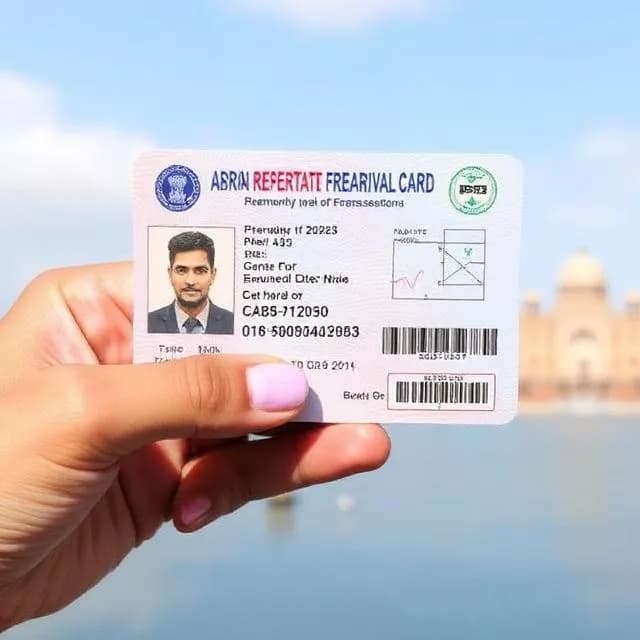
TL;DR — Key Facts at a Glance
- As of October 2025, all OCI cardholders must submit an e-Arrival Card within 72 hours before landing in India — no exceptions.
- Only Indian passport holders are exempt; every other traveler, including OCI holders on US, UK, Canadian, or Australian passports, must comply.
- Apply free at indianvisaonline.gov.in/earrival or via the Su-Swagatam mobile app.
- Forgetting to file can trigger secondary inspection, delays, and potential spot fines — treat compliance as non-negotiable.
- Dedicated e-Arrival lanes at major airports are reportedly cutting immigration wait times significantly.
What Changed in October 2025 — and Why It Matters
India's Bureau of Immigration (BOI), operating under the Ministry of Home Affairs, replaced the decades-old paper disembarkation card with a fully digital system on 1 October 2025. The paper form — that blue slip handed out on flights — is gone.
The rollout had one significant twist. When the rule launched, OCI holders were temporarily excluded. Within days, around 4–7 October 2025 according to immigration advisory firms including Fragomen and Envoy Global, the government reversed that exemption. OCI cardholders were brought fully into scope.
By late October 2025, the rule was unambiguous: only holders of valid Indian passports are exempt. Every other international arrival — tourists, visa holders, and OCI cardholders alike — must file the e-Arrival Card before touching down. The official mandate details, including the governing circular, are published through the Ministry of Home Affairs and the Bureau of Immigration's e-Arrival portal, which travelers should consult directly for the most current official language.
What the e-Arrival Card Actually Is
The e-Arrival Card is the digital equivalent of the immigration arrival form, sometimes called the Electronic Disembarkation Card. It is not a visa. It is not related to the Air Suvidha portal, which was a COVID-era health declaration system that has since been discontinued.
Think of it as a pre-clearance registration: you submit your travel and personal details before boarding, the system generates a QR code, and immigration officers scan it on arrival. The data is already in the system before your flight lands. This shift to digital pre-registration is part of a broader modernisation effort across Indian airports, aimed at reducing paper handling and shortening queues at immigration counters.
Core Requirements
- Must be submitted within the 72-hour window before your scheduled arrival — not earlier.
- One submission per traveler, including minor children holding OCI cards.
- Generates a QR code and PDF confirmation sent to your registered email.
- Present the QR code alongside your foreign passport and OCI card at immigration.
Who Must File — No Exemptions for OCI in 2026
The scope is broad. If you hold an OCI card and are traveling on a foreign passport, you must file — regardless of how long you have held the OCI card, how frequently you visit India, or the purpose of your trip.
| Traveler Type | e-Arrival Card Required? |
|---|---|
| OCI cardholder on US/UK/Canadian/Australian passport | Yes — mandatory |
| Minor child with OCI card | Yes — add as family member on parent's form |
| Foreign national on tourist/business visa | Yes — mandatory |
| OCI holder transiting and exiting the international zone | Yes — recommended; confirm with your airline |
| Indian citizen with valid Indian passport | No — exempt |
| Former PIO card holder (not converted to OCI) | Treated as full foreigner; Yes — mandatory |
PIO cards had a conversion deadline of 31 December 2025. Anyone who did not convert is now treated as a standard foreign national for all immigration purposes.
Step-by-Step: How to Apply for the e-Arrival Card
The process takes roughly five to seven minutes if your documents are in front of you. Two official channels exist.
Option 1 — Official Web Portal (Recommended)
URL: https://indianvisaonline.gov.in/earrival/
- Open the portal and select Fill out the e-Arrival Card.
- Enter your full name exactly as it appears in your foreign passport.
- Select your nationality — the country of your foreign passport, not India.
- Enter passport number, date of issue, expiry date, and place of issue.
- Enter your OCI card number. The system cross-references it.
- Provide date of birth, gender, email address, and a reachable mobile number.
- Add flight details: flight number, scheduled arrival date, and port of entry (for example, DEL for Indira Gandhi International Airport).
- List countries visited in the previous 14 days.
- Enter your first address in India — hotel name and full address including PIN code, or family address.
- Select your purpose of visit from the dropdown menu.
- Use the Add Family Member function if traveling with others on OCI. One QR code covers the group.
- Review, declare accuracy, and submit. A PDF with QR code arrives by email within minutes.
Option 2 — Su-Swagatam Mobile App
Download Indian Visa Su-Swagatam from the Apple App Store or Google Play Store. The fields mirror the web portal. The app stores your details for repeat trips, which is useful for frequent travelers who visit India multiple times a year.
Practical Tips
- File 24–48 hours before departure, not at the last minute or at the airport.
- Screenshot the QR code and save the PDF offline — email delivery can lag on slow connections.
- Use Chrome on desktop; some users have reported form-rendering issues on Safari.
- For minors, use a parent's email and mobile number and add the child as a family member.
- If your flight number changes due to a rebooking, file a new e-Arrival Card with the corrected details.
An NRI's First-Hand Account: December 2025 Travel to Hyderabad
Sreekanth Bathalapalli, a software engineer based in California and a long-time H-1B holder who has been traveling to India on an OCI card for over a decade, describes his December 2025 experience at Rajiv Gandhi International Airport in Hyderabad.
"I almost missed the e-Arrival requirement entirely. I had heard about the October rule change but assumed — wrongly — that the OCI exemption was still in place. It was only when a colleague mentioned it two days before my flight that I scrambled to file. The portal itself was straightforward; I completed it in about six minutes on my laptop. At the airport, the dedicated e-Arrival lane at Hyderabad moved fast. I was through immigration in roughly 18 minutes, compared to the 45 to 60 minutes I had come to expect over years of travel. The officer scanned the QR code, glanced at my OCI card and passport, and waved me through. No paper form, no pen hunt on the plane. That part genuinely impressed me. What frustrated me was the lack of proactive communication from the government — there was no email to OCI cardholders, no SMS, nothing. I found out through a colleague and a Facebook group. For a policy with real entry consequences, that rollout communication was poor."
His experience at Hyderabad aligns with reports from other NRIs who traveled through Delhi's Terminal 3 and Mumbai's Terminal 2 during the same period. Dedicated e-Arrival gates with QR scanners have reportedly been operational at both airports since late 2025, though travelers should verify current infrastructure status with their airline or the relevant airport authority before travel, as operational details may have evolved.
What Happens If You Do Not File
Missing the e-Arrival Card does not automatically mean you will be turned away at the border. In practice, officers at major airports have been directing non-compliant travelers to a secondary area to complete the form on airport Wi-Fi before proceeding. The process adds significant time and stress, particularly after a long international flight.
Reported consequences include secondary inspection and delays of one to two hours. Some NRI community sources have mentioned the possibility of spot fines for non-compliance, though official penalty amounts have not been independently confirmed in any publicly available Bureau of Immigration circular as of early 2026. Travelers should check the official e-Arrival portal or the Ministry of Home Affairs website for any formally published enforcement guidelines.
The safer approach is simple: treat the e-Arrival Card as a non-negotiable item on your pre-flight checklist, the same way you would confirm your passport validity or print your boarding pass.
How This Fits Into the Broader 2026 OCI Travel Landscape
The e-Arrival Card requirement arrives alongside several other OCI-related changes that American NRIs should track.
OCI re-issue rules remain in effect: mandatory re-issue when the holder turns 20, and again when the foreign passport is renewed after age 50. Name changes, address updates, and certain life events also trigger re-issue obligations. Processing times through Indian consulates in the US have varied significantly in recent months, and reports from immigration advisory firms such as Fragomen and Envoy Global suggest that wait times can shift depending on application volume and staffing. Check the relevant consulate's current published wait time directly before planning travel, and build in adequate lead time if a re-issue is pending.
FRRO (Foreigners Regional Registration Office) registration requirements apply to OCI holders staying in India beyond 180 days. The e-Arrival Card does not replace or satisfy FRRO obligations. As of early 2026, no publicly confirmed changes to the core FRRO long-stay registration framework for OCI holders have been reported by the Ministry of Home Affairs, though travelers planning extended stays should verify current requirements directly with the MHA or a licensed immigration professional, as policy updates can occur with limited advance notice.
Taken together, the e-Arrival Card mandate, OCI re-issue obligations, and FRRO registration rules form a layered compliance picture for NRIs. None of these requirements is especially burdensome on its own, but missing any one of them can create friction at the border or with local authorities. Building a simple annual checklist — e-Arrival Card filed before each trip, OCI re-issue status confirmed, FRRO obligations reviewed for any long stay — is the most practical way to stay ahead of the requirements.
Next Steps
- Bookmark indianvisaonline.gov.in/earrival now and add it to your travel checklist.
- Download the Su-Swagatam app and pre-fill your personal details so future submissions take under two minutes.
- Check your OCI card re-issue status if you are approaching age 20 or have renewed your foreign passport after age 50.
- If your PIO card was not converted to OCI before 31 December 2025, consult an immigration attorney about your current entry status.
- For stays exceeding 180 days, confirm FRRO registration requirements with the Ministry of Home Affairs or a licensed immigration professional.
Sources
- Bureau of Immigration — e-Arrival Card Official Portal
- Ministry of Home Affairs, Government of India
- Fragomen — Global Immigration Advisory
- Envoy Global — Immigration Alerts
Related NRI Globe Coverage
- How to Apply for OCI Card in 2026: Step-by-Step Guide for NRIs
- OCI Card Rules 2026: Critical Deadline for PIO Holders and Stricter
- OCI Card 2026 – Complete Guide for NRIs & PIO Holders
- Top OCI Card Mistakes in 2026: Avoid Rejections, Delays & Travel
- US H1B Visa Latest News June 2026 for Indians: What Changed
- H-1B Job Loss 60-Day Grace Period Rule Explained: What NRIs Must Know in 2026 + Best Alternatives
- H-1B Visa New Rules 2026, EB-2 Green Card Backlogs & Latest US Immigration Updates for Indians
- Trump No Tax on Tips: Boost for Indian-Americans
Fresh from NRI Globe
- YouTuber Nandu's World (Rama Nandana) UK Visa & Job Fraud Case: Full Details + Key Lessons for NRIs (2026)
- Dussehra / Vijayadashami 2026 Events Country-Wise — Global NRI Directory (Ram Lila, Ravana Dahan, Durga Puja Pandals, Ayudha Puja Venues + Booking)
- Diwali 2026 Events Country-Wise — Global NRI Directory (White House, Leicester, London Trafalgar, Toronto, Auckland, Sydney Parramasala, Fiji, Mauritius, Trinidad, South Africa and More)
- Diwali / Deepavali 2026 Country-Wise NRI Celebrations — Complete Global Guide (USA, UK, Canada, Australia, Fiji, Mauritius, Trinidad, South Africa, UAE and 30+ Countries)