
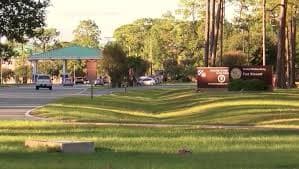
Fort Stewart Lockdown: A Community Holds Its Breath Amid Active Shooter Crisis
By NRI Globe Staff
August 6, 2025
HINESVILLE, Ga. — The morning calm at Fort Stewart, the largest Army base east of the Mississippi, was shattered on August 6, 2025, when a chilling alert echoed across the sprawling 280,000-acre installation: an active shooter was on the loose. At 11:04 a.m. ET, the base, located just 40 miles southwest of Savannah, Georgia, plunged into lockdown, transforming a routine day into one of fear, uncertainty, and resilience for the thousands of soldiers, families, and civilians who call this military hub home. As the situation unfolds, the Fort Stewart community—and the nation—wait anxiously for answers, clinging to hope amid reports of casualties and a suspect in custody. Here’s the full story of a day that shook this tight-knit military community to its core.
A Sudden Alert Sparks Fear
It was just after 11 a.m. when Fort Stewart’s commander, Colonel William “Gabe” Weaver, issued an urgent lockdown order for the 2nd Armored Brigade Combat Team (2ABCT) area, near Highway 144 and Old Sunbury Road. The directive extended to Wright and Evans Army Airfields and the base’s three DoDEA schools—Diamond, Kessler, and Murray Elementary—where children were swiftly ushered into safety protocols. “Lockdown your facility immediately, stay inside, close and lock all windows and doors,” read a post on the Fort Stewart Hunter Army Airfield’s verified Facebook page, urging personnel to keep phone lines open and report accountability to leadership. All gates to the base slammed shut, sealing off the installation as law enforcement swarmed the scene.
For the 10,000-plus residents of Fort Stewart—soldiers of the 3rd Infantry Division, their families, and civilian employees—the lockdown was a stark reminder of the fragility of safety, even on a heavily secured military post. Parents received messages from school officials, like Community Superintendent Brian Perry, assuring them that while the schools were locked down, there was “no immediate threat” to students. Nearby, Liberty County Schools, including Button Gwinnett Elementary, Joseph Martin Elementary, and Snelson Golden Middle School, enacted a “soft lockdown” as a precaution, halting bus services and keeping students indoors. The ripple effect reached Appling County Schools, which also initiated a Level 1 lockdown, underscoring the gravity of the situation.
Casualties and a Suspect: The Unfolding Crisis
By 11:51 a.m., Fort Stewart officials confirmed the worst: casualties had been reported, though the extent and nature—whether injuries or fatalities—remained unclear. Major Charles Egan, speaking to local outlet WSAV, revealed that four individuals had been transported to Memorial Hospital, a somber indication of the incident’s toll. Lt. Col. Angel Tomko, the Fort Stewart Police Department spokesperson, confirmed the presence of an active shooter but withheld further details, directing inquiries to the base’s social media updates. By noon, authorities identified one suspect, though their identity and motives remain undisclosed as the investigation continues.
The 2nd Armored Brigade area, a hub for training and operations, became the focal point of the crisis. Located near the airfield, this zone is critical to Fort Stewart’s mission of preparing soldiers for rapid deployment. The idea of violence erupting in such a place—where soldiers train to protect and serve—felt like a betrayal of the base’s purpose. For families on post, the lockdown meant hours of uncertainty, with loved ones huddled in homes, offices, or classrooms, awaiting the “all clear” signal that had yet to come.
A Community’s Heartbeat: Fort Stewart’s Role and Response
Fort Stewart, nestled in southeast Georgia near Hinesville, is more than a military base—it’s a vibrant community. Home to the 3rd Infantry Division, it supports thousands of soldiers, civilians, and their families, complete with schools, medical facilities, and recreational amenities. Spanning World War II-era roots to modern rapid-deployment operations, the base is a cornerstone of America’s defense and a major economic driver in the region. Its live-fire ranges, aviation facilities, and vast maneuver areas make it a hub of military readiness, but on this day, that readiness was tested not by training but by a real-time threat.
As news of the lockdown spread, Georgia’s leaders expressed solidarity. Governor Brian Kemp took to X, writing, “As we remain in close contact with law enforcement on the ground, Marty, the girls, and I are saddened by today’s tragedy at Ft. Stewart. We are keeping the victims, their families, and all those who answer the call to serve in our hearts and prayers, and we ask that Georgians everywhere do the same.” Representative Buddy Carter, from Georgia’s 1st Congressional District, echoed the sentiment, posting, “I am monitoring the situation at Fort Stewart. Please join me in prayers for the casualties, their families, and the brave law enforcement officers working to protect our community.”
The Human Toll: Stories Amid the Silence
Behind the official updates lies the human side of this crisis. Imagine the parents, like those at Diamond Elementary, receiving a text that their children were safe but locked down, unable to shake the fear of “what if.” Picture the soldiers, trained for combat yet confined to offices or barracks, waiting for clarity. For the NRI community, many of whom have ties to military families or understand the weight of service, this incident hits close to home. Fort Stewart’s diverse population includes Indian-American soldiers and civilians, some of whom have shared stories on X of loved ones on base, describing the anxiety of waiting for updates while gates remain closed and phone lines buzz with concern.
One X post captured the mood: “My cousin’s stationed at Fort Stewart. No word yet, just praying they’re safe. This is terrifying.” Another user wrote, “Fort Stewart is like a second home for so many of us in GA. Heartbroken for the families.” These voices reflect a community united in worry but resilient in hope, leaning on faith and each other as law enforcement works to secure the base.
What’s Next: Awaiting
Related NRI Globe Coverage
- Canada Immigration Guide for NRIs in 2026: Express Entry, PNP, Study Pathways, and Why It's a Top Choice Amid US Uncertainties
- Greece Closes Over 700 Schools Amid Deepening Demographic Crisis
- Haiti in Turmoil: U.S. Embassy on Lockdown Amid Gunfire Chaos
- Gaza Starvation Crisis: Child Malnutrition Soars Amid Ongoing Conflict
- What Time Is the Red Fort Ceremony in Your Time Zone? Complete Guide
- Hormuz Crisis: How NRIs Worldwide Could Be Hit
- Telegram CEO Pavel Durov Slams WhatsApp Security: “You’d Have to Be Braindead to Believe It’s Secure in 2026”
- GCC News This Week: April 2026 – Under Siege in the Strait of Hormuz Crisis, Rising Oil Prices, and Urgent Calls for Global Action
Fresh from NRI Globe
- YouTuber Nandu's World (Rama Nandana) UK Visa & Job Fraud Case: Full Details + Key Lessons for NRIs (2026)
- Dussehra / Vijayadashami 2026 Events Country-Wise — Global NRI Directory (Ram Lila, Ravana Dahan, Durga Puja Pandals, Ayudha Puja Venues + Booking)
- Diwali 2026 Events Country-Wise — Global NRI Directory (White House, Leicester, London Trafalgar, Toronto, Auckland, Sydney Parramasala, Fiji, Mauritius, Trinidad, South Africa and More)
- Diwali / Deepavali 2026 Country-Wise NRI Celebrations — Complete Global Guide (USA, UK, Canada, Australia, Fiji, Mauritius, Trinidad, South Africa, UAE and 30+ Countries)