
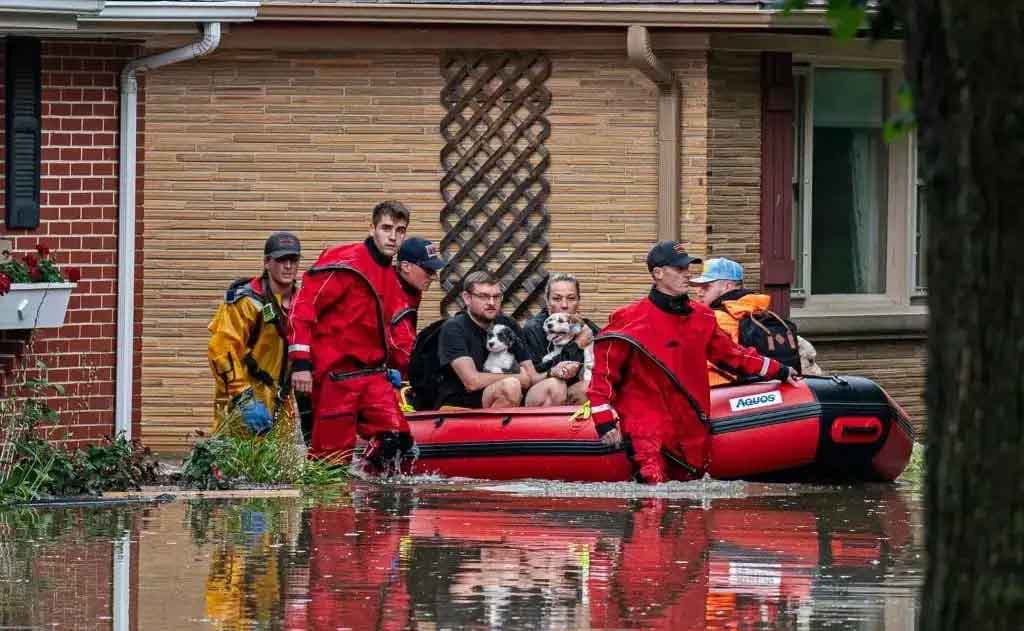
A Deluge Overwhelms Southeastern Wisconsin
On August 9 and 10, 2025, southeastern Wisconsin, particularly Milwaukee and Waukesha counties, was struck by unprecedented flash flooding caused by torrential rainfall, prompting a state of emergency in Milwaukee and the cancellation of the Wisconsin State Fair's final day. The catastrophic weather event, which saw some areas receive up to 13 inches of rain, disrupted lives, damaged property, and left a lasting impact on the region, resonating deeply with the Indian diaspora in the U.S. who follow such natural disasters with concern for affected communities.
Record-Breaking Rainfall and Flooding
The National Weather Service (NWS) reported that Milwaukee and surrounding areas received 7 to 13 inches of rain in a matter of hours, with St. Francis recording a high of 10.5 inches by Sunday morning, August 10. Milwaukee's airport shattered its previous daily rainfall record, logging 5.75 inches on August 9 alone, with a storm total nearing 7 inches. The Milwaukee River near Estabrook Park reached major flood stage, hitting 10.5 feet by 3:30 a.m. Sunday, surpassing previous records, while the Kinnickinnic River recorded 17.19 feet, and the Root River overflowed along Cleveland Avenue, creating hazardous conditions for motorists and pedestrians.
The relentless downpours overwhelmed the Milwaukee Metropolitan Sewerage District, with 14.35 inches of water rushing into the system at one location. Flash flood warnings were issued for Milwaukee, Waukesha, Ozaukee, and Washington counties, with some alerts extending until 8:15 a.m. on August 10. The NWS described the situation as "life-threatening," urging residents to avoid flooded roads with the slogan "Turn Around, Don't Drown." Additional rainfall of 1 to 3 inches was expected, raising fears of further flooding in already saturated areas.
Wisconsin State Fair Disrupted
The Wisconsin State Fair, a beloved annual event in West Allis, was forced to close early on Saturday, August 9, and canceled its final day on Sunday due to severe flooding on the fairgrounds. Videos shared by attendees and reported by TMJ4 showed fairgoers wading through ankle-deep water and vehicles nearly submerged in parking lots. The early closure, announced just before 9 p.m. on Saturday, led to the cancellation of a headline performance by Lynyrd Skynyrd. Fair officials cited safety concerns, directing visitors to use the Main Stage or Turn 4 exits due to the flooded Tunnel Entrance F.
Despite the chaos, some moments of resilience emerged. The Wisconsin State FFA Honors Band and Choir performed to a larger-than-expected crowd in the Youth Exhibit Hall as fairgoers sought shelter, providing a brief respite during the downpour. However, the decision to cancel the final day was a significant blow to the fair's organizers and attendees, marking a rare disruption in its 174-year history.
Widespread Impact and Response
The flooding caused extensive damage across Milwaukee and surrounding areas. The Milwaukee Fire Department handled over 600 emergency calls between 8 p.m. Saturday and 7 a.m. Sunday, including 65 water rescues for people stranded in vehicles or on top of cars. Fire Chief Aaron Lipski expressed frustration, noting that many incidents could have been avoided if drivers heeded warnings not to drive through floodwaters. Nearly 47,000 We Energies customers lost power in southeast Wisconsin, with 10,000 outages in Milwaukee County and 8,000 in Waukesha County.
City streets turned into rivers, with manhole covers popping off and debris floating through neighborhoods. In Wauwatosa, the Menomonee River overflowed, damaging the 68th Street bridge. Residents like Jacqueline Zeledon reported devastating basement flooding, with losses including furnaces, water heaters, and personal belongings. Milwaukee Mayor Cavalier Johnson and County Executive David Crowley declared a state of emergency on Sunday, August 10, to mobilize resources and coordinate with state and federal partners. Johnson emphasized that no flood-related deaths had been reported, a point of relief amid the destruction.
The flooding also disrupted other events, including the USA Triathlon Sprint and Paratriathlon National Championships, canceled due to unsafe water conditions and course damage. At American Family Field, rain seeped through the roof during a Milwaukee Brewers game on August 9, and flooded streets limited access to parking lots the following day.
Community and Diaspora Concerns
For the Indian-American community, many of whom reside in or have ties to the Midwest, the flooding in Milwaukee raises concerns about safety, infrastructure resilience, and the impact on local economies. The cancellation of the Wisconsin State Fair, a cultural touchstone, underscores the broader effects of climate-driven extreme weather, a topic of growing interest among the diaspora as they compare such events to monsoon-related flooding in India. The community's engagement with U.S. news highlights their solidarity with affected residents and their advocacy for robust disaster response measures.
Ongoing Challenges and Forecast
The NWS warned of additional heavy rainfall through Sunday, August 10, with pockets of storms potentially exacerbating flooding in already hard-hit areas. A flood watch remained in effect until Monday morning, August 11, with officials urging residents to stay off roads and avoid flooded areas, especially at night due to reduced visibility. The forecast indicated drier conditions starting Monday afternoon, with sunshine expected from Tuesday through Saturday, though isolated showers remained possible.
City crews and first responders worked tirelessly to clear surface water and assist stranded residents, while emergency management teams assessed the full extent of the damage. Alderman Peter Burgelis advised residents to use the non-emergency number (414-933-4444) for non-life-threatening flooding issues, reserving 911 for emergencies. The Milwaukee Department of Public Works reiterated the dangers of navigating standing water, emphasizing the need for caution.
Looking Ahead
As Milwaukee and southeastern Wisconsin begin the recovery process, the flooding serves as a stark reminder of the region's vulnerability to extreme weather. For the Indian diaspora, this event prompts reflection on global climate challenges and the importance of community resilience. The full scope of the damage, particularly to homes and infrastructure, will likely take weeks to assess, but the collective response of residents, first responders, and officials highlights the strength of the region in the face of adversity.
Related NRI Globe Coverage
- Winter Storm Fern Aftermath January 2026: State-by-State Impact on USA NRIs
- Flash Floods Ravage Alamance County: Rescue Operations Underway
- American Hero Scott Ruskan Saves 165 Lives in Texas Flash Floods: A Coast Guard Story of Bravery
- 2026 US State Policy Changes: What NRIs and Indian Professionals Need to Know
- Davos 2026 Day 1 Highlights: India's Historic Presence & What It Means for NRIs Worldwide
- Mother of All Deals: India's Historic EU Free Trade Agreement — January 2026 Updates
- College Basketball Previews January 2026: Duke vs Louisville and Michigan vs Penn State
- Punjab Battles Worst Floods in Decades, Over 1,400 Villages Submerged
Fresh from NRI Globe
- YouTuber Nandu's World (Rama Nandana) UK Visa & Job Fraud Case: Full Details + Key Lessons for NRIs (2026)
- Dussehra / Vijayadashami 2026 Events Country-Wise — Global NRI Directory (Ram Lila, Ravana Dahan, Durga Puja Pandals, Ayudha Puja Venues + Booking)
- Diwali 2026 Events Country-Wise — Global NRI Directory (White House, Leicester, London Trafalgar, Toronto, Auckland, Sydney Parramasala, Fiji, Mauritius, Trinidad, South Africa and More)
- Diwali / Deepavali 2026 Country-Wise NRI Celebrations — Complete Global Guide (USA, UK, Canada, Australia, Fiji, Mauritius, Trinidad, South Africa, UAE and 30+ Countries)