
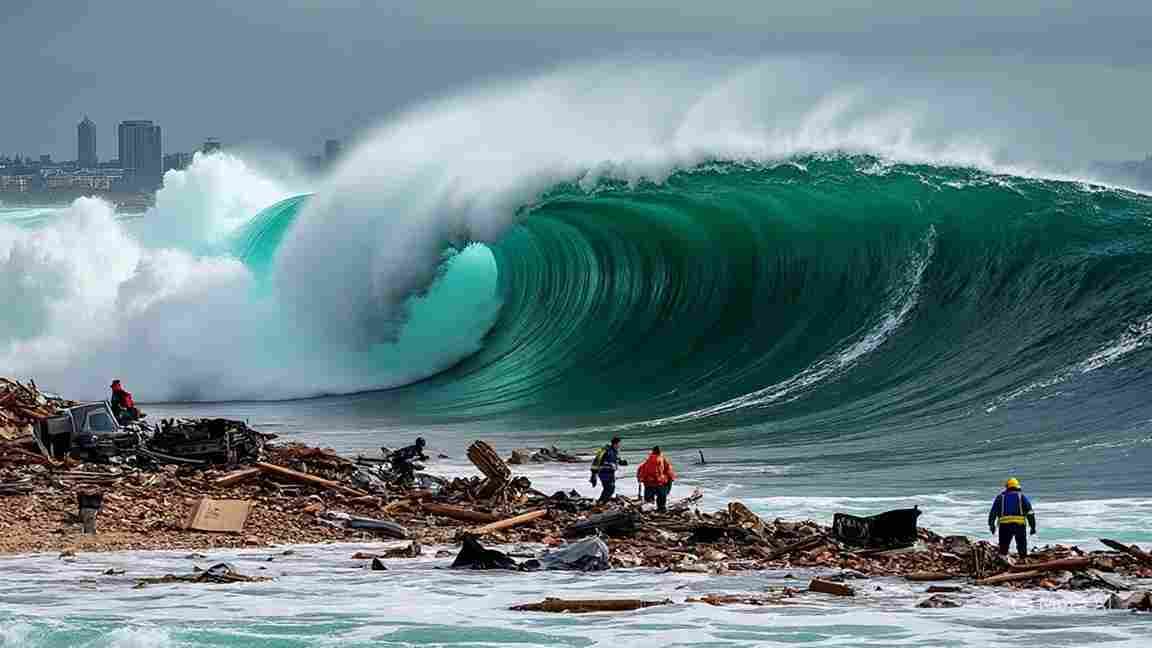
Increasing Tsunami Risks in the USA: Causes, Impacts, and Preparedness
Tsunamis, often referred to as nature’s most powerful and destructive forces, pose a growing threat to coastal regions of the United States. While tsunamis are relatively rare compared to other natural disasters, recent studies indicate that the chances of a tsunami impacting the U.S. are increasing due to a combination of geological, environmental, and climatic factors. This article delves into the reasons behind the rising tsunami risks, the regions most vulnerable, the potential impacts, and how communities can prepare for these catastrophic events. For residents, policymakers, and visitors, understanding these risks is crucial for safety and resilience.
Understanding Tsunamis and Their Causes
A tsunami is a series of enormous ocean waves triggered by sudden disruptions in the ocean, such as earthquakes, underwater landslides, volcanic eruptions, or, in rare cases, meteorite impacts. These waves can travel thousands of miles across ocean basins at speeds up to 800 kilometers per hour, striking coastlines with devastating force. In the U.S., tsunamis are primarily associated with seismic activity along subduction zones—regions where tectonic plates converge, causing one plate to slide beneath another.
The U.S. Geological Survey (USGS) explains that an earthquake along a subduction zone can uplift the seafloor, displacing massive volumes of water and initiating a tsunami. Other triggers, such as submarine landslides or glacial collapses, can also generate these destructive waves. While tsunamis are not a daily occurrence, their frequency and potential severity are increasing due to several factors, which we’ll explore below.
Why Are Tsunami Chances Increasing in the USA?
Recent studies and geological assessments point to several reasons why tsunami risks in the United States are on the rise. These include heightened seismic activity, climate change-induced environmental shifts, and improved scientific understanding of historical tsunami patterns.
1. Heightened Seismic Activity in Subduction Zones
The U.S. is home to several tectonically active regions, particularly along the Pacific Ring of Fire, which includes the Cascadia Subduction Zone (CSZ) off the coasts of Washington, Oregon, and northern California, as well as the Aleutian Subduction Zone in Alaska. These areas are prone to large earthquakes capable of generating tsunamis.
- Cascadia Subduction Zone: A Virginia Tech study published in the Proceedings of the National Academy of Sciences estimates a 15% chance of a magnitude 8.0 or greater earthquake occurring in the CSZ within the next 50 years. Such an event could cause coastal land to sink by up to 6.5 feet, amplifying tsunami impacts by expanding floodplains. The last major rupture in this zone occurred in 1700, producing a tsunami that devastated the Pacific Northwest and reached as far as Japan. Geological evidence suggests these events occur approximately every 500 years, indicating the region is due for another significant quake.
- Aleutian Subduction Zone: In Alaska, the Aleutian Islands face a 9% chance of a magnitude 9.0 or greater earthquake within the next 50 years, according to a University of Hawaiʻi at Mānoa study. The 1964 magnitude 9.2 Great Alaska Earthquake, which triggered a deadly tsunami, underscores the region’s vulnerability.
2. Climate Change and Environmental Factors
Climate change is exacerbating tsunami risks by altering coastal and geological conditions:
- Rising Sea Levels: Higher sea levels due to melting ice caps and thermal expansion of seawater increase the extent of flooding during a tsunami. Even a small rise in sea level can significantly amplify the destructive reach of tsunami waves, particularly in low-lying coastal areas like those in Hawaii, California, and the Pacific Northwest.
- Glacial Retreat and Landslides: In Alaska, warming temperatures are causing glaciers to retreat, destabilizing slopes and increasing the likelihood of landslides. A notable example is the 2015 Taan Fiord megatsunami, where a landslide triggered a wave with an initial height of 100 meters. Similar events are becoming more likely as climate change accelerates glacial melting.
- Coastal Erosion: Erosion weakens coastal defenses, making communities more vulnerable to tsunami inundation. Areas like California’s coastline, particularly in Los Angeles and Ventura counties, are seeing expanded tsunami hazard zones due to changing coastal topography.
3. Improved Scientific Modeling and Risk Assessments
Advancements in geophysical research and tsunami modeling have revealed that current predictive models may underestimate tsunami severity by as much as 100%. A 2022 study by USC Dornsife found that even relatively small earthquakes in shallow subduction zones can produce disproportionately large tsunamis due to specific geological structures, such as the outer wedge of subduction zones. This discovery has led to updated hazard maps, particularly in California, where tsunami flood zones have expanded in areas like Long Beach, Malibu, and San Francisco.
4. Population Growth in Vulnerable Areas
More than 700 million people globally live in low-lying coastal areas, and the U.S. is no exception. States like California, Hawaii, Oregon, Washington, and Alaska have densely populated coastal communities. The growth of urban centers in tsunami-prone areas, such as Los Angeles, Seattle, and Honolulu, increases the potential for loss of life and property damage. FEMA’s National Risk Index highlights these states as having the highest tsunami risk due to their proximity to subduction zones and historical tsunami impacts.
Regions at Greatest Risk in the USA
While any U.S. coast could theoretically be affected by a tsunami, certain regions face significantly higher risks due to their geological and geographical characteristics:
- Pacific Northwest (Washington, Oregon, Northern California): The Cascadia Subduction Zone poses the greatest threat, with the potential for a magnitude 9.0 earthquake generating waves up to 40 feet high. Coastal communities could have as little as 10 minutes to evacuate, making preparedness critical.
- Alaska: The Aleutian Islands and southern Alaska are vulnerable to both seismic and landslide-induced tsunamis. The 1964 Gulf of Alaska tsunami caused widespread destruction, and recent studies suggest more frequent tsunami events in the region than previously thought.
- Hawaii: Located in the middle of the Pacific, Hawaii is susceptible to both local tsunamis (from volcanic flank collapses) and distant tsunamis from earthquakes around the Pacific Rim. The 1946 Aleutian tsunami killed 159 people in Hawaii, with waves reaching 55 feet.
- California: Coastal areas like Crescent City, Long Beach, and San Francisco face risks from both local and distant tsunamis. The 2011 Tohoku tsunami caused significant damage to California harbors, and updated hazard maps show expanded flood zones in several counties.
- Caribbean (Puerto Rico, U.S. Virgin Islands): While less frequent, the Caribbean faces tsunami risks from earthquakes along the Caribbean Plate boundaries. The 1929 Grand Banks earthquake triggered a tsunami that affected the region.
Historical Tsunami Events in the USA
The U.S. has experienced several significant tsunamis, providing critical lessons for future preparedness:
- 1964 Gulf of Alaska Tsunami: Triggered by a magnitude 9.2 earthquake, this tsunami caused widespread damage across Alaska, Hawaii, California, Oregon, and Washington, killing 124 people. Crescent City, California, was particularly hard-hit.
- 1946 Aleutian Tsunami: A magnitude 8.6 earthquake in the Aleutian Islands generated waves that devastated Hilo, Hawaii, with runup heights of 33–55 feet, resulting in 159 deaths.
- 1700 Cascadia Tsunami: Geological evidence and Japanese records confirm a magnitude 9.0 earthquake along the Cascadia Subduction Zone, producing a tsunami that impacted the Pacific Northwest and Japan.
- 2015 Taan Fiord Megatsunami: A landslide in Alaska triggered a wave with a runup height of 193 meters, one of the largest recorded in recent history.
These events underscore the destructive potential of tsunamis and the need for proactive measures.
Potential Impacts of Tsunamis
Tsunamis can cause catastrophic damage to infrastructure, economies, and human lives. Key impacts include:
- Flooding and Property Damage: Tsunami waves can inundate low-lying areas, destroying homes, businesses, and critical infrastructure like ports and power plants. The 1964 Alaska tsunami caused an estimated $3.4 billion in damage (adjusted for inflation).
- Loss of Life: Drowning is the primary cause of tsunami-related deaths, followed by injuries from debris. The 2004 Indian Ocean tsunami, which killed nearly 230,000 people globally, highlighted the human toll of these disasters.
- Economic Disruption: Tsunamis disrupt transportation, power, and communication networks, leading to long-term economic impacts. Damage to harbors and marinas, as seen in Crescent City during the 2011 Tohoku tsunami, can cripple local economies.
- Environmental Damage: Tsunamis can cause coastal erosion, saltwater intrusion into freshwater systems, and destruction of ecosystems, affecting agriculture and fisheries.
- Mental Health Effects: Survivors often face long-term psychological trauma due to loss of loved ones, homes, and livelihoods.
Preparedness and Mitigation Strategies
Given the increasing tsunami risks, communities, governments, and individuals must take proactive steps to enhance preparedness and resilience:
1. Early Warning Systems
The National Tsunami Warning Center (NTWC) and Pacific Tsunami Warning Center (PTWC) monitor seismic activity and sea level changes to issue timely alerts. Recent advancements, such as the proposed WaveAlert system, aim to leverage earthquake early warning systems like MyShake to deliver rapid, consistent warnings to the public.
- Tsunami Alerts: The U.S. issues four levels of alerts—Warning, Advisory, Watch, and Information Statement—to guide evacuation and response efforts. Residents should familiarize themselves with these alerts and act immediately upon receiving a warning.
- Evacuation Planning: Communities should map out evacuation routes and practice drills. The USGS’s Pedestrian Evacuation Analyst tool helps estimate evacuation times from tsunami hazard zones.
2. Infrastructure Resilience
Building resilient infrastructure is critical to minimizing tsunami impacts:
- Elevated Structures: Constructing buildings and critical infrastructure above tsunami inundation zones or reinforcing them to withstand flooding.
- Coastal Barriers: Levees and seawalls can reduce tsunami impacts, as seen in some California communities where hazard zones were adjusted after levee assessments.
- Land-Use Planning: Avoiding development in high-risk areas and preserving natural barriers like wetlands can mitigate tsunami damage.
3. Public Education and Awareness
Public awareness is key to reducing tsunami risks:
- Know the Signs: Natural warning signs, such as a sudden rise or retreat of ocean water or a loud roar, indicate an imminent tsunami. Residents should evacuate immediately without waiting for official warnings.
- Community Drills: Regular tsunami evacuation drills, as practiced in Washington and Oregon, help prepare residents for rapid response.
- Emergency Kits: Households should maintain emergency kits with food, water, medical supplies, and communication devices to sustain themselves post-disaster.
4. International Collaboration
Tsunami risks are global, requiring cooperation among nations. The U.S. collaborates with international Tsunami Service Providers through UNESCO’s Intergovernmental Oceanographic Commission to enhance monitoring and warning systems.
Conclusion: A Call to Action for Tsunami Preparedness
The increasing tsunami risks in the USA, driven by seismic activity, climate change, and population growth in vulnerable areas, demand urgent attention. Coastal states like Alaska, Hawaii, Washington, Oregon, and California face the highest threats, with the potential for devastating megatsunamis within the next 50 years. By investing in early warning systems, resilient infrastructure, and public education, communities can mitigate the impacts of these catastrophic events.
For residents and visitors, understanding tsunami risks and preparing accordingly is essential. Familiarize yourself with local evacuation routes, stay informed about tsunami alerts, and participate in community preparedness programs. Together, we can build a more resilient future against the growing threat of tsunamis.
For more information on tsunami preparedness, visit NOAA’s Tsunami Warning Center or FEMA’s Ready.gov. Stay safe, stay prepared, and help protect our coastal communities from the rising tide of tsunami risks.
Related NRI Globe Coverage
- Powerful 7.8 Magnitude Earthquake Strikes Southern Philippines (Mindanao) — Tsunami Warnings Issued, Damage in General Santos
- NRI Dubai Investments: Returns & Risks 2026
- Nipah Virus Outbreak West Bengal 2026: Risks for NRIs & Prevention Tips
- 2026 War Possibilities: Global Flashpoints & What They Mean for NRIs – Risks, Safety, and Diaspora Impactsa
- Mega Tsunami Warning: Pacific Coast Faces Potential 1,000-Foot Wave Threat
- The Ripple Effect of Trump’s Tariffs on NRIs: Direct and Indirect Impacts
- Global Tsunami Alert: How NRIs in the US, Japan & Beyond Should Stay Safe
- Global Tsunami Alert: How NRIs in the US, Japan & Beyond Should Stay Safe
Fresh from NRI Globe
- YouTuber Nandu's World (Rama Nandana) UK Visa & Job Fraud Case: Full Details + Key Lessons for NRIs (2026)
- Dussehra / Vijayadashami 2026 Events Country-Wise — Global NRI Directory (Ram Lila, Ravana Dahan, Durga Puja Pandals, Ayudha Puja Venues + Booking)
- Diwali 2026 Events Country-Wise — Global NRI Directory (White House, Leicester, London Trafalgar, Toronto, Auckland, Sydney Parramasala, Fiji, Mauritius, Trinidad, South Africa and More)
- Diwali / Deepavali 2026 Country-Wise NRI Celebrations — Complete Global Guide (USA, UK, Canada, Australia, Fiji, Mauritius, Trinidad, South Africa, UAE and 30+ Countries)