
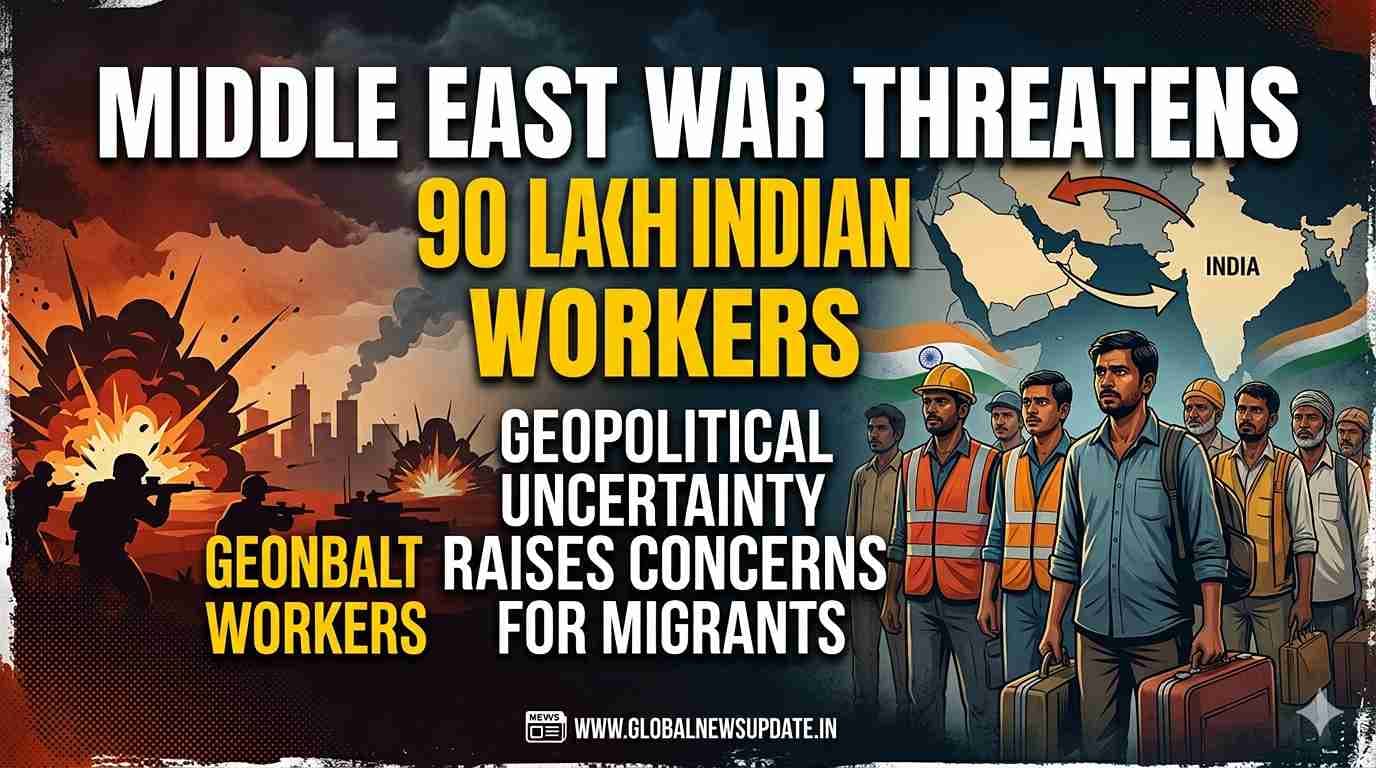
Ongoing US-Israel-Iran War Puts Nearly 9 Million Indian Expatriates in Serious Danger – Safety Concerns, Job Losses, and Economic Impact on Families Back Home
Nearly 90 lakh (9 million) Indian workers in the Gulf Cooperation Council (GCC) countries are facing heightened risks to their lives and livelihoods as the conflict involving the US, Israel, and Iran continues into April 2026. According to multiple sources and Ministry of External Affairs (MEA) estimates, around 8.9 to 10 million Indians live and work across the UAE, Saudi Arabia, Qatar, Kuwait, Oman, and Bahrain — with the majority being blue-collar workers in construction, oil & gas, hospitality, logistics, and services.
The escalation of hostilities, including missile and drone strikes, airspace closures, and disruptions to trade routes, has created a precarious situation for Indian migrants. Many are choosing to stay put despite the dangers, fearing immediate job loss and the inability to support families back in India.
Scale of the Indian Presence in the Gulf
- UAE: Largest host with approximately 3.5 million Indians.
- Saudi Arabia: Around 2.5 million Indians.
- Other countries: Significant numbers in Qatar, Kuwait, Oman (around 7.7 lakh), and Bahrain (around 3.2 lakh).
Roughly 65-70% of these workers are in low-to-mid skilled blue-collar roles. They earn between ₹30,000 to ₹1,00,000 per month — often double or more than equivalent jobs in India — making Gulf employment a critical economic lifeline for millions of families, especially from Kerala, Telangana, Andhra Pradesh, Tamil Nadu, Uttar Pradesh, and Bihar.
Gulf countries account for a substantial portion of India’s total remittances — estimated at around $51 billion annually from the region alone.
Key Risks Facing Indian Workers
- Safety and Physical Threats Migrant workers, often living in crowded labour camps or near industrial zones, face risks from falling debris, drone strikes, and potential escalation. Reports indicate that migrant workers have been among the casualties in the broader Gulf region, with limited access to safe shelters or evacuation options due to the kafala sponsorship system, which restricts mobility.
- Job Security and Potential Layoffs Over 300,000 Indian jobs are estimated to be at immediate risk if the conflict prolongs. Sectors like construction, tourism, hospitality, logistics, and aviation are already seeing slowdowns. Recruitment for new workers has been temporarily paused, affecting over 1 lakh Indians with secured job permits who are now grounded.
- Economic Disruptions
- Airspace closures and flight disruptions have stranded workers and delayed returns.
- Oil price volatility and supply chain issues could lead to project delays and cost-cutting by employers.
- Prolonged conflict may reduce remittances, impacting India’s current account and household incomes in migrant-heavy states.
Many workers report receiving salaries on time so far, but recruiters and experts warn that a months-long war could trigger widespread layoffs and hiring freezes.
Why Most Indians Are Choosing to Stay
For the majority of low-income migrant workers, the dilemma is stark: “Risk vs Roti” (safety versus livelihood). Returning home without a job could mean immediate financial distress for dependent families. Many view the current situation as “temporary and manageable” unless it escalates dramatically. However, this choice comes with growing anxiety over personal safety and long-term job stability.
Human rights organizations have highlighted ongoing vulnerabilities under the kafala system, including wage theft, poor living conditions, and limited legal protections — issues that the conflict has further exposed.
India’s Response and Challenges
The Indian government has expressed “great anxiety” over the situation and is closely monitoring developments. Steps taken so far include:
- Organizing special evacuation flights for stranded Indians.
- Advisories urging caution and coordination with embassies.
- Engagement with GCC governments for worker welfare.
However, experts note that large-scale evacuation of 90 lakh people is logistically challenging. India is also balancing its energy security interests, as the Gulf remains a major source of crude oil imports.
Recruitment agencies and industry bodies like the Indian Staffing Federation have called for stronger pre-departure training, better crisis response mechanisms, and reforms to protect migrant rights.
Broader Economic Impact on India
A sustained disruption could affect:
- Remittance inflows (critical for rural and semi-urban economies).
- Bilateral trade and investment ties with GCC nations.
- Domestic job market pressure if large numbers return unemployed.
States with high migration rates are particularly vulnerable, with potential ripple effects on local consumption and real estate.
NRIGlobe.com urges all Indian workers in the Gulf and their families to stay in regular contact with Indian embassies and consulates, follow official advisories, and prioritize safety while exploring contingency plans.
If you or your loved ones are in the Gulf region, share your experiences or concerns in the comments. What support do you need from the government or community?
Related NRI Globe Coverage
- Why US Chose Pakistan in Iran Conflict Explained
- Thousands Dead, Millions Displaced: The Human Toll of the 2026 US-Israel War on Iran as Infrastructure Threats Escalate
- Canada News This Week: April 2026 – Pride in Space, Political Pressure at Home, and Global Ripples from the Iran Conflict
- AWS UAE Data Center Hit Amid Iran Conflict | Cloud Casualty
- Iran-Israel Conflict: Risks of Nuclear Escalation if Supreme Leader Assassinated
- Russia Issues Stark Warning to US Over Israel-Iran Conflict: Are We on the Brink of World War 3?
- Trump Says US 'Essentially Taken Over' Iran (May 2026): Context, Operation Epic Fury & Current Status
- Shadows Over the Gulf: The Fragile 2026 Iran War Ceasefire — May 8 Update for NRIs
Fresh from NRI Globe
- YouTuber Nandu's World (Rama Nandana) UK Visa & Job Fraud Case: Full Details + Key Lessons for NRIs (2026)
- Dussehra / Vijayadashami 2026 Events Country-Wise — Global NRI Directory (Ram Lila, Ravana Dahan, Durga Puja Pandals, Ayudha Puja Venues + Booking)
- Diwali 2026 Events Country-Wise — Global NRI Directory (White House, Leicester, London Trafalgar, Toronto, Auckland, Sydney Parramasala, Fiji, Mauritius, Trinidad, South Africa and More)
- Diwali / Deepavali 2026 Country-Wise NRI Celebrations — Complete Global Guide (USA, UK, Canada, Australia, Fiji, Mauritius, Trinidad, South Africa, UAE and 30+ Countries)