
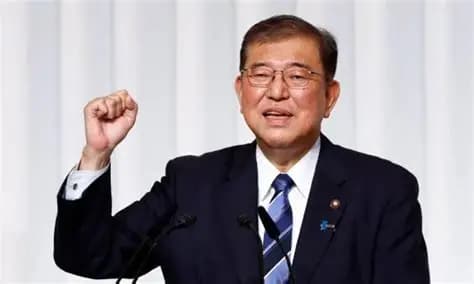
Japan’s Bold Move: Proposing an Indian Ocean-Africa Economic Zone to Counter China’s Influence
In a strategic push to deepen ties with Africa and bolster its global influence, Japanese Prime Minister Shigeru Ishiba unveiled an ambitious plan to create an "Indian Ocean-Africa Economic Zone" at the Ninth Tokyo International Conference on African Development (TICAD 9) held in Yokohama from August 20-22, 2025. The initiative, aimed at countering China’s growing economic and political clout in Africa, seeks to integrate Japan’s trade and investment networks across India, the Middle East, and the African continent. Ishiba also pledged to train 30,000 African artificial intelligence (AI) experts over the next three years and promote free trade, positioning Japan as a key partner in Africa’s development. As the continent emerges as a resource-rich hub with a young, dynamic population, Japan’s move signals a new chapter in its Indo-Pacific strategy, with implications for global geopolitics.
TICAD 9: A Platform for Japan’s African Ambitions
The Tokyo International Conference on African Development, launched in 1993, has long been Japan’s flagship platform for engaging with Africa. TICAD 9, co-hosted by Japan, the African Union Commission, and the United Nations, brought together leaders from over 50 African nations, including Kenya’s President William Ruto, South Africa’s Cyril Ramaphosa, Nigeria’s Bola Tinubu, and Egypt’s Prime Minister Mostafa Madbouly, representing President Abdel Fattah al-Sisi. Held in Yokohama, the three-day summit focused on three core agendas: peace and stability, economic development, and social issues like health, climate change, and youth exchanges.
In his keynote address, Ishiba emphasized Africa’s vast potential, noting its projected population growth to 2.5 billion by 2050 and its abundant natural resources. “Africa is a continent brimming with vitality, with a young population and immense energy resources,” he said, speaking at a pre-conference forum organized by Nikkei. “We aim to strengthen interregional connectivity and promote trade and investment to unlock this potential.” The proposed economic zone, encompassing the Indian Ocean region and Africa, is designed to leverage Japan’s existing business networks in India and the Middle East to facilitate trade and investment in Africa, creating a robust framework for economic integration.
Countering China’s Influence
Japan’s initiative comes at a time when China’s influence in Africa is surging, driven by its Belt and Road Initiative and the Forum on China-Africa Cooperation, established in 2000. Beijing has invested heavily in African infrastructure, mining, and energy projects, often through loans that have raised concerns about debt sustainability. For instance, posts on X have highlighted China’s strategy of lending to African nations, which some claim leads to dependency and the transfer of national assets when debts cannot be repaid. Japan’s leadership has openly acknowledged that the Indian Ocean-Africa Economic Zone is a direct response to this growing Chinese presence, aiming to offer African nations an alternative partner committed to free trade and sustainable development.
Ishiba’s plan is rooted in Japan’s broader Free and Open Indo-Pacific vision, which seeks to promote a rules-based international order in contrast to China’s assertive economic and military posture. The initiative aligns with Japan’s strategic interests, particularly its reliance on the Indian Ocean for over 90% of its oil imports, primarily from the Middle East. By fostering economic ties between Africa, India, and the Middle East, Japan aims to secure stable trade routes and reduce its vulnerability to regional disruptions, such as a potential blockade of the Strait of Hormuz.
Training 30,000 AI Experts: A Digital Leap for Africa
A cornerstone of Ishiba’s proposal is Japan’s commitment to train 30,000 AI experts across Africa over the next three years. This initiative targets industrial digitalization and job creation, particularly in tech-savvy nations like Kenya, which is emerging as a hub for innovation in East Africa. The training program will involve partnerships between Japanese universities, industries, and African institutions, fostering skills in AI, data science, and related fields. “This is about empowering Africa’s youth to drive the continent’s digital future,” Ishiba said, highlighting the alignment with Kenya’s Vision 2030, which aims to transform the country into a middle-income, industrialized nation.
The focus on AI training also reflects Japan’s domestic strengths in technology and innovation. Japanese firms, already active in India and the Middle East, will collaborate with African partners to develop digital infrastructure, from logistics networks to smart industries. This move is expected to create jobs and enhance Africa’s regional integration, making it a more competitive player in global markets. For countries like Kenya, where the tech sector is booming, Japan’s investment in human capital could be a game-changer, fostering a new generation of innovators and entrepreneurs.
Promoting Free Trade and Economic Integration
The Indian Ocean-Africa Economic Zone is designed to streamline trade and investment for Japanese companies operating in Africa. Many Japanese businesses export goods to Africa from production hubs in India and the Middle East, and the initiative includes a forum to promote third-country logistics models. Japan will leverage its Official Development Assistance (ODA) programs to strengthen logistics networks, connecting African markets to the broader Indo-Pacific region. A new joint task force, involving Japanese industry, academia, and government, will explore ways to deepen these economic partnerships, ensuring that trade flows are efficient and mutually beneficial.
Ishiba’s emphasis on free trade comes amid tensions with the United States, where President Donald Trump’s tariff policies have strained Japan’s economy. In July 2025, Trump imposed a 25% tariff on Japanese imports, prompting Ishiba to pledge $1 trillion in investments in the U.S. to mitigate trade frictions. The African initiative, however, underscores Japan’s commitment to open markets, contrasting with Trump’s protectionist stance and China’s debt-driven model. By promoting free trade in Africa, Japan aims to position itself as a trusted partner, offering African nations an alternative to China’s infrastructure-heavy approach.
The Yokohama Declaration and Beyond
The TICAD 9 summit concluded with the adoption of the “Yokohama Declaration,” a document outlining commitments to peace, economic growth, and social development. Ishiba, alongside Angolan President Joao Lourenco, the summit’s co-chair, emphasized private-sector-driven investments and collaboration between governments and businesses. Bilateral meetings with leaders from over 30 African nations, including Kenya, Liberia, and Egypt, further solidified Japan’s outreach. For instance, Egypt’s Prime Minister Madbouly participated in a Japan-Egypt Business Council forum to explore cooperation opportunities, highlighting the initiative’s practical applications.
The summit also addressed pressing African challenges, such as debt crises exacerbated by Western aid cuts, conflict, and climate change. South Africa’s President Ramaphosa noted that Africa’s “debt and liquidity crisis is constraining governments’ ability to support their citizens,” underscoring the need for sustainable partnerships. Japan’s initiative, with its focus on capacity-building and trade, aims to address these issues while fostering long-term economic resilience.
Geopolitical Stakes and Regional Dynamics
Japan’s push into Africa occurs against a complex geopolitical backdrop. North Korea’s growing ties with Russia, including reported arms supplies for the Ukraine conflict, have heightened tensions in East Asia, where Japan and South Korea face shared security challenges. Ishiba, a defense policy expert, has advocated for stronger Japan-South Korea-U.S. cooperation to counter threats from North Korea, China, and Russia. His African initiative complements this strategy by strengthening Japan’s economic influence in a region critical to global supply chains.
The initiative also responds to shifting U.S. policies under Trump, whose tariffs and reduced foreign aid have created opportunities for Japan to fill the gap in Africa. Ishiba’s meetings with African leaders, coupled with his recent diplomatic engagements in Indonesia, Malaysia, and planned talks with Trump, reflect Japan’s proactive approach to maintaining its relevance in a rapidly changing global order.
What’s Next for Japan and Africa?
As TICAD 9 wrapped up, the Indian Ocean-Africa Economic Zone emerged as a cornerstone of Japan’s strategy to deepen ties with a continent poised for growth. By training 30,000 AI experts and promoting free trade, Japan is betting on Africa’s youth and resources to drive mutual prosperity. However, challenges remain, including competition with China’s entrenched presence and the need to navigate Trump’s unpredictable trade policies. For African nations, Japan’s initiative offers a promising alternative, emphasizing skills development and open markets over debt-fueled infrastructure.
As Ishiba navigates domestic pressures, including an upcoming upper house election in July 2025 and inflation concerns, his African gamble could bolster Japan’s global standing. For Africa, the partnership promises economic opportunities and a chance to diversify its international alliances. As the Yokohama Declaration takes shape, the world watches to see if Japan’s vision can reshape the Indo-Pacific and African economic landscape, offering a counterweight to China’s ambitions.
Related NRI Globe Coverage
- White House Jumps on TikTok Bandwagon: A Bold Move Amid Security Fears and China Tensions
- Top US Companies Actively Hiring NRIs in 2026 Amid Economic Uncertainty: Opportunities for Indian Professionals
- BREAKING: Chinese Dissident Lei Claims China's Real Population Is Under 500 Million – Sparking Massive Online Debate Over Official 1.4 Billion Figure
- Trump's Bold Greenland Bid Heats Up: Military Option Discussed – What It Means for NRI Investors and Global Strategy
- New Year’s Day 2026 Celebrations Around the World: A Time Zone Guide for the Global Indian Diaspora
- Trump’s Bold Push to Ban Mail-In Voting Before 2026: A Constitutional Clash Looms
- Trump Fires Labor Chief After Disappointing July Jobs Report: Economic and Political Fallout
- India's Diplomatic Triumph: Elected to UN ECOSOC 2026–28 with 181 Votes
Fresh from NRI Globe
- YouTuber Nandu's World (Rama Nandana) UK Visa & Job Fraud Case: Full Details + Key Lessons for NRIs (2026)
- Dussehra / Vijayadashami 2026 Events Country-Wise — Global NRI Directory (Ram Lila, Ravana Dahan, Durga Puja Pandals, Ayudha Puja Venues + Booking)
- Diwali 2026 Events Country-Wise — Global NRI Directory (White House, Leicester, London Trafalgar, Toronto, Auckland, Sydney Parramasala, Fiji, Mauritius, Trinidad, South Africa and More)
- Diwali / Deepavali 2026 Country-Wise NRI Celebrations — Complete Global Guide (USA, UK, Canada, Australia, Fiji, Mauritius, Trinidad, South Africa, UAE and 30+ Countries)