
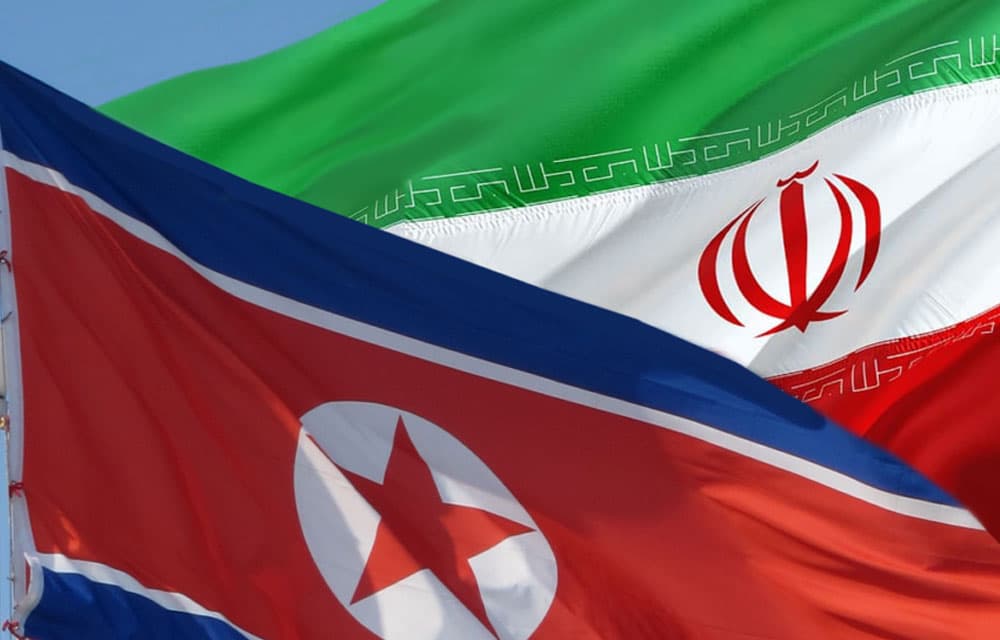
North Korea-South Korea Tensions: A Tale of Sibling Rivalry and Stalled Diplomacy
In a fiery statement that reverberated across the Korean Peninsula, Kim Yo Jong, the influential sister of North Korean leader Kim Jong Un, delivered a sharp rebuke to South Korea's latest overtures for peace. On August 20, 2025, through North Korea's state-run Korean Central News Agency (KCNA), she declared that her country would "never see South Korea as a partner for diplomacy," dismissing Seoul's efforts as a facade hiding a "sinister intention." Labeling South Korea as the "top-class faithful dog" of the United States, Kim Yo Jong's words underscored a deepening rift between the two Koreas, signaling a troubling new chapter in their fraught relationship. This bold pronouncement, delivered during a meeting with North Korea's Foreign Ministry officials, is not just another episode in the peninsula's long history of tension—it's a vivid reminder of how personal, political, and geopolitical forces intertwine to keep peace at bay.
A History of Hope and Hostility
The Korean Peninsula, divided since 1945, has long been a stage for drama, with North and South Korea playing out a saga of rivalry, reconciliation attempts, and recurring setbacks. The Korean War (1950–1953) left the peninsula split along the 38th parallel, with the Demilitarized Zone (DMZ) serving as a heavily fortified scar. Over the decades, moments of hope—like South Korea's Sunshine Policy in the late 1990s and early 2000s—have flickered, only to be extinguished by mutual distrust. The policy, championed by South Korean Presidents Kim Dae-jung and Roh Moo-hyun, saw historic gestures, such as the 2000 inter-Korean summit where Kim Dae-jung met Kim Jong Il, Kim Jong Un's father, to discuss unification. Cross-border family reunions and joint marches at the Olympics followed, raising dreams of a united Korea.
The 2018 Winter Olympics in Pyeongchang marked another high point. North and South Korean athletes marched under a unified flag, and Kim Yo Jong herself attended as part of an unprecedented high-level delegation, shaking hands with South Korean President Moon Jae-in. That April, Moon and Kim Jong Un signed the Panmunjom Declaration, pledging denuclearization and peace. For a moment, the world dared to hope that the peninsula's cold war might thaw. But these dreams crumbled. By 2020, North Korea demolished a joint liaison office in Kaesong, and Kim Jong Un labeled South Korea an "enemy." Diplomacy stalled, and tensions resumed their familiar dance.
The Loudspeaker Saga: Tit-for-Tat Provocations
The latest flare-up has its roots in a peculiar form of psychological warfare: propaganda loudspeakers and trash-filled balloons. In June 2024, South Korea resumed broadcasting anti-North Korean messages—blaring K-pop, weather reports, and criticisms of the Kim regime—along the DMZ. This was in response to North Korea's bizarre campaign of sending balloons laden with trash, manure, and even propaganda into South Korea. Pyongyang's balloon blitz was itself a retaliation against South Korean activists launching balloons carrying anti-Kim leaflets, K-pop, and dollar bills. The cycle of provocation escalated when North Korea installed its own loudspeakers, threatening a "horrible disaster" if South Korea's broadcasts continued.
Enter South Korea's new president, Lee Jae-myung, elected in June 2025 after the impeachment of his predecessor, Yoon Suk Yeol, whose hardline policies had inflamed tensions. Lee campaigned on a platform of reconciliation, promising to revive the 2018 inter-Korean military agreement to reduce border hostilities. In a bold move, he ordered the dismantling of South Korea's loudspeakers and suspended broadcasts to "restore trust." South Korea's military even reported that North Korea appeared to be removing its own speakers, sparking cautious optimism. But Kim Yo Jong swiftly crushed those hopes, denying any such dismantling and mocking Seoul's "unfounded unilateral supposition" as a desperate bid for diplomacy. Her statement, laced with venom, reaffirmed North Korea's hardline stance: no reconciliation, no partnership, no peace.
Kim Yo Jong: The Power Behind the Throne
Kim Yo Jong, often described as her brother's closest confidante and a key player in North Korea's propaganda and foreign policy, is no stranger to fiery rhetoric. As deputy director of the Workers' Party of Korea's Propaganda and Agitation Department, she has emerged as a formidable figure, often playing the "bad cop" to Kim Jong Un's more reserved demeanor. Her sharp tongue and strategic role make her a central character in this drama. In her August 2025 statement, she not only dismissed South Korea's peace gestures but also took aim at the annual South Korea-U.S. military drills, branding them a "reckless" rehearsal for invasion. These exercises, particularly the Freedom Shield drills in March 2025, have long been a sore point for Pyongyang, which views them as a direct threat.
Kim Yo Jong's remarks also hinted at a broader ambition: to elevate North Korea's diplomatic clout at South Korea's expense. She claimed that Seoul would be relegated to a "subordinate role" in regional affairs, while North Korea, bolstered by its growing ties with Russia, would take center stage. This shift reflects Kim Jong Un's strategic pivot. Since 2020, North Korea has deepened its alliance with Moscow, reportedly supplying artillery and missiles for Russia's war in Ukraine in exchange for military and economic aid. This alignment has emboldened Pyongyang, reducing its reliance on dialogue with Seoul or Washington.
A Constitutional Crisis and a New Cold War
Kim Jong Un's own actions have set the stage for this diplomatic freeze. In January 2024, he declared peaceful reunification with South Korea "impossible," ordering the North's constitution rewritten to designate the South as a "hostile state" and "principal enemy." This marked a seismic shift, abandoning decades of rhetoric about shared nationhood. Kim also shuttered agencies tasked with inter-Korean relations, signaling a permanent break. His sister's latest statement reinforces this policy, framing South Korea as an adversary to be countered, not a partner to be engaged.
The broader geopolitical context adds fuel to the fire. North Korea's nuclear ambitions remain unchecked, with Kim Jong Un overseeing a strategic cruise missile test in February 2025 and vowing to expand his nuclear arsenal. The U.S.-South Korea alliance, strengthened by trilateral cooperation with Japan, has responded with robust military exercises, further antagonizing Pyongyang. Meanwhile, North Korea's alignment with Russia and China has given Kim a sense of impunity, allowing him to dismiss Western-led sanctions and diplomatic overtures.
South Korea's Olive Branch and North Korea's Iron Fist
President Lee Jae-myung's conciliatory approach stands in stark contrast to Kim's belligerence. In a televised speech on August 15, 2025, Lee emphasized respect for North Korea's system and disavowed unification by absorption, hoping to rebuild trust. His administration is even considering allowing individual tours to North Korea and discouraging activist leaflet campaigns. Yet, Kim Yo Jong's response suggests these gestures are falling on deaf ears. She accused Seoul of colluding with Washington to undermine Pyongyang, framing Lee's outreach as a ploy to mask hostility.
This standoff is more than a clash of policies—it's a tale of two Koreas locked in a cycle of mistrust, where gestures of goodwill are met with suspicion, and provocations beget provocations. The peninsula, once a symbol of Cold War division, now teeters on the edge of a new cold war, with Kim Jong Un and his sister doubling down on isolation and defiance.
What Lies Ahead?
As tensions simmer, the world watches anxiously. South Korea's efforts to de-escalate, led by a president eager to mend ties, face an uphill battle against a North Korean regime that seems uninterested in dialogue. Kim Yo Jong's latest salvo, coupled with Kim Jong Un's constitutional overhaul, suggests that Pyongyang is preparing for a long-term confrontation, not reconciliation. The peninsula remains a powder keg, where a single misstep—be it a drone, a balloon, or a military drill—could ignite a broader conflict.
For now, the loudspeakers may be silent, but the war of words continues. As Kim Yo Jong's taunts echo across the DMZ, the dream of a peaceful Korea fades, replaced by the stark reality of a divided peninsula where diplomacy seems as distant as ever.
Further reading: See the Wikipedia overview of Korean Peninsula history and India's Ministry of External Affairs resources for additional context on regional diplomatic efforts.
Related NRI Globe Coverage
- India Reopens Embassy in Pyongyang, North Korea After Three-Year Hiatus
- North Korea Military Support to Iran: Geopolitical Implications
- France News This Week: April 2026 – Diplomatic Tensions, Rising Fuel Costs, and a Touch of National Heritage
- NRIs in Gulf Countries: Essential Safety Tips Amid Escalating Middle East Tensions (March 2026 Update)
- Breaking: US Fires Cruise Missiles from Syria at Targets in Iran Amid Heightened Tensions
- US-Iran Nuclear Talks Begin in Oman Amid Rising Tensions
- Winter Storm Fern Alert: What NRIs in Dallas & North Texas Need to Know – Safety Tips for Indian Families This Weekend
- New Zealand Protest Targets Sikh Procession: Rising Tensions
Fresh from NRI Globe
- YouTuber Nandu's World (Rama Nandana) UK Visa & Job Fraud Case: Full Details + Key Lessons for NRIs (2026)
- Dussehra / Vijayadashami 2026 Events Country-Wise — Global NRI Directory (Ram Lila, Ravana Dahan, Durga Puja Pandals, Ayudha Puja Venues + Booking)
- Diwali 2026 Events Country-Wise — Global NRI Directory (White House, Leicester, London Trafalgar, Toronto, Auckland, Sydney Parramasala, Fiji, Mauritius, Trinidad, South Africa and More)
- Diwali / Deepavali 2026 Country-Wise NRI Celebrations — Complete Global Guide (USA, UK, Canada, Australia, Fiji, Mauritius, Trinidad, South Africa, UAE and 30+ Countries)