
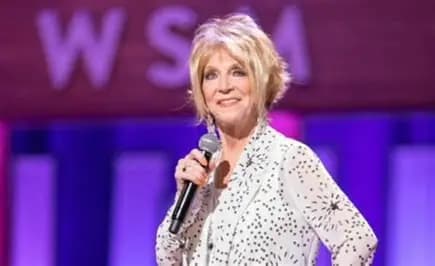
Jeannie Seely: The Soul of Country Music Silenced at 85
A Star Born Under Pennsylvania Skies
In the rolling hills of Titusville, Pennsylvania, on July 6, 1940, Marilyn Jeanne Seely entered the world as the youngest of four children to Irene and Leo Seely. Raised on a farm near Townville, her childhood was steeped in the rhythms of rural life and the melodies of country music. Saturday nights were sacred, with the family gathered around the radio, entranced by the Grand Ole Opry’s broadcasts. “I knew at 8 years old what I wanted to be,” Seely told PEOPLE in 2022, her eyes sparkling with the memory of dreaming to join the Opry family alongside idols like Roy Acuff, Minnie Pearl, and Ernest Tubb.
By age 11, young Jeannie was already singing on WMGW’s local radio show in Meadville, her voice carrying the raw promise of a future star. At 16, she took the stage on WICU television in Erie, Pennsylvania, her performances hinting at the soulful delivery that would later earn her the moniker “Miss Country Soul.” Inspired by country legends like Jean Shepard and pop icons like Patti Page, Seely’s early years were a tapestry of music, from her father’s banjo at square dances to the family’s impromptu picking sessions.
From Farm to Fame: A Journey West and South
After high school, Seely worked as a stenographer, but the Pennsylvania winters pushed her to seek sunnier horizons. In 1961, at 21, she packed her dreams into a Ford Falcon and moved to California, where she landed a job at Liberty and Imperial Records in Hollywood. There, she began writing songs, her pen crafting hits like “Anyone Who Knows What Love Is (Will Understand)” for R&B singer Irma Thomas, co-written with Randy Newman. Her songwriting caught the ears of country stars like Connie Smith and Dottie West, but Seely’s heart was set on singing.
A brief stint with Challenge Records gave her a taste of recording, but Nashville called her name. In 1965, with just $50 to her name, she arrived in Music City, where fate—and talent—took over. Porter Wagoner hired her for his road show and syndicated TV series, giving her a platform to shine. But it was a phone call from songwriter Hank Cochran that changed everything. Cochran played her the first verse of “Don’t Touch Me” over the phone, and Seely, captivated, insisted on hearing the rest in person. She recorded the song with Monument Records in 1966, and it soared to number two on the US Hot Country Songs chart, earning her a Grammy for Best Female Country Vocal Performance in 1967. The song, now a country music standard, was her ticket to stardom.
Breaking Barriers at the Grand Ole Opry
In 1967, Seely stepped into the Opry’s iconic circle as its first Pennsylvania native and soon became the first woman to regularly host its segments. But it was her bold fashion choice—a miniskirt on the traditionally conservative Opry stage—that sparked a revolution. When Opry manager Ott Devine questioned her attire, Seely quipped, “You do know the trend is coming,” and negotiated a deal to keep wearing her modern style. Her defiance paved the way for other women to shed the gingham ruffles, modernizing the image of female country artists. “Jeannie blazed a nonconformist trail from the moment she hit the Opry stage in her miniskirt,” wrote authors Mary Bufwack and Robert K. Oermann.
Seely’s Opry tenure was nothing short of legendary. With 5,397 performances, she holds the record for the most appearances in the show’s 100-year history, a testament to her enduring connection with fans. Her soulful hits like “Can I Sleep in Your Arms” and duets with Jack Greene, such as “Wish I Didn’t Have to Miss You,” kept her in the spotlight, while her mentorship of younger artists, especially women, cemented her as a backstage force. “She mentored countless artists, especially women, and while they learned from her confidence and wit, she reminded us she was learning from them too,” said a CMA representative in 2023.
A Life of Creativity and Resilience
Seely’s career was a tapestry of versatility. She wrote songs for legends like Merle Haggard and Willie Nelson, hosted “Sundays with Seely” on SiriusXM’s Willie’s Roadhouse (her final episode airing July 27, 2025), and produced for bluegrass group Cutter & Cash and The Kentucky Grass. Her 2020 album, An American Classic, featured collaborations with artists like Vince Gill, and in 2024, she released the single “Suffertime.” In March 2025, Sony Music Publishing Nashville honored her with reimagined versions of her songs by rising stars like Madeline Edwards and Tiera Kennedy.
Yet, 2025 was a year of personal and physical trials. Seely had battled health issues since the fall, undergoing multiple back surgeries and two emergency abdominal surgeries. The loss of her husband, Eugene Ward, to cancer in December 2024 added emotional weight to her struggles. On August 1, 2025, she passed peacefully at Summit Medical Center in Hermitage, Tennessee, due to complications from an intestinal infection, surrounded by loved ones and her beloved cat, Corrie.
A Legacy That Echoes
Seely’s impact transcends her music. She was honored with the CMA’s Joe Talbot Award in 2023, inducted into the Music City Walk of Fame in 2018, and celebrated as Grand Marshall in her hometown of Townville, Pennsylvania. The Jeannie Seely Interchange outside the Opry House stands as a tribute to her influence on Nashville. Her final public appearance on March 1, 2025, at the reopening of the Legends of Country Music Museum, where she has a dedicated exhibit, was a fitting capstone to her storied career.
The Grand Ole Opry dedicated its Saturday night show on August 2, 2025, to Seely’s memory, with tributes pouring in from artists like Lorrie Morgan and Carly Pearce, who cited her as an inspiration. “I dreamt of singing in the Grand Ole Opry my whole life. Be like Jeannie—she’s kind of my inspiration as far as the Opry goes,” Pearce said in 2017.
For NriGlobe.com Readers: A Universal Story
For the global Indian diaspora, Seely’s journey resonates as a testament to chasing dreams against all odds. From a farm girl with $50 to a Grammy-winning icon, she embodied resilience and reinvention—qualities that echo the aspirations of many who leave home to build new lives. Her advocacy for women in music mirrors the fight for equity in any field, a message that transcends borders. As you gather this weekend, perhaps for a family celebration or a quiet moment, let Seely’s story inspire you to break your own barriers, just as she did in a miniskirt under the Opry’s lights.
Seely is survived by friends, family, and her cherished cat, Corrie. A memorial service will be announced soon. Her legacy, like the notes of “Don’t Touch Me,” will linger in the hearts of those who loved her music and the doors she opened for generations to come.
Related NRI Globe Coverage
- US Tariffs Country-Wise in 2026 & Their Impact on NRIs — India 10%, China 12.5%, Sectoral Rates Explained
- AI Usage by Country 2026: Where Indians & NRIs Stand in the Global AI Boom
- Electric Vehicles by Country 2026: Top Nations, EV Sales Numbers, Market Share Percentages & What It Means for NRIs
- Latest Update on Camp Mystic Floods: Search Continues for Missing Campers in Texas Hill…
- YouTuber Nandu's World (Rama Nandana) UK Visa & Job Fraud Case: Full Details + Key Lessons for NRIs (2026)
- US Crime News 2026 — Top Trend Categories NRIs Are Watching (Organized Retail Theft, Auto Theft, Cybercrime, Hate Crimes, Fentanyl, AI-Enabled Fraud)
- US Crime & Safety This Week — September 17-21, 2026 (NRI Family Guide, FBI Alerts, H-1B/Immigration Scams, Tech Support Fraud, Emergency Resources)
- Japan's Centenarian Population Surpasses 100,000 for the First Time in History
Fresh from NRI Globe
- Dussehra / Vijayadashami 2026 Events Country-Wise — Global NRI Directory (Ram Lila, Ravana Dahan, Durga Puja Pandals, Ayudha Puja Venues + Booking)
- Diwali 2026 Events Country-Wise — Global NRI Directory (White House, Leicester, London Trafalgar, Toronto, Auckland, Sydney Parramasala, Fiji, Mauritius, Trinidad, South Africa and More)
- Diwali / Deepavali 2026 Country-Wise NRI Celebrations — Complete Global Guide (USA, UK, Canada, Australia, Fiji, Mauritius, Trinidad, South Africa, UAE and 30+ Countries)
- Dussehra / Vijayadashami 2026 Country-Wise NRI Celebrations — USA, UK, Canada, Australia, New Zealand, UAE, Singapore, Germany, Netherlands and More