
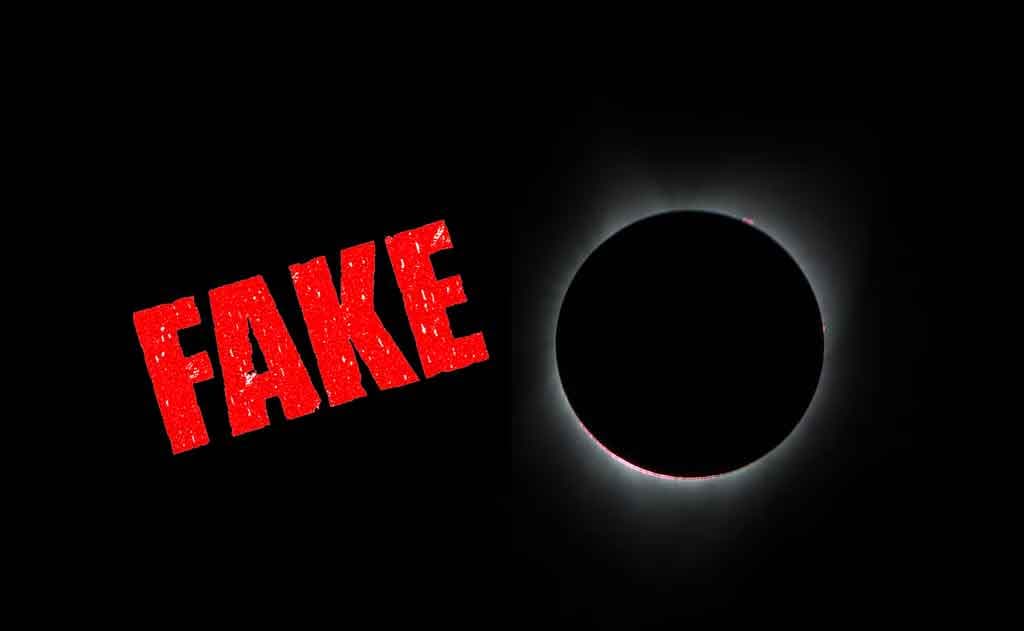
Imagine this: you're scrolling through your phone, and a post stops you cold. It claims that on August 2, 2025, a total solar eclipse will plunge the entire world into six minutes of pitch-black darkness—a cosmic event so rare it won't happen again for a century. The internet explodes with videos, memes, and breathless warnings, some even citing NASA. People start planning watch parties, stocking up on supplies, and whispering about end-times vibes. Sounds thrilling, right? Too bad it's completely false. NASA has swooped in to debunk this viral hoax, and the real story about the next big eclipse is even more epic.
The Hoax That Lit Up the Internet
It all started with a flurry of posts on X and TikTok, where a rumor about a "6-minute darkness" on August 2, 2025, spread faster than a meteor shower. The claim? A total solar eclipse would blanket the planet in darkness, with some posts suggesting schools were closing and NASA was issuing warnings. The hype was real—until it wasn't. The rumor, fueled by a mix of excitement and misinformation, got so big it sparked debates, doomsday theories, and even eclipse-themed merch. But NASA, the ultimate cosmic myth-buster, shut it down with a simple truth: there's no total solar eclipse in 2025.
Instead, the next major eclipse is set for August 2, 2027, and it's shaping up to be a showstopper. Unlike the fake 2025 blackout, this one's real, visible in parts of Europe, Africa, and the Middle East, and it's got astronomers and adventure-seekers already buzzing.
NASA Sets the Record Straight
According to NASA, August 2, 2025, is just another day under the Sun—literally. No global blackout, no total eclipse. The closest event is a partial solar eclipse on September 21, 2025, which will only be visible in parts of Africa, Europe, and southern Asia. It'll dim the Sun slightly, creating a crescent effect, but it's far from the apocalyptic darkness the internet promised. For folks in the U.S., there's nothing to see at all.
The real action comes on August 2, 2027, with a total solar eclipse that's being called the "Eclipse of the Century." This one's a big deal, with up to 6 minutes and 23 seconds of totality—the moment when the Moon fully blocks the Sun, turning day into an eerie twilight. The catch? It's only visible along a narrow path stretching from southern Spain through North Africa to the Middle East. Think Morocco, Egypt, Saudi Arabia, and Yemen. If you're in Luxor, Egypt, you'll get the full six-minute-plus experience, with the Sun's glowing corona stealing the show.
Why the 2027 Eclipse Is Worth the Hype
So, what makes the 2027 eclipse such a blockbuster? It's all about perfect cosmic timing:
- Moon's Close-Up: The Moon will be near its closest point to Earth (perigee), making it look bigger and blocking the Sun for longer.
- Sun's Distance: Earth will be farther from the Sun (near aphelion), making the Sun appear smaller, which helps the Moon cover it completely.
- Prime Location: The eclipse's path crosses near the equator, slowing the Moon's shadow and extending the duration of totality.
This alignment creates one of the longest total eclipses on land in decades, not seen since 1991 and not again until 2114. The path of totality, about 160 miles wide, will sweep through places like southern Spain, Gibraltar, Morocco, Algeria, Tunisia, Libya, Egypt, Sudan, Saudi Arabia, Yemen, and Somalia. For those outside the path, like parts of Europe, Africa, or western India, a partial eclipse will still offer a cool view—think 10-30% of the Sun covered, depending on your spot.
A Cosmic Party with Science and Culture
Eclipses have always been a big deal, from ancient myths of gods battling in the sky to modern scientists studying the Sun's corona. The 2027 eclipse is no exception. It's a chance to see the Sun's outer atmosphere, usually hidden by its glare, and for researchers to test theories about solar physics. But it's not just for science nerds. In Egypt, Luxor's clear skies and ancient ruins will make it a hotspot for eclipse chasers, blending cosmic awe with visits to places like the Pyramids or the Valley of the Kings. Spain and Morocco are already gearing up for tourists, with hotels and tour operators booking up fast.
For Americans, the 2027 eclipse is a bit of a trek, but it's worth it. The last big U.S. eclipse was in 2024, and the next one isn't until 2044. If you're in western India, you'll catch a partial eclipse in the late afternoon, but you'll need to travel to see totality.
How the Hoax Happened
So how did this 2025 rumor get so big? Blame the internet's love for drama. Some posts mixed up the 2027 eclipse with 2025, while others exaggerated the event into a global blackout—an astronomical no-go, since eclipses only darken a small strip of Earth. Sensational headlines, like one from Daily Galaxy, didn't help, hyping a "once-in-a-century" event that got the dates wrong. NASA and sites like Space.com urge everyone to double-check with trusted sources, like NASA's eclipse page or the American Astronomical Society, before buying into viral claims.
Get Ready for 2027
Want to catch the real deal? Here's how to prep for August 2, 2027:
- Pick Your Spot: Luxor, Egypt, is the place for maximum totality, but southern Spain or Morocco are great for milder weather. Check NASA's maps for exact times.
- Stay Safe: Never stare at the Sun without certified solar glasses, except during the brief totality phase.
- Plan Ahead: Join astronomy clubs or book eclipse tours for a guided experience. Hotels are already filling up.
- Save the Date: It's a Monday, with totality hitting in the early to mid-afternoon, depending on where you are.
The 2025 hoax may have been a bust, but it's a reminder of how much we love a good cosmic story. The 2027 eclipse is the real deal—a chance to witness the universe in all its jaw-dropping glory. So, skip the fake news, grab some solar glasses, and get ready for a celestial adventure that's truly out of this world.
Sources: NASA,
Related NRI Globe Coverage
- Solar Eclipse Hoax Debunked: The Truth About August 2, 2027
- Major US News This Week (September 14-15, 2026): Supreme Court Blocks Trump Mail Voting Rules, AI Debate Explodes, Space Weapons Confirmed
- Women Accounted for 98% of US Job Gains in August 2026 — What It Means for the Economy & NRIs
- Erin Piacenti Times Square Stabbing — BofA VP Killed in Random Attack
- Why Is India's Independence Day on 15 August? The Reason Behind the Date
- What Happened on 15 August 1947? The Complete Story of India's First Independence Day
- UK Visa Changes for Indians 2026: GBM, ILR & Trade Deal Guide
- Total Solar Eclipse 2027 – 6 Minutes of Darkness You Can’t Miss
Fresh from NRI Globe
- YouTuber Nandu's World (Rama Nandana) UK Visa & Job Fraud Case: Full Details + Key Lessons for NRIs (2026)
- Dussehra / Vijayadashami 2026 Events Country-Wise — Global NRI Directory (Ram Lila, Ravana Dahan, Durga Puja Pandals, Ayudha Puja Venues + Booking)
- Diwali 2026 Events Country-Wise — Global NRI Directory (White House, Leicester, London Trafalgar, Toronto, Auckland, Sydney Parramasala, Fiji, Mauritius, Trinidad, South Africa and More)
- Diwali / Deepavali 2026 Country-Wise NRI Celebrations — Complete Global Guide (USA, UK, Canada, Australia, Fiji, Mauritius, Trinidad, South Africa, UAE and 30+ Countries)