
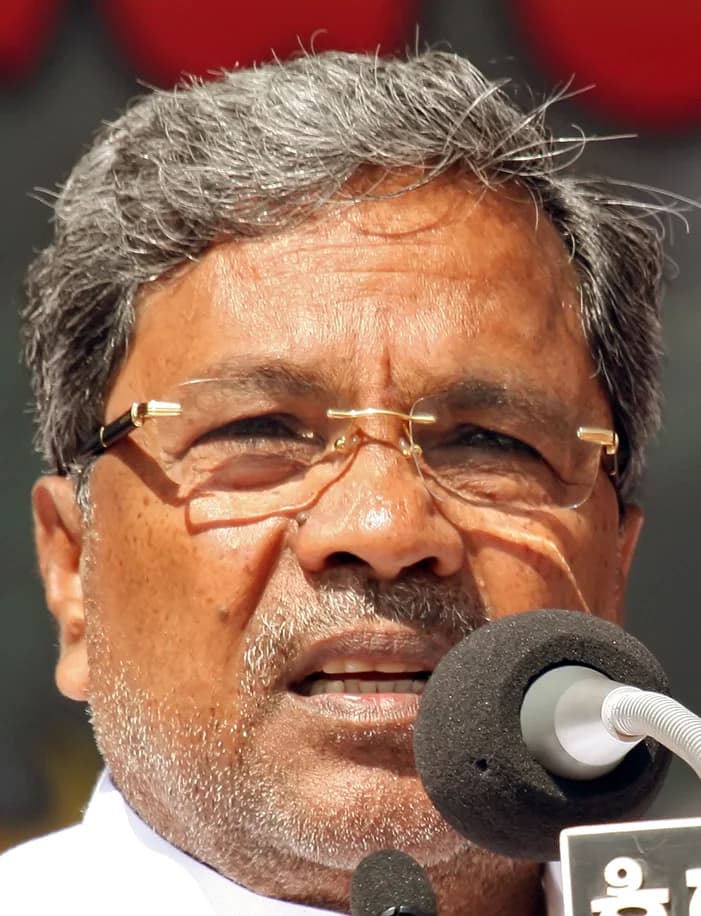
Key points from the transition:
- Siddaramaiah is reported to have submitted his resignation to the Governor's office in late May 2026.
- The move follows reported directives from the Congress high command.
- DK Shivakumar is positioned as the likely successor.
- The change aims to prepare the party for the 2028 elections.
Karnataka's political landscape shifted in late May 2026 when Chief Minister Siddaramaiah stepped down, according to reports citing party and government sources. The resignation is said to end his second term and opens a new chapter for the state Congress unit. Such transitions in a large southern state carry significance well beyond the immediate circle of legislators, touching infrastructure timelines, welfare program continuity, and investor confidence across the region. The broader implications extend to how state-level governance affects citizens, businesses, and communities that depend on consistent administrative frameworks during periods of political change.
Sequence of Events
Reports suggest Siddaramaiah informed his cabinet during a morning meeting at his residence. He is said to have cited instructions from the party leadership in Delhi. The formal resignation letter was subsequently delivered at Lok Bhavan to the special secretary, as the Governor was reportedly away at the time. Ministers present witnessed an emotional exchange, after which the group moved to discuss next steps. The procedural path that follows such a submission — acceptance by the Governor, a call to form a new government, and a legislature party meeting — is well established in Indian constitutional practice, and observers expect the sequence to proceed without significant legal complication. In Indian federalism, chief ministerial resignations are governed by established protocols that ensure orderly transitions while maintaining the continuity of state administration and legislative authority.
Reasons Behind the Decision
Internal party discussions had reportedly continued for several months. Tensions between the Chief Minister and his deputy formed one factor. Another was the widely noted need to refresh the leadership ahead of the next assembly polls. Siddaramaiah, now in his late seventies, had already become one of the longest-serving Chief Ministers in state history. In Indian state politics, such longevity is relatively rare and often generates its own internal pressures, as younger factions seek opportunities and the high command weighs electoral arithmetic for future cycles. The Congress party's central leadership has historically used chief ministerial transitions as moments to recalibrate state-level strategies and align them with national party objectives. Whether he will receive a national role, a Rajya Sabha nomination, or a central assignment remains unclear, with no confirmed announcement from the party at the time of writing. Precedent from other Congress-governed states suggests that outgoing chief ministers are sometimes offered ceremonial or advisory positions, though nothing has been confirmed in this case. Such arrangements allow senior leaders to remain engaged with party affairs while creating space for new leadership to establish its own priorities and administrative approach.
Who Will Lead Next
Deputy Chief Minister DK Shivakumar holds the strongest position among potential successors. He leads the state Congress committee and maintains wide support among Vokkaliga voters, a community with significant demographic weight in the Old Mysore region and parts of Bengaluru Rural. A legislature party meeting is expected within days to confirm the choice. Observers describe the process as coordinated, with no public opposition surfacing inside the party. In comparative terms, Congress has managed similar transitions in other states by relying on a central observer mechanism, where senior party figures from Delhi facilitate the legislature party meeting and help build consensus before a formal vote is taken. That model is widely expected to apply here as well. The role of the central observer is to ensure that the transition reflects the broader party consensus and that factional disputes do not undermine the legitimacy of the new leadership among legislators and party workers.
NRI Perspective on the Transition
Many Non-Resident Indians from Karnataka maintain business and family ties in Bengaluru and other districts. A leadership change of this scale naturally raises questions about continuity in infrastructure projects and investment policies that affect overseas professionals and returning entrepreneurs alike. Karnataka, and Bengaluru in particular, has historically attracted a disproportionate share of India's technology investment, and the state's administrative direction matters to NRIs who hold property, run companies, or plan to repatriate savings into local ventures. The state's reputation for relatively stable governance and business-friendly policies has been a significant draw for diaspora capital and talent returning from abroad.
Several NRI entrepreneurs who relocated to Karnataka in recent years have previously cited stable governance as a reason for their decisions. They are now watching closely to see whether the incoming team will maintain the same pace on airport expansion, metro extensions and startup incentives. Community groups based in the United States and the Gulf have expressed interest in continued support for welfare schemes that carried the outgoing administration's backing. For NRIs whose family members in Karnataka benefit from state-level health or housing programs, the question of whether a new chief minister will preserve, modify, or rebrand existing schemes is a practical one with direct household implications. The continuity of welfare programs is particularly important for families where elderly parents or younger siblings depend on subsidized services or direct cash transfers.
Families who send remittances for education and property purchases are also seeking reassurance that administrative processes will remain predictable during the handover period. Property registration, for instance, is a state subject in India, and any reorganization of revenue department contacts or digital portals during a cabinet reshuffle can temporarily slow processing times. The digitalization of property records in Karnataka has been an ongoing effort, and NRIs are concerned that leadership transitions might affect the pace of these modernization initiatives. Cultural institutions that receive diaspora funding represent another area of interest, as new cabinet priorities could shift departmental contacts and approval timelines. The broader community's concern, as reflected in online forums and association newsletters, is straightforward: clear communication so that long-term plans for visits, investments and philanthropy are not disrupted by the change at the top.
For NRIs with active applications or pending approvals at Karnataka state departments, monitoring official portals during the transition period is advisable. Official statements from the Karnataka Governor's office and Congress Legislature Party communications, as cited in this article, remain the most reliable sources for confirmed timelines. NRI associations that maintain formal channels with Karnataka Bhavan offices in other Indian cities may also find those contacts useful for obtaining clarifications on departmental continuity during the handover weeks. Many NRI chambers of commerce and professional associations have established protocols for engaging with state governments during periods of transition, and these networks can serve as useful conduits for information and advocacy.
Background to the Leadership Shift
Factional differences inside the Congress had surfaced repeatedly in the months leading up to the resignation. One camp drew strength from backward-class networks while the other relied on organizational reach across the state. This kind of dual-power arrangement — where the chief minister and the state party president come from different social bases — is a recurring feature of Congress governance in large states, and managing it requires sustained effort from both the state leadership and the central party apparatus. Governance challenges in Bengaluru — including persistent traffic congestion and water supply concerns — added external pressure. Opposition parties highlighted these points in public statements throughout the preceding months. Party sources describe the current change as an internal adjustment rather than a collapse of the government, emphasizing that the coalition of legislators remains intact and that no floor-crossing or defection scenario is anticipated. The stability of the legislative coalition is essential for the new chief minister to govern effectively and to avoid the kind of mid-term instability that has affected other state governments in recent years.
Timeline of Expected Actions
| Step | Expected Window | Key Participants |
|---|---|---|
| Governor accepts resignation | Within 48 hours | Governor's office |
| CLP meeting | Next 3–5 days | Congress legislators |
| Swearing-in of new CM | Within one week | New leader and cabinet |
| Possible portfolio changes | Following two weeks | New CM and high command |
Reactions Across Political Lines
Congress spokespersons framed the move as a forward-looking step. BJP leaders called it evidence of internal strain. Business groups in Bengaluru asked for a steady focus on IT corridors and ease of doing business. Public discussion on social platforms centered on whether welfare programs would continue without interruption under new leadership. Industry bodies that had previously engaged with the outgoing administration on policy consultations expressed a preference for early meetings with the incoming team to establish continuity on pending files. The business community's response to leadership transitions often reflects underlying concerns about policy consistency and the predictability of regulatory environments.
Record of the Outgoing Chief Minister
Siddaramaiah completed one full term from 2013 to 2018 and returned to the Chief Minister's office in 2023. His governments introduced several direct-benefit schemes aimed at women and lower-income households, which became central to the Congress campaign platform. These schemes, which covered areas such as free bus travel, household electricity subsidies, and monthly financial support for eligible women, were credited by party strategists with contributing to the Congress victory in the preceding assembly election. Critics pointed to delays in urban projects and questions over land allocations during his tenures. Supporters credit him with meaningfully expanding the social welfare net and sustaining a broad coalition of voters across caste and community lines. His political career, spanning several decades and multiple party affiliations before he settled with Congress, is widely regarded as one of the more consequential in Karnataka's post-independence history. The welfare schemes introduced during his administrations have become reference points in state politics and are likely to influence the policy direction of his successor.
Implications for State Administration
Officials expect routine work to continue during the handover period. Files already in process at the secretariat are unlikely to face prolonged pauses, as departments have been asked to maintain normal schedules. Departments handling revenue and health are specifically reported to be operating without interruption. In practice, Indian state administrations are staffed by a permanent civil service cadre whose work continues regardless of political transitions at the top, which provides a degree of institutional continuity that is sometimes underappreciated in public commentary. The incoming leader will ultimately decide on any immediate policy reviews or changes in departmental priorities. Cabinet composition, in particular, will signal which policy areas the new chief minister intends to emphasize in the remaining period before the next election cycle. The distribution of portfolios among cabinet ministers often reflects the political balance within the ruling coalition and the priority areas that the new leadership wishes to highlight during its tenure.
Next steps
Monitor official notifications from the Governor's office and the Karnataka Congress committee for confirmed dates and appointments. NRIs with pending state-related applications should check department portals for any temporary changes in processing contacts or timelines. Community organizations may find it useful to schedule briefings once the new cabinet composition is formally announced.
Sources
Official statements from the Karnataka Governor's office and Congress Legislature Party communications.
Related NRI Globe Coverage
- Pete Hegseth Pentagon Turmoil — Army Secretary Dan Driscoll Resigns
- Astronomer CEO Resigns After Coldplay Concert Scandal
- Linda Yaccarino Resigns as X CEO Amid Grok AI Controversy: What’s Next for the Platform?
- YouTuber Nandu's World (Rama Nandana) UK Visa & Job Fraud Case: Full Details + Key Lessons for NRIs (2026)
- US Crime News 2026 — Top Trend Categories NRIs Are Watching (Organized Retail Theft, Auto Theft, Cybercrime, Hate Crimes, Fentanyl, AI-Enabled Fraud)
- US Crime & Safety This Week — September 17-21, 2026 (NRI Family Guide, FBI Alerts, H-1B/Immigration Scams, Tech Support Fraud, Emergency Resources)
- Japan's Centenarian Population Surpasses 100,000 for the First Time in History
- Major US News This Week (September 14-15, 2026): Supreme Court Blocks Trump Mail Voting Rules, AI Debate Explodes, Space Weapons Confirmed
Fresh from NRI Globe
- Dussehra / Vijayadashami 2026 Events Country-Wise — Global NRI Directory (Ram Lila, Ravana Dahan, Durga Puja Pandals, Ayudha Puja Venues + Booking)
- Diwali 2026 Events Country-Wise — Global NRI Directory (White House, Leicester, London Trafalgar, Toronto, Auckland, Sydney Parramasala, Fiji, Mauritius, Trinidad, South Africa and More)
- Diwali / Deepavali 2026 Country-Wise NRI Celebrations — Complete Global Guide (USA, UK, Canada, Australia, Fiji, Mauritius, Trinidad, South Africa, UAE and 30+ Countries)
- Dussehra / Vijayadashami 2026 Country-Wise NRI Celebrations — USA, UK, Canada, Australia, New Zealand, UAE, Singapore, Germany, Netherlands and More