
TL;DR:
- The Kohinoor ("Mountain of Light") originated in Golconda, Andhra Pradesh, likely in the 13th–14th century, weighing 793 carats uncut.
- It passed through the Kakatiya dynasty, Delhi Sultanate, Mughal Empire, Persian and Afghan rulers, and Sikh Empire before British acquisition in 1849.
- After the Second Anglo-Sikh War, the British East India Company coerced 10-year-old Maharaja Duleep Singh to surrender it via the Treaty of Lahore.
- Recut to a smaller carat weight and housed in the Tower of London, the Kohinoor remains contested; India, Pakistan, Iran, and Afghanistan claim ownership.
- For the Indian diaspora, the diamond symbolizes both cultural pride and colonial injustice, fueling ongoing repatriation campaigns.
The Origins of the Kohinoor Diamond
The Kohinoor emerged from the Kollur Mine in the Golconda region of Andhra Pradesh, India, likely between the 13th and 14th centuries. In its uncut state, it weighed approximately 793 carats, making it one of the largest diamonds ever discovered. Golconda was renowned globally for producing exceptional diamonds; the region supplied gemstones to emperors and merchants across Asia, the Middle East, and eventually Europe.
Ancient Hindu texts link the Kohinoor to the Syamantaka jewel, a divine gift from the sun god Surya mentioned in the Bhagavata Purana. While these mythological connections add spiritual resonance for Indian communities, the diamond's documented history begins in the 16th century. For NRIs, the Kohinoor represents tangible proof of India's pre-colonial technological and geological sophistication.
The Golconda mines were operational for centuries and produced diamonds of exceptional clarity and size. By the time European traders arrived in India, Golconda diamonds were already legendary. The Kohinoor's origin story—rooted in Indian soil and Indian craftsmanship—forms the foundation of the repatriation argument that resonates across diaspora communities today.
Early History: From Kakatiyas to the Delhi Sultanate
The Kohinoor's earliest documented ownership traces to the Kakatiya dynasty, which ruled parts of modern-day Andhra Pradesh and Telangana from the 12th to 14th centuries. Historical records suggest the diamond was enshrined in a Hindu temple, likely as the eye of a deity statue, reflecting its spiritual significance in Indian religious practice. The Kakatiyas were patrons of the arts and architecture, and the diamond would have been displayed as a symbol of dynastic power.
In 1310, Alauddin Khilji of the Delhi Sultanate launched a military campaign against Warangal, the Kakatiya capital. His general, Malik Kafur, is credited with acquiring the Kohinoor among other treasures during this raid. The diamond then circulated through successive Delhi Sultanate rulers—a period of roughly 200 years during which it became embedded in Indo-Islamic court culture. This transition marks the diamond's shift from Hindu temple to Islamic sultanate, illustrating India's complex religious and political history.
For NRIs, particularly those interested in pre-Mughal Indian history, this period underscores the Kohinoor's deep roots in India's medieval kingdoms. The diamond survived multiple conquests, wars, and dynastic changes while remaining within the Indian subcontinent—a testament to its symbolic importance across religious and cultural boundaries.
The Mughal Empire: A Jewel of Power
The Kohinoor gained its greatest prominence during the Mughal Empire. Babur, the founder, acquired it after defeating Ibrahim Lodi at the Battle of Panipat in 1526. Babur's memoirs, the Baburnama, describe a massive diamond weighing approximately 186 old carats (roughly equivalent to modern carats), which scholars identify as likely the Kohinoor. This written record provides the first authenticated historical documentation of the stone's ownership and value.
Under Emperor Shah Jahan in 1628, the Kohinoor was set into the legendary Peacock Throne (Takht-e-Tavoos), a masterpiece of Mughal craftsmanship that showcased India's wealth and artistic achievement. The throne featured inlaid precious stones, enamel work, and gold filigree—a symbol of Mughal imperial power. The Kohinoor remained with the Mughals until 1739, when Persian ruler Nader Shah invaded Delhi, looted the throne, and reportedly named the gem "Koh-i-Noor" (Mountain of Light) for its exceptional brilliance.
This Mughal era represents the diamond's most celebrated period in Indian history. For diaspora members, the Peacock Throne connection elevates the Kohinoor beyond a mere gemstone into a symbol of India's architectural and cultural contributions to world civilization. The recut and repolished stone that Nader Shah encountered would have been even more brilliant than its original form—a testament to Mughal lapidary expertise.
Persian and Afghan Rule: A Shifting Legacy
Following Nader Shah's assassination in 1747, the Kohinoor passed through his heirs until his grandson gifted it to Ahmad Shah Durrani, founder of the Afghan Empire, as payment for military support. The diamond remained with the Durrani dynasty for nearly 70 years. In 1813, Shah Shuja Durrani, facing political exile, presented the Kohinoor to Maharaja Ranjit Singh, the Sikh Empire's founder, in gratitude for military sanctuary in Punjab.
Ranjit Singh, known as the "Lion of Punjab," treasured the Kohinoor and wore it during major festivals including Diwali and Dussehra. Historical accounts describe him displaying the diamond at state occasions, reinforcing Sikh sovereignty and prestige. For NRIs with Punjabi heritage, this period represents a golden age of Sikh political power and cultural pride. The diamond became intertwined with Sikh identity and the Khalsa's martial legacy.
After Ranjit Singh's death in 1839, the Sikh Empire rapidly declined due to internal succession disputes and external British pressure. The Kohinoor, held by the young Maharaja Duleep Singh, became a prize coveted by the expanding British East India Company. This period of transition set the stage for what many view as the diamond's unlawful seizure.
British Acquisition: A Controversial Chapter
In 1849, following the Second Anglo-Sikh War, the British East India Company annexed Punjab and demanded the Kohinoor as a war indemnity. The 10-year-old Maharaja Duleep Singh, under duress and without meaningful consent, was coerced into signing the Treaty of Lahore, which formally surrendered the diamond to Queen Victoria. For the Indian diaspora, this moment encapsulates colonial exploitation—a child forced to relinquish his nation's most precious heritage.
The Kohinoor was shipped to England in 1850 and displayed at the Great Exhibition of 1851 in London's Crystal Palace. However, Victorian observers found the Mughal cut disappointing by contemporary standards. Prince Albert, Queen Victoria's consort, commissioned a recut into an oval brilliant shape. Historical sources indicate the recut significantly reduced the diamond's weight while enhancing its sparkle and brilliance by contemporary standards. However, the alteration sparked criticism from historians and gemologists who viewed it as the destruction of a historical artifact.
The acquisition and subsequent recut remain deeply controversial among historians and cultural heritage advocates. NRIs frequently cite this episode as emblematic of colonial disregard for non-Western cultural patrimony. The treaty itself is contested—legal scholars debate whether a child's signature, obtained under military occupation, constitutes valid consent under international law and ethical standards of the period.
The Kohinoor in the British Crown Jewels
Since 1851, the Kohinoor has been housed in the Tower of London as part of the British Crown Jewels. It was worn by Queen Victoria as a brooch and later incorporated into the crowns of Queen Alexandra (1902), Queen Mary (1911), and Queen Elizabeth The Queen Mother (1937). A persistent legend—rooted in Hindu and Islamic traditions—claims the diamond curses its male owners, leading the British royal family to restrict its use to female royals exclusively.
The Tower of London receives approximately 2.8 million visitors annually, making the Kohinoor one of the world's most viewed diamonds. Its presence in the Crown Jewels symbolizes British imperial history and cultural authority. For NRIGlobe.com readers, however, the Kohinoor's display represents a contested artifact—a piece of India's heritage displayed as a trophy of empire.
The diamond's absence from recent coronation ceremonies has been noted by observers and commentators. While official explanations for such decisions remain limited, the omission reflects broader sensitivity to repatriation demands and postcolonial politics. This evolving approach underscores the Kohinoor's status as more than an unquestioned crown jewel—it has become a source of diplomatic tension between the UK and India, with implications for how Western institutions approach contested cultural artifacts.
Myths and Mystique of the Kohinoor
The Kohinoor is layered with mythology that extends far beyond gemological facts. Hindu texts connect it to the Syamantaka jewel, described in the Bhagavata Purana as a divine gem that grants prosperity and protection. Islamic and Persian traditions speak of the diamond's power to grant dominion to its rightful owner. The aphorism "whoever owns the Kohinoor rules the world" has circulated for centuries, adding mystique to its political and military history.
The curse legend—that male owners suffer misfortune—gained traction after Nader Shah's violent death and Duleep Singh's exile and poverty in later life. While these are historical coincidences rather than supernatural causation, the belief persists in Indian, Persian, and Afghan folklore. For diaspora communities, these myths connect the diamond to India's spiritual traditions and cosmology, making it a symbol of cultural continuity beyond mere material value.
These narratives serve a psychological function: they frame the Kohinoor not as a British possession but as an entity with its own agency and destiny, bound to India by spiritual and historical forces. For NRIs engaged in repatriation advocacy, the mythology reinforces the argument that the diamond belongs in India, where its cultural meaning is rooted in centuries of tradition and belief.
Repatriation Debate: A Call for Justice
The Kohinoor remains the focal point of international restitution debates. India's government has formally requested its return multiple times, most prominently during the 2010 Commonwealth Games and again in 2016. Pakistan, Iran, and Afghanistan have also asserted claims based on historical ownership during their respective periods of control. The British Museum Act of 1963 legally prohibits the British Museum from deaccessioning items, and the British government has extended this principle to the Crown Jewels, effectively blocking repatriation through legal channels.
The Indian diaspora views the Kohinoor's retention as emblematic of broader colonial injustice and the West's refusal to acknowledge historical wrongs. Organizations like the India Culture Forum and various NRI advocacy groups have launched campaigns demanding repatriation. The debate intersects with broader conversations about cultural patrimony, the ethics of museum collections, and postcolonial justice. Legal scholars argue that the Treaty of Lahore—signed by a child under military occupation—lacks moral and legal validity under contemporary international standards.
For NRIGlobe.com's audience, the repatriation debate is more than academic: it represents a rallying point for diaspora identity and an assertion of India's right to its own heritage. The growing international support for repatriation claims across multiple continents suggests the political landscape may be shifting, though no concrete movement toward return has materialized to date. The Kohinoor has become symbolic of broader questions about how nations address historical injustices and reclaim cultural patrimony.
The Kohinoor's Physical Characteristics and Valuation
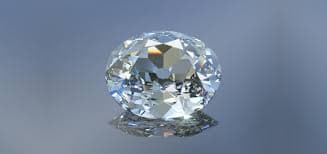
The Kohinoor, as currently cut and displayed, is an oval brilliant-cut diamond measuring 36.00 × 31.90 × 13.04 millimeters. Its color is classified as colorless, and its clarity is exceptional. The stone features 66 facets and exhibits a distinctive optical phenomenon—a "black hole" effect at its center when viewed from certain angles, caused by the depth of the cut and the stone's internal light refraction.
Valuations of the Kohinoor vary widely among gemologists and appraisers. Most published estimates place its monetary value in the range of several hundred million dollars, though precise figures are speculative because the diamond has never been sold on the open market. Its cultural, historical, and symbolic value to India and the Indian diaspora is incalculable—it represents centuries of Indian sovereignty, craftsmanship, and heritage. The Tower of London and Royal Collection Trust maintain the diamond as part of the Crown Jewels, and its insurance and valuation records remain confidential.
As a Golconda diamond, the Kohinoor belongs to a rare category of stones prized by collectors for their exceptional clarity and the historical significance of their origin. Modern gemological analysis confirms its authenticity and quality, placing it among the world's most important diamonds alongside the Hope Diamond and the Pink Star. Its rarity and provenance make it irreplaceable from both scientific and cultural perspectives.
The Kohinoor in Popular Culture and Modern Media
The Kohinoor has inspired numerous works of fiction, film, and television, keeping its story alive in global consciousness. George MacDonald Fraser's novel Flashman and the Mountain of Light (1990) dramatized the diamond's role during the Sikh Wars. The Indian television series Kohinoor (2005) aired on Doordarshan, bringing the diamond's history to Indian audiences. The Bollywood film Bang Bang! (2014) featured the Kohinoor as a central plot device, blending action and historical intrigue.
The Assassin's Creed video game franchise incorporated the Kohinoor as a mythical artifact with supernatural properties, introducing the diamond to millions of global gamers. These portrayals, while often historically inaccurate, serve to maintain the Kohinoor's cultural relevance and mystique. For NRIs, particularly younger diaspora members, these media representations reinforce the diamond's importance as a symbol of Indian heritage and identity.
The Kohinoor's presence in popular culture ensures that even those unfamiliar with its actual history recognize it as emblematic of India's past. This cultural resonance strengthens diaspora engagement with repatriation campaigns and broader conversations about cultural justice. The diamond's narrative—spanning continents, empires, and centuries—continues to captivate audiences and fuel discussions about ownership, heritage, and historical accountability.
Next Steps
For NRIs interested in the Kohinoor's story, several avenues for engagement exist. Visit the Tower of London's official website to view current information about the Crown Jewels and the diamond's display. Support organizations advocating for cultural repatriation, such as the India Culture Forum or academic initiatives focused on postcolonial heritage justice. Engage in informed discussions within diaspora communities about what repatriation would mean for India's cultural identity and global standing.
Consider exploring related topics: the history of the Peacock Throne, the Sikh Empire's contributions to Indian culture, the ethics of museum collections, and the broader movement for restitution of colonially acquired artifacts. The Kohinoor's story is ultimately India's story—one of sophistication, resilience, loss, and the ongoing quest for justice and recognition.
Sources
- Royal Collection Trust – Official Repository of British Crown Jewels Documentation
- Historic Royal Palaces – Tower of London Official Site
- Britannica Encyclopedia – Kohinoor Diamond Entry
- BBC News – Historical and Contemporary Coverage of Kohinoor Repatriation Debates
- The Hindu – Indian Newspaper Coverage of Kohinoor and Cultural Heritage Issues