
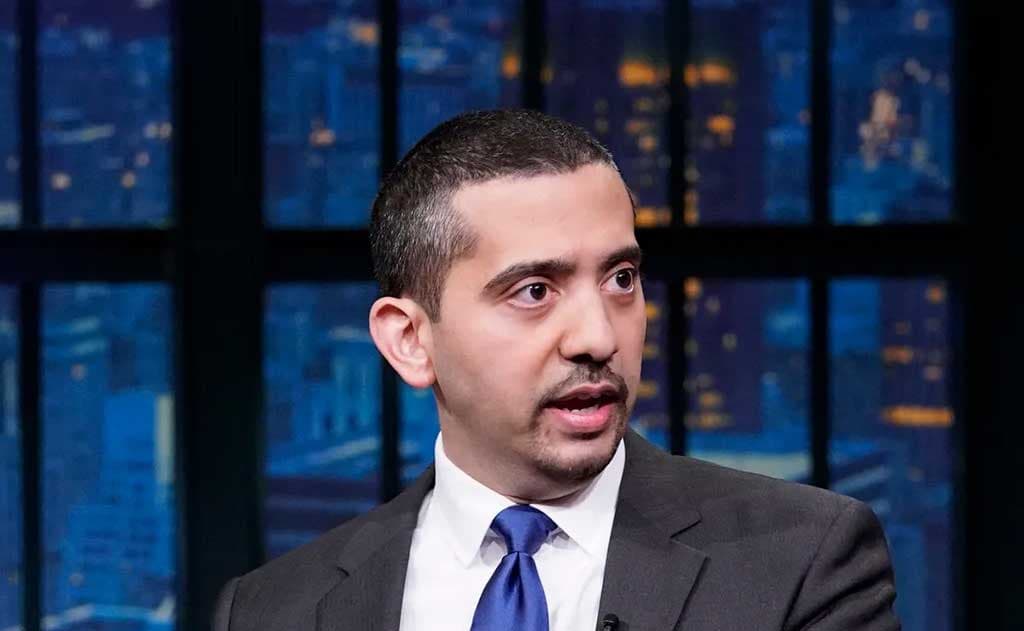
In a fiery critique that has ignited fierce debate, journalist Mehdi Hasan has accused Western powers—particularly the United States, the United Kingdom, and their allies—of systematically dismantling the pillars of international law to protect Israel. Speaking on August 7, 2025, during a podcast episode of We're Not Kidding on the Zeteo platform, Hasan declared that the UN Security Council, the Geneva Conventions, the International Court of Justice (ICJ), and the International Criminal Court (ICC) have been "burned down" by Western states to shield Israel from accountability. His remarks, rooted in the ongoing Israel-Palestine conflict, have sparked a firestorm on social media and drawn sharp responses from critics and supporters alike. For NRIGlobe.com readers, here's the full story behind Hasan's provocative claims, the context fueling his outrage, and the global implications of his accusations.
Hasan's Bombshell: A "Burned Down" Global Order
Mehdi Hasan, a prominent journalist known for his incisive commentary on MSNBC and Al Jazeera, didn't mince words in his latest critique. "The West has burned down the UN Security Council, the Geneva Conventions, the ICJ, and the ICC to protect Israel," he stated, his voice brimming with frustration. Hasan argued that these institutions, designed to uphold international law and human rights, have been undermined by Western governments through vetoes, diplomatic pressure, and selective enforcement—all to insulate Israel from scrutiny over its actions in Gaza and the occupied Palestinian territories.
The accusations come amid heightened tensions in the Israel-Palestine conflict, particularly following the escalation of violence in Gaza since October 2023. Hasan pointed to specific examples: the U.S. repeatedly vetoing UN Security Council resolutions calling for ceasefires in Gaza, Western leaders dismissing ICJ rulings on Israel's occupation, and attempts to discredit ICC investigations into alleged war crimes. "These are the guardrails of the international system," Hasan said, "and they've been torched to give Israel a free pass."
The Context: Israel, Gaza, and International Law
Hasan's claims are grounded in a series of contentious developments. Since the Hamas-led attack on Israel on October 7, 2023, which killed 1,139 people and saw 251 hostages taken, Israel's military response in Gaza has drawn global condemnation. According to Gaza health officials, over 40,000 Palestinians have been killed, with millions displaced and infrastructure decimated. The conflict has spotlighted international institutions' roles—or lack thereof—in addressing the crisis.
- UN Security Council: The U.S., a permanent member with veto power, has blocked multiple resolutions calling for an immediate ceasefire, arguing they fail to condemn Hamas sufficiently. In March 2024, the U.S. vetoed a resolution supported by 13 of the 15 Council members, prompting accusations of bias. Hasan argued this renders the Security Council "toothless" when it comes to Israel.
- Geneva Conventions: These treaties, which govern the conduct of war, have been invoked to criticize Israel's actions in Gaza, including alleged targeting of civilians and infrastructure. Hasan cited reports of Israel's use of white phosphorus and starvation tactics, which critics say violate the Conventions. Western governments, he claimed, have downplayed these allegations to avoid confronting Israel.
- International Court of Justice (ICJ): In July 2024, the ICJ issued a landmark advisory opinion declaring Israel's occupation of Palestinian territories since 1967 unlawful and calling for its end. Western leaders, including U.S. officials, dismissed the ruling as non-binding, with some calling it "anti-Israel." Hasan argued this selective rejection undermines the ICJ's authority.
- International Criminal Court (ICC): The ICC's 2024 issuance of arrest warrants for Israeli Prime Minister Benjamin Netanyahu and Defense Minister Yoav Gallant for alleged war crimes in Gaza sparked outrage among Western allies. The U.S. and UK condemned the move, with some lawmakers threatening sanctions against the ICC. Hasan called this "bullying" a direct attack on the court's independence.
The Social Media Storm
Hasan's remarks exploded on platforms like X, where clips of his podcast went viral. Supporters praised his candor, with one user posting, "Mehdi's right—the West picks and chooses when international law applies. Israel gets a blank check." Another wrote, "The UN, ICJ, ICC—all neutered when it comes to Israel. Hasan's just saying what we all see." Critics, however, accused him of oversimplification. "Hasan ignores Hamas's role and the complexity of the conflict," one X post read. "The West isn't burning anything—it's navigating a mess." Others labeled his rhetoric "inflammatory," arguing it fuels anti-Western sentiment.
The debate reflects broader polarization. Pro-Palestinian activists on X echoed Hasan's frustration, pointing to the U.S.'s $3.8 billion annual military aid to Israel as evidence of bias. Pro-Israel voices countered that the UN and ICC have an "anti-Israel agenda," citing resolutions disproportionately targeting Israel. The clash underscores the challenge of discussing the conflict without igniting accusations of bias or hypocrisy.
The Broader Implications
Hasan's accusations tap into a deeper crisis of confidence in the global order. The UN Security Council's paralysis, driven by U.S. and Russian vetoes, has long frustrated smaller nations. The ICJ and ICC, meant to ensure accountability, face criticism for selective enforcement—Russia and Sudan face scrutiny, but Western allies often escape. Hasan argued that this double standard erodes trust in these institutions, particularly in the Global South, where many see the West as prioritizing geopolitical interests over justice.
The Israel-Palestine conflict is a flashpoint. South Africa's 2024 ICJ case accusing Israel of genocide in Gaza, supported by several nations, highlighted the divide. Western governments' tepid responses—contrasted with their swift condemnation of Russia's actions in Ukraine—fueled perceptions of hypocrisy. Hasan's critique resonates with those who see a pattern: powerful nations bending international law to suit their allies.
Hasan's Track Record and Credibility
Mehdi Hasan, a British-American journalist, has built a reputation for provocative yet meticulously argued commentary. His work at MSNBC, Al Jazeera, and now Zeteo has made him a polarizing figure—admired for his clarity, criticized for his confrontational style. His 2023 departure from MSNBC, amid rumors of cancellation over his pro-Palestinian views, added fuel to his narrative of Western media bias. In his podcast, Hasan doubled down, citing his own experiences: "I've seen how the system silences critics of Israel, from journalists to politicians."
What's Next?
Hasan's remarks have reignited calls for reforming global institutions. Some propose expanding the UN Security Council to dilute veto power, while others advocate stronger enforcement of ICJ and ICC rulings. For now, the Israel-Palestine conflict remains a litmus test for international law's efficacy. With Gaza's humanitarian crisis worsening—UNICEF reported 17,000 unaccompanied children in Gaza as of August 2025—the pressure on Western governments to act is mounting.
Hasan's critique is a challenge to the status quo, but it's not without risks. By framing the West as the sole culprit, he risks oversimplifying a complex issue, where Hamas's actions and regional dynamics also play a role. Yet his core question—can international law be applied consistently?—resonates globally.
Join the Conversation
Mehdi Hasan's bold claims have sparked a necessary debate about power, accountability, and the future of international law. Do you agree that Western states have undermined global institutions to protect Israel, or is the issue more nuanced? Share this story on X, Facebook, or Instagram and join the discussion. Tag @NRIGlobe and use #GlobalJustice to share your take. Stay tuned to NRIGlobe.com for the latest on geopolitics, human rights, and the stories shaping our world.
Further reading: See the International Court of Justice and International Criminal Court for primary references on these institutions.
Related NRI Globe Coverage
- Trump’s Explosive Claim: 5 Jets Downed in India-Pakistan War – PM Modi Must Address the Truth
- Donald Trump Deadline Nears as US–Israel Strike Iran
- Thousands Dead, Millions Displaced: The Human Toll of the 2026 US-Israel War on Iran as Infrastructure Threats Escalate
- Mojtaba Khamenei Named New Supreme Leader of Iran After Father's Death in US-Israel Strikes
- Analysis: How the US-Israel Strikes on Iran Could Impact NRIs – Economic, Security, and Personal Ramifications
- Impact Analysis: How the US-Israel Strikes on Iran Are Driving Gold and Silver Prices – What NRIs Need to Know
- Top US News January 2026: Politics, Storms & Society
- India–Venezuela Oil Deal? Trump Says “We’ve Made That Deal”
Fresh from NRI Globe
- YouTuber Nandu's World (Rama Nandana) UK Visa & Job Fraud Case: Full Details + Key Lessons for NRIs (2026)
- Dussehra / Vijayadashami 2026 Events Country-Wise — Global NRI Directory (Ram Lila, Ravana Dahan, Durga Puja Pandals, Ayudha Puja Venues + Booking)
- Diwali 2026 Events Country-Wise — Global NRI Directory (White House, Leicester, London Trafalgar, Toronto, Auckland, Sydney Parramasala, Fiji, Mauritius, Trinidad, South Africa and More)
- Diwali / Deepavali 2026 Country-Wise NRI Celebrations — Complete Global Guide (USA, UK, Canada, Australia, Fiji, Mauritius, Trinidad, South Africa, UAE and 30+ Countries)