
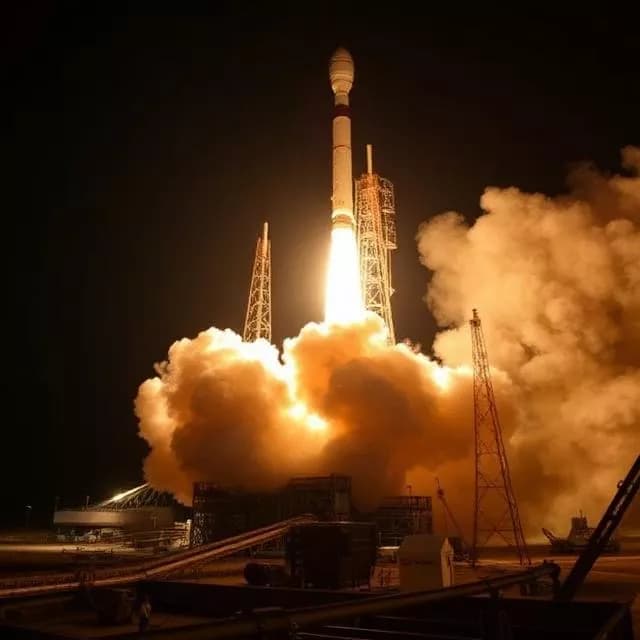
NISAR Satellite Launch Preparation: A Milestone in India-US Space Collaboration
In a landmark achievement for global space exploration, the NASA-ISRO Synthetic Aperture Radar (NISAR) satellite is poised for launch on July 30, 2025, at 5:40 PM IST from the Satish Dhawan Space Centre (SDSC SHAR) in Sriharikota, India. This $1.5 billion mission, a joint venture between the Indian Space Research Organisation (ISRO) and the National Aeronautics and Space Administration (NASA), represents a groundbreaking collaboration between two of the world’s leading space agencies. Equipped with cutting-edge dual-band Synthetic Aperture Radar (SAR) technology, NISAR is set to revolutionize Earth observation, offering unprecedented insights into climate change, agriculture, and disaster management.
A Pioneering Mission with Dual-Frequency Radar
The NISAR satellite, weighing approximately 2,392 kg, is the first of its kind to employ dual-frequency Synthetic Aperture Radar, combining NASA’s L-band and ISRO’s S-band radar systems. This innovative technology, mounted on ISRO’s modified I3K satellite bus, enables NISAR to penetrate clouds and darkness, providing all-weather, day-and-night imaging with a resolution of 5 to 10 meters. The satellite’s massive 12-meter unfurlable mesh antenna, supplied by Astro Aerospace, enhances its ability to collect high-quality data across a 242 km swath, scanning nearly all of Earth’s land and ice surfaces every 12 days.
Unlike traditional optical satellites that rely on sunlight and clear skies, NISAR’s radar capabilities allow it to monitor Earth’s surface under any conditions. This makes it an invaluable tool for observing complex natural processes, including ground deformation, ice sheet dynamics, and vegetation changes. By detecting movements as small as a few centimeters, NISAR will provide critical data for tracking earthquakes, landslides, volcanic activity, and glacier melt, while also supporting sustainable agriculture and resource management.
A Decade of Collaboration
The NISAR mission, initiated under a bilateral agreement signed in 2014, is the culmination of over a decade of collaboration between ISRO and NASA’s Jet Propulsion Laboratory (JPL). ISRO has contributed the S-band radar, the satellite bus, and the Geosynchronous Satellite Launch Vehicle (GSLV-F16), which will propel NISAR into a 743 km Sun-synchronous orbit with an inclination of 98.4 degrees. NASA has provided the L-band radar, GPS receivers, a high-capacity solid-state recorder, and a payload data subsystem. This synergy of expertise has created a satellite that is not only a technological marvel but also a symbol of strengthened India-US relations.
The journey to launch has not been without challenges. Originally scheduled for March 2024, the mission was delayed due to concerns about the radar antenna reflector’s performance under high temperatures. The reflector was returned to JPL in California for a reflective coating to mitigate overheating risks. By October 2024, the antenna was transported via NASA’s C-130 cargo plane to ISRO’s Satellite Integration and Testing Establishment in Bengaluru, where it underwent rigorous testing. By late January 2025, NISAR was fully integrated and ready for shipment to Sriharikota, marking a significant milestone in its preparation.
Transforming Earth Observation
NISAR’s primary mission is to provide consistent, high-resolution data to advance our understanding of Earth’s dynamic systems. Its key objectives include:
- Disaster Management: NISAR’s ability to detect centimeter-scale ground deformations will enhance monitoring of earthquakes, tsunamis, volcanoes, and landslides, enabling faster response times and better risk assessments. Its all-weather imaging will support real-time disaster response for events like floods, cyclones, and wildfires.
- Climate Change Research: By tracking ice sheet movements, glacier retreat, and sea level rise, NISAR will provide critical data for climate models. Its observations of polar regions, including Antarctica and the Arctic, will deepen our understanding of how ice masses impact global climate.
- Agriculture and Resource Management: NISAR will monitor soil moisture, crop growth, and vegetation dynamics, offering valuable insights for farmers to optimize irrigation and improve food security. It will also track changes in forests, wetlands, and coastal ecosystems, supporting sustainable resource planning.
- Infrastructure Monitoring: The satellite’s precise measurements will help assess the stability of dams, levees, and urban infrastructure, aiding in urban planning and disaster preparedness.
With an open data policy, NISAR’s 85 terabytes of daily data will be freely accessible to researchers, governments, and organizations worldwide, fostering global collaboration in addressing environmental and societal challenges.
Strengthening India’s Role in Global Space Exploration
For India, NISAR represents a significant leap in its space technology capabilities. The mission enhances India’s expertise in radar-based Earth observation and strengthens its disaster management framework, particularly in vulnerable regions like the Himalayas. ISRO’s Space Applications Centre in Ahmedabad has also engaged with private startups to explore commercial applications of NISAR’s data, paving the way for innovations in agriculture, urbanization, and climate sensing.
The launch of NISAR aboard the GSLV-F16, a reliable three-stage rocket with a proven track record, underscores ISRO’s growing prowess in space exploration. The mission builds on India’s legacy of successful programs like Chandrayaan-1 and the recent Axiom-4 mission, which saw Indian astronauts collaborate with NASA aboard the International Space Station.
A Global Impact Awaits
As the launch date approaches, excitement is building among scientists, policymakers, and the global space community. NISAR’s ability to “see” Earth’s surface in unprecedented detail will transform our understanding of natural processes and human-induced changes. From aiding farmers in optimizing crop yields to providing real-time data for disaster response, NISAR’s applications are vast and far-reaching.
The mission has already garnered significant attention, with posts on X highlighting its potential to empower farmers, scientists, and disaster responders. The collaborative spirit of NISAR, as noted by ISRO and NASA, reflects a shared commitment to using space technology for the betterment of humanity.
A New Era of Earth Observation
The NISAR satellite launch on July 30, 2025, marks a historic moment in India-US space collaboration and a new chapter in Earth observation. By combining cutting-edge technology with a shared vision for global good, NISAR will provide a powerful new perspective on our planet’s changing landscapes. As the GSLV-F16 prepares to lift off from Sriharikota, the world awaits the transformative insights that NISAR will deliver, from climate change research to disaster resilience and beyond.
Published on July 25, 2025, by nriglobe.com
Related NRI Globe Coverage
- America Returns to the Moon: NASA's Artemis II Launch Window Opens February 6, 2026 – A Milestone for Global Indians & NRIs
- Major US News This Week (September 14-15, 2026): Supreme Court Blocks Trump Mail Voting Rules, AI Debate Explodes, Space Weapons Confirmed
- Canada News This Week: April 2026 – Pride in Space, Political Pressure at Home, and Global Ripples from the Iran Conflict
- Apple Pay Finally Coming to India: What NRIs Need to Know About the 2026 Launch
- Trump-Musk Feud Ignites: Tesla Subsidies Slashed, America Party Launch
- YouTuber Nandu's World (Rama Nandana) UK Visa & Job Fraud Case: Full Details + Key Lessons for NRIs (2026)
- US Crime News 2026 — Top Trend Categories NRIs Are Watching (Organized Retail Theft, Auto Theft, Cybercrime, Hate Crimes, Fentanyl, AI-Enabled Fraud)
- US Crime & Safety This Week — September 17-21, 2026 (NRI Family Guide, FBI Alerts, H-1B/Immigration Scams, Tech Support Fraud, Emergency Resources)
Fresh from NRI Globe
- Dussehra / Vijayadashami 2026 Events Country-Wise — Global NRI Directory (Ram Lila, Ravana Dahan, Durga Puja Pandals, Ayudha Puja Venues + Booking)
- Diwali 2026 Events Country-Wise — Global NRI Directory (White House, Leicester, London Trafalgar, Toronto, Auckland, Sydney Parramasala, Fiji, Mauritius, Trinidad, South Africa and More)
- Diwali / Deepavali 2026 Country-Wise NRI Celebrations — Complete Global Guide (USA, UK, Canada, Australia, Fiji, Mauritius, Trinidad, South Africa, UAE and 30+ Countries)
- Dussehra / Vijayadashami 2026 Country-Wise NRI Celebrations — USA, UK, Canada, Australia, New Zealand, UAE, Singapore, Germany, Netherlands and More