
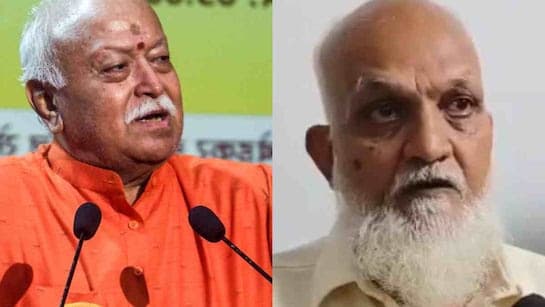
Retired ATS Officer's Bombshell: Was RSS Chief Targeted in Malegaon Blast Case?
New York, August 1, 2025 — For Non-Resident Indians (NRIs) watching India's political landscape from afar, the latest revelation from retired Anti-Terrorism Squad (ATS) officer Mehboob Mujhawar hits like a thunderbolt. In an explosive claim, Mujhawar alleges he was pressured to arrest Rashtriya Swayamsevak Sangh (RSS) chief Mohan Bhagwat in the 2008 Malegaon blast case and to spin it with a "saffron terror" narrative. For the global Indian diaspora, this story stirs questions about political agendas, the integrity of India's institutions, and the treatment of Hindu organizations back home.
The Malegaon blast, a tragic event on September 29, 2008, in Maharashtra's Nashik district, claimed six lives and left over 100 injured. For NRIs, many of whom followed the news with concern, the case became a lightning rod for controversy when the term "saffron terror" emerged, suggesting Hindu nationalist groups were behind the attack. Now, Mujhawar's claims, shared in an exclusive interview with NRIGlobe, peel back layers of intrigue, hinting at a possible conspiracy to tarnish India's cultural giants like the RSS.
Mujhawar, a seasoned officer who served during the ATS's investigation, dropped a bombshell: he was allegedly ordered to implicate Mohan Bhagwat, the revered Sarsanghchalak of the RSS, despite no evidence tying him to the blast. "It wasn't just about arrests; they wanted a story—a 'saffron terror' label to stick," Mujhawar told NRIGlobe. "I was stunned. As an officer, I swore to uphold justice, not to fabricate cases for political gain." His refusal to comply, he says, stemmed from a deep sense of duty, a sentiment that resonates with NRIs who value India's democratic principles from thousands of miles away.
For the diaspora, the RSS holds a complex place—often seen as a cultural anchor promoting Hindu values, yet frequently misunderstood or vilified in global media. Mujhawar's allegations suggest a deliberate attempt to smear the organization. "The pressure came from higher-ups, with clear political motives," he revealed. "The goal was to paint Hindu nationalism as terrorism, to weaken groups like the RSS that millions, including NRIs, look to for cultural pride."
The Malegaon case has long been a puzzle. Initially, the ATS targeted Hindu groups, arresting individuals like Sadhvi Pragya Thakur. But when the National Investigation Agency (NIA) took over, it challenged the "saffron terror" narrative, dropping charges against some accused for lack of evidence. For NRIs, who often rely on fragmented news from India, Mujhawar's claims rekindle memories of those turbulent years when headlines screamed of "Hindu terror," leaving many feeling alienated or defensive about their heritage.
From the bustling streets of New Jersey to the quiet suburbs of Melbourne, NRIs are buzzing about what this means. "It's disturbing," says Priya Sharma, a software engineer in Toronto. "We're proud of India's diversity, but targeting cultural organizations like the RSS feels like an attack on our identity. If Mujhawar's claims are true, it's a betrayal of India's values." Others, like Rajesh Patel in Dubai, urge caution: "We need proof. But if political games were played, it hurts India's image abroad."
The RSS, through spokesperson Sunil Ambekar, responded strongly: "These revelations confirm what we've said for years—baseless attempts to malign us won't succeed. The RSS remains committed to India's unity." BJP leaders, too, are demanding a probe. "This is a grave misuse of power," said Maharashtra's Devendra Fadnavis. "The truth must come out." Opposition parties, however, are skeptical, with some calling it a distraction from current issues.
Mujhawar, now retired and living quietly, says he spoke out to clear his conscience. "I saw an injustice, and as an Indian, I couldn't stay silent," he said. His words strike a chord with NRIs who often grapple with how to defend India's image while acknowledging its flaws. The Malegaon case, still winding through courts, remains a flashpoint, and Mujhawar's story adds fuel to an already fiery debate.
For the NRI community, this saga is more than a news story—it's a reminder of the complexities of India's political and cultural battles. As they navigate life abroad, many wonder: was the "saffron terror" narrative a genuine probe or a calculated move to divide? Mujhawar's claims, whether proven or not, ensure this question will linger in diaspora WhatsApp groups and community halls worldwide.
NRIGlobe reached out to the Ministry of External Affairs and India's Home Ministry for comment but received no response by press time. Stay tuned as we follow this unfolding story.
Related NRI Globe Coverage
- RSS Chief Mohan Bhagwat Champions Unity and Coexistence in India
- YouTuber Nandu's World (Rama Nandana) UK Visa & Job Fraud Case: Full Details + Key Lessons for NRIs (2026)
- Telugu-Origin Men Sampath Rajidi and Sreedhar Mada Plead Guilty in Major H-1B Visa Fraud Case in California – “Dollar Dream” Turns Sour
- Tragic NRI Crime Story: Indian Hindu H-1B Techie Shankar Nagappa Hangud Sentenced to Life Without Parole for Murdering Wife and Three Children in California
- Big Breaking News: TVK Chief Vijay's Wife Sangeetha Sornalingam Files Divorce Petition, Alleges Extramarital Affair with Actress
- Celebrity Deaths and Case Revivals: Michael Reagan’s Passing
- Canada Express Entry 2026: New Physician Category and Targeted Draws for Skilled NRIs
- Trump Fires Labor Chief After Disappointing July Jobs Report: Economic and Political Fallout
Fresh from NRI Globe
- Dussehra / Vijayadashami 2026 Events Country-Wise — Global NRI Directory (Ram Lila, Ravana Dahan, Durga Puja Pandals, Ayudha Puja Venues + Booking)
- Diwali 2026 Events Country-Wise — Global NRI Directory (White House, Leicester, London Trafalgar, Toronto, Auckland, Sydney Parramasala, Fiji, Mauritius, Trinidad, South Africa and More)
- Diwali / Deepavali 2026 Country-Wise NRI Celebrations — Complete Global Guide (USA, UK, Canada, Australia, Fiji, Mauritius, Trinidad, South Africa, UAE and 30+ Countries)
- Dussehra / Vijayadashami 2026 Country-Wise NRI Celebrations — USA, UK, Canada, Australia, New Zealand, UAE, Singapore, Germany, Netherlands and More