
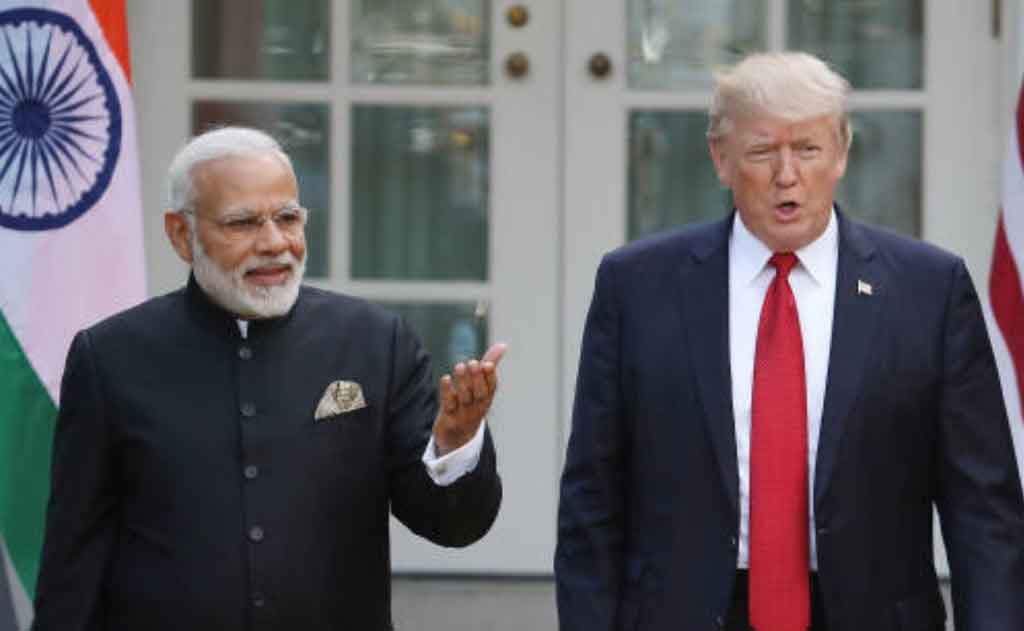
In a significant development highlighting the growing strain in U.S.-India relations, reports from both the German newspaper Frankfurter Allgemeine Zeitung (FAZ) and The New York Times (NYT) indicate that U.S. President Donald Trump attempted to contact Indian Prime Minister Narendra Modi multiple times in recent weeks, only to be met with refusal. The NYT report, published on August 30, 2025, suggests that Trump made at least four attempts to reach Modi, but the Indian leader declined to engage, reflecting both caution and frustration amid a deepening trade dispute and geopolitical tensions.
Background: A Once-Warm Relationship Sours
The relationship between Trump and Modi, once characterized by mutual admiration and high-profile events like the “Howdy Modi!” rally in Houston and “Namaste Trump!” in Gujarat during Trump’s first term, has deteriorated significantly. The two leaders, both known for their populist and assertive styles, had previously cultivated a public image of camaraderie, with Modi calling Trump a “true friend” during a February 2025 White House visit. However, recent events have strained this bond, with trade disputes and diplomatic missteps taking center stage.
The last officially acknowledged phone call between the two leaders occurred on June 17, 2025, following Trump’s abrupt departure from the G7 Summit in Canada. A planned bilateral meeting between Modi and Trump on the sidelines of the summit was canceled, and during the subsequent call, Trump invited Modi for a stopover in Washington. Modi declined, citing a prior commitment to visit Croatia. According to the NYT, Indian officials were wary that Trump might orchestrate a photo-op with Pakistan’s Army Chief Asim Munir, who was invited to the White House at the same time, a move that would have been politically sensitive for India.
The Trade Dispute: Tariffs and Tensions
The core of the current rift lies in a trade dispute exacerbated by Trump’s imposition of steep tariffs on Indian goods. In July 2025, Trump announced a 25% tariff on Indian imports, followed by an additional 25% tariff as a punitive measure for India’s continued purchase of Russian crude oil, bringing the total to a staggering 50%—the highest imposed on any country except Brazil. These tariffs, which came into effect on August 27, 2025, have been described by India as “extremely unfortunate” and have severely impacted Indian exporters, who are bracing for a sharp decline in U.S. orders.
The tariffs are part of Trump’s broader “America First” policy, which aims to address trade imbalances and protect U.S. markets. Trump has criticized India for its trade surplus with the U.S. and its significant oil imports from Russia, which he claims fuel Moscow’s war machine in Ukraine. On July 31, 2025, Trump remarked, “I don’t care what India does with Russia. They can take their dead economies down together,” a statement that provoked a sharp response from Modi. On August 10, Modi asserted that India was progressing toward becoming one of the world’s top three economies, countering Trump’s “dead economy” claim.
Negotiations for a U.S.-India trade deal, which aimed to boost bilateral trade to $500 billion by 2030, have stalled. The NYT reports that Indian officials were cautious about engaging in further talks, fearing that Trump might misrepresent discussions on his social media platform, Truth Social, as he has done in the past. This concern was heightened by Trump’s tendency to announce agreements prematurely, as seen when he claimed a trade deal had been struck with India without an actual agreement in place.
The India-Pakistan Ceasefire Controversy
A significant point of contention has been Trump’s repeated claims that he played a pivotal role in brokering a ceasefire between India and Pakistan following a brief military conflict in May 2025, triggered by a terror attack in Kashmir’s Pahalgam region on April 22 that killed 26 people. India launched Operation Sindoor on May 7, targeting terrorist infrastructure in Pakistan and Pakistan-occupied Kashmir. Trump claimed on Truth Social that his mediation and trade offers secured the ceasefire, a narrative India has vehemently rejected.
During the June 17 call, Modi explicitly told Trump that the ceasefire was negotiated directly between India and Pakistan through existing military channels, initiated at Pakistan’s request, and that there was no U.S. involvement. India’s Ministry of External Affairs reiterated this stance, with Foreign Secretary Vikram Misri stating, “India does not and will never accept mediation.” Trump’s persistence in claiming credit, coupled with his suggestion that Modi nominate him for the Nobel Peace Prize—an honor Pakistan reportedly considered endorsing—further irritated New Delhi. Modi’s refusal to entertain this suggestion is cited as a turning point in their relationship.
India’s Strategic Shift: Looking East
Amid the fallout with the U.S., India appears to be recalibrating its foreign policy. Modi’s upcoming visit to China for the Shanghai Cooperation Organization (SCO) summit in Tianjin, where he will meet Chinese President Xi Jinping and Russian President Vladimir Putin, signals a potential shift toward closer ties with Beijing and Moscow. Analysts like Mark Frazier, co-director of the India-China Institute at the New School in New York, argue that India’s pivot is strategic, not merely a reaction to U.S. tariffs. Frazier notes that India and China share interests in global influence and industrial growth, with India needing Chinese investment and technology to bolster its economy.
This shift comes as India faces domestic criticism over the tariffs and Trump’s perceived slights. The deportation of Indian immigrants in shackles earlier in 2025 and Trump’s overtures toward Pakistan, including hosting its army chief and announcing an oil exploration deal, have fueled perceptions in India that Trump is treating the country on par with its smaller rival, Pakistan. These actions have been seen as a “national humiliation” for Modi, who has staked his reputation on projecting India as a global power.
Modi’s Caution and Domestic Considerations
The NYT and FAZ reports highlight Modi’s refusal to take Trump’s calls as a reflection of both his anger and strategic caution. Indian officials are wary of Trump’s unpredictable social media behavior, fearing he might post misleading claims about their discussions, as he did with the India-Pakistan ceasefire. This concern was compounded by an incident where Trump finalized new trade terms with Vietnam’s General Secretary To Lam in a single call, only to announce a deal prematurely, a scenario Modi is keen to avoid.
Domestically, Modi has vowed to protect India’s farmers and entrepreneurs, stating on August 27 in Ahmedabad, “No matter how much pressure comes, we will bear it. But your interests will never be harmed.” This stance underscores India’s resistance to U.S. pressure to open its agricultural and dairy sectors, a key sticking point in trade talks. The tariffs and Trump’s rhetoric have also sparked debate in India about Modi’s foreign policy, with some critics arguing that his personalized approach to diplomacy has left India vulnerable to Trump’s erratic style.
Broader Geopolitical Implications
The breakdown in U.S.-India relations has broader implications for global geopolitics. The U.S. had long viewed India as a counterweight to China in the Indo-Pacific region, but analysts like Frazier argue that this vision is “collapsing,” as India never intended to fully align with the U.S. against China. India’s continued purchase of Russian oil, which now accounts for 36% of its imports, and its neutral stance in the Russia-Ukraine conflict have further strained ties with Washington. Trump’s advisor Peter Navarro even labeled the Ukraine war “Modi’s war,” accusing India of indirectly funding Russia’s aggression through oil purchases, a claim India has dismissed.
Meanwhile, Trump’s actions have stirred controversy in India beyond trade. His family’s luxury tower project near Delhi, where 300 apartments priced up to €12 million sold out in a day, has been criticized amid perceptions that Trump is leveraging his political influence for business gains. His claim of securing the India-Pakistan ceasefire further fueled anger, with Indian officials viewing it as an attempt to inflate his global stature at India’s expense.
White House Denial and Ongoing Uncertainty
A White House spokesperson, Anna Kelly, has denied that Trump attempted to contact Modi, contradicting the NYT and FAZ reports. However, the consistency of accounts from multiple sources, including Japanese outlet Nikkei Asia, lends credence to claims of Trump’s outreach and Modi’s refusal. The lack of communication between the two leaders since June 17, coupled with Trump’s decision to cancel plans to visit India for the Quad summit later in 2025, suggests a significant cooling in bilateral ties.
As India navigates this diplomatic storm, Modi’s government faces the challenge of balancing economic pressures from the U.S. tariffs with its strategic interests in maintaining ties with Russia and China. The fallout with Trump, once seen as a key ally, underscores the limits of personalized diplomacy in an era of competing global interests. For now, Modi’s refusal to engage with Trump signals India’s determination to chart its own course, even as it grapples with the economic and political ramifications of this high-stakes standoff.
Sources: The New York Times, Frankfurter Allgemeine Zeitung, India Today, The Tribune, The Financial Express, Nikkei Asia, The Telegraph
Related NRI Globe Coverage
- US-Iran Nuclear Talks Begin in Oman Amid Rising Tensions
- Trump's Tariffs and Trade Wars in 2026: How They Affect NRI Families
- US-India Trade Tensions Escalate as Navarro Criticizes Modi’s Geopolitical Moves
- Federal Appeals Court Strikes Down Trump’s Tariffs as Illegal Overreach: A Blow to Trade Policy
- India to Suspend Postal Services to US from August 29 Amid Trump’s Tariff Moves
- White House Jumps on TikTok Bandwagon: A Bold Move Amid Security Fears and China Tensions
- Trump-Zelensky Meeting: Ukraine War Talks Amid Crimea and NATO Tensions
- Trump Sets August 8 Ceasefire Deadline, Deploys Nuclear Submarines Amid Russia Tensions
Fresh from NRI Globe
- YouTuber Nandu's World (Rama Nandana) UK Visa & Job Fraud Case: Full Details + Key Lessons for NRIs (2026)
- Dussehra / Vijayadashami 2026 Events Country-Wise — Global NRI Directory (Ram Lila, Ravana Dahan, Durga Puja Pandals, Ayudha Puja Venues + Booking)
- Diwali 2026 Events Country-Wise — Global NRI Directory (White House, Leicester, London Trafalgar, Toronto, Auckland, Sydney Parramasala, Fiji, Mauritius, Trinidad, South Africa and More)
- Diwali / Deepavali 2026 Country-Wise NRI Celebrations — Complete Global Guide (USA, UK, Canada, Australia, Fiji, Mauritius, Trinidad, South Africa, UAE and 30+ Countries)