
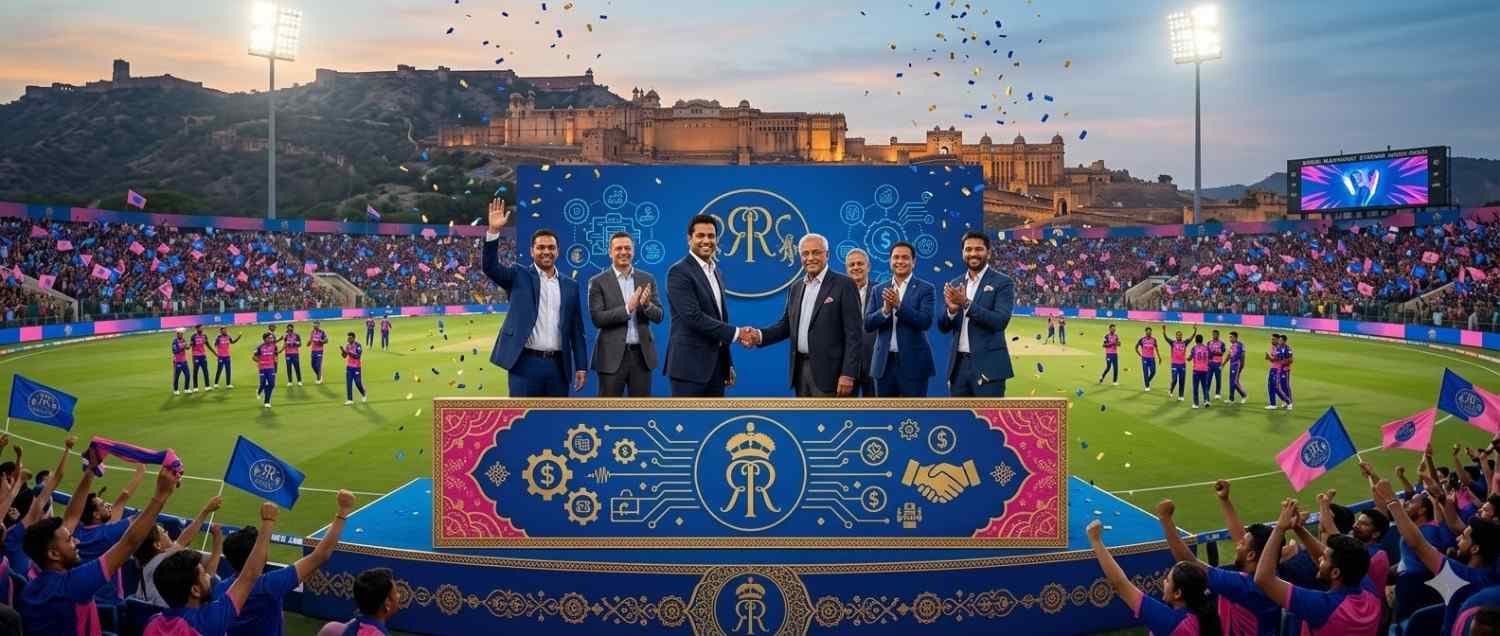
Hyderabad/New Delhi, March 24, 2026 — In one of the biggest ownership changes in Indian Premier League (IPL) history, a consortium led by US-based serial entrepreneur Kal Somani has acquired 100% ownership of the Rajasthan Royals franchise for $1.63 billion (approximately ₹13,500–15,000 crore).
The deal, reported by The Times of India and other outlets on March 24, 2026, marks a significant milestone as Rajasthan Royals — the inaugural IPL champions in 2008 — become one of the highest-valued franchises in the league’s ecosystem.
Who is Kal Somani?
Kal Somani is a prominent US-based entrepreneur and investor with deep roots in technology, ed-tech, data privacy, AI governance, and sports tech. He is the founder of global companies including IntraEdge, Truyo, Truyo.AI, and Academian.
Somani first entered the Rajasthan Royals ecosystem in 2021 as an investor and had publicly expressed strong faith in the franchise’s future, stating at the time: “We see huge potential with this investment, and we are excited for the future of the IPL.”
His consortium is backed by heavyweight American investors:
- Rob Walton, eldest son of Walmart founder Sam Walton
- The Hamp family, majority owners of the NFL’s Detroit Lions
- Sheila Ford Hamp, who also belongs to the iconic Ford Motor Company family
This powerful blend of tech entrepreneurship and American sports ownership brings significant global expertise and financial muscle to the Rajasthan Royals.
Deal Timeline and Bidding Process
- The sale process was managed by advisory firm Raine Group, with an initial valuation floor set around $1.1 billion.
- In January 2026, Somani’s group submitted a preliminary offer of approximately $1.3 billion, contingent on the future performance of IPL media rights.
- By mid-March 2026, Rajasthan Royals had received four binding bids.
- Somani’s consortium emerged as the clear frontrunner after competitive bidding.
- The final winning bid closed at $1.63 billion for 100% ownership, representing a substantial premium over earlier offers and reflecting soaring IPL franchise valuations.
Earlier reports suggested the franchise had rejected even higher bids (up to $1.7 billion in some cases) from other consortia, indicating the owners’ confidence in achieving a premium valuation.
Current Ownership Transition
Until the deal is fully closed and regulatory approvals (including from the BCCI) are obtained, Manoj Badale (through Emerging Media Ventures) remains the majority owner on record. The franchise also had minority stakes held by entities such as RedBird Capital Partners and Tiger Global in the past.
The transaction is expected to pave the way for fresh capital infusion, global branding opportunities, and enhanced player development initiatives under the new ownership.
What This Means for IPL Valuations
This $1.63 billion deal further cements the IPL as one of the world’s most valuable sports leagues. Rajasthan Royals now join the growing list of billion-dollar-plus IPL franchises, with rivals like Royal Challengers Bengaluru reportedly eyeing even higher valuations nearing $2 billion.
Industry experts attribute the surge to:
- Explosive growth in IPL media rights
- Strong sponsorship ecosystem
- Rising global interest in T20 cricket
- Strategic value of long-term ownership in a league with massive viewership
Rajasthan Royals Legacy
Founded in 2008, Rajasthan Royals made history by winning the inaugural IPL under the captaincy of Shane Warne. Known for their smart scouting, data-driven approach, and “Royals way” of nurturing talent, the franchise has remained a consistent performer despite never being the highest spenders in auctions.
The new ownership is expected to build on this foundation while bringing international best practices from NFL and other global sports properties.
Kal Somani and his partners are believed to be committed to keeping the franchise’s core identity intact while accelerating its global footprint.
Stay tuned for official confirmation from the BCCI and Rajasthan Royals as the transaction moves through final stages. This deal is likely to trigger further movement in IPL ownership landscape ahead of the 2027 media rights cycle.