
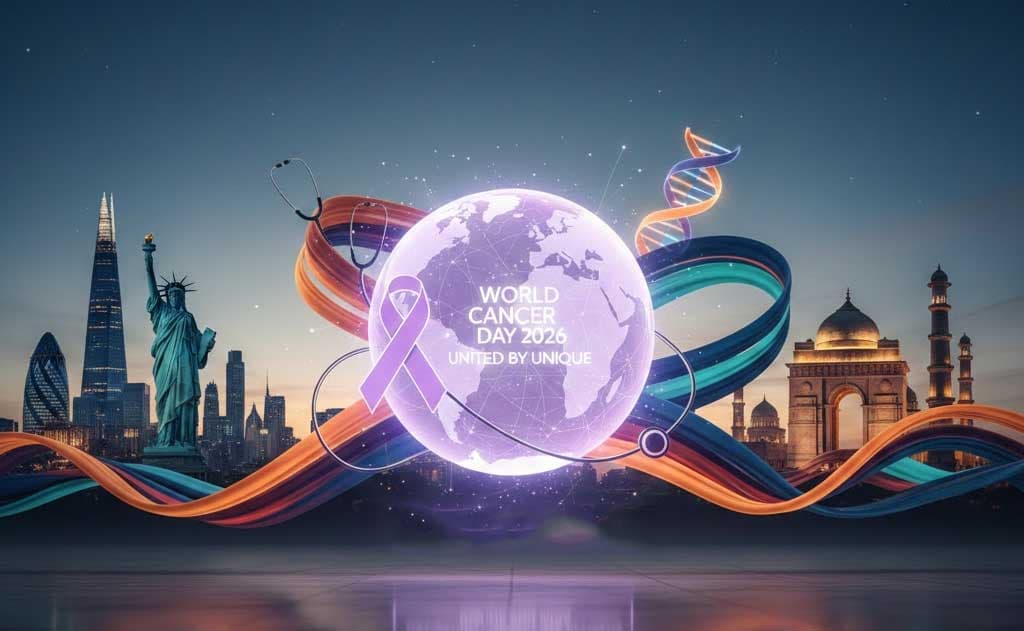
World Cancer Day 2026 falls on February 4, a global observance led by the Union for International Cancer Control (UICC) to unite efforts in raising awareness, promoting prevention, early detection, treatment, and advocacy against cancer. The theme for 2025-2027, "United by Unique", emphasizes people-centered care. It recognizes that every individual's experience with cancer is distinct—shaped by personal biology, cultural background, socioeconomic factors, and unique needs—yet we are all united in the shared goal of reducing the cancer burden, improving outcomes, and ensuring compassionate, equitable care. This theme builds on placing patients, families, caregivers, and communities at the heart of health systems, moving beyond one-size-fits-all approaches to holistic, personalized support.
In 2026, as the second year of this multi-year campaign, the focus shifts toward real-world stories and actionable change: what truly works in delivering care that meets diverse needs across settings. This resonates deeply for Americans facing high-tech resources amid rising costs, Non-Resident Indians (NRIs) navigating cross-border options between the US and India, and the global hope fueled by AI-driven innovations in cures and precision oncology.
This ultimate guide explores these dimensions, blending statistics, practical tips, breakthrough insights, and inspiration to empower readers—whether in the US, India, or diaspora communities.
Cancer Landscape in the United States: Key Statistics and Resources
In the US, cancer remains a major public health challenge, but progress is evident through declining mortality rates and improving survival. Projections for 2026 estimate approximately 2,114,850 new cancer cases (about 5,800 daily) and 626,140 deaths (around 1,720 daily). This reflects an aging population and other factors, yet the overall 5-year relative survival rate for all cancers combined has reached a milestone of 70% for recent diagnoses, thanks to reduced smoking, earlier detection, and advanced treatments. Since 1991, these efforts have averted nearly 4.8 million cancer deaths.
Leading cancers include breast, prostate, lung, and colorectal, with disparities persisting—e.g., higher mortality among Native American and Black populations for certain types. Mortality declined through 2023, averting deaths via prevention and innovation, though challenges like access inequities threaten future gains.
For Americans, key resources include:
- American Cancer Society (ACS): Offers free support via 1-800-227-2345, Ride to Treatment transportation, lodging, and Look Good Feel Better programs.
- National Cancer Institute (NCI): Comprehensive info on clinical trials, prevention, and designated cancer centers.
- Centers for Disease Control and Prevention (CDC): Screening guidelines and state programs.
- Community support groups, patient navigation, and insurance navigation for Affordable Care Act benefits.
Early screening (mammograms, colonoscopies, low-dose CT for lung) saves lives—many cases are detectable early when treatable.
NRI-Specific Guidance: Navigating Cancer Care Across Borders
For NRIs in the US (often of Indian origin), cancer care involves unique considerations: cultural preferences for family involvement, interest in integrative approaches (e.g., Ayurveda alongside Western medicine), and options for treatment in India due to cost, familiarity, or advanced facilities.
India hosts world-class centers like Tata Memorial Hospital (Mumbai), Apollo Hospitals, Fortis, and Rajiv Gandhi Cancer Institute, offering high-quality oncology at fractions of US costs—e.g., advanced therapies like immunotherapy or proton beam. Many NRIs opt for diagnosis/treatment in the US and follow-up or second opinions in India, or vice versa.
Cross-border tips:
- Insurance and Costs: US plans may not cover overseas treatment; explore medical tourism facilitators for packages including visas, travel, and accommodation. Compare costs transparently.
- Telemedicine: Use platforms for virtual consultations between US oncologists and Indian specialists.
- Visa and Logistics: Medical visas (e.g., India's e-Medical Visa) ease access; plan for family accompaniment.
- Cultural Support: Organizations like Indian American Cancer Network (IACAN) provide South Asian-focused education, support groups, and resources on prevention, integrated medicine (Yoga, meditation), and survivor stories.
- Second Opinions: Leverage global networks; some US centers collaborate internationally.
Prevention remains key—NRIs may face higher risks for certain cancers (e.g., oral due to tobacco in some communities)—emphasizing lifestyle changes.
AI-Driven Breakthroughs: The Frontier of Cancer Cures in 2026
AI is revolutionizing oncology, accelerating drug discovery, enabling precision oncology, and personalizing care—aligning perfectly with "United by Unique."
In 2025-2026, AI marks a turning point: first AI-designed oncology candidates enter human trials, compressing discovery from years to months. Key advances:
- Drug Discovery: AI analyzes vast datasets for novel targets, designs molecules via protein structure prediction (e.g., post-2024 Nobel influences), and repurposes drugs. Models simulate interactions, speeding pipelines.
- Precision Oncology: AI integrates genomics, imaging, and clinical data for tailored therapies. It predicts immunotherapy response (70-80% accuracy), matches patients to trials, and analyzes tumor microenvironments.
- Diagnostics and Early Detection: AI enhances imaging (e.g., mammograms, pathology), liquid biopsies, and multi-omics for earlier, accurate detection.
- Clinical Trials and Care: AI optimizes patient stratification, adaptive designs, and workflows; federated learning pools data securely.
Experts forecast continued growth in AI for predictive biomarkers, personalized vaccines, and equitable access—potentially transforming outcomes for diverse populations, including NRIs bridging US innovation and India's scale.
Prevention Worldwide: Actionable Steps for All
Nearly 40-50% of cancers are preventable through modifiable factors. Globally, tobacco causes 15% of cases, infections 10%, alcohol 3%, plus obesity, inactivity, pollution, and UV exposure.
Universal tips (from WHO, UICC, and European Code Against Cancer):
- Avoid all tobacco forms.
- Limit alcohol.
- Maintain healthy weight via balanced diet (fruits, vegetables, whole grains; limit processed/red meat).
- Exercise regularly (150+ minutes moderate activity weekly).
- Protect from sun/UV; avoid tanning beds.
- Get vaccinated (HPV for cervical/oral; Hepatitis B for liver).
- Reduce pollution exposure; promote clean air.
- Screen regularly (age-appropriate for breast, cervical, colorectal, etc.).
- Limit ultra-processed foods/sugary drinks.
Governments should regulate tobacco/alcohol, vaccinate widely, and build green spaces.
Survivor Inspiration: Stories of Resilience and Hope
Cancer journeys highlight uniqueness yet unity. Survivors worldwide share triumphs: early detection stories, innovative treatments, family support, and post-treatment thriving. Many credit integrative practices, community, and mindset. "United by Unique" amplifies these voices—patients as active participants shaping care.
Hope shines through declining mortality, AI promise, and global solidarity.
FAQs
What is the official World Cancer Day 2026 theme? "United by Unique," focusing on people-centered, personalized care.
How many cancers are preventable? Up to 40-50%, mainly via lifestyle and vaccinations.
Can NRIs get affordable treatment in India? Yes, many top hospitals offer advanced care at lower costs; use facilitators for seamless packages.
How is AI changing cancer treatment? It accelerates drug design, predicts responses, personalizes plans, and improves detection.
Where to find support in the US? ACS, NCI, local centers; for South Asians, IACAN.
Infographic Ideas
- "United by Unique" timeline: Theme explanation + global stats.
- US Cancer Stats 2026: Pie charts for cases/deaths by type, survival trends.
- Prevention Wheel: 10 key actions with icons.
- AI in Oncology Flowchart: From data to personalized cure.
- NRI Journey Map: US vs. India care pathways.
Sources
- Union for International Cancer Control (UICC) and worldcancerday.org
- American Cancer Society (Cancer Statistics 2026)
- WHO and IARC reports on prevention
- AACR and oncology journals on AI advances
- Indian American Cancer Network (IACAN)
On World Cancer Day 2026, let's unite—each uniquely—in hope, action, and progress toward a cancer-free future.
Related NRI Globe Coverage
- World Cancer Day 2026: NRI Cancer Care USA, UK & India
- Independence Day vs Republic Day: 12 Differences Explained
- Martin Luther King Jr. Day 2026: A Day of Reflection, Service, and Inspiration for Global Indians
- New Year’s Day 2026 Celebrations Around the World: A Time Zone Guide for the Global Indian Diaspora
- YouTuber Nandu's World (Rama Nandana) UK Visa & Job Fraud Case: Full Details + Key Lessons for NRIs (2026)
- Labor Day 2026 Gas Prices Hit Record High — How It's Affecting NRI Travel Plans Across the USA
- US Gas Prices on Track to Top $4 Per Gallon on Labor Day 2026 for the First Time Ever
- Independence Day 2026 for NRIs: USA, UK, Canada, Australia, UAE, Europe and Singapore Guide
Fresh from NRI Globe
- Dussehra / Vijayadashami 2026 Events Country-Wise — Global NRI Directory (Ram Lila, Ravana Dahan, Durga Puja Pandals, Ayudha Puja Venues + Booking)
- Diwali 2026 Events Country-Wise — Global NRI Directory (White House, Leicester, London Trafalgar, Toronto, Auckland, Sydney Parramasala, Fiji, Mauritius, Trinidad, South Africa and More)
- Diwali / Deepavali 2026 Country-Wise NRI Celebrations — Complete Global Guide (USA, UK, Canada, Australia, Fiji, Mauritius, Trinidad, South Africa, UAE and 30+ Countries)
- Dussehra / Vijayadashami 2026 Country-Wise NRI Celebrations — USA, UK, Canada, Australia, New Zealand, UAE, Singapore, Germany, Netherlands and More