

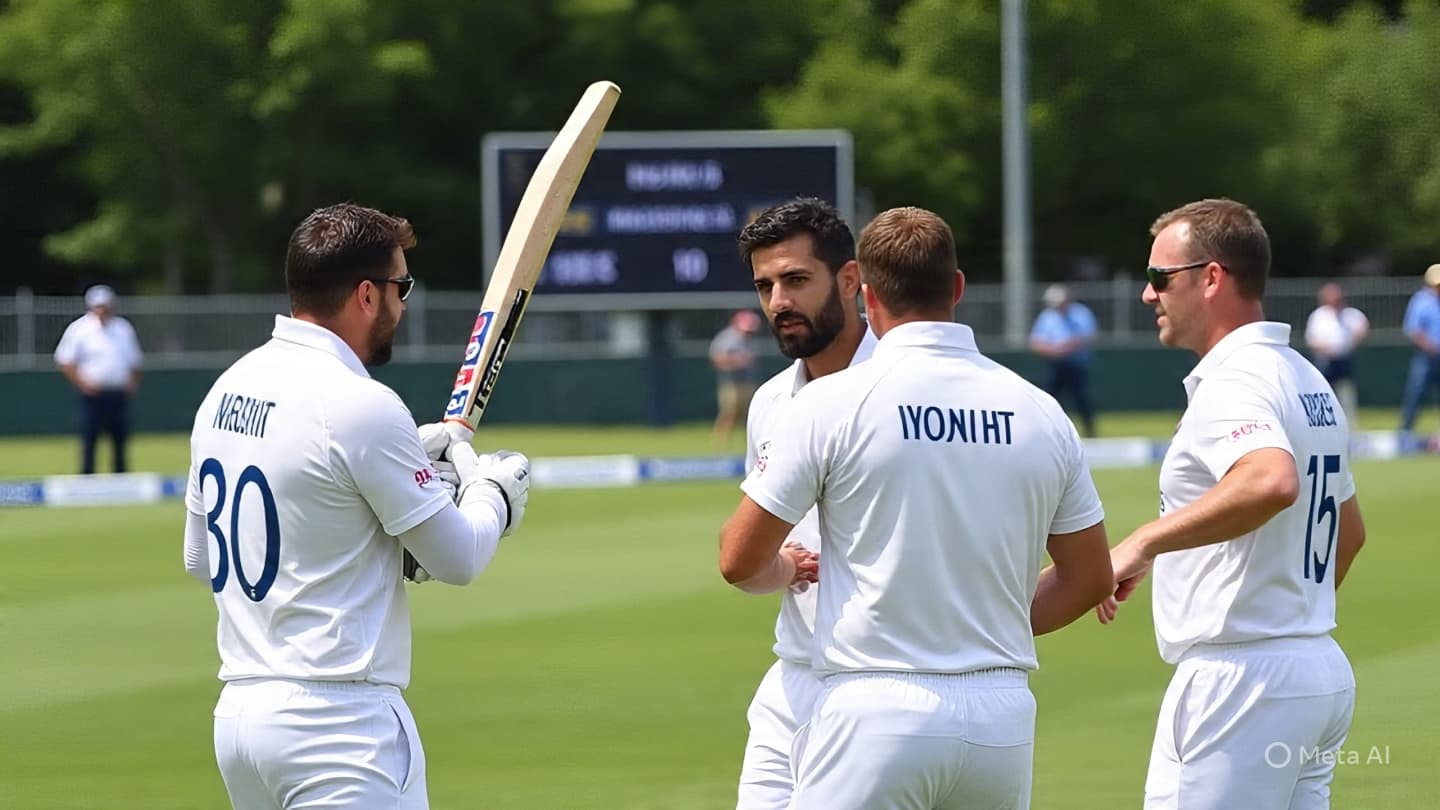
The most reliable conversation starter at any NRI gathering in 2026 — Diwali dinners in Toronto, Onam pageants in Sydney, weekend cricket meets in Houston — is the cricket-football generational divide. The parents grew up on IPL and Test cricket, with the radio commentary in the background of every summer. The children, born or raised abroad, woke up on Premier League Saturdays and rate Erling Haaland's goal tally with the same fluency their parents rate a Virat Kohli innings. The household has two simultaneous sports calendars and rarely watches anything together.
This is not a passing phase, and it is not random. The shift has structural drivers that are quieter than the headline narratives, and it produces effects that show up everywhere from school PE classes to streaming-subscription decisions in NRI households.
Driver one: the schedule that fits a school week
Football's structural advantage in a diaspora living room is calendar fit. A Premier League season runs August to May, with Saturday and Sunday afternoons that line up with most countries' weekend leisure windows. A nine-year-old in Toronto can watch Liverpool against Manchester City on Sunday morning local time, walk to soccer practice that afternoon, and meet a peer group that's been doing the same thing for years.
Cricket's calendar fits the Indian school year better than it fits the diaspora one. The IPL plays in March-May, in Indian Standard Time slots that translate to early-morning or late-night viewing in most NRI hubs. Test cricket and ODIs are scattered across the year in a format the casual second-generation viewer struggles to follow without the cultural context the first generation carries naturally. The result is that for the average diaspora teenager, football is the sport with a stable, predictable rhythm; cricket is the sport with the spectacular but scattered events.
Driver two: the school PE class
The second driver is what gets played at school in the destination country. Football is the dominant playground sport across the U.K., most of Continental Europe, most of Latin America, much of Africa, and increasingly Canada and the U.S. The diaspora child's first organised sport, almost by default, is a kick-around in a six-a-side school league. Cricket as a school sport is dominant only in a narrow set of geographies — the U.K., parts of South Africa, parts of Australia and New Zealand, and a handful of expat-heavy schools in the Gulf.
This produces a self-reinforcing loop. The child plays football at school, gets coached in football at the local club, develops a fan loyalty that maps to a club kit, and grows up identifying with that club rather than with a national cricket team they only watch on weekends. The parent's attempt to introduce cricket — taking the child to a nets session at the local Indian club, putting on a Sunday IPL viewing — meets a child who is already pulled toward the sport their peer group plays.
Driver three: streaming and the format wars
Streaming has accelerated both sides of the divide. Premier League rights distribution in NRI hubs has stabilised — most households pick the platform that carries their preferred competition and pay through the season. The viewing experience is consistent and built for an English-speaking audience.
Cricket streaming, by contrast, has fragmented. Different rights holders carry the IPL in different geographies, with the U.S. streaming experience having gone through three vendors in five years. Test cricket and bilateral ODI series are split across yet more platforms, with regional blackouts that frustrate the casual viewer. The first-generation parent who grew up navigating any cricket feed they could find adapts. The second-generation child, used to single-app sports viewing, rarely persists past the second login problem.
The counter-current: where cricket still wins
Two surfaces have kept cricket meaningful in NRI households even as football pulls the next generation. The first is the family WhatsApp group. Cricket remains the lingua franca of intergenerational sports conversation in the diaspora — the WhatsApp chat that lights up during a tense IPL final connects grandparents in Hyderabad, parents in Dallas and teenagers in London in a way no Premier League match ever does. Even a teenager whose primary sport is football participates in the cricket WhatsApp thread, because that is where the family lives.
The second is the weekend Indian community club. Sunday cricket at the local Indian sports association — the tape-ball pickup game, the eight-overs-a-side tournament between regional associations, the long lunch afterwards — has stayed culturally significant for first-generation NRIs and serves as one of the few reliable ways to introduce a second-generation child to cricket as a participatory sport, not just a televised one. Children who never quite catch the fan-loyalty bug for an IPL team still often grow up playing cricket socially because their parents play.
What the shift competes for
The cricket-football divide in NRI households isn't really about the sports. It is about three other things the sports stand in for. The first is the time the family spends together watching something. A household where parents watch cricket and children watch football has lost the shared-viewing ritual that used to anchor weekends; the practical question for those households is what activity, if not televised sport, fills that slot. Many have replaced it with cooking together, family streaming of Indian films, or scheduled weekend phone calls to grandparents.
The second is identity transmission. For first-generation parents, watching India beat Australia in a Test series is a way to transmit a piece of cultural memory to children who don't share the schooling, the radio commentary, or the bus-stand conversations that made cricket fandom natural in India. When that transmission doesn't take — when the child's loyalty is to Arsenal, not to India — the parent has to find other transmission channels. Festivals, food, language, films and music all take on more of the load.
The third is the local-community network. The cricket club kept first-generation NRIs connected to other first-generation NRIs every weekend. The football world the children grow up in produces a more cosmopolitan friendship pattern — the local team, not the diaspora team. This is mostly a positive integration story, but the side effect is that the parents' community ties weaken slightly with each child who doesn't join them at the cricket club.
Where the next decade probably lands
The most likely future is a stable two-track household. Cricket holds the first-generation, the WhatsApp groups, and the participatory weekend sport in the diaspora community club. Football holds the next generation's primary fan identity and the integrated school-and-club ecosystem in the destination country. Both will be true at once, and that will be the normal household, not a household in transition.
For the parent navigating this in real time, the practical lesson is to stop framing it as a competition. The child who supports Manchester City and the parent who supports the Mumbai Indians can still watch India's T20 World Cup match together. The shared viewing doesn't require shared fandom. It requires acknowledging that the household runs two sports calendars, both legitimate, and finding the small set of fixtures — usually a high-stakes India match, occasionally a Manchester or Liverpool derby — where the calendars briefly meet.