
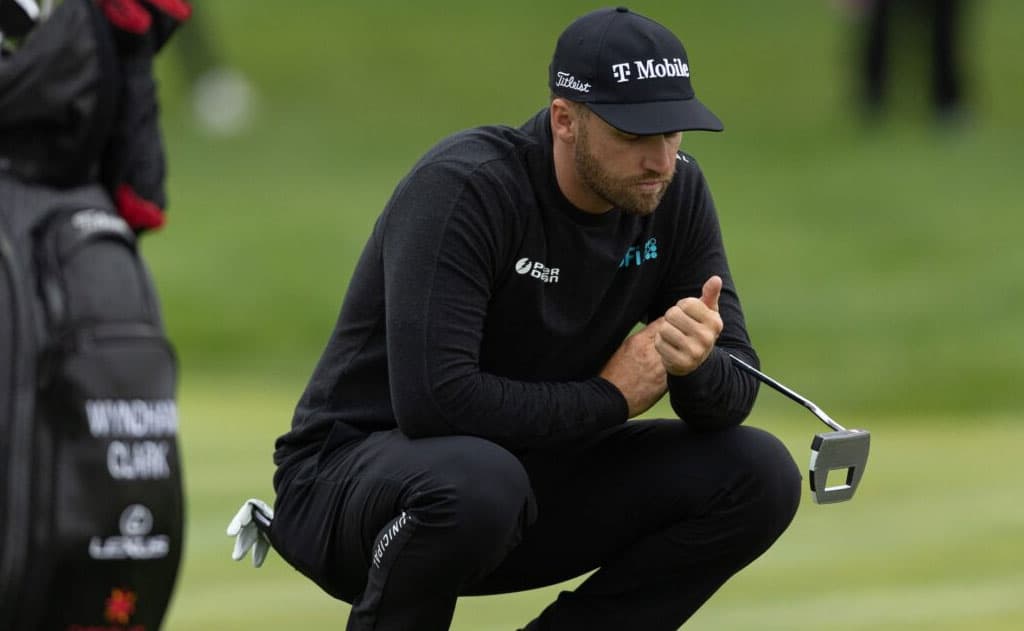
In the hallowed halls of Oakmont Country Club, where golf’s history whispers through century-old lockers and meticulously manicured greens, a storm brewed during the 2025 U.S. Open that no one saw coming. Wyndham Clark, the 2023 U.S. Open champion, found himself at the center of a controversy that has rocked the golfing world, leading to an unprecedented ban from one of America’s most storied golf venues. The reason? A moment of unchecked frustration that left two historic lockers battered and the golf community buzzing with outrage, disappointment, and debate.
A Frustrating Finish at Oakmont
The 2025 U.S. Open, hosted at Oakmont Country Club just 15 miles outside Pittsburgh, was a grueling test of skill and mental fortitude. Known for its punishing greens and brutal rough, Oakmont has a reputation for pushing even the world’s best golfers to their limits. For Wyndham Clark, the week was a bitter disappointment. The 31-year-old, who rose to prominence with his 2023 U.S. Open victory at Los Angeles Country Club, carded back-to-back rounds of 74, finishing at 8-over par. A bogey on the final hole of his second round sealed his fate, missing the cut by a single stroke. For a player who had once held the No. 3 spot in the world rankings, the sting of failure was sharp.
As Clark walked off the 18th green, the weight of a challenging 2025 season—marked by just one top-10 finish in 19 PGA Tour events—seemed to boil over. What happened next would spark a firestorm. In the sanctity of Oakmont’s historic locker room, a space steeped in tradition and lined with lockers that have borne witness to golf’s greatest moments, Clark allegedly unleashed his frustration. Reports surfaced that he kicked in the lattice panels of two lockers, leaving visible damage that shocked club members and fans alike. A photograph of the caved-in lockers, shared by Tron Carter of the No Laying Up podcast, went viral on social media, igniting a wave of condemnation.
The Golf World Reacts
The golfing community didn’t hold back. Oakmont’s locker room isn’t just any locker room—it’s a shrine to the sport, a place where legends like Ben Hogan and Jack Nicklaus once prepared for battle. Fans and members were incensed. “That’s a historical locker room too. I’d ban him from ever playing there again,” one fan fumed on social media. Another added, “This is unacceptable anywhere. He’s a guest of Oakmont. You don’t do this ever.” The sentiment was echoed by an Oakmont member who, speaking to GOLF.com, expressed a desire to confront Clark: “I’d be tempted to show up at his next tournament and heckle him on the tee. You know, something like, ‘Hey, buddy, how about I come to your house and kick in the shower doors?’”
This wasn’t Clark’s first brush with controversy in 2025. Just a month earlier, at the PGA Championship at Quail Hollow, he had flung his driver in frustration, damaging a T-Mobile sign—ironically, one featuring the logo of a key sponsor. That incident prompted a public apology on social media, where Clark admitted, “My actions were uncalled for and completely inappropriate, making it clear that I have things I need to work on.” But the Oakmont incident, coming so soon after, painted a troubling pattern of emotional outbursts.
Oakmont’s Response: A Ban with Conditions
The fallout was swift and severe. On July 16, 2025, Oakmont Country Club president John Lynch sent a letter to members, first reported by Golf Digest and confirmed by ESPN, announcing that Clark was banned from the club’s premises. The decision, reached after discussions with the United States Golf Association (USGA) and the club’s board, was a bold statement about the club’s commitment to its heritage and standards of conduct. “Following multiple discussions with the USGA and the OCC Board, a decision has been made that Mr. Clark will no longer be permitted on OCC property,” Lynch wrote.
However, the letter offered a path to redemption. Clark’s ban could be lifted if he meets specific conditions: full repayment for the damaged lockers, a “meaningful contribution” to a charity chosen by the club’s board, and the completion of counseling or anger management therapy. These stipulations reflect Oakmont’s desire to hold Clark accountable while acknowledging the possibility of growth and reconciliation. As of the letter’s release, sources suggested Clark had offered to pay for repairs but had not yet fulfilled all requirements.
Clark’s Apology and Redemption Bid
Clark didn’t stay silent for long. The following week at the Travelers Championship, where he opened with an impressive 6-under 64, he addressed the incident. “I’ve had a lot of highs and lows in my career, especially this year some lows,” he told reporters. “I made a mistake that I deeply regret. I’m very sorry for what happened. But I’d also like to move on, not only for myself but for Oakmont, for the USGA, and kind of focus on the rest of this year.” His words carried a tone of contrition, but also a plea to shift the narrative toward his future goals, including a spot on the U.S. Ryder Cup team and a stronger finish in the FedEx Cup standings, where he currently languishes at No. 80.
At the Scottish Open, Clark hinted at personal growth, calling the incident a “wake-up call” to get back on track. “I made a mistake in a moment of rage with a bad year and everything coming together,” he said. Yet, the golf world remains divided. Some, like LIV Golf’s Graeme McDowell, downplayed the incident, noting that he’d seen worse in locker rooms and suggesting Oakmont’s reaction might be an overreach. Others, however, see Clark’s actions as a breach of the sport’s decorum, especially at a venue as revered as Oakmont.
A Pattern of Frustration
Clark’s 2025 season has been a far cry from his breakout 2023, when he clinched the U.S. Open and earned a Ryder Cup spot. With only one top-10 finish this year and a slide to No. 28 in the Official World Golf Ranking, the pressure has clearly taken a toll. His struggles in majors are particularly stark: since his 2023 victory, he’s missed the cut in four of eight majors and hasn’t cracked the top 30 in any. The Oakmont incident, coupled with the PGA Championship outburst, has raised questions about his mental resilience and ability to handle adversity.
Social media chatter, particularly on platforms like Reddit’s r/NoLayingUp, has speculated about Clark’s mental state. Some fans point to his work with a sports psychologist, highlighted in Netflix’s Full Swing, as evidence of ongoing efforts to manage his emotions. Others are less forgiving, with one commenter calling him an “ungrateful turd” living a life most would envy. The debate rages: is Clark a talented player unraveling under pressure, or is the reaction to his outburst overblown?
What’s Next for Clark and Oakmont?
The ban from Oakmont, while significant, won’t immediately disrupt Clark’s career. The club isn’t scheduled to host another U.S. Open until 2033, the final year of Clark’s 10-year exemption from his 2023 win. Still, the symbolic weight of being barred from such a prestigious venue stings, especially for a player fighting to regain his form and reputation. Clark’s path forward hinges on meeting Oakmont’s conditions and proving he can channel his competitive fire constructively.
For Oakmont, the incident underscores the club’s fierce pride in its heritage. The decision to ban a former U.S. Open champion is unprecedented, signaling that no player is above the club’s standards. As the golf world watches, Clark’s next moves—both on and off the course—will determine whether this chapter becomes a footnote or a defining moment in his career.
For now, the damaged lockers at Oakmont stand as a reminder: even in golf, a game of precision and poise, raw emotion can leave a lasting mark. Whether Clark can repair the damage—both literal and figurative—remains to be seen.
Related NRI Globe Coverage
- NRI US Sports Watching Guide 2026: NBA, NHL, MLB, NFL by Country
- Sports This Week — September 17-21, 2026 (NFL, NBA, MLB, Cricket, Premier League, F1) NRI Weekend Guide
- Hero Ajith Kumar's Racing Career: Achievements, Rankings and Journey in Motorsport
- IPL 2027 Season Preview — Format, Team Retentions, Broadcast Coverage for NRIs Abroad
- India Cricket 2026-27 — Complete NRI Streaming Guide (USA, UK, Canada, Australia)
- F1 Latest Updates September 2026: Shock Gasly Pole at Monza Italian GP — Full Analysis & Race Preview
- 2026 Italian Grand Prix Qualifying Analysis at Monza: Pierre Gasly Shocks with Maiden Pole Position
- Sports Weekend USA Sept 5-7, 2026: College Football, MLB, NASCAR Southern 500 & F1 Italian GP Complete Guide
Fresh from NRI Globe
- YouTuber Nandu's World (Rama Nandana) UK Visa & Job Fraud Case: Full Details + Key Lessons for NRIs (2026)
- Dussehra / Vijayadashami 2026 Events Country-Wise — Global NRI Directory (Ram Lila, Ravana Dahan, Durga Puja Pandals, Ayudha Puja Venues + Booking)
- Diwali 2026 Events Country-Wise — Global NRI Directory (White House, Leicester, London Trafalgar, Toronto, Auckland, Sydney Parramasala, Fiji, Mauritius, Trinidad, South Africa and More)
- Diwali / Deepavali 2026 Country-Wise NRI Celebrations — Complete Global Guide (USA, UK, Canada, Australia, Fiji, Mauritius, Trinidad, South Africa, UAE and 30+ Countries)