
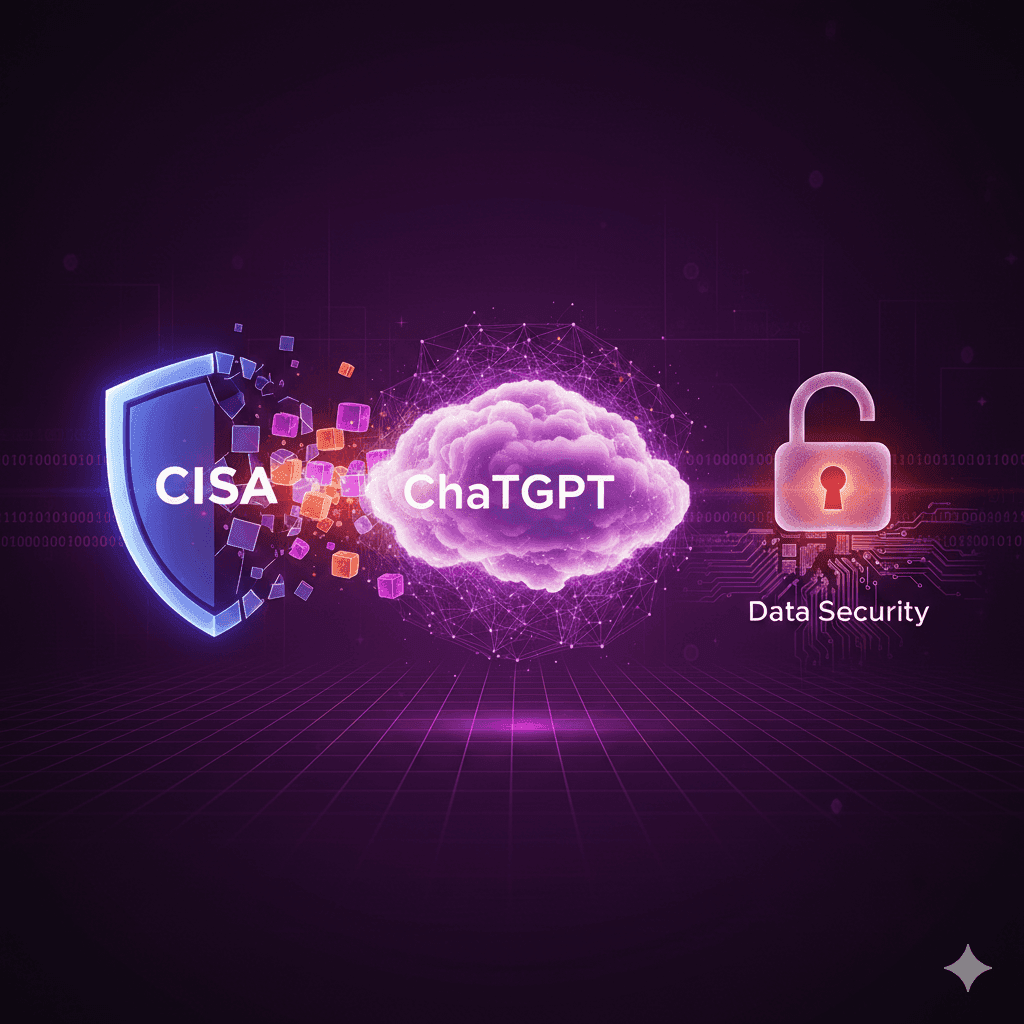
What the CISA–ChatGPT Incident Means for Data Security
Indian-origin CISA chief Dr. Madhu Gottumukkala uploaded "For Official Use Only" contracting files to public ChatGPT, triggering alerts & DHS review. Know the irony, risks & what it means for US cybersecurity in 2026.
CISA Acting Director Dr. Madhu Gottumukkala Uploaded Sensitive Files to Public ChatGPT – Shocking Incident Rocks US Cyber Agency
In a stunning irony that has sent shockwaves through the cybersecurity community, Dr. Madhu Gottumukkala, the acting director of the Cybersecurity and Infrastructure Security Agency (CISA) — America's frontline defender against cyber threats — reportedly uploaded sensitive government contracting documents into a public version of ChatGPT last summer.
The incident, first revealed by Politico on January 27, 2026, has sparked widespread debate about AI governance, leadership judgment, and the very safeguards CISA promotes to protect federal networks from adversaries like Russia and China.
For the NRI community in the US and worldwide, this story is especially noteworthy: Dr. Gottumukkala is of Indian-origin, making him one of the highest-profile Indian-American officials in the Trump administration's national security apparatus.
Who Is Dr. Madhu Gottumukkala? Background of the Acting CISA Director
Dr. Madhu Gottumukkala currently serves as both Acting Director and Deputy Director of CISA, the Department of Homeland Security (DHS) agency responsible for safeguarding US federal networks, critical infrastructure, and election systems from cyber threats.
- Prior Role — Before joining CISA in May 2025, he was Commissioner and Chief Information Officer for South Dakota’s Bureau of Information and Technology under then-Governor Kristi Noem (now DHS Secretary).
- Appointment — Appointed deputy director by DHS Secretary Kristi Noem in the Trump administration, he became the senior-most political official at CISA after mass layoffs reduced staff from ~3,400 to ~2,400.
- Indian-Origin Pride & Scrutiny — As an Indian-American leader in US cybersecurity, his actions draw extra attention from the diaspora, especially amid ongoing debates about immigrant contributions to American tech and security leadership.
His tenure has already faced controversies, including workforce reductions, congressional grilling over staffing, and earlier reports of a failed polygraph test leading to staff investigations.
What Exactly Happened? Timeline of the ChatGPT Incident
According to four DHS officials speaking to Politico (anonymously due to fear of retribution):
- May 2025 — Shortly after joining CISA, Gottumukkala requested and received a special temporary exception from the agency’s Office of the Chief Information Officer (OCIO) to access public ChatGPT. → Most DHS employees are blocked from public AI tools like ChatGPT due to data leakage risks.
- Mid-July to August 2025 — He uploaded CISA contracting documents marked “For Official Use Only” (FOUO) — a sensitive but unclassified designation meaning the information is not for public release and could harm operations, privacy, or national interests if exposed.
- August 2025 — CISA’s automated cybersecurity sensors flagged the uploads multiple times in the first week alone, triggering alerts designed to prevent theft or unintentional disclosure of government material from federal networks.
- Internal Response — Senior officials, including CISA CIO Robert Costello and chief counsel Spencer Fisher, met with Gottumukkala to review the uploads. A DHS-level damage assessment was conducted to evaluate potential harm.
- January 2026 — The story breaks publicly, igniting online discussions, memes, and mockery about the head of America’s cyber defense agency using the very tool many agencies warn against.
CISA’s Official Statement (via Director of Public Affairs Marci McCarthy):
“Acting Director Dr. Madhu Gottumukkala was granted permission to use ChatGPT with DHS controls in place. This use was short-term and limited. Acting Director Dr. Madhu Gottumukkala last used ChatGPT in mid-July 2025 under an authorized temporary exception granted to some employees. CISA’s security posture remains to block access to ChatGPT by default unless granted an exception.”
The agency emphasized its commitment to harnessing AI under President Trump’s executive order to boost US AI leadership.
Why This Is a Big Deal: Security Risks of Uploading to Public ChatGPT
Even though the files were not classified, experts highlight serious concerns:
- Data Retention by OpenAI — Anything uploaded to public ChatGPT is shared with OpenAI and can be retained to train/improve the model or influence responses to other users (unless opted out in enterprise versions).
- Potential Exposure — Sensitive contracting details (vendor names, pricing, terms) could reveal procurement strategies, budgets, or vulnerabilities if mishandled.
- Insider Threat Irony — CISA recently issued an insider threat alert — and quoted Gottumukkala in related materials — right around the time this story emerged.
- Broader Implications — Reinforces warnings from cybersecurity professionals: public generative AI tools pose real risks of data leakage, especially in government.
Key Risks Table
| Risk Factor | Description | Potential Impact |
|---|---|---|
| Data Leakage | Uploaded info shared with OpenAI servers | Could inform foreign adversaries |
| Training Model Contamination | Sensitive details used to fine-tune future responses | Indirect exposure to millions of users |
| Compliance Violation | Violates DHS policy on handling FOUO information | Disciplinary action possible |
| Reputational Damage | Undermines CISA’s credibility on AI security guidance | Public trust erosion |
Reactions & Online Mockery – What the Internet Is Saying
The incident has fueled widespread irony-fueled commentary:
- “The head of CISA warning about insider threats… while being the insider threat?”
- “ChatGPT now knows more about CISA contracts than some contractors.”
- Social media users highlight the contradiction: the agency blocks ChatGPT for employees but grants its leader an exception — only for alerts to fire.
For NRIs in tech/cyber fields, the story raises questions about leadership standards in high-stakes US government roles.
What Happens Next? Ongoing Investigations & Lessons
- Damage Assessment — DHS continues evaluating whether any real harm occurred (outcome not yet public).
- Policy Review — Likely tighter controls on AI exceptions across DHS.
- No Disciplinary Action Announced — Gottumukkala remains in position; CISA defends the use as limited and controlled.
- Broader Lesson — Even top officials must follow “least privilege” and zero-trust principles when using generative AI.
For Indian-Americans and global NRIs following US tech-policy news, this episode underscores the challenges of balancing innovation with security in the AI era.
Stay Updated — Follow www.nriglobe.com for more on US cybersecurity, NRI leadership stories, AI developments, and Trump administration updates. Have thoughts on this incident? Share in the comments below!
Latest NRI News & Global Updates:
Health, Wellness & Lifestyle for NRIs
https://nriglobe.com/lifestyle/
Latest NRI News & Global Updates
https://nriglobe.com/news/
Business & Finance News for NRIs
https://nriglobe.com/business/
Investment Guides for NRIs
https://nriglobe.com/investment/
Jobs & Career Opportunities for NRIs
https://nriglobe.com/jobs/
Related NRI Globe Coverage
- How Much Electricity Does AI Use for One Prompt? The Real 2026 Numbers (ChatGPT, Gemini, Agentic AI)
- How Much Water Does AI Use for One Prompt? The Real 2026 Numbers Explained
- Best AI Tools for NRIs in 2026 — ChatGPT, Claude, Gemini, Perplexity, Notion AI and Practical Uses for Immigration, Family and Productivity
- OpenAI Reshapes ChatGPT as an All-in-One Superapp: How Coding, Canva, and Booking Integrations Affect Indian IT Professionals
- India Reaches 100 Million Weekly ChatGPT Users
- Grok vs ChatGPT vs Gemini for NRIs in 2026
- ChatGPT Challenges Google in Daily Searches, But Not Fully — The Hybrid Era
- OpenAI Unlocks Third-Party Apps for ChatGPT: Boosting Opportunities for NRI Tech Innovators
Fresh from NRI Globe
- YouTuber Nandu's World (Rama Nandana) UK Visa & Job Fraud Case: Full Details + Key Lessons for NRIs (2026)
- Dussehra / Vijayadashami 2026 Events Country-Wise — Global NRI Directory (Ram Lila, Ravana Dahan, Durga Puja Pandals, Ayudha Puja Venues + Booking)
- Diwali 2026 Events Country-Wise — Global NRI Directory (White House, Leicester, London Trafalgar, Toronto, Auckland, Sydney Parramasala, Fiji, Mauritius, Trinidad, South Africa and More)
- Diwali / Deepavali 2026 Country-Wise NRI Celebrations — Complete Global Guide (USA, UK, Canada, Australia, Fiji, Mauritius, Trinidad, South Africa, UAE and 30+ Countries)