
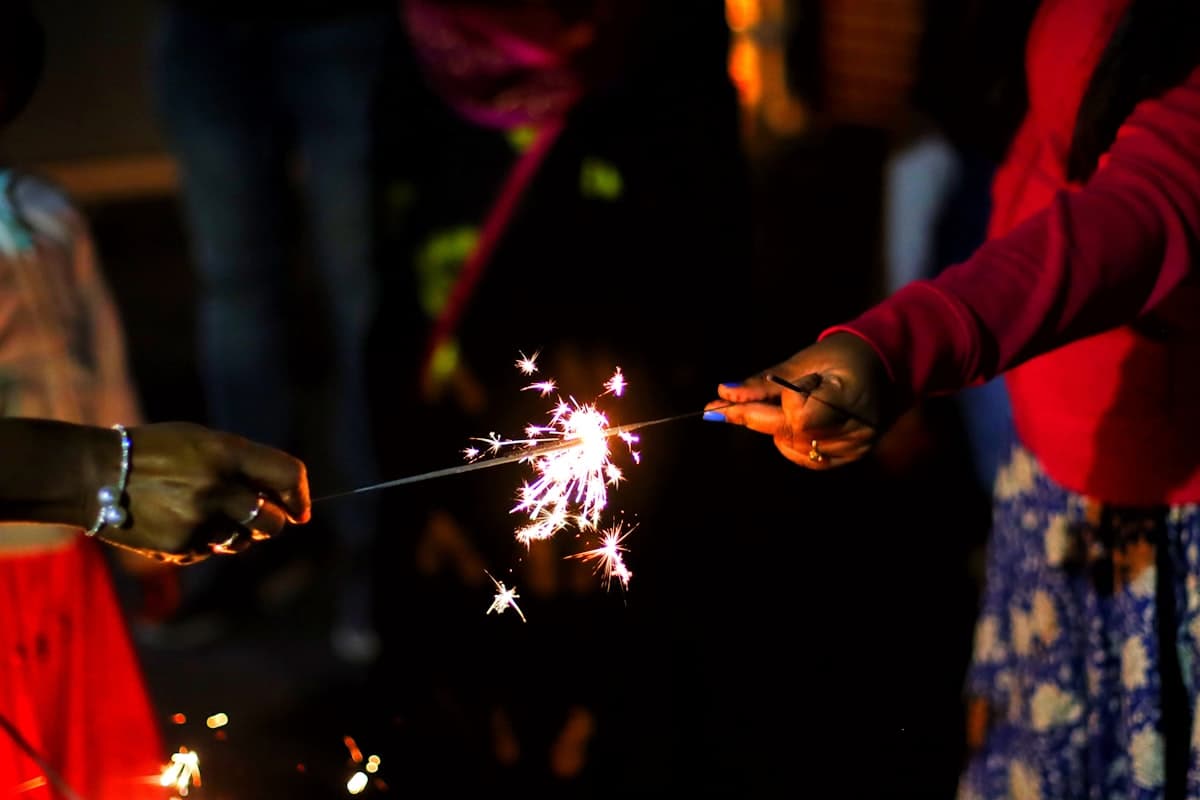
Delhi and north India's post-Diwali smog is a well-documented public-health issue. The combination of firecrackers on Diwali night, seasonal stubble-burning in Punjab/Haryana, industrial emissions, and cold-air inversion during November regularly pushes Delhi's AQI into the "Very Poor" (301-400) and "Severe" (401-500) categories in early November. For NRI visitors — especially children, elderly parents, or family members with asthma or COPD — this needs planning, not surprise.
What to Expect in Delhi + NCR for Diwali 2026 (Nov 8)
Based on air-quality patterns from CPCB (Central Pollution Control Board) archives:
- Early November (Nov 1-6) — AQI typically "Poor" to "Very Poor" (201-400). Stubble burning + cool inversion.
- Diwali night + day-after (Nov 8-9) — Consistently the worst 48 hours. AQI often 400-500+ ("Severe") especially where firecracker use is high.
- Nov 10-15 — Gradual return to "Very Poor" as smoke disperses. Weather-dependent.
- Mid-November onward — Cold-air inversion continues to trap pollution through much of winter.
Verify current AQI live at CPCB or IQAir before/during your visit.
Most-Affected Regions
- Delhi + NCR (Gurugram, Noida, Ghaziabad, Faridabad) — hardest hit
- Punjab (Amritsar, Ludhiana, Chandigarh) — stubble burning epicenter
- Haryana (Ambala, Karnal, Panipat) — very high AQI
- Uttar Pradesh (Lucknow, Kanpur, Meerut) — high AQI
- South India (Bengaluru, Chennai, Hyderabad) — generally MUCH better AQI (100-200 range post-Diwali)
- Mumbai + Pune — cleaner than north, but Diwali night still spikes AQI
Most At-Risk Groups
- Children under 8 — developing lungs, higher breathing rate per body weight
- Elderly (65+) — reduced lung capacity, higher cardiovascular risk
- Asthma / COPD sufferers — very high risk of exacerbation
- Pregnant women — fine particulate exposure linked to preterm birth risk
- Heart-disease patients — spike in cardiac events in high-AQI cities documented in health-agency data
Practical Protection for NRI Visitors
1. Bring N95 masks (KN95 / N95 rated PM 2.5)
- Cotton/surgical masks do NOT block PM 2.5 particulates
- N95 fit-tested masks (nose-clip + sealed edge) reduce PM 2.5 exposure by 80-95%
- Bring 20-30 masks per traveler (available on Amazon USA/UK/Canada/AUS at $1-2/mask)
- Kids' N95 masks in child-sized are worth the search
2. Portable air purifiers for the home
- Coway, Dyson, Xiaomi, Honeywell all sell India-plug versions ($150-$600)
- 1 unit per bedroom is the minimum for a family stay
- Buy in India (delivery + warranty) rather than travel with one
- Check HEPA rating (True HEPA H13 or above)
3. Track live AQI
- IQAir app (free, city + neighbourhood-level AQI)
- CPCB National AQI app (official)
- Google Maps now shows AQI overlays in India
4. Time outdoor activities
- Best windows — mid-morning (9 AM - 12 PM) has slightly lower AQI than early morning (thermal mixing)
- Avoid — 5-8 AM (cold-air inversion peak) and 6-10 PM (post-sunset accumulation + firecrackers)
- Reschedule outdoor kids' events to indoor venues
5. Prep at-risk family members
- Talk to your doctor before travel if elderly parents visiting or asthma-prone members
- Pack asthma inhalers, N95 masks, allergy meds
- Consider a nebulizer machine if severe asthmatic in family
Alternative Diwali Destinations for At-Risk NRIs
If your family includes very young kids, elderly, or asthma sufferers, consider celebrating Diwali in:
- Bengaluru — Generally milder AQI (100-200 post-Diwali vs 400-500 in Delhi)
- Chennai — Coastal breeze keeps AQI in "Moderate" range
- Hyderabad — Better AQI than Delhi; large NRI community; strong festival scene
- Pune — Cooler than Mumbai, cleaner than Delhi
- Kochi / Trivandrum — Kerala coastal cities with cleanest AQI
- Goa — Coastal + off-season pricing; not a Diwali hub but calm
Or stay abroad and celebrate at community temples — see our Diwali 2026 5-Day NRI Guide for global celebrations.
Delhi Firecracker Restrictions (Historical)
- Supreme Court has restricted firecrackers in Delhi-NCR in recent years, with only "green crackers" (reduced emissions) permitted
- Bursting hours typically restricted to 8 PM - 10 PM on Diwali
- Enforcement has been variable; expect illegal firecracker use to persist to some degree
- Verify latest court orders + Delhi Pollution Control Committee guidance for 2026
Diwali 2026 Delhi/NCR NRI Planning Checklist
- ☐ Book flights (see our Diwali 2026 Flight Price Guide)
- ☐ Pack N95 masks (20-30 per person)
- ☐ Order home air purifier for family stay location
- ☐ Install IQAir app + check baseline AQI 1 week before
- ☐ Consult doctor if traveling with at-risk family members
- ☐ Plan indoor Diwali family gatherings when possible
- ☐ Time flights to arrive by Nov 5-6 (before Diwali AQI peak)
- ☐ Return travel Nov 12-15 to skip immediate post-Diwali smog + peak fares
Related NRI Globe Diwali + Travel Coverage
- Diwali 2026 Flight Prices to India — NRI Booking Guide
- Diwali 2026 Complete 5-Day NRI Guide
- Eco-Friendly Diwali + Fireworks Laws by Country
Frequently Asked Questions
How bad is Delhi's air quality during Diwali?
Delhi's AQI historically climbs into the "Severe" (401-500+) range on Diwali night and the following day due to firecrackers, stubble-burning in Punjab/Haryana, cold-air inversion, and industrial emissions. Very-Poor conditions typically persist through mid-November.
Do N95 masks help against Delhi smog?
Yes. Properly fitted N95 or KN95 masks with sealed edges reduce PM 2.5 particulate exposure by 80-95%. Cotton and surgical masks do NOT block PM 2.5. Bring 20-30 N95 masks per traveler from your home country.
Should elderly parents visit Delhi during Diwali?
Consult their doctor before booking. Elderly (65+) and those with heart disease, asthma, or COPD are at high risk during Delhi's post-Diwali smog window (Nov 8-15). Consider celebrating in South India (Bengaluru, Chennai, Hyderabad) or coastal cities instead.
Which Indian cities have better AQI during Diwali?
South India — Bengaluru, Chennai, Hyderabad, and Kerala cities (Kochi, Trivandrum) — typically have AQI in the "Moderate" (100-200) range post-Diwali vs Delhi's "Severe" 400-500. Mumbai and Pune are also meaningfully better than Delhi.
Can I buy air purifiers in India rather than traveling with one?
Yes — Coway, Dyson, Xiaomi, Honeywell, Blueair all sell India-plug versions with local warranty on Amazon India, Flipkart, and direct-brand websites. Buying in India is easier than traveling with a purifier and includes warranty + service.
Disclaimer: NRI Globe provides journalism and general information only. Not medical advice. For health decisions related to travel with at-risk family members, consult a licensed physician. Verify current AQI at cpcb.nic.in and IQAir before travel.
Related NRI Globe Coverage
- Diwali 2026 Flight Prices to India — NRI Booking Guide (Nov 8) for USA, UK, Canada & Australia
- US Visa Stamping in India 2026 — Dropbox Narrowed, Backlogs, and the 90-Day Diwali Trip Playbook
- Mexico FMM Tourist Card for Indian Visitors 2026: Complete Application Guide + Visa-Exempt Pathway
- Best Travel Insurance for NRIs 2026 — Complete Guide (IMG, Seven Corners, Allianz, SafetyWing & More)
- PAN Card + Aadhaar for NRIs 2026 — Linking, Application, Complete Guide (Tax + Financial Transactions)
- UK ILR & British Citizenship for Indians 2026 — Complete Guide (Life in UK Test, Eligibility, Timeline)
- UAE Golden Visa 2026 for Indians — Complete Guide (Eligibility, Application, Investment)
- Australia Skilled Migration 2026 for Indians — Complete Points-Based Visa Guide (189, 190, 491)
Fresh from NRI Globe
- YouTuber Nandu's World (Rama Nandana) UK Visa & Job Fraud Case: Full Details + Key Lessons for NRIs (2026)
- Dussehra / Vijayadashami 2026 Events Country-Wise — Global NRI Directory (Ram Lila, Ravana Dahan, Durga Puja Pandals, Ayudha Puja Venues + Booking)
- Diwali 2026 Events Country-Wise — Global NRI Directory (White House, Leicester, London Trafalgar, Toronto, Auckland, Sydney Parramasala, Fiji, Mauritius, Trinidad, South Africa and More)
- Diwali / Deepavali 2026 Country-Wise NRI Celebrations — Complete Global Guide (USA, UK, Canada, Australia, Fiji, Mauritius, Trinidad, South Africa, UAE and 30+ Countries)