
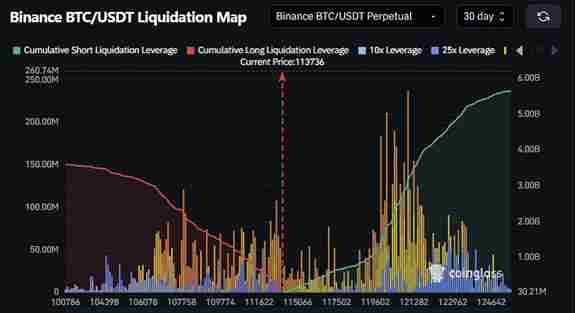
Bitcoin Hits $113,800 Amid Halving and Institutional Adoption, Eyes $1 Million by 2030
Introduction
Bitcoin, the world's leading cryptocurrency, has soared to a remarkable $113,800, marking a significant milestone in its 2025 rally. This surge follows the April 2024 halving event, which cut mining rewards from 6.25 BTC to 3.125 BTC per block, reinforcing Bitcoin’s scarcity-driven value proposition. Coupled with unprecedented institutional adoption and favorable market dynamics, analysts are optimistic about Bitcoin’s trajectory, with some projecting prices as high as $1 million by 2030. This article, crafted for NRI Globe, explores the factors behind Bitcoin’s recent surge, historical market patterns, and the forces shaping its future.
The 2024 Halving: A Catalyst for Scarcity
Bitcoin’s halving events, occurring approximately every four years after 210,000 blocks, are pivotal to its economic model. The April 2024 halving reduced the block reward to 3.125 BTC, slowing the issuance of new coins and intensifying Bitcoin’s programmed scarcity, with a fixed supply cap of 21 million coins. Historically, halvings have triggered significant price surges due to reduced supply meeting steady or growing demand:
- 2012 Halving: Bitcoin’s price rose from $12 to over $1,000 within a year.
- 2016 Halving: Prices climbed from $650 to nearly $20,000 by late 2017.
- 2020 Halving: Bitcoin surged from $8,000 to a peak of $69,000 in 2021.
The 2024 halving has followed a similar pattern, though its impact was amplified by a pre-halving rally, with Bitcoin reaching an all-time high of $73,737.94 before the event, driven by spot Bitcoin ETF approvals. Unlike previous cycles, the 2024 surge reflects a maturing market with robust institutional infrastructure, setting the stage for sustained growth.
Institutional Adoption Fuels the Rally
Institutional interest has been a game-changer for Bitcoin’s valuation. The approval of spot Bitcoin Exchange-Traded Funds (ETFs) in January 2024 opened the floodgates for institutional capital. By March 2025, nine Bitcoin ETFs had accumulated over 473,600 BTC, with BlackRock’s iShares Bitcoin Trust ETF alone holding 215,625 BTC, surpassing MicroStrategy’s holdings. This influx of capital, totaling over $31.1 billion excluding Grayscale’s ETF, has boosted market liquidity and reduced volatility, making Bitcoin more attractive to risk-averse investors.
Major corporations like MicroStrategy, Tesla, and Square have allocated significant treasury reserves to Bitcoin, signaling confidence in its role as a hedge against inflation and currency devaluation. The 2024 U.S. presidential election, with Donald Trump’s re-election and pro-crypto stance, further fueled optimism. Trump’s promises to establish a national Bitcoin reserve and position the U.S. as a “crypto superpower” have driven a 45% price increase since November 2024, with Bitcoin hitting $103,900 by December.
Historical Patterns and Market Dynamics
Bitcoin’s price movements have historically followed a four-year cycle tied to halvings, characterized by accumulation, markup, distribution, and markdown phases. Post-halving bull runs typically peak 12–18 months after the event, as seen in previous cycles. The 2024 halving has aligned with macroeconomic factors, including persistent inflation and Federal Reserve interest rate cuts, pushing investors toward Bitcoin as a store of value.
Technical indicators support the bullish outlook. Bitcoin is trading within an ascending parallel channel, with recent price action near $118,300 testing resistance levels. On-balance volume (OBV) confirms a volume-backed breakout, while the Relative Strength Index (RSI) at 59–62 suggests sustained bullish momentum without overbought conditions. These patterns, combined with scarcity-driven supply shocks, underpin forecasts for continued growth.
Expert Forecasts: $1 Million by 2030?
Analysts are divided on Bitcoin’s long-term price but agree on its upward trajectory. Key predictions include:
- 2025–2026: Prices could reach $120,000–$200,000, driven by ETF inflows and broader adoption in payment infrastructure.
- 2027–2028: The next halving in 2028, reducing rewards to 1.5625 BTC, could push prices to $220,000–$420,000 as long-term holders dominate supply.
- 2029–2030: Optimistic projections range from $460,000 to $1 million, with ARK Invest’s Cathie Wood forecasting up to $3.8 million in a bull case scenario, citing institutional adoption and global economic instability.
Michael Saylor of MicroStrategy predicts a “supply shock” post-2024 halving, while Anthony Scaramucci of SkyBridge Capital sees Bitcoin peaking at $170,000 by mid-2026. More conservative estimates, like AMBCrypto’s $242,500 by 2030, reflect caution about regulatory risks and market volatility. Vikram Subburaj of Giottus notes that while $1 million by 2025 is unlikely, it remains plausible by 2030 if Bitcoin’s market cap approaches gold’s $17 trillion.
Risks and Challenges
Despite the optimism, Bitcoin faces challenges. Regulatory uncertainty, particularly in jurisdictions with restrictive policies, could dampen adoption. Environmental concerns surrounding Bitcoin’s Proof-of-Work (PoW) consensus mechanism persist, though advancements in energy-efficient mining rigs are mitigating these issues. Market volatility and the concentration of holdings among institutional players also pose risks of manipulation or sudden sell-offs.
The Road Ahead
Bitcoin’s surge to $113,800 reflects a confluence of scarcity, institutional adoption, and macroeconomic trends. The 2024 halving has set the stage for another bull run, with historical patterns suggesting a peak in 2025–2026. As Bitcoin integrates into mainstream finance through ETFs and corporate treasuries, its role as “digital gold” strengthens. While $1 million by 2030 remains speculative, the combination of limited supply, growing demand, and technological advancements like the Lightning Network positions Bitcoin for significant growth.
Investors should approach Bitcoin with caution, employing strategies like dollar-cost averaging to manage volatility. Staying informed about regulatory developments, institutional inflows, and technological innovations will be crucial for navigating this dynamic market. For now, Bitcoin’s journey toward potential seven-figure valuations continues to captivate the global financial landscape, solidifying its place as a transformative asset class.
Disclaimer: Cryptocurrency investments carry inherent risks. Conduct thorough research and consult financial advisors before investing.
Continue reading — NRI Globe pillar guide: NRI Taxation India — NRE/NRO/DTAA/FBAR
Related NRI Globe Coverage
- Bitcoin Surpasses Amazon with $118,000 Peak: Is $1 Million Next?
- Zomato and Blinkit Smash NYE Records with 7.5 Million
- Spain Rejects $7.24B F-35 Deal, Commits €10.5B to Eurofighter and FCAS Amid Trump’s Tariff Threats
- Meta and Microsoft Shares Soar to New Records Amid AI-Driven Success
- Bitcoin Hits Record $112,000: What NRIs Need to Know
- BlackRock’s iShares Bitcoin ETF Surpasses 700,000 BTC: The Most Successful ETF Ever
- H-1B Cap-Exempt Employers 2026 — The No-Lottery Path (Universities, Nonprofits, Research Institutions) for Indian Professionals
- F-1 OPT to H-1B Roadmap 2026 — Complete Timeline for Indian Students (STEM-OPT, Cap Lottery, Employer Sponsorship)
Fresh from NRI Globe
- YouTuber Nandu's World (Rama Nandana) UK Visa & Job Fraud Case: Full Details + Key Lessons for NRIs (2026)
- Dussehra / Vijayadashami 2026 Events Country-Wise — Global NRI Directory (Ram Lila, Ravana Dahan, Durga Puja Pandals, Ayudha Puja Venues + Booking)
- Diwali 2026 Events Country-Wise — Global NRI Directory (White House, Leicester, London Trafalgar, Toronto, Auckland, Sydney Parramasala, Fiji, Mauritius, Trinidad, South Africa and More)
- Diwali / Deepavali 2026 Country-Wise NRI Celebrations — Complete Global Guide (USA, UK, Canada, Australia, Fiji, Mauritius, Trinidad, South Africa, UAE and 30+ Countries)