
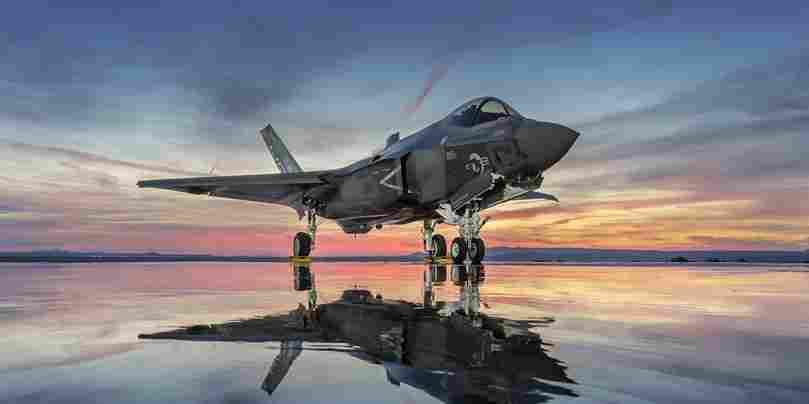
Spain Rejects $7.24B F-35 Deal, Commits €10.5B to Eurofighter and FCAS Amid Trump’s Tariff Threats
In a bold move, Spain has scrapped plans to purchase 50 Lockheed Martin F-35 fighter jets, valued at approximately €6.25 billion ($7.24 billion), opting instead to bolster its commitment to European defense programs, the Eurofighter Typhoon and the Future Combat Air System (FCAS). Announced on August 7, 2025, this decision, reported by El País and confirmed by Spain’s Ministry of Defence, reflects a strategic pivot toward European industrial autonomy and a rebuke of U.S. President Donald Trump’s aggressive tariff threats and NATO spending pressures. With €10.5 billion allocated for defense in 2025, Spain’s choice underscores a growing European push for self-reliance in the face of strained U.S.-Europe relations. Here’s the full story, optimized for NRIGlobe.com’s tech and global affairs audience.
Background: Spain’s Defense Modernization and the F-35 Consideration
Spain’s air and naval forces have long relied on aging fleets of McDonnell Douglas F/A-18 Hornets and AV-8B Harrier II jump jets, operated from the Juan Carlos I aircraft carrier. To modernize these capabilities, Spain issued a non-binding Request for Information (RFI) in 2017 for the F-35 Lightning II, considering both the F-35A (conventional takeoff and landing) for the Spanish Air and Space Force and the F-35B (short takeoff and vertical landing) for the Navy. The 2023 defense budget allocated €6.25 billion to replace these aging aircraft, with the F-35 initially viewed as a frontrunner due to its fifth-generation stealth and advanced sensor capabilities.
The Eurofighter Typhoon, a fourth-generation multirole fighter produced by Airbus, BAE Systems, and Leonardo, has been a mainstay of Spain’s air force since 2003, with 115 units ordered, including 25 additional jets under the Halcon II program in December 2024. The FCAS, a sixth-generation “system of systems” being developed by France, Germany, and Spain through Dassault Aviation, Airbus, and Indra Sistemas, aims to deliver an optionally manned fighter, drones, and AI-driven battlefield management by 2040. Despite its long timeline, FCAS represents Europe’s ambition for technological sovereignty.
The Catalyst: Trump’s Tariff Threats and NATO Pressure
U.S. President Donald Trump’s “America First” policy has intensified trade and defense tensions with NATO allies, including Spain. In August 2025, Trump imposed a 25% tariff on European Union exports, including Spanish goods, as part of a broader trade war affecting nearly 70 countries. Posts on X and reports from Reuters suggest Trump’s tariffs were partly retaliatory, targeting Spain for refusing to meet his proposed NATO defense spending target of 5% of GDP. Spain’s Socialist Prime Minister Pedro Sánchez committed to NATO’s existing 2% GDP target for 2025 but rejected the 5% goal, calling it incompatible with Spain’s welfare state priorities. Trump criticized Spain, stating, “Spain is terrible. They’re the only country that won’t pay in full,” and threatened punitive trade measures.
These tensions, coupled with Trump’s push for NATO allies to buy U.S. military equipment, including the F-35, have been perceived as coercive. European Commission President Ursula von der Leyen’s agreement to purchase more U.S. weapons and energy, criticized by EU High Representative Josep Borrell as a deal “struck in one hour on a golf course,” further highlighted the divide. Spain’s decision to abandon the F-35 aligns with a broader European sentiment, as articulated by aviation expert Richard Aboulafia: “The F-35 was the product of an era of extreme trust, and they may never trust the U.S. again.”
Spain’s Strategic Pivot: Eurofighter and FCAS
Spain’s Ministry of Defence confirmed to POLITICO, “The Spanish option involves the current Eurofighter and the FCAS in the future,” signaling a clear preference for European platforms. The decision redirects €10.5 billion in 2025 defense spending toward European suppliers, reinforcing the Eurofighter program and bolstering the FCAS, despite its developmental challenges. The Eurofighter, while lacking the F-35’s stealth capabilities, is a proven platform, and Spain’s recent order of 25 additional jets ensures air superiority until FCAS becomes operational.
The FCAS program, however, faces hurdles, including disputes between France, Germany, and Spain over industrial leadership and intellectual property. Dassault Aviation’s CEO, Eric Trappier, has accused Belgium, a new FCAS partner, of “mocking” the program by purchasing F-35s, highlighting tensions within the European defense ecosystem. Spain’s commitment to FCAS, backed by €10.5 billion, aims to stabilize the program, with Indra Sistemas poised to become a “national champion” in defense technology.
Implications for Spain’s Military and NATO
Spanish Navy’s Capability Gap
The decision poses significant challenges for the Spanish Navy. The Juan Carlos I, equipped with a ski-jump for STOVL operations, relies on aging Harrier jets set to retire by 2030. The F-35B was the only modern STOVL fighter available, and neither the Eurofighter nor FCAS offers this capability. Without a replacement, the Navy may rely solely on helicopters or unmanned aerial systems, potentially limiting the carrier’s strategic role. Air Chief Lt. Gen. Francisco Braco has warned against over-reliance on the Eurofighter, citing risks of a single-platform fleet.
Impact on Lockheed Martin and U.S.-Spain Relations
The cancellation is a major setback for Lockheed Martin, which had positioned the F-35 as an ideal interim solution. The decision exacerbates tensions with the U.S., already strained by Sánchez’s criticism of NATO’s 5% spending target and Trump’s tariff threats. Spain’s move mirrors India’s recent halt of a $3.6 billion Boeing P-8I deal, suggesting a broader pushback against U.S. defense dominance amid tariff pressures.
Boost for European Defense
Spain’s pivot strengthens Europe’s defense industrial base, aligning with Ursula von der Leyen’s call to “buy more” European weapons. The Eurofighter, produced by Airbus, BAE Systems, and Leonardo, and the FCAS, led by Dassault and Airbus, benefit from Spain’s €10.5 billion investment. This move may encourage other NATO members, like Canada and Portugal, to reconsider F-35 commitments, especially as Trump’s policies raise concerns about U.S. reliability.
SEO Keywords:
- Spanish Navy aircraft carrier
- Lockheed Martin F-35 Spain
- U.S.-Spain defense rift
- European defense investment
- NATO F-35 program
Geopolitical Context: A Fractured NATO
Trump’s tariff policies and skepticism toward NATO, including threats to “encourage” Russia to attack low-spending allies, have eroded trust in U.S. leadership. Spain’s decision reflects a broader European shift toward strategic autonomy, with countries like India, Turkey, and Brazil also exploring non-U.S. defense ecosystems. The FCAS, despite its challenges, represents Europe’s vision for a post-American defense architecture, integrating advanced technologies like AI and unmanned systems.
Spain’s rejection of the F-35 also resonates with Global South nations wary of U.S. geopolitical entanglements. As the Financial Times notes, Trump’s demands risk dragging Europe into conflicts misaligned with regional priorities, prompting Spain to prioritize sovereignty over alliance pressures.
SEO Keywords:
- Trump NATO policies 2025
- European strategic autonomy
- Global South defense strategies
- U.S. geopolitical influence
- Spain FCAS investment
Future Outlook
Spain’s decision leaves several questions:
- Naval Capability: Without the F-35B, the Spanish Navy faces a decade-long gap until FCAS or alternative solutions emerge. Extending Harrier service is impractical due to dwindling spares.
- FCAS Viability: The FCAS program’s success depends on resolving Franco-German-Spanish disputes. Spain’s financial commitment may stabilize it, but delays could push operational timelines beyond 2040.
- U.S.-Spain Relations: Ongoing tariff disputes and NATO spending disagreements may further strain bilateral ties, potentially affecting other U.S. defense deals.
- European Defense: Spain’s move could galvanize other NATO members to invest in European platforms, strengthening the continent’s defense industry.
Conclusion
Spain’s rejection of the $7.24 billion F-35 deal in favor of the Eurofighter and FCAS is a strategic defiance of Trump’s tariff threats and NATO pressure. By committing €10.5 billion to European defense, Spain reinforces its commitment to regional autonomy, despite operational risks to its navy. This decision, driven by economic, political, and strategic considerations, highlights a shifting global defense landscape where trust in U.S. reliability is waning. As Europe doubles down on homegrown solutions, Spain’s move could inspire other nations to prioritize sovereignty over alliance obligations.
Call to Action: Follow NRIGlobe.com for the latest on global defense and geopolitical shifts. Share your thoughts on Spain’s F-35 rejection in the comments below!
Last Updated: August 7, 2025
Spain scraps F-35 deal 2025,
Eurofighter Typhoon Spain,
Future Combat Air System FCAS,
Trump tariffs NATO,
Spain U.S. defense tensions,
Eurofighter Typhoon capabilities,
FCAS sixth-generation fighter,
Spain defense spending 2025,
European defense industry,
Indra Sistemas FCAS,
Trump tariffs Spain 2025,
NATO defense spending 5%,
U.S.-Spain geopolitical tensions,
European defense autonomy,
Lockheed Martin F-35 setback,
Continue reading — NRI Globe pillar guide: NRI Taxation India — NRE/NRO/DTAA/FBAR
Related NRI Globe Coverage
- US-India Trade Deal: Tariff Cuts and What They Mean for NRIs and the Indian Economy in 2026
- Trump's 100% Tariff on Pharma Imports: A Devastating Blow to India's Lifesaving Drug Exports
- Impact of Trump’s 25% Tariff on Indian Exports: An NRI Perspective
- Trump’s Tariff Tsunami: How New Trade Policies Are Shaping Life for Indian-American Families and Businesses
- Trump Rejects AI Slowdown Calls, Backs Faster Innovation — What It Means for NRIs in 2026
- Trump’s Iran Warning Sends Oil Past $110
- Trump Tariffs Severely Impact Indian Industries and Growth Paths
- India Halts $3.6B Boeing P-8I Aircraft Deal
Fresh from NRI Globe
- YouTuber Nandu's World (Rama Nandana) UK Visa & Job Fraud Case: Full Details + Key Lessons for NRIs (2026)
- Dussehra / Vijayadashami 2026 Events Country-Wise — Global NRI Directory (Ram Lila, Ravana Dahan, Durga Puja Pandals, Ayudha Puja Venues + Booking)
- Diwali 2026 Events Country-Wise — Global NRI Directory (White House, Leicester, London Trafalgar, Toronto, Auckland, Sydney Parramasala, Fiji, Mauritius, Trinidad, South Africa and More)
- Diwali / Deepavali 2026 Country-Wise NRI Celebrations — Complete Global Guide (USA, UK, Canada, Australia, Fiji, Mauritius, Trinidad, South Africa, UAE and 30+ Countries)