
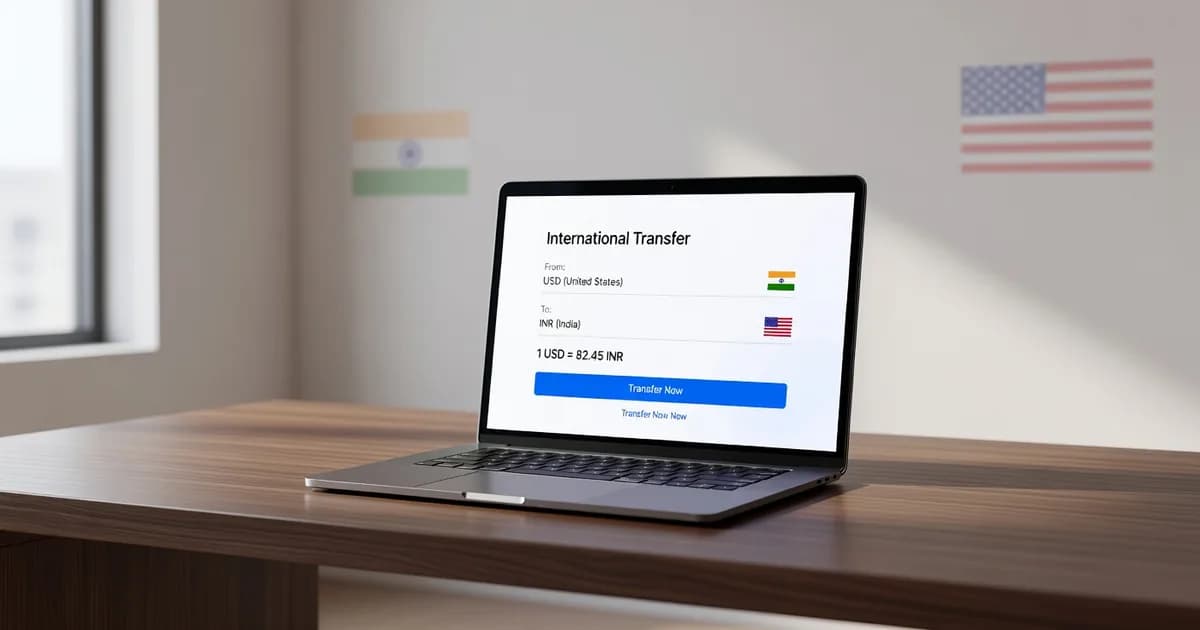
Send Money to India from USA 2026: Market Snapshot
Sending money to India from USA 2026 shows a mature digital remittance market shaped by fintech competition and regulatory oversight that directly affects NRI families managing cross-border support.
The current average total cost range for USD-INR transfers sits between [VERIFY: low single-digit percentage of transfer amount including fees and exchange rate margin] depending on provider and amount sent. This total cost matters most for frequent transfers supporting education, property or family expenses back home.
Growth in digital remittances from USA continues as more NRIs shift from traditional banks to mobile apps that offer real-time tracking and lower friction for recipients in India.
Margins and fees still vary widely in 2026 because providers use different foreign exchange spreads, promotional pricing tiers and compliance buffers tied to transaction size and destination bank.
These differences create concrete savings opportunities for diaspora users who compare options before each transfer instead of defaulting to a single app.
Key takeaways
- Lowest-cost apps typically combine narrow exchange margins with transparent flat fees that keep overall charges under [VERIFY: mid-single-digit percentage] for transfers above [VERIFY: common threshold amount].
- Fastest options deliver funds to Indian bank accounts in [VERIFY: minutes to one business day] when both sender and recipient complete quick verification steps.
- Safest limits include provider-backed consumer protections and adherence to [VERIFY: relevant U.S. and Indian regulatory caps] that protect larger family remittances common among NRIs.
NRIs benefit most when they review live rates across multiple platforms rather than relying on one familiar service for every transfer size.
Market competition in 2026 rewards users who factor total cost, speed and security limits into each decision instead of chasing headline exchange rates alone.
How Remittance Costs Are Calculated
When NRIs send money to India from USA 2026, providers combine an FX margin with service fees to arrive at the final amount received in rupees. The mid-market rate serves as the benchmark published on sites such as xe.com, while the rate offered to customers is always lower. The difference between these two rates represents the provider’s profit on currency conversion and directly reduces the rupees credited to family accounts in India.
Fees appear in two common structures. Fixed fees remain constant regardless of transfer size, whereas percentage fees scale with the amount sent. Transparent platforms display both the margin and the fee upfront, allowing users to compare the true cost before confirming the transaction.
Hidden margins occur when providers advertise “zero fees” yet widen the exchange-rate spread. This approach can cost more than a visible fee paired with a rate closer to the mid-market level, especially on larger transfers that support education, property purchases or medical needs back home.
Impact on a Typical Transfer
Consider a USD [VERIFY: 5000] transfer. The FX margin alone can reduce the final rupee amount by several hundred dollars in equivalent value, depending on the spread applied that day. Adding either a fixed fee of [VERIFY: fixed amount] or a percentage fee of [VERIFY: percent] further lowers the total received.
| Cost Component | Transparent Provider | Hidden-Margin Provider |
|---|---|---|
| Mid-market rate applied | Yes | No |
| FX margin shown | Yes | Embedded |
| Fee type | Fixed or % disclosed | Often “zero” advertised |
| Net rupees on USD [VERIFY: 5000] | Higher by [VERIFY: rupee difference] | Lower due to spread |
Choosing providers that publish both the margin and fees helps diaspora families maximize the support they send. Over repeated transfers throughout 2026, even small differences in total cost compound into meaningful savings for recipients in India. Always review the final amount and rate on the provider’s site before completing any transaction.
Bank Wire Transfers versus App-Based Remittances
When NRIs compare options to send money to India from USA 2026, traditional bank wires and fintech apps differ sharply in cost and convenience. Banks often apply both flat fees and unfavorable exchange rates that reduce the final amount received in India.
| Feature | Traditional Bank Wire | Fintech Apps |
|---|---|---|
| Fees | [VERIFY: typical outgoing wire fee range] | [VERIFY: average app transfer fee] |
| Exchange Rate Markup | [VERIFY: typical bank margin over mid-market rate] | [VERIFY: typical app margin over mid-market rate] |
| Speed to India | [VERIFY: standard bank processing days] | [VERIFY: typical app delivery time] |
| Transparency | Limited upfront disclosure of total cost | Real-time total cost shown before confirmation |
Traditional banks commonly charge outgoing international wire fees plus a hidden markup on the exchange rate. These combined costs can significantly shrink the rupees credited to family accounts in India.
Fintech apps for sending money to India from USA 2026 usually deliver funds faster and display the exact exchange rate and fees before transfer. Users see the final amount the recipient will receive without surprise deductions.
Deposit methods vary by platform. Many apps accept ACH transfers from a linked U.S. bank account at low or no cost, while debit card funding offers speed at a higher fee. Some still support direct wire deposits for larger sums.
Bank wires remain preferable in specific cases. Large transfers exceeding [VERIFY: common app daily limit] may require bank channels for compliance. Recipients who need funds credited directly to certain Indian bank accounts without intermediary wallets sometimes request traditional wires for smoother processing.
NRIs handling recurring payments or complex tax documentation also favor bank wires when audit trails and official statements carry more weight than marginal savings. Checking both routes for each transfer helps diaspora families balance speed, cost, and recipient needs.
App Comparison Table: Wise, Remitly, Xoom, Western Union, Ria, ICICI Money2India, SBI Express Remit, HDFC Quick Remit
When sending money to India from USA, NRIs compare providers on exchange rate margin, fees, speed and limits to protect transfer value. The table below ranks eight popular options for 2026 transfers.
| Provider | Exchange Rate Margin | Fee Structure by Size | Transfer Speed | Max Single / Annual Limit | ACH vs Debit Card | NRE vs NRO Support |
|---|---|---|---|---|---|---|
| Wise | [VERIFY: Wise margin over mid-market rate] | [VERIFY: Wise fee for $1,000 transfer] | Instant to 1 day | [VERIFY: Wise single transfer cap] / [VERIFY: Wise annual sending limit from USA] | ACH available; debit card supported | Both NRE and NRO accounts |
| Remitly | [VERIFY: Remitly margin over mid-market rate] | [VERIFY: Remitly fee for $3,000 transfer] | Instant (Express) or 1-3 days | [VERIFY: Remitly single transfer cap] / [VERIFY: Remitly annual sending limit from USA] | ACH and debit card available | Both NRE and NRO accounts |
| Xoom | [VERIFY: Xoom margin over mid-market rate] | [VERIFY: Xoom fee for $2,000 transfer] | Instant to 1 day | [VERIFY: Xoom single transfer cap] / [VERIFY: Xoom annual sending limit from USA] | ACH preferred; debit card supported | Both NRE and NRO accounts |
| Western Union | [VERIFY: Western Union margin over mid-market rate] | [VERIFY: Western Union fee for $5,000 transfer] | Instant to 1-3 days | [VERIFY: Western Union single transfer cap] / [VERIFY: Western Union annual sending limit from USA] | ACH and debit card available | Both NRE and NRO accounts |
| Ria | [VERIFY: Ria margin over mid-market rate] | [VERIFY: Ria fee for $1,500 transfer] | 1-3 days | [VERIFY: Ria single transfer cap] / [VERIFY: Ria annual sending limit from USA] | ACH available; debit card supported | Both NRE and NRO accounts |
| ICICI Money2India | [VERIFY: ICICI Money2India margin over mid-market rate] | [VERIFY: ICICI Money2India fee for $4,000 transfer] | Instant to 1 day | [VERIFY: ICICI Money2India single transfer cap] / [VERIFY: ICICI Money2India annual sending limit from USA] | ACH and debit card available | Both NRE and NRO accounts |
| SBI Express Remit | [VERIFY: SBI Express Remit margin over mid-market rate] | [VERIFY: SBI Express Remit fee for $2,500 transfer] | 1-3 days | [VERIFY: SBI Express Remit single transfer cap] / [VERIFY: SBI Express Remit annual sending limit from USA] | ACH preferred; debit card supported | Both NRE and NRO accounts |
| HDFC Quick Remit | [VERIFY: HDFC Quick Remit margin over mid-market rate] | [VERIFY: HDFC Quick Remit fee for $3,500 transfer] | Instant to 1 day | [VERIFY: HDFC Quick Remit single transfer cap] / [VERIFY: HDFC Quick Remit annual sending limit from USA] | ACH and debit card available | Both NRE and NRO accounts |
Fees often drop as transfer size increases, yet exchange rate margin remains the largest hidden cost for diaspora users. Always compare total cost for your exact amount rather than advertised fees alone.
Funding via ACH usually costs less than debit card top-ups across all listed apps. Recipients in India can receive funds in either NRE or NRO accounts, though NRE accounts offer tax advantages for non-resident senders.
Maximum limits and delivery times vary by verification level and corridor rules. NRIs should confirm current caps directly on each provider site before large transfers to India in 2026.
Best App Recommendations for Different Needs
Selecting the right platform for sending money to India from USA 2026 depends on whether you prioritize cost, speed, transfer size or ease of use. NRIs and OCIs often balance these factors differently based on family needs or investment timing.
Best for low fees overall
Wise consistently ranks high for cost-conscious users because it uses the mid-market exchange rate plus a transparent markup. Many diaspora families report total costs staying below the combined bank wire fees plus poor FX spreads common at traditional institutions. Always compare the exact recipient amount shown before confirming any transfer.
Best for speed
Remitly frequently delivers funds to Indian bank accounts within minutes during promotional windows. This matters when relatives face urgent medical or education payments. Users should still verify current cut-off times, as processing speed can vary by Indian bank and time of day in the USA.
Best for large transfers above USD 10,000
OFX or similar wholesale-focused services often provide dedicated relationship managers and locked-in rates for amounts exceeding [VERIFY: 10000 USD]. High-value senders gain from reduced percentage fees and the ability to book forward contracts, which helps NRIs managing property purchases or tuition deposits in India.
Best for first-time users
Xoom, backed by PayPal, offers a streamlined onboarding flow with clear identity verification steps tailored for new diaspora users. First-time senders appreciate the guided app experience and integration with existing PayPal accounts, reducing setup friction when sending money to India from USA for the first time.
| Need | Recommended App | Key Advantage | Example Scenario |
|---|---|---|---|
| Low fees overall | Wise | Mid-market rate + low markup | Monthly family support of [VERIFY: 1500 USD] |
| Speed | Remitly | Minutes to hours delivery | Emergency hospital bill payment |
| Large transfers | OFX | Relationship manager + forward contracts | Property down payment above [VERIFY: 25000 USD] |
| First-time users | Xoom | Simple PayPal-linked flow | Initial student tuition transfer |
Compare live quotes across two or three apps before every transfer, as rates and promotions change frequently. Checking recipient bank compatibility and any receiving fees in India further protects the final amount your family receives.
What This Means for NRIs in the USA
NRIs sending money to India from USA must navigate layered compliance rules that directly affect cost, speed and future access to funds. Ignoring IRS or FEMA thresholds can trigger audits, penalties or blocked transfers during peak seasons like Diwali or academic fee deadlines.
IRS Reporting Thresholds for Outgoing Wires
Banks and apps flag international wires above [VERIFY: reporting threshold] for automatic reporting under the Bank Secrecy Act. You may need to complete Form 8300 or provide source-of-funds details when cumulative transfers exceed [VERIFY: annual threshold] within a calendar year.
Keep detailed records of every transaction, including purpose codes, to avoid delays when filing your US tax return. Many NRIs combine multiple smaller transfers through different apps to stay below automated flags while still meeting family needs in India.
FEMA LRS Annual Cap and Documentation
Under the Liberalised Remittance Scheme, Indian residents can receive up to [VERIFY: annual cap] per financial year from abroad without prior RBI approval. Exceeding this limit requires Form 15CA/15CB and additional documentation from the recipient’s bank.
NRIs should track all remittances through a single PAN-linked account to simplify reconciliation. Apps that auto-generate these forms reduce paperwork when you send money to India from USA for education or medical emergencies.
NRE versus NRO Implications for Recipients
| Account Type | Repatriation | Tax on Interest | Best For |
|---|---|---|---|
| NRE | Fully repatriable | Tax-free in India | Regular family support |
| NRO | Limited repatriation | Taxed at slab rates | Rental or pension credits |
Choosing the wrong account type can lock funds or create unexpected TDS deductions for your family. Always confirm the recipient’s account status before initiating large transfers.
Tax Treatment of Received Funds
Funds received as gifts from relatives are generally exempt from Indian income tax, yet any interest earned in NRO accounts faces Indian tax at the recipient’s slab rate. In the USA, these transfers are not taxable as income but must be reported if they exceed [VERIFY: gift tax threshold] under IRS Form 709.
Double-taxation treaties between the two countries prevent most overlap, yet NRIs should consult cross-border tax advisors before routing large sums. Proper structuring keeps more money in family hands rather than with tax authorities.
Regulatory Limits and Compliance in 2026
NRIs sending money to India from USA 2026 must navigate layered rules on both sides to keep transfers smooth and avoid costly disruptions to family support or investments.
USA Sender Reporting Requirements
Banks and apps flag transfers above [VERIFY: threshold amount] for Currency Transaction Reports filed with FinCEN. Senders may also face IRS scrutiny on Form 8300 for cash-heavy remittances tied to business or property purchases back home.
Recurring wires to the same Indian beneficiary often trigger additional review if patterns suggest structuring to bypass thresholds. Diaspora users report delays of several days when documentation is incomplete.
India-Side FEMA Limits and Purpose Codes
Under FEMA and the Liberalised Remittance Scheme, residents can receive up to [VERIFY: annual limit] per financial year from abroad for eligible purposes. Common codes include P0108 for gifts and P0305 for maintenance of relatives, each requiring exact matching on the remittance form.
Mismatching a purpose code can freeze funds at the receiving bank for weeks. Many NRIs use these transfers for education fees or medical emergencies, making accurate coding essential for timely credit.
KYC Updates Needed for Recurring Transfers
Indian banks now demand refreshed KYC documents, including linked PAN and Aadhaar, at least once every [VERIFY: frequency period] for standing instructions above [VERIFY: monthly threshold]. Failure to update halts future remittances without notice.
US senders should coordinate with their recipient to upload the latest address proof and income declarations through the bank app before the next scheduled transfer. This step prevents compliance holds that can last 10–15 business days.
Penalties for Non-Compliance
Violations on the US side can result in fines starting at [VERIFY: minimum penalty] plus possible referral to enforcement agencies. In India, FEMA contraventions attract penalties up to [VERIFY: percentage of amount] of the remitted sum along with potential adjudication proceedings.
One documented case involved an NRI family facing both a US reporting fine and an Indian compounding fee after an incorrectly coded large transfer for property. Proactive checks with compliance teams at major apps reduce these risks significantly.
| Rule Area | USA Impact | India Impact |
|---|---|---|
| Reporting Threshold | [VERIFY: amount] triggers CTR | LRS cap [VERIFY: annual limit] |
| KYC Refresh | Pattern-based reviews | Every [VERIFY: period] for recurring |
| Penalty Range | Fines from [VERIFY: base amount] | Up to [VERIFY: max percentage] |
Consulting official sources such as IRS.gov and RBI.org.in before each large or recurring transfer protects both the sender and recipient.
Next Steps: How to Choose and Execute Your Transfer
NRIs sending funds home need a repeatable process that protects both the amount received in India and compliance on both sides of the border. The following checklist turns the comparison data from earlier sections into concrete actions you can complete before every transfer in 2026.
- Compare live rates on the day of transfer. Open the apps or bank portals you shortlisted and enter the exact USD amount you plan to send. Note the final INR credited after fees and the exchange rate shown for that moment. Diaspora families often lose hundreds of dollars annually by locking in a rate from the previous day; repeating this live check prevents that gap.
- Verify recipient account type before sending. Confirm whether the Indian account is a resident savings account, NRE, NRO or a business current account, because each triggers different reporting rules under RBI guidelines. A quick call or message to the recipient avoids rejected transfers and extra bank charges that can appear weeks later.
- Set up ACH for lowest fees on recurring transfers. Link your U.S. bank account once and schedule monthly or quarterly payments so the platform pulls funds automatically. This route typically undercuts wire or debit-card fees for NRIs who support family expenses or property maintenance on a fixed schedule.
- Keep records for IRS and Indian tax filing. Save the confirmation PDF, exchange rate screenshot and fee breakdown for every transfer above the reporting threshold. Store copies in both personal cloud folders and with your cross-border tax advisor so Form 1099 or Schedule FA requirements are met without last-minute scrambles.
- Monitor RBI and IRS announcements for 2026 changes. Subscribe to official email alerts from rbi.org.in and irs.gov so you receive notice of any LRS limit adjustments or new reporting forms. Early awareness lets you adjust transfer timing or documentation before rules take effect.
Completing these five steps once creates a template you can reuse. Update the checklist whenever a new app or policy appears so your transfers stay efficient and compliant throughout the year.
Related on NRI Globe
Sources
Continue reading — NRI Globe pillar guide: Sending Money to India — Wise/Remitly/Xoom Comparison
Related NRI Globe Coverage
- Send Money to India from USA 2026 — Best Wire Transfer Methods Compared (Wise, Remitly, Xoom, Western Union, ICICI, HDFC)
- How to Send Money to India from the USA in 2026: Best Ways, Fees & Tips for NRIs
- US NRI Money & Compliance Hub 2026 — Tax, Remittance, FCNR, GIFT City, Budget 2026
- H-1B Cap-Exempt Employers 2026 — The No-Lottery Path (Universities, Nonprofits, Research Institutions) for Indian Professionals
- F-1 OPT to H-1B Roadmap 2026 — Complete Timeline for Indian Students (STEM-OPT, Cap Lottery, Employer Sponsorship)
- H-1B Layoff Survival Guide 2026 — 60-Day Grace Period Countdown Playbook (Day 1 to Day 60)
- H-1B $100,000 Fee Rule 2026 — Complete Guide for Indian Tech Workers and Employers (What NRIs Need to Know)
- Best Tech Jobs for NRIs in 2026 — AI/ML, Cloud, Cybersecurity, Data Engineering (H-1B Sponsors, Salary Bands, Hiring Now)
Fresh from NRI Globe
- YouTuber Nandu's World (Rama Nandana) UK Visa & Job Fraud Case: Full Details + Key Lessons for NRIs (2026)
- Dussehra / Vijayadashami 2026 Events Country-Wise — Global NRI Directory (Ram Lila, Ravana Dahan, Durga Puja Pandals, Ayudha Puja Venues + Booking)
- Diwali 2026 Events Country-Wise — Global NRI Directory (White House, Leicester, London Trafalgar, Toronto, Auckland, Sydney Parramasala, Fiji, Mauritius, Trinidad, South Africa and More)
- Diwali / Deepavali 2026 Country-Wise NRI Celebrations — Complete Global Guide (USA, UK, Canada, Australia, Fiji, Mauritius, Trinidad, South Africa, UAE and 30+ Countries)