
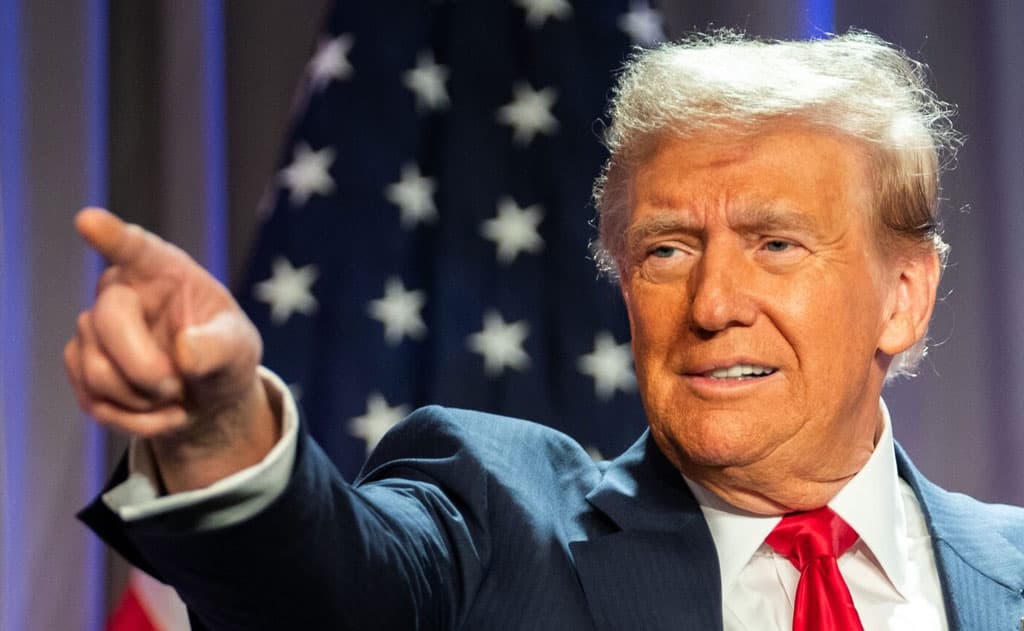
Trump's "Dead Economy" Claim on India: An NRI Perspective on Implications and Opportunities
Introduction
On July 30, 2025, U.S. President Donald Trump labeled India's economy "dead" while announcing a 25% tariff on Indian imports, citing India's high tariffs on U.S. goods and its trade ties with Russia. For Non-Resident Indians (NRIs) living in the U.S. and beyond, these remarks and the accompanying tariffs raise concerns about India's economic trajectory, U.S.-India trade relations, and their personal investments. This SEO-optimized article, tailored for NRIs on www.nriglobe.com, analyzes Trump's comments from an NRI perspective, exploring their impact on India's economy, key sectors, and NRI investment opportunities, while offering insights into navigating this evolving landscape.
Keywords: Trump comments Indian economy, India dead economy NRI, U.S. tariffs India impact, NRI investments India, India-U.S. trade relations, Indian economy 2025
Understanding Trump's Comments: An NRI Lens
Trump's "dead economy" remark, made during a speech on trade policy, is part of his broader "America First" agenda, which includes a 25% tariff on Indian imports effective August 1, 2025, and potential penalties tied to India's purchases of Russian oil and military equipment. For NRIs, particularly those in the U.S., this rhetoric signals potential disruptions in bilateral trade, which could affect remittances, investments, and job opportunities tied to India's export-driven sectors.
As NRIs, you may be concerned about how these tariffs impact India's economic stability and your financial ties to the country. India's economy, far from "dead," is projected to grow at 6.5% in FY 2024-25, outpacing most global economies despite a slowdown from previous years. With $87 billion in exports to the U.S. in 2024, India remains a key player in global trade, and NRIs can play a pivotal role in supporting its resilience.
Economic Impact on India: What NRIs Need to Know
India's Economic Resilience
Despite Trump's provocative label, India's economy remains robust, driven by domestic consumption, a thriving tech sector, and strategic trade diversification. Key points for NRIs:
- GDP Growth: India's 6.5% growth rate in FY 2024-25, though slower than prior years, reflects resilience amid global economic challenges.
- Trade with the U.S.: India's $44.4 billion trade surplus with the U.S. in 2024 underscores its export strength, particularly in IT services ($33 billion), pharmaceuticals ($8 billion), and gems and jewelry ($8.5 billion).
- Challenges: A depreciating rupee (87.16 to USD) and potential tariff-induced inflation could increase costs for NRI remittances and investments.
Sector-Specific Impacts of U.S. Tariffs
Trump's tariffs will affect sectors critical to India's economy, with implications for NRIs invested in these industries or reliant on related job markets:
- Textiles and Apparel:
- Tariffs will rise to 31-34%, impacting India's $8 billion apparel exports to the U.S.
- NRIs in retail or supply chain businesses may face higher costs, but India's competitive edge over China (facing 54% tariffs) could create opportunities.
- Companies like KPR Mill and Page Industries are worth monitoring for investment potential.
- Pharmaceuticals:
- Currently exempt from immediate tariffs, India's $12.2 billion pharma exports to the U.S. remain stable.
- NRIs in healthcare or with stakes in firms like Dr. Reddy's or Aurobindo Pharma should watch for future tariff expansions.
- IT and Services:
- India's IT sector, a major employer for NRIs, faces risks from potential H-1B visa restrictions, which could raise costs for firms like Infosys and Wipro.
- A stronger U.S. dollar may boost NRI remittances when converted to rupees, offering short-term financial benefits.
- Gems and Jewelry:
- Tariffs of 30-38.5% threaten this labor-intensive sector, potentially impacting NRI investors in companies like Titan or Rajesh Exports.
- Job losses in this sector could affect NRI families with ties to India's jewelry trade.
- Automotive:
- Higher tariffs will reduce competitiveness for auto exports, affecting firms like Mahindra & Mahindra.
- NRIs in the U.S. auto industry may face supply chain disruptions.
Related Keywords: NRI investments textiles, India pharma exports NRI, IT sector NRI jobs, gems and jewelry tariffs, India auto sector investments
Financial Implications for NRIs
Remittances and Currency Volatility
The rupee's depreciation against the U.S. dollar (from 83.8 to 87.16) benefits NRIs sending money to India, as remittances yield higher value in rupees. However, tariff-induced inflation could erode purchasing power for Indian families reliant on these funds. NRIs should:
- Lock in Exchange Rates: Use forward contracts or fixed-rate remittance services to mitigate currency volatility.
- Monitor Inflation: Rising import costs in India may increase living expenses for your families back home, as tracked by RBI inflation data.
Investment Opportunities and Risks
Trump's tariffs and global trade shifts present both challenges and opportunities for NRI investors:
- Stock Market Volatility: FII outflows due to rising U.S. Treasury bond yields could pressure Indian markets, but sectors like defense and renewables remain attractive.
- China Plus One Strategy: As global firms diversify away from China, India's manufacturing sector offers long-term investment potential in areas like electronics and chemicals.
- Real Estate: India's growing urban markets, particularly in tier-2 cities, remain a safe bet for NRI property investments despite short-term economic pressures.
Related Keywords: NRI remittances 2025, India stock market NRI, China Plus One NRI investments, India real estate NRI
Geopolitical Context and NRI Influence
Trump's criticism of India's Russia ties reflects U.S. efforts to curb India's multi-alignment strategy, which balances relations with the U.S., China, and Russia. For NRIs, this geopolitical tension underscores India's strategic importance in the Indo-Pacific, potentially strengthening its bargaining power in trade talks. The personal rapport between Trump and Prime Minister Narendra Modi, along with the influence of Usha Vance (wife of Vice President-elect J.D. Vance), could pave the way for diplomatic resolutions, benefiting NRI communities invested in U.S.-India relations.
NRIs in the U.S. can leverage their networks to advocate for balanced trade policies, emphasizing India's role as a reliable partner in technology, defense, and pharmaceuticals.
Related Keywords: NRI advocacy U.S.-India, India-Russia relations NRI, Modi-Trump NRI perspective
Strategic Advice for NRIs
To navigate the fallout from Trump's tariffs and comments, NRIs can take proactive steps:
- Diversify Investments: Shift portfolios toward tariff-resistant sectors like IT and pharmaceuticals, and explore opportunities in non-U.S. markets like the EU and ASEAN.
- Engage in Advocacy: Join NRI business forums to influence U.S.-India trade negotiations, highlighting India's economic contributions.
- Optimize Remittances: Use digital platforms like Wise or ICICI Bank for cost-effective transfers, capitalizing on favorable exchange rates.
- Stay Informed: Monitor trade developments and India's fiscal policies, such as increased capital expenditure, which could stabilize markets.
Countering the "Dead Economy" Narrative
Indian opposition leaders, like Rahul Gandhi, have used Trump's remarks to criticize domestic policies, but NRIs should view India's economy through a global lens. India's export growth (77% from 2004-2014) and resilience amid trade wars highlight its potential. For NRIs, this is a time to reinforce confidence in India's markets, support local businesses, and advocate for stronger bilateral ties.
Related Keywords: Rahul Gandhi Trump comments, NRI confidence Indian economy, India export growth
Conclusion
Trump's "dead economy" label is a rhetorical jab, not a reflection of India's economic reality. For NRIs, the 25% tariffs pose challenges but also open doors for strategic investments and advocacy. By diversifying portfolios, optimizing remittances, and engaging in U.S.-India trade discussions, NRIs can contribute to India's resilience while safeguarding their financial interests. India's economy remains a beacon of growth, and NRIs are uniquely positioned to shape its future.
Call to Action: Join the NRI Globe community to stay updated on U.S.-India trade developments and discover investment opportunities in India's thriving sectors. Subscribe to our newsletter for exclusive insights tailored for NRIs.
Further reading: See the Reserve Bank of India and Bureau of Economic Analysis for primary references on trade and economic data.
Continue reading — NRI Globe pillar guide: NRI Taxation India — NRE/NRO/DTAA/FBAR
Related NRI Globe Coverage
- Impact of Trump’s 25% Tariff on Indian Exports: An NRI Perspective
- Global Trade on Edge: Will Trump's Tariffs Backfire?
- US Tariffs 2026: Impact on India and What NRIs Should Know
- The AI Bubble Is Starting to Crack: What It Means for NRIs and Indian Tech Investors in 2026
- Trump’s Iran Warning Sends Oil Past $110
- US Economy 2026: What It Means for NRIs
- Tesla Dethroned: China's BYD Overtakes as World's Top EV Seller in 2025 – Implications for NRIs and Global Indians in 2026
- SpaceX in 2026: How Elon Musk’s Starship Is Revolutionizing the Global Space Economy – A Proud Moment for Indian Talent & NRI Investors
Fresh from NRI Globe
- YouTuber Nandu's World (Rama Nandana) UK Visa & Job Fraud Case: Full Details + Key Lessons for NRIs (2026)
- Dussehra / Vijayadashami 2026 Events Country-Wise — Global NRI Directory (Ram Lila, Ravana Dahan, Durga Puja Pandals, Ayudha Puja Venues + Booking)
- Diwali 2026 Events Country-Wise — Global NRI Directory (White House, Leicester, London Trafalgar, Toronto, Auckland, Sydney Parramasala, Fiji, Mauritius, Trinidad, South Africa and More)
- Diwali / Deepavali 2026 Country-Wise NRI Celebrations — Complete Global Guide (USA, UK, Canada, Australia, Fiji, Mauritius, Trinidad, South Africa, UAE and 30+ Countries)