Published on HinduTone | Festival & Devotion
“Wherever Rama’s name is chanted, that place becomes Ayodhya.” — Ancient Sanskrit saying, quoted in temples from Houston to Hiroshima
Introduction: A Birthday That Belongs to the World
On the ninth day of the bright half of the Hindu lunar month of Chaitra — Chaitra Shukla Navami — Hindus across every continent pause, fold their hands, and celebrate the birth of Maryada Purushottam Sri Rama: the ideal man, the perfect king, the seventh avatar of Lord Vishnu.
Sri Rama Navami 2025 falls on Sunday, 6 April.
In Ayodhya, the birthplace of Rama in Uttar Pradesh, hundreds of thousands gather for a celebration that has persisted, unbroken, for millennia. The Sarayu river glitters with lamps. The air is thick with the fragrance of jasmine and camphor. The chant of Jai Shri Ram rises in waves.
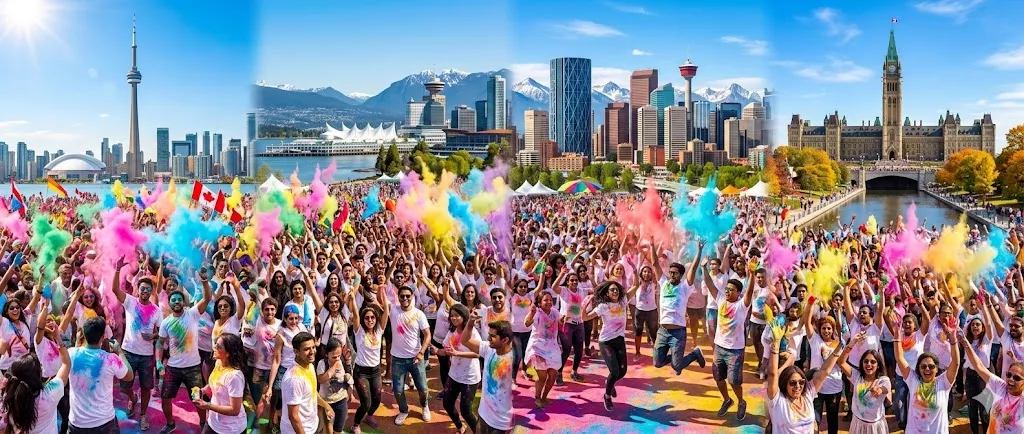
But in 2025, that same chant rises in Houston. In London. In Singapore. In Melbourne. In Toronto. In Dubai. In Cape Town.
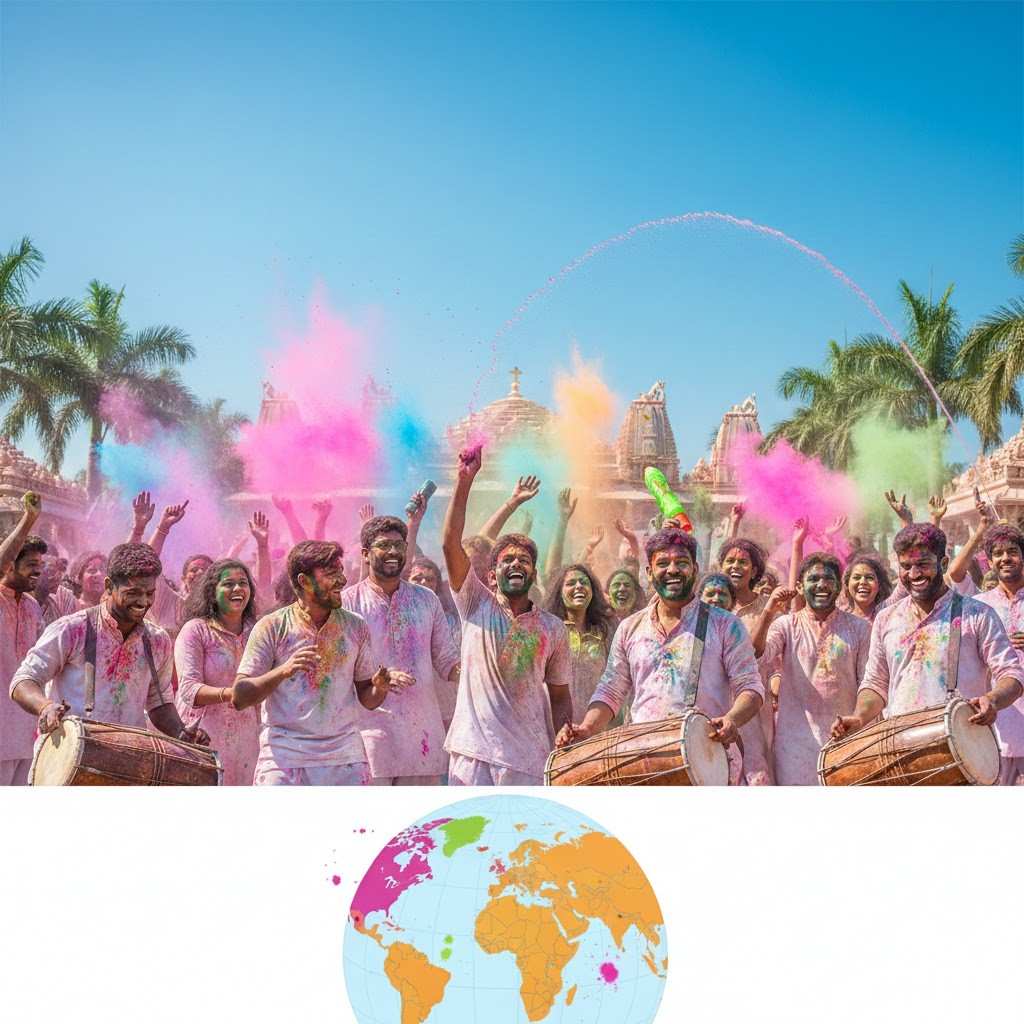
The Hindu diaspora — estimated at over 30 million NRIs and PIOs living outside India — has carried Sri Rama Navami across every time zone. This is the story of how they celebrate, what they preserve, what they have innovated, and why this festival, more than perhaps any other, speaks to the soul of Hindus far from their homeland.
The Significance of Sri Rama Navami: Why This Festival Matters Deeply
Before exploring the worldwide celebrations, it is worth understanding why Rama Navami holds such emotional and spiritual weight for the diaspora.
Rama as the Universal Ideal
Lord Rama is not merely a deity in the conventional sense. He is a maryada — a standard. A model of:
- Dutiful sonhood (pitribhakti) — he accepted 14 years of exile without bitterness
- Righteous kingship (Rama Rajya) — a just ruler who placed duty above personal happiness
- Unwavering dharma — he kept his word even at enormous personal cost
- Devotional marriage — his bond with Sita is the archetype of faithful, sacred partnership
For NRIs navigating the complex demands of life abroad — balancing careers, raising children between cultures, sometimes sacrificing proximity to family — Rama’s story resonates with painful, beautiful precision. His exile feels less metaphorical and more biographical.
Rama Navami After the Ayodhya Temple Consecration
The Prana Pratishtha (consecration) of the Ram Mandir in Ayodhya on 22 January 2024 transformed Rama Navami for the global Hindu community. For the first time in centuries, the idol of Ram Lalla stands consecrated in his birthplace — Ram Janmabhoomi. The 2025 Rama Navami is, therefore, a deeply heightened occasion. NRI communities worldwide have incorporated special prayers for the Ram Mandir into their Navami observances, and live-streaming of the Ayodhya celebrations has become a centrepiece of diaspora gatherings.
Rama Navami Across the World: Country-by-Country
United States — The Largest NRI Hindu Community
The United States is home to approximately 4.2 million Indian Americans, making it the most populous NRI community outside the Gulf. Hindu temples across the US observe Rama Navami with extraordinary devotion and increasing scale.
How American Hindus Celebrate
Temple celebrations are the heart of US Rama Navami. Major events include:
- Sri Venkateswara Temple, Pittsburgh, Pennsylvania — One of the oldest and most revered Hindu temples in America, the Tirumala Tirupati-style temple in Penn Hills conducts elaborate Rama Navami Brahmotsavam spanning three to five days. The event draws devotees from across the Northeast US and Canada.
- ISKCON Temples (nationwide) — International Society for Krishna Consciousness temples across the US — from Los Angeles to New York to Chicago — observe Rama Navami with Ramayana recitations, abhishekam (ritual bathing of the deity), bhajans, and free prasad distribution. ISKCON’s celebration emphasises Rama as Vishnu avatar alongside Krishna devotion.
- Sri Siva Vishnu Temple, Lanham, Maryland — Serving the greater Washington DC area, this temple hosts one of the most attended Rama Navami events on the East Coast, with Kalyana Utsavam (divine wedding ceremony of Rama and Sita) as its centrepiece.
- Chinmaya Mission centres (40+ US locations) — Chinmaya Mission conducts Ramayana Parayanam (continuous reading of the Valmiki Ramayana or Ramacharitmanas) across nine days leading to Navami. Their Bala Vihar (children’s programme) incorporates dramatic enactments of Rama’s life for second-generation Hindu children.
- Texas Hindu community — Houston and Dallas, home to large Telugu and Tamil populations, host multi-day events at temples including the Sri Meenakshi Temple (Pearland), Sri Rajarajeswari Temple (Austin), and Sri Venkateswara Swami Temple of Greater Houston.
The American Innovation: Rama Navami as Cultural Education
A distinctive feature of US Rama Navami celebrations is their strong educational dimension. Second-generation Hindu Americans — born in the US, often more comfortable in English than Telugu or Tamil — engage with Rama’s story through:
- English-language Ramayana storytelling sessions at temple balaji halls
- Dramatic performances (Rama Leela) staged by Hindu youth organisations
- Interfaith Rama Navami programmes at university Hindu Student Councils (HSCs) — inviting non-Hindu classmates to learn about the festival
- Digital Navami — online Ramayana reading groups connecting NRIs across time zones
Community Voice: “I grew up in New Jersey knowing the Ramayana as stories my grandmother told me. When I became an adult and truly understood what Rama sacrificed — what it means to honour your word even when it costs you everything — I understood why my grandparents clung to this story when they came to America. It was their guide to living with dignity in a difficult land.” — Suresh Venkataramaiah, 42, software engineer, New Jersey
Rama Navami Food in America
Fasting on Rama Navami is widely observed. American NRIs fast on fruits and milk (phalahar) through the day, breaking their fast after temple abhishekam. The traditional panakam (jaggery, water, cardamom, and pepper drink) and vadapappu (soaked moong dal with coconut) — offerings specific to Andhra-style Rama Navami — are prepared in Telugu community homes.
Many Hindu grocery stores in US cities — Patel Brothers, India Grocers, Amma’s Kitchen — stock Rama Navami essentials seasonally.
United Kingdom — Devotion in Every Accent
The UK’s 1.7 million Hindus are concentrated in Leicester, London, Birmingham, and Manchester. The community spans Gujarati, Punjabi, Tamil, Telugu, Sindhi, and Rajasthani backgrounds — and Rama Navami is one of the few festivals that genuinely cuts across all these communities.
Key UK Celebrations
- BAPS Swaminarayan Temples — Swaminarayan temples across the UK (Neasden in London, Oldham, Wellingborough, Leicester) conduct Rama Katha (discourses on Rama’s life), Ramayana exhibitions, and bhajan evenings throughout the Navami period.
- Ram Mandir, Leicester — Leicester’s Ram Mandir — established in 1969, one of the oldest purpose-built Hindu temples in Europe — is the epicentre of UK Rama Navami. The temple conducts nine-day akhand path (continuous scripture reading) and abhishekam on Navami day, attended by thousands.
- Shree Sanatan Mandir, Leicester — Hosts Sundar Kanda recitation events drawing the local Gujarati and North Indian community.
- Hindu temples in Southall and Wembley — Multiple temples in West London observe Kalyana Utsavam with elaborate decoration and prasad distribution.
- Vishwa Hindu Parishad UK — VHP UK organises community Rama Navami events, including processions in certain cities.
The British Tamil Dimension
South Indian Tamil Hindus in the UK observe Rama Navami with particular emphasis on Sundar Kanda recitations (the fifth book of Valmiki Ramayana, celebrating Hanuman’s devotion to Rama). Tamil cultural organisations in East Ham, Tooting, and Harrow host these.
Community Voice: “In my village in Tamil Nadu, Rama Navami meant the whole street would come together. In Leicester, it’s the whole temple. Different scale, same heart. When the priest chants Rama Rama Rama and everyone joins in — I am not in England anymore.” — Jayalakshmi Subramaniam, 61, retired teacher, Leicester
Australia — Southern Hemisphere, Northern Spirit
Australia’s Indian-origin population has grown rapidly to over 700,000, with significant Hindu communities in Sydney, Melbourne, Brisbane, and Perth.
Australian Rama Navami Highlights
- BAPS Swaminarayan Mandir, Sydney — Australia’s largest Hindu temple conducts multi-day Rama Navami celebrations including Kalyana Utsavam, cultural programmes, and community meals.
- Sri Venkateswara Temple, Helensburgh (Sydney) — The magnificent Tirupati-style temple in Helensburgh hosts one of Australia’s most attended Rama Navami celebrations, drawing over 5,000 devotees. The abhishekam and Sita Rama Kalyanam (divine wedding) are performed with full Vedic ritual.
- Melbourne’s ISKCON Hare Krishna Temple — Melbourne’s vibrant Hare Krishna community hosts public Rama Navami celebrations in Federation Square and at their Albert Park temple.
- Hindu Council of Australia coordinates nationwide Navami events and connects temples across states.
The Australian Phenomenon: Outdoor Navami
Unlike their UK counterparts who often contend with cold April weather (Rama Navami falls in early spring in the northern hemisphere, which means early autumn in Australia), Australian Hindus have the climate for outdoor bhajan and prasad events. Temple grounds, community parks, and cultural centres host evening celebrations that blend devotion with community picnics.
Canada — Multicultural Devotion
Canada’s Indian diaspora — approximately 1.8 million — is centred in Toronto, Vancouver, and Calgary. The Toronto area alone has over 40 Hindu temples.
- BAPS Swaminarayan Mandir, Toronto — Canada’s most visited Hindu temple hosts elaborate Rama Navami celebrations including Rathotsavam (chariot procession) in some years.
- Vishnu Mandir, Richmond Hill — One of Toronto’s oldest Hindu temples, conducts nine-day Ramayana recitations.
- Sri Lankan Tamil Hindu community — A significant part of Canada’s Hindu population are Sri Lankan Tamils, who observe Rama Navami with Sundar Kanda and Hanuman Chalisa recitations in their own temples.
UAE & Gulf — Hindu Devotion in an Islamic Landscape
The UAE alone hosts over 3.5 million Indians — the largest Indian diaspora community in a single country. Celebrating Hindu festivals in the Gulf requires navigating a different legal and cultural framework, yet the Hindu community does so with remarkable vibrancy.
- ISKCON Dubai — Dubai’s ISKCON temple (Jebel Ali) is the largest Hindu temple in the Middle East and the primary venue for Rama Navami celebrations. The temple hosts multi-day events including Ramayana exhibitions, abhishekam, and cultural programmes.
- Shiva and Vishnu Temple, Dubai — This community temple observes Navami with puja and prasad distribution.
- Sharjah Hindu Temple — The only legally recognised Hindu temple in the UAE (outside ISKCON), serving the enormous Indian community in Sharjah.
- Private community celebrations — Many NRI families in Abu Dhabi, Doha (Qatar), Manama (Bahrain), and Muscat (Oman) observe Rama Navami through home puja, virtual participation in India-based temple live-streams, and community apartment gatherings.
Community Voice: “We cannot have a public procession here. But our building has 200 families — 150 are Hindu. On Rama Navami, every door has a mango leaf torana. Every flat smells of camphor and agarbatti. Our building becomes a temple.” — Rajesh Nair, 45, IT manager, Dubai
Singapore — The Precision of Devotion
Singapore’s Hindu community — predominantly Tamil — is one of the most organised in the world. The Hindu Endowments Board (HEB) oversees major temples and festivals with characteristic Singaporean precision.
- Sri Mariamman Temple and Sri Veeramakaliamman Temple (Little India) — Both temples observe Rama Navami with special abhishekam and bhajans.
- Sri Senpaga Vinayagar Temple — Popular with the Singaporean Tamil community for Navami observances.
- ISKCON Singapore — Active Rama Navami programme including Ramayana quiz competitions for children.
- Hindu Centre Singapore — Organises academic and devotional programmes for Navami.
Singapore’s unique contribution to diaspora Rama Navami is the integration of heritage preservation education — programmes teaching younger Tamils and Hindus about the Ramayana tradition within the context of Singapore’s multicultural identity.
South Africa — A Century-Old Tradition
South Africa’s Indian community — descended from indentured labourers brought to Natal in the 1860s and 1870s — has one of the longest NRI Hindu traditions in the world. These are Hindus whose ancestors left India over 150 years ago, yet whose devotion has remained vivid.
- Durban, KwaZulu-Natal — Home to the largest concentration of South African Indians (approximately 1 million), Durban hosts Rama Navami celebrations at multiple temples including the famous Shree Emperumal Temple.
- Shri Vishnu Temple, Durban — One of the most respected temples in South Africa, with elaborate Navami celebrations.
- South African Hindu Maha Sabha — The apex Hindu body in South Africa coordinates Rama Navami events nationally.
South African Hindus have developed a uniquely creolised Rama devotion — influenced by 150 years of local culture, Zulu rhythms, and Bhojpuri folk traditions (many came from Bihar and UP). Their bhajans carry a distinct South African flavour unlike anywhere else in the world.
Malaysia — The Tamil Hindu Heartland
Malaysia’s approximately 1.8 million Hindus (predominantly Tamil) observe Rama Navami with deep devotion.
- Batu Caves Temple, Kuala Lumpur — While Thaipusam is Batu Caves’ most famous festival, the temple complex observes Rama Navami with special prayers.
- Sri Mahamariamman Temple, Kuala Lumpur — Malaysia’s oldest and most ornate Hindu temple observes Navami with full ritual calendar.
- Tamil schools and cultural organisations — Malaysia’s extensive Tamil-medium school system (unique globally) incorporates Ramayana into education, making Navami a culturally reinforced holiday.
Japan & East Asia — Small Communities, Deep Devotion
Japan’s Indian Hindu community is small — perhaps 15,000–20,000 — but remarkably devoted. Tokyo, Osaka, and Nagoya have small Hindu prayer halls and community groups. Rama Navami is observed in private homes and community gatherings. The Indian Hindu Temple, Tokyo (Shinjuku) and Hindu Mandir Osaka host Navami events drawing the full NRI community.
Universal Rituals: What Brings NRI Rama Navami Together
Across all these countries, certain rituals and practices appear consistently — the threads that unite the global celebration:
Abhishekam (Ritual Bathing of the Deity)
The centrepiece of Rama Navami in every Hindu temple worldwide. The idol of Lord Rama (often alongside Sita, Lakshmana, and Hanuman) is bathed with panchamrita — a mixture of milk, curd, honey, ghee, and sugar — followed by rose water, sandalwood paste, and turmeric water. The abhishekam liquid (theertham) is collected and distributed to devotees as sacred prasad.
 Ramayana Parayanam (Scripture Recitation)
 Ramayana Parayanam (Scripture Recitation)
The reading of the Valmiki Ramayana (in Sanskrit), Tulsidas’s Ramacharitmanas (in Awadhi Hindi), or Kamban’s Ramavataram (in Tamil) is central to Navami. Many communities conduct akhand parayanam — unbroken, continuous readings beginning nine days before Navami and culminating on the Navami day itself. This is observed in the US, UK, UAE, Australia, and wherever there is a dedicated Hindu community.
Sita Rama Kalyanam (Divine Wedding Ceremony)
Many temples across the world perform the Kalyanam — the marriage of Rama and Sita — on Navami day. The idols are dressed as bride and groom, the wedding ceremony is enacted with full Vedic ritual, and devotees participate as wedding guests. This tradition is especially prominent in South Indian temples (Andhra, Tamil) but has spread to all communities.
Bhajans & Kirtans
From the Hanuman Chalisa to Rama Rama Ragupati Rama to Tamil Divya Prabandham verses, music is inseparable from Rama Navami. ISKCON’s Hare Rama Hare Krishna kirtan culture has introduced Rama bhakti to non-Indian communities worldwide — Rama Navami kirtans in ISKCON temples are attended by devotees of dozens of nationalities.
Prasad: Panakam & Vadapappu
The two offerings most specifically associated with Rama Navami are:
- Panakam — a cooling drink of jaggery, water, black pepper, cardamom, and dried ginger. It is offered to Rama (who was said to have loved it) and distributed to all devotees. Panakam is unique to Rama Navami — you will not find it at any other festival.
- Vadapappu — raw, soaked green moong dal mixed with fresh coconut and a pinch of salt. Simple, cooling, sacred.
Both are specifically associated with the South Indian (particularly Andhra and Karnataka) Rama Navami tradition, but have spread to communities worldwide as the signature taste of this festival.
The Ramayana as Living Literature: NRI Children and Rama’s Story
One of the most important dimensions of worldwide Rama Navami celebrations is their role in passing the Ramayana to the next generation.
Hindu parents in the diaspora face a genuine challenge: their children grow up in educational systems that do not teach Hindu mythology, in social environments where Hinduism is exotic rather than ambient. Rama Navami is one of their most powerful tools for transmission.
How NRI Families Keep the Ramayana Alive
| Method | Location |
|---|---|
| Temple Bala Vihar (children’s classes) | Worldwide |
| School competitions — Ramayana quiz, essay, drama | US, UK, Singapore, Malaysia |
| Animated Ramayana screenings | All NRI communities |
| Amar Chitra Katha comics | Home reading globally |
| Ramayana mobile apps and YouTube | Universal |
| Grandparent storytelling (phone/video call) | Cross-generational, global |
| Bharatanatyam performances depicting Rama Leela | US, UK, Singapore, Australia |
Community Voice: “My son was born in Sydney. He has never been to India. But he can tell you the story of Vali and Sugriva, he knows why Rama broke Shiva’s bow, he can sing the Hanuman Chalisa. He learned all of it at the temple’s Sunday school. On Rama Navami, when he stands in front of the deity and folds his hands — he is not just Australian. He is Hindu. Both, fully.” — Annapurna Reddy, 49, Brisbane
Digital Rama Navami: How Technology Connects the Global Community
The COVID-19 pandemic accelerated what was already happening: Hindu festivals moved online, and they stayed there — not as a replacement for in-person celebration, but as a powerful supplement.
Digital Rama Navami Practices in the NRI World
- Ayodhya Ram Mandir Live Stream — Doordarshan and multiple YouTube channels stream the Ayodhya Rama Navami celebrations live. NRIs in the US, UAE, and UK time their own puja to coincide with the Ayodhya abhishekam.
- Tirupati Temple Live Stream — TTD (Tirumala Tirupati Devasthanams) streams Navami celebrations from Tirumala, which conducts a famous Brahmotsavam.
- WhatsApp Ramayana Groups — Hundreds of NRI families participate in WhatsApp groups conducting nine-day Ramayana readings, sharing one chapter per day in the lead-up to Navami.
- YouTube Pravachans — Discourses by speakers like Morari Bapu (renowned for his Ramayana kathas), Devkinandan Thakur Ji, and Sri Sri Ravi Shankar are watched by NRIs worldwide on Navami.
- Virtual Prasad from Ayodhya — Services offering home delivery of Ram Mandir prasad to NRI addresses have emerged since the 2024 consecration.
Rama Navami 2025: Special Significance for the Global Community
Why 2025 Is Different
The Ram Mandir in Ayodhya, consecrated in January 2024, will celebrate its first full Rama Navami in April 2025 with the fully completed temple structure. Plans include:
- A special Surya Tilak ceremony — where the sun’s rays are engineered, through a system of mirrors and lenses, to fall directly on Ram Lalla’s forehead at noon on Navami day. This stunning feat of devotional engineering made global headlines in 2024 and will be repeated and enhanced in 2025.
- Expanded facilities for pilgrims and digital viewers.
- A global Jai Shri Ram chanting event coordinated across time zones.
NRI community organisations worldwide are coordinating simultaneous Rama Navami prayers to align with the Ayodhya celebration — creating, for the first time, a truly global Rama Navami moment.
How to Celebrate Sri Rama Navami Wherever You Are
For NRI Families Without Access to a Temple
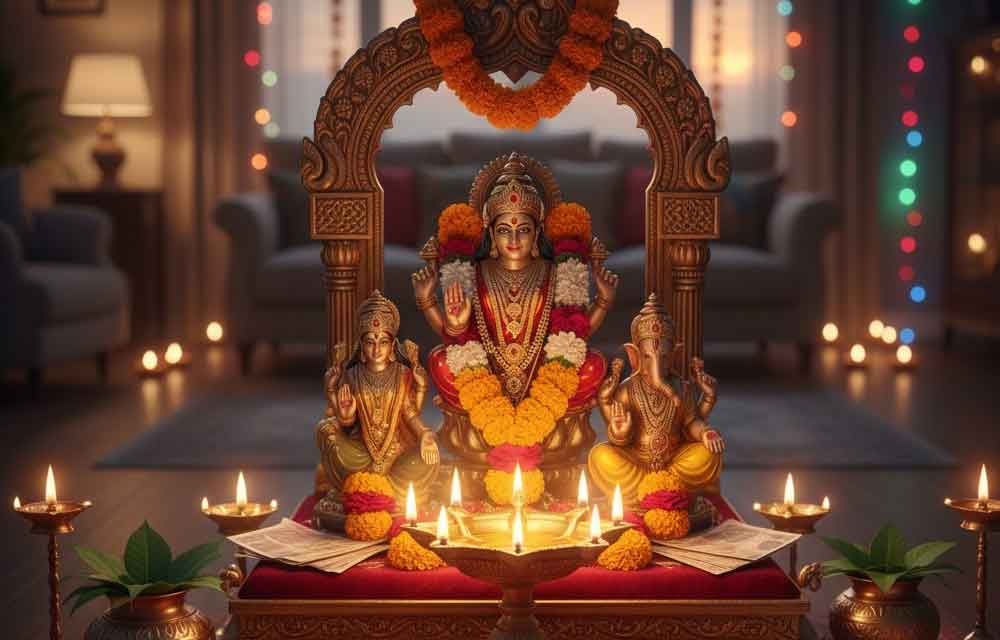
- Set up a home altar with an image or idol of Ram Darbar (Rama, Sita, Lakshmana, Hanuman).
- Observe a fast (phalahar — fruits and milk) through the day.
- Read or listen to Sundar Kanda — Hanuman’s search for Sita — available in all Indian languages on YouTube and apps like Shankara TV.
- Prepare Panakam and Vadapappu as home prasad.
- Light a lamp (deepam) and chant Rama Rama or the Hanuman Chalisa at noon (the traditional birth time of Rama).
- Watch the Ayodhya Surya Tilak ceremony live — typically streamed from 12:00–12:30 IST.
- Call grandparents in India to participate in the puja together over video.
For Those Attending a Temple
- Arrive early for abhishekam — it is the most attended and most moving part of the day.
- Participate in the Sita Rama Kalyanam if your temple conducts it.
- Accept and savour panakam and vadapappu prasad — these are specific to this festival.
- If possible, attend the evening Ramayana discourse.
Rama Navami Traditions by Indian Regional Community
| Community | Primary Practice | Signature Prasad | Key Chant |
|---|---|---|---|
| Telugu (Andhra/Telangana) | Kalyanam, Abhishekam | Panakam, Vadapappu | Sri Rama Jaya Rama |
| Tamil | Sundar Kanda, Divya Prabandham | Panakam, Puliyodarai | Kodanda Rama |
| Kannada | Ramayana Parayanam | Panakam, Kosambari | Rama Rama |
| North Indian (Hindi belt) | Ramacharitmanas, Kirtan | Panchamrit, Fruit | Jai Shri Ram |
| Gujarati | Bhajan, Satsang | Panchamrit | Shri Ram Jai Ram |
| Maharashtrian | Kirtan, Vari tradition | Panchamrit | Ram Ram |
| ISKCON (all origins) | Hare Nama Kirtan | Panchamrit, Halava | Hare Rama |
The Deeper Meaning: Why Rama Travels So Well
Of all Hindu deities, Rama may be the one who travels most easily across cultures, geographies, and generations. Here is why:
He is a story, not just a symbol. The Ramayana is a complete narrative — with love, loss, exile, war, reunion, and moral complexity. It can be told in any language, performed in any art form, adapted to any medium. From the original Valmiki Sanskrit to Tulsidas’s Hindi to Kamban’s Tamil to shadow puppet shows in Malaysia and Bali to stage productions in London — the story of Rama travels.
His values are universal. Filial piety, marital fidelity, friendship, courage, justice — these are not culturally specific. They are human. An NRI software engineer in Silicon Valley and a South African teacher in Durban and a Tamil nurse in Singapore all find something personally true in Rama’s choices.
Hanuman makes him accessible. The devotion of Hanuman — the ideal bhakta, utterly selfless, completely surrendered to Rama — gives every Hindu a model of how to relate to the divine. Hanuman is relatable in a way that the morally perfect Rama sometimes is not. Together, they form a complete devotional circuit.
He represents the homeland without nostalgia. Rama’s story is set in India — Ayodhya, the Dandaka forest, Lanka — but its meaning transcends location. For NRIs who left India (or whose grandparents left), Rama is a connection to the homeland that does not require the homeland to be physically present. He travels in the heart.
Frequently Asked Questions
Q: When is Sri Rama Navami 2025? Sri Rama Navami 2025 falls on Sunday, 6 April 2025 (Chaitra Shukla Navami per the Hindu lunar calendar).
Q: What is the significance of Rama Navami for NRIs specifically? For Hindus living abroad, Rama Navami serves as a cultural and spiritual anchor — a day when the diaspora reconnects with shared mythology, language, and ritual, regardless of which country they live in.
Q: What is the Surya Tilak ceremony at Ayodhya? The Surya Tilak is a remarkable engineering feat at the Ram Mandir in Ayodhya where, at noon on Rama Navami, mirrors and lenses are aligned to direct sunlight precisely onto the forehead of the Ram Lalla idol — symbolising the sun (Surya, ancestor of the Solar dynasty/Ikshvaku kula to which Rama belongs) blessing his descendant.
Q: Can non-Hindus attend Rama Navami temple events? Yes, the vast majority of Hindu temples worldwide are open to all visitors during Rama Navami. Temples in the US, UK, Australia, and Singapore actively welcome non-Hindu guests.
Q: What is panakam and where can NRIs make it? Panakam is a sacred drink made from jaggery, water, black pepper, cardamom, and a piece of dry ginger. Ingredients are available at any Indian grocery store globally. It is the signature prasad of Rama Navami, prepared in millions of homes and temples worldwide.
Q: How can NRIs participate in Ayodhya’s Rama Navami celebrations from abroad? The Ram Mandir Trust (Shri Ram Janmabhoomi Teertha Kshetra) and Doordarshan stream the celebrations live. Search YouTube for “Ram Mandir Rama Navami live” on the day.
Conclusion: One Name, Infinite Devotion
Thirty million NRIs. Dozens of countries. Hundreds of temples. Thousands of community halls. Millions of home altars.
On Chaitra Shukla Navami, all of them — simultaneously, across every time zone on earth — fold their hands and say Jai Shri Ram.
Some say it in Ayodhya, standing on the land where Rama walked. Some say it in a Houston temple with marble floors and AC and a cafeteria serving panakam to 3,000 people. Some say it in a Dubai apartment, camphor smoke rising to the ceiling, a child asleep in the next room. Some say it quietly, alone, in a London flat at midnight, watching a live-stream of the Surya Tilak on their phone.
The name travels. The devotion travels. Rama travels.
And wherever Hindus gather in his name — that is Ayodhya.
Jai Siya Ram.
Written for HinduTone.com — Your voice for the global Hindu community.
Related Articles:
- Navratri in the UK: How Gujaratis & South Indians Celebrate Abroad
- Hanuman Jayanti Worldwide: NRI Celebrations Across the Globe
- Ram Mandir Ayodhya: A Complete Pilgrim’s Guide for NRIs Visiting India
- Diwali in America: How Indian Americans Light Up the New World
© HinduTone.com — For editorial queries and republication permissions: editorial@hindutone.com