Ugadi 2026: Complete NRI Guide to Celebrations, Rituals & Traditions Worldwide
Connecting Indian diaspora to sacred roots: Your comprehensive guide to celebrating Ugadi across continents
Introduction: Welcoming Ugadi 2026 as Global Indians
Ugadi, derived from the Sanskrit words “Yuga” (age) and “Adi” (beginning), marks the traditional New Year according to the Hindu lunisolar calendar. For millions of Non-Resident Indians and People of Indian Origin across the world, Ugadi represents more than just a calendar change—it’s a profound connection to cultural identity, family traditions, and spiritual heritage.
Ugadi 2026 Date: Wednesday, March 18, 2026 (Chaitra Shukla Pratipada)
Whether you’re in New York or New Delhi, Sydney or San Francisco, London or Los Angeles, this comprehensive guide from NRIGlobe.com helps you celebrate Ugadi authentically while adapting traditions to your global lifestyle. We’ll explore rituals, recipes, puja procedures, and practical tips for observing this sacred festival across time zones and continents.
Understanding Ugadi: Cultural Significance for the Indian Diaspora
The Spiritual Foundation
Ugadi signifies the first day of Chaitra Masam, commemorating the moment when Lord Brahma began creation, as mentioned in the Bhavishya Purana. This festival embodies:
Cosmic Renewal: Beginning of a new solar-lunar cycle
Spiritual Reset: Opportunity to realign with dharmic principles
Fresh Beginnings: New year, new intentions, new possibilities
Destiny Reading: Traditional Panchanga Shravanam forecasting the year ahead
Regional Celebrations Across India
Ugadi unites diverse Indian communities under different names:
- Ugadi – Andhra Pradesh, Telangana, Karnataka
- Gudi Padwa – Maharashtra, Goa
- Cheti Chand – Sindhi community worldwide
- Navreh – Kashmiri Pandits
- Sajibu Nongma Panba – Manipur
This regional diversity reflects India’s cultural richness—something NRIs carry proudly across borders.
Why Ugadi Matters for NRIs and PIOs
Preserving Cultural Identity
For second and third-generation Indian Americans, British Indians, Australian Indians, and diaspora worldwide, Ugadi serves as:
Cultural Anchor: Connecting children to ancestral traditions
Community Building: Bringing Indian communities together abroad
Values Transmission: Teaching life philosophies through symbolic rituals
Identity Pride: Celebrating Indian heritage in multicultural societies
The Universal Message
Ugadi’s core teaching—accepting life’s sweet and bitter experiences with equanimity—resonates universally. The traditional Ugadi Pachadi, with its six tastes, symbolizes life’s diversity—a lesson that transcends geography and culture.
Ugadi 2026 Panchanga Shravanam: What the New Year Holds
Understanding Panchanga Shravanam
Panchanga Shravanam is the ceremonial reading of the Hindu almanac, performed by Vedic scholars. This ancient practice forecasts:
- Agricultural trends
- Economic climate
- Health patterns
- Political developments
- Spiritual opportunities
The Five Elements
1. Tithi – Lunar day phase 2. Vara – Weekday influences 3. Nakshatra – Constellation effects 4. Yoga – Auspicious planetary combinations 5. Karana – Half-day lunar calculations
For 2026: Predictions emphasize adaptability, spiritual discipline, ethical business practices, and community harmony—particularly relevant for global Indians navigating multiple cultural contexts.
Accessing Panchanga Abroad
Online Resources:
- YouTube livestreams from major Indian temples
- Hindu temple websites in your country
- Virtual Panchanga sessions by Vedic scholars
- Mobile apps offering daily Panchanga
Complete Ugadi 2026 Puja Vidhi for NRIs
Preparing Your Home (Adapting to Your Location)
Early Morning Rituals:
- Wake before sunrise (adjust for your time zone)
- Traditional oil bath (Abhyanga Snanam)
- Wear new or traditional Indian clothing
- Create a sacred space in your home
Home Decoration:
- Rangoli/Muggulu: Use rice flour or colored powder at entrance
- Mango Leaves: Available at Indian grocery stores or use alternatives
- Marigold Garlands: Create DIY or purchase from local florists
- Lighting: Traditional diyas or LED alternatives
Essential Puja Items (Available Worldwide)
Where to Source Materials:
USA/Canada:
- Indian grocery stores (Patel Brothers, Subzi Mandi)
- Online: Amazon, Indian specialty websites
- Local Hindu temples often have puja supplies
UK/Europe:
- Local Indian shops in Leicester, Southall, Brick Lane
- Online Indian stores
- Temple prasadam shops
Australia/New Zealand:
- Harris Park (Sydney), Dandenong (Melbourne)
- Online suppliers
- Community temple shops
Middle East:
- Abundant Indian stores in Dubai, Abu Dhabi, Doha
- Easy access to all traditional materials
Southeast Asia:
- Little India neighborhoods
- Well-stocked Indian provision shops
Step-by-Step Puja Procedure
Required Items:
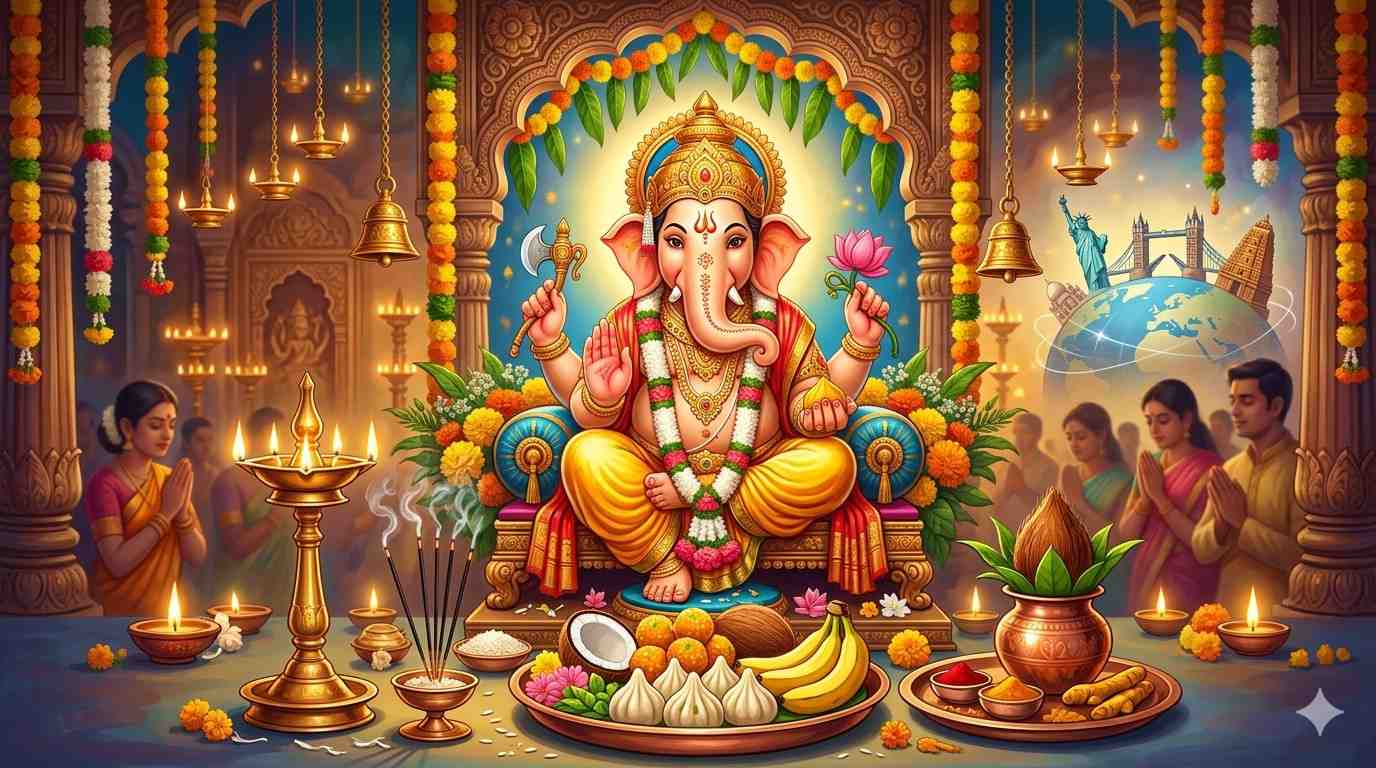
- Kalash (copper/brass pot with water, mango leaves, coconut)
- Incense sticks and holder
- Diyas or candles
- Fresh flowers (any available locally)
- Fruits for offering
- Ugadi Pachadi ingredients
- Small bell
- Kumkum and turmeric
Detailed Puja Steps:
1. Ganapati Prarthana (5 minutes)
"Vakratunda Mahakaya Surya Koti Samaprabha
Nirvighnam Kuru Me Deva Sarva Kaaryeshu Sarvada"
Invoke Lord Ganesha to remove obstacles.
2. Kalasha Sthapana (10 minutes)
- Fill kalash with water
- Place mango leaves around the rim
- Top with coconut
- This represents creation and abundance
3. Main Invocation (15 minutes)
- Light incense and lamp
- Invoke Brahma (Creator), Vishnu (Preserver), Maheshwara (Transformer)
- Chant available mantras or prayers you know
- Play devotional music if helpful
4. Scripture Reading (Optional, 10-20 minutes)
- Vishnu Sahasranama (available in translation)
- Bhagavad Gita passages
- Any sacred text meaningful to your family
5. Ugadi Sankalpa (Resolution) Speak your intentions for the year—personal, professional, spiritual goals.
6. Offering Ugadi Pachadi Offer the prepared Pachadi to the deity, then distribute to family members.
7. Aarti and Prasadam
- Perform aarti with camphor or lamp
- Distribute prasadam to everyone present
- If alone, video call family in India during this moment
Pro Tip for NRIs: Record your puja on video to share with family back home, creating a bridge across distances.
Ugadi Pachadi: Recipe & Deep Symbolism
The Six Tastes of Life
Ugadi Pachadi is the festival’s culinary centerpiece, teaching profound life lessons through taste:
| Ingredient | Taste | Life Aspect | Philosophy |
|---|---|---|---|
| Neem flowers | Bitter | Hardships, challenges | Teaches resilience |
| Jaggery/Sugar | Sweet | Joy, success, happiness | Embrace blessings |
| Tamarind | Sour | Obstacles, setbacks | Accept difficulties |
| Raw mango | Tangy | Surprises, unexpected events | Stay flexible |
| Green chili | Spicy | Anger, passion, intensity | Channel emotions |
| Salt | Salty | Basic necessities, grounding | Maintain balance |
The Lesson: Just as we accept all tastes in one dish, we must accept all experiences in life with equanimity—a teaching from the Bhagavad Gita (2:48): “Samatvam yoga uchyate” (Equanimity is called yoga).
Traditional Ugadi Pachadi Recipe (NRI-Friendly)
Ingredients (Serves 4-6):
- Fresh/dried neem flowers – 1 tsp (or neem leaves if flowers unavailable)
- Jaggery or brown sugar – 2 tablespoons
- Tamarind paste – 1 tablespoon (or concentrate available at stores)
- Raw green mango – 2 tablespoons, finely chopped (substitute: green apple if mango unavailable)
- Green chili – 1 small, finely chopped (adjust to taste)
- Salt – ¼ teaspoon
- Water – ¼ cup
Preparation Method:
- Prepare Neem: If using dried neem flowers, soak in warm water for 10 minutes. Fresh flowers can be used directly.
- Process Tamarind: If using tamarind block, soak in warm water, extract pulp, and strain.
- Mix Ingredients: In a bowl, combine all ingredients with water. Mix thoroughly.
- Adjust Consistency: Add more water if too thick. The mixture should be slightly liquid.
- Offering: Before consumption, offer to your home deity or sacred space.
- Serving: Each family member takes a small spoonful, mindfully experiencing all six tastes.
Global Substitutions:
- Neem unavailable? Bitter greens like arugula or dandelion (symbolic representation)
- Raw mango unavailable? Green apple, tart plum, or preserved mango
- Jaggery unavailable? Brown sugar or date syrup
- Fresh tamarind unavailable? Tamarind concentrate from Indian stores
Storage Tip: Make fresh on Ugadi morning. Does not store well; consume within hours.
Traditional Ugadi Festival Recipes for Global Kitchens
Essential Ugadi Dishes (Adapted for NRI Homes)
1. Bobbatlu / Puran Poli (Sweet Flatbread)
Symbolism: Prosperity and abundance
Quick Recipe:
- Filling: Chana dal (1 cup), jaggery (¾ cup), cardamom
- Dough: Wheat flour (2 cups), oil, salt, turmeric
- Method: Cook dal until soft, mash with jaggery, stuff in dough circles, cook on griddle
Time-Saving NRI Tip: Prepare dal filling a day ahead; freeze extra puran polis for future use.
2. Pulihora (Tamarind Rice)
Symbolism: Offered to Lord Vishnu; represents divine blessings
Quick Recipe:
- Cooked rice (3 cups)
- Tamarind pulp (2 tbsp)
- Mustard seeds, curry leaves, peanuts, turmeric
- Tempering spices
Time-Saving NRI Tip: Use instant tamarind mix available at Indian stores; prepare rice in rice cooker.
3. Payasam/Kheer (Rice Pudding)
Symbolism: Sweetness and devotion
Quick Recipe:
- Rice/vermicelli (¼ cup)
- Milk (4 cups) or coconut milk for vegan version
- Sugar/jaggery, cardamom, saffron, nuts
Time-Saving NRI Tip: Use condensed milk for richer, faster preparation.
4. Mango Dal
Seasonal Preparation:
- Toor dal with raw mango pieces
- Turmeric, chili, jaggery balance
- Fresh coriander garnish
Meal Planning for Working NRIs
Day Before (Tuesday, March 17):
- Soak dal for bobbatlu
- Shop for fresh ingredients
- Prepare tamarind pulp
- Clean and organize puja space
Ugadi Morning (Wednesday, March 18):
- Early puja (6-7 AM before work if needed)
- Quick Ugadi Pachadi preparation
- Main cooking can happen evening
Evening Celebration:
- Complete cooking
- Family dinner
- Video call extended family in India
- Virtual celebration with friends
Celebrating Ugadi 2026 Across Global Locations
North America (USA & Canada)
Major Celebration Cities:
- Bay Area (California): Hindu temples in Sunnyvale, Fremont
- New Jersey/New York: Strong Telugu community presence
- Texas: Dallas, Houston Telugu associations
- Chicago: Active cultural organizations
- Toronto/Vancouver: Well-established Indian communities
How to Celebrate:
Option 1: Temple Celebrations
- Major temples host grand Ugadi events
- Panchanga Shravanam ceremonies
- Community feast (Annaprasadam)
- Cultural programs
Popular Temples:
- Sri Venkateswara Temple, Pittsburgh, PA
- Livermore Shiva Vishnu Temple, CA
- Hindu Temple of Greater Chicago, IL
- BAPS Shri Swaminarayan Mandir, Toronto
Option 2: Home Celebrations
- Morning puja with family
- Virtual puja with relatives in India (time zone planning)
- Prepare traditional feast
- Teach children about significance
Option 3: Community Gatherings
- Telugu associations organize events
- Cultural halls host celebrations
- Kannada Koota events
- Maharashtra Mandal Gudi Padwa programs
Time Zone Advantage: East Coast NRIs can easily join morning pujas in India via video call (evening in India = morning in USA).
United Kingdom & Europe
Major Celebration Cities:
- London: Neasden Temple, Southall community
- Leicester: Strong Hindu community
- Birmingham: Multiple temple options
- Manchester, Edinburgh: Growing Indian populations
How to Celebrate:
UK-Specific Tips:
- Morning puja possible before work (similar IST-GMT time difference)
- Weekend temple events if Ugadi falls on weekday
- Indian grocery stores well-stocked with materials
- Active online Indian communities for coordination
European Cities:
- Netherlands (Amsterdam, The Hague): Hindu temples
- Germany (Frankfurt, Munich): Indian cultural centers
- France (Paris): Temple de Ganesh
- Switzerland: Hindu communities in major cities
Australia & New Zealand
Major Celebration Cities:
- Sydney: Harris Park temple hub, Parramatta
- Melbourne: Dandenong, Glen Waverley communities
- Brisbane, Perth: Growing Telugu and Kannada communities
- Auckland, Wellington: Active Indian diaspora
How to Celebrate:
Australia-Specific Advantages:
- Favorable time zone for connecting with India (minimal difference)
- Large Telugu and Kannada populations
- Excellent availability of Indian ingredients
- Outdoor celebration possibilities (March = early autumn, pleasant weather)
Popular Venues:
- Sri Venkateswara Temple, Helensburgh (Sydney)
- Shri Shiva Vishnu Temple, Melbourne
- Hindu temples in major cities
Community Events:
- Telugu associations organize large gatherings
- Weekend celebrations if falls on weekday
- Family picnics incorporating Ugadi traditions
Middle East (UAE, Qatar, Saudi Arabia, Oman)
Celebration Hubs:
- Dubai/Abu Dhabi: Multiple temple options, large Indian population
- Doha: Active Indian community
- Riyadh, Jeddah: Private community celebrations
How to Celebrate:
Advantages:
- Easy access to Indian ingredients
- Large Indian expat community
- Temples and cultural centers (where permitted)
- Similar time zone to India
Considerations:
- Respect local customs and regulations
- Private home celebrations common
- Community hall gatherings
- Virtual participation in India-based events
Southeast Asia (Singapore, Malaysia, Thailand)
Well-Established Communities:
- Singapore: Little India, Hindu temples
- Malaysia: Strong Tamil and Telugu communities
- Thailand (Bangkok): Growing Indian expat population
Celebration Advantages:
- Excellent availability of ingredients
- Active Hindu temples
- Familiar with Indian festivals
- Easy travel to/from India
Africa (South Africa, Kenya, Uganda, Mauritius)
Historic Indian Communities:
- Well-preserved traditions
- Multi-generational diaspora
- Strong cultural organizations
- Temple infrastructure
Teaching Ugadi Values to Second-Generation NRIs
For Children and Teens
Age-Appropriate Activities:
Ages 3-8:
- Story time: Narrate Brahma’s creation story
- Hands-on: Help make Ugadi Pachadi, taste each ingredient
- Art project: Create Ugadi greeting cards
- Dress-up: Wear traditional Indian clothes
- Music: Learn Ugadi songs
Ages 9-15:
- Explain deeper symbolism of Pachadi’s six tastes
- Involve in puja preparation and procedure
- Research project: History of Ugadi
- Cooking: Lead recipe preparation
- Technology: Create digital Ugadi greetings for family
Ages 16+:
- Philosophical discussions: Life’s dualities, acceptance
- Leadership: Organize community Ugadi events
- Cultural preservation: Document family traditions
- Mentorship: Teach younger children
- Social media: Share celebrations positively
Building Cultural Identity
Why This Matters:
Growing up in multicultural societies, second-generation Indians often navigate dual identities. Festivals like Ugadi provide:
Connection to roots: Understanding family heritage Pride in culture: Celebrating uniqueness in diversity Value transmission: Learning timeless philosophies Family bonding: Intergenerational connections Community belonging: Finding their Indian community abroad
Practical Approach:
- Don’t force participation; inspire through stories and experience
- Make it fun and relevant to their lives
- Connect ancient wisdom to modern challenges
- Respect their questions and perspectives
- Create lasting memories through celebration
Modern Ugadi: Blending Tradition with Contemporary Life
Virtual Celebrations in the Digital Age
Technology-Enabled Traditions:
1. Video Call Pujas
- Zoom/WhatsApp group pujas with global family
- Synchronized timing across time zones
- Shared screen for Panchanga Shravanam
- Virtual aarti participation
2. Social Media Connection
- Share Ugadi greetings and photos
- Instagram stories documenting celebrations
- Facebook groups coordinating community events
- YouTube for learning puja procedures
3. Online Resources
- Livestreamed temple celebrations
- Virtual Sanskrit classes for children
- Recipe videos with modern adaptations
- Digital Panchanga apps
4. Digital Preservation
- Record family traditions on video
- Create digital recipe books
- Archive family Ugadi stories
- Build online cultural repositories
Sustainable and Eco-Friendly Ugadi
Green Celebration Ideas:
Natural Decorations:
- Real flowers instead of plastic
- Organic rangoli colors
- Biodegradable materials
- Potted plants as decor (can plant later)
Conscious Consumption:
- Plan food quantities to minimize waste
- Donate excess to local shelters
- Use reusable puja items
- Avoid single-use plastics
Community Karma:
- Organize tree planting on Ugadi
- Beach/park cleanup as community
- Donate to environmental causes
- Teach children ecological dharma
Ugadi Do’s and Don’ts: Complete Guide
Do’s
Spiritual Practices:
- Wake during Brahma Muhurta (pre-dawn)
- Take ritual bath and wear clean clothes
- Perform puja with devotion
- Read or listen to sacred texts
- Make positive resolutions (Sankalpa)
- Practice meditation or yoga
Family and Community:
- Connect with family (in-person or virtually)
- Attend temple or community celebrations
- Teach children about Ugadi significance
- Share Ugadi greetings widely
- Foster unity and harmony
Acts of Goodness:
- Give charity (daan) – especially food or clothes
- Feed the hungry
- Help those in need
- Practice forgiveness
- Speak positive and uplifting words
Personal Development:
- Start new beneficial habits
- Begin learning something new
- Set meaningful goals
- Reflect on past year’s growth
- Plan for positive changes
Don’ts
Avoid These Actions:
- Sleeping late or waking late
- Negative speech, criticism, or complaints
- Arguments or conflicts with anyone
- Intoxicants (alcohol, drugs)
- Non-vegetarian food (observe sattvic diet)
- Wasting food or resources
- Harsh words or anger
- Starting Ugadi with negative thoughts
Cultural Sensitivity:
- Don’t treat it as just another day off
- Don’t overlook teaching children the significance
- Don’t forget to connect with elders
- Don’t ignore the spiritual dimension
Ugadi and Professional Life: Auspicious Beginnings
Career and Business Significance
Ugadi is considered highly auspicious for:
New Ventures:
- Starting a business
- Launching products
- Signing important contracts
- Beginning new projects
Professional Development:
- Starting new jobs
- Career transitions
- Educational pursuits
- Skill development initiatives
Financial Planning:
- Beginning investment strategies
- Financial year planning
- Savings goals setting
- Charitable giving plans
NRI-Specific Professional Considerations
Global Business: Many NRI entrepreneurs and professionals use Ugadi to:
- Launch India-related business ventures
- Strengthen India connections
- Network with Indian business community abroad
- Time major professional decisions auspiciously
Work-Life Balance:
- Take PTO for meaningful celebration
- Negotiate flexible work for cultural observance
- Educate colleagues about Indian festivals
- Build multicultural workplace awareness
Astrological Insights for Ugadi 2026
Cosmic Alignments
Planetary Positions:
- Sun enters Pisces (Meena Rashi)
- Moon in Chaitra Shukla Pratipada
- Auspicious nakshatra combinations
What This Means:
- Favorable for new beginnings
- Spiritual growth emphasized
- Creativity and intuition enhanced
- Relationship harmony highlighted
Personal Astrological Planning
Sankalpa Based on Your Sign: Different zodiac signs can focus on specific areas during Ugadi 2026:
- Aries: Leadership and innovation
- Taurus: Financial stability and security
- Gemini: Communication and learning
- Cancer: Family and emotional wellness
- Leo: Creative expression and recognition
- Virgo: Health and service
- Libra: Relationships and partnerships
- Scorpio: Transformation and healing
- Sagittarius: Wisdom and travel
- Capricorn: Career and discipline
- Aquarius: Community and humanitarian efforts
- Pisces: Spirituality and intuition
Connecting Generations: Ugadi Traditions Across Ages
For First-Generation Immigrants
Your Role:
- Preserve authentic traditions
- Share childhood Ugadi memories
- Teach language, rituals, and values
- Connect children to relatives in India
- Document family customs for posterity
Balancing Acts:
- Maintaining traditions in new context
- Adapting to children’s busy schedules
- Keeping celebrations meaningful, not burdensome
- Finding community in adopted country
For Second-Generation NRIs
Your Opportunity:
- Learn and appreciate your heritage
- Create fusion traditions (respecting authenticity)
- Educate peers about Indian culture
- Bridge two cultures meaningfully
- Pass to future generations with renewed relevance
For Third-Generation and Beyond
Maintaining Connection:
- Even distant from India, culture remains relevant
- Universal values transcend geography
- Community involvement keeps traditions alive
- Technology enables unprecedented connection
- Personal meaning makes traditions sustainable
Ugadi 2026 Special Initiatives
Community Service Projects
Suggested Activities:
Food Drives:
- Organize community meal preparation
- Donate to local food banks
- Sponsor meals for homeless shelters
- Share traditional food with neighbors
Educational Initiatives:
- Cultural presentations at local schools
- Library displays about Ugadi
- Interfaith dialogue events
- Children’s cultural workshops
Environmental Actions:
- Community tree planting
- Park cleanups
- Sustainable living pledges
- Environmental awareness programs
Healthcare Support:
- Blood donation camps
- Health screening camps
- Mental health awareness
- Senior citizen support
Interfaith Sharing
Building Bridges: Ugadi offers opportunity to:
- Invite neighbors to celebrations
- Explain significance to friends
- Share food with community
- Build multicultural understanding
- Combat isolation of immigrant communities
Essential Resources for NRIs
Shopping Guide
Indian Grocery Stores by Country:
USA:
- Patel Brothers (nationwide)
- Subzi Mandi
- India Bazaar
- Local Asian markets
UK:
- Southall stores
- Online: Spices of India, Indian Grocery Store
- Local Asian markets in major cities
Australia:
- Harris Park shops (Sydney)
- Dandenong stores (Melbourne)
- Indian specialty stores
Canada:
- Little India (Toronto)
- Punjab Market (Vancouver)
- Indian grocery chains
Online Global:
- Amazon (puja supplies)
- Specialty Indian websites shipping internationally
- eBay for harder-to-find items
Online Learning Resources
Puja Procedures:
- YouTube: Authentic puja vidhi videos
- Temple websites with detailed instructions
- Hindu heritage websites
- Mobile apps for daily rituals
Language Learning:
- Telugu, Kannada language apps
- Sanskrit pronunciation guides
- Mantra learning resources
Cultural Education:
- Hindu festivals explained
- Philosophical teachings
- Storytelling resources for children
Community Connections
Finding Your Community:
- Indian association websites
- Telugu associations globally
- Kannada Kootas
- Maharashtra Mandals
- Temple community boards
- Facebook groups for local Indian communities
- Meetup.com Indian groups
- WhatsApp community groups
Frequently Asked Questions (FAQ)
General Questions
Q: Can non-Indians or non-Hindus participate in Ugadi? A: Absolutely! Indian culture welcomes all. Friends and partners of Indians often participate. It’s an opportunity for cultural exchange and learning. Share the significance respectfully, and participation is welcomed.
Q: I’m the only Indian in my area. How do I celebrate? A: Even solo celebration is meaningful! Perform home puja, prepare Pachadi, video call family in India, join virtual community celebrations online, and use the day for personal reflection and goal-setting.
Q: Our children don’t speak Telugu/Kannada. Can they still participate? A: Yes! Cultural connection transcends language. Explain significance in English, use translated prayers, focus on values and experiences. Language learning can come gradually.
Q: Is it okay to celebrate on the weekend instead of the actual date? A: While the actual date carries astrological significance, celebrating on a nearby weekend for practical reasons is acceptable, especially for working families. The devotional spirit matters most.
Practical Questions
Q: Where can I find neem flowers abroad? A: Check Indian grocery stores, especially in the days before Ugadi. Some carry dried neem. Alternatively, neem leaves can substitute, or use the symbolic representation of including something bitter (like bitter greens) to maintain the philosophical teaching.
Q: How do I explain Ugadi to my non-Indian workplace? A: Share that it’s the Hindu/Indian New Year, a time for renewal and new beginnings, celebrated by millions. If requesting time off, compare it to importance of other New Year celebrations. Offer to share food or explain significance to interested colleagues.
Q: Can we do a simplified version of the puja? A: Yes! A simple puja with basic items, heartfelt prayers, and Ugadi Pachadi captures the essence. Elaborate rituals are wonderful but not mandatory. Devotion and understanding matter more than complexity.
Q: What if Ugadi conflicts with work obligations? A: Perform early morning puja before work, or evening celebration after. Many NRIs split observance—morning prayers, evening feast. The flexibility respects both cultural tradition and practical reality.
Spiritual Questions
Q: I’m not religious but culturally Indian. Should I celebrate? A: Yes! Ugadi has both spiritual and cultural dimensions. You can focus on cultural aspects—family connection, traditional food, life philosophy—without religious elements. The six tastes teaching is universally applicable.
Q: Can I create new Ugadi traditions for my family? A: Absolutely! While respecting core meanings, adapt creatively. New traditions might include: family goal-setting sessions, gratitude journals, annual photo traditions, or fusion celebrations blending multiple heritages.
Q: Does Ugadi celebration abroad have the same spiritual power? A: Yes! The spiritual significance isn’t location-dependent. Your devotion, intention, and practice create the spiritual experience. Many believe the effort to maintain traditions abroad earns additional merit.
Conclusion: Ugadi 2026 – Bridging Continents, Celebrating Heritage
As we welcome Ugadi 2026 on Wednesday, March 18, millions of NRIs and PIOs across the globe will pause to honor this sacred tradition. Whether you’re watching the sunrise over Manhattan, Sydney Harbour, the Thames, or the Persian Gulf, you’re connected to an ancient wisdom that transcends geography.
The NRI Ugadi Experience
For global Indians, Ugadi represents:
Cultural Continuity: Maintaining roots while growing new branches
Family Bonds: Strengthening connections across continents and generations
Spiritual Grounding: Finding peace and purpose through timeless teachings
Identity Pride: Celebrating Indian heritage in multicultural societies
Community Building: Creating extended families in adopted homelands
The Universal Message
Ugadi’s core teaching—accepting all of life’s experiences with equanimity, as symbolized by Ugadi Pachadi’s six tastes—resonates universally. In our globalized world where NRIs navigate multiple cultures, this wisdom becomes even more relevant:
- Adaptation (like adjusting recipes) without losing essence
- Balance (like blending tastes) between multiple identities
- Resilience (like accepting bitterness) through challenges
- Gratitude (like savoring sweetness) for opportunities
- Wholeness (like the complete dish) integrating all experiences
Your Ugadi 2026 Invitation
This Ugadi, wherever you are:
Honor your heritage with authentic celebration
Adapt traditions to your unique context
Connect deeply with family across miles
Teach the next generation about their roots
Share your culture with the wider community
Recommit to values that give life meaning
Begin anew with intention and hope
Final Blessing
May Ugadi 2026 bring to every NRI family:
Sukha (Happiness) in your homes
Shanti (Peace) in your hearts
Samruddhi (Prosperity) in your endeavors
Samraskara (Cultural values) in your children
Samyoga (Connection) with your roots
Ugadi Subhakankshalu | Yugadi Shubhashayagalu | Happy Ugadi!
Stay connected with www.nriglobe.com for:
- Authentic guides to Indian festivals worldwide
- NRI lifestyle and cultural preservation tips
- Community connections and event listings
- Resources for teaching children Indian heritage
- Global Indian success stories and inspiration
Follow us on social media: Instagram: @nriglobe Facebook: /nriglobeofficial Twitter: @admin YouTube: NRI Globe Channel
Share Your Ugadi Story: We’d love to hear how you celebrate Ugadi in your corner of the world! Share your photos, videos, family traditions, and unique adaptations. Tag us #Ugadi2026NRIGlobe #GlobalIndianCelebrations
Join Our Community: Connect with thousands of NRIs worldwide maintaining cultural traditions. Share tips, recipes, celebration ideas, and support one another in this beautiful journey of staying rooted while reaching global.
From all of us at NRIGlobe.com to you and your family:
May this Ugadi mark a beautiful new chapter in your global Indian journey!
© 2026 NRIGlobe.com – Connecting Indian Diaspora to Culture, Community & Heritage Worldwide
…
[Message clipped] View entire message
Latest NRI News & Global Updates:
Health, Wellness & Lifestyle for NRIs
https://nriglobe.com/health-wellness/
Latest NRI News & Global Updates
https://nriglobe.com/news/
Business & Finance News for NRIs
https://nriglobe.com/business/
Investment Guides for NRIs
https://nriglobe.com/investment/
Jobs & Career Opportunities for NRIs
https://nriglobe.com/jobs/