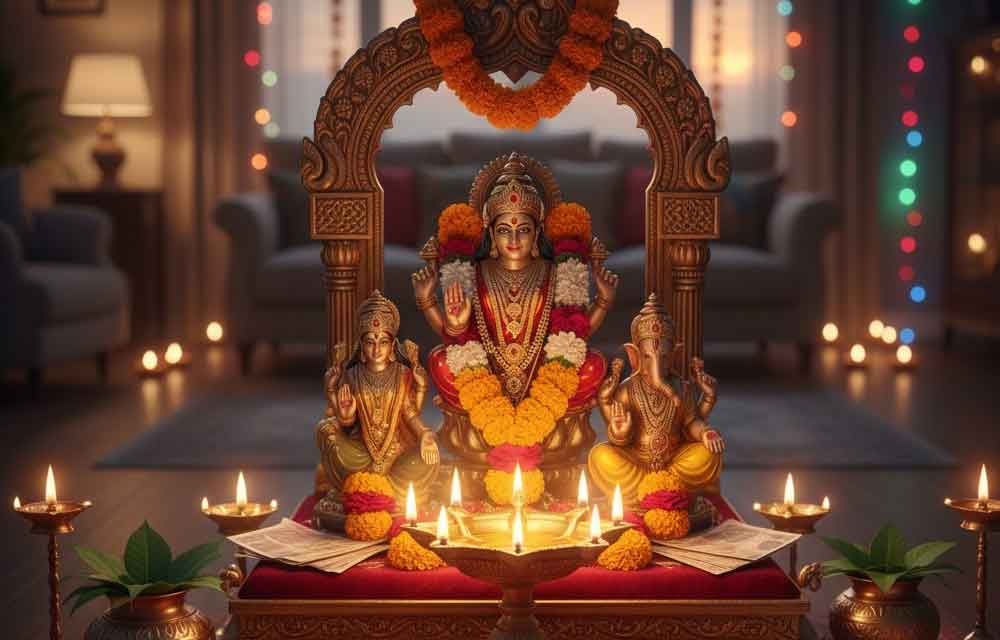
Holi Festival 2026: Date, Rituals & Significance
Complete Guide — Dates · Muhurat · Significance · Puja Vidhi · Mantras
Source: HinduTone.com | Preserving the Timeless Wisdom of Sanatan Dharma
Festival Dates — Quick Overview
| Festival | Date | Day | Tithi |
|---|---|---|---|
| Holika Dahan | 3 March 2026 | Tuesday (Mangalvar) | Phalguna Purnima |
| Rangwali Holi (Dhulhandi) | 4 March 2026 | Wednesday (Budhvar) | Pratipada |
| Purnima Tithi Begins | 2 March 2026 | Monday | 5:55 PM IST |
| Purnima Tithi Ends | 3 March 2026 | Tuesday | 5:07 PM IST |
Holika Dahan — Exact Shubh Muhurat 2026
Holika Dahan must be performed during Pradosh Kaal (the auspicious period after sunset) while Purnima Tithi is still in effect. In 2026, both conditions align perfectly on Tuesday, 3rd March.
Main Muhurat Window
| Detail | Time / Status |
|---|---|
| Shubh Muhurat Start | 6:22 PM IST |
| Shubh Muhurat End | 8:50 PM IST |
| Total Duration | 2 hours 28 minutes |
| Bhadra Kaal Status | Clear — Fully Auspicious |
| Pradosh Kaal | Prevails during muhurat |
| Purnima Tithi | Valid at time of Dahan |
Important — Bhadra Kaal Note: Hindu scriptures (Skanda Purana, Nirnaya Sindhu) strictly forbid performing Holika Dahan during Bhadra (Vishti Karana). It is believed to bring inauspiciousness and negative results. In 2026, Bhadra does not fall during the evening window — making the entire Pradosh Kaal period scripturally clear and highly auspicious.
City-Wise Holika Dahan Timings
| City / State | Holika Dahan Muhurat | Rangwali Holi Peak |
|---|---|---|
| New Delhi | 6:22 PM – 8:50 PM | 8:00 AM – 2:00 PM |
| Mumbai | 6:30 PM – 8:55 PM | 8:00 AM – 2:00 PM |
| Varanasi / Kashi | 6:20 PM – 8:45 PM | 8:00 AM – 2:00 PM |
| Mathura / Vrindavan | 6:22 PM – 8:50 PM | Special 7-day celebration |
| Jaipur (Rajasthan) | 6:25 PM – 8:50 PM | 8:00 AM – 2:00 PM |
| Kolkata (West Bengal) | 6:40 PM – 9:00 PM | 9:00 AM – 1:00 PM |
| Bengaluru | 6:20 PM – 8:45 PM | 9:00 AM – 1:00 PM |
| Hyderabad | 6:15 PM – 8:40 PM | 9:00 AM – 1:00 PM |
| Ahmedabad | 6:25 PM – 8:50 PM | 8:00 AM – 2:00 PM |
| Lucknow / Braj Region | 6:20 PM – 8:48 PM | 8:00 AM – 2:00 PM |
| Bhopal | 6:25 PM – 8:50 PM | 8:00 AM – 1:00 PM |
| Patna (Bihar) | 5:55 PM – 8:20 PM | 8:00 AM – 12:00 PM |
*Timings may vary slightly by exact coordinates. Consult your local Panchang or temple pandit for precise times.
धार्मिक महत्व | Religious Significance of Holi
“जय श्री राधे! रंगों का यह उत्सव केवल बाहरी नहीं, भीतर के अहंकार, ईर्ष्या और वैर को जलाकर प्रेम और भक्ति की विजय का उत्सव है।”
“This festival of colors is not merely external — it celebrates burning away the ego, envy, and enmity within, declaring the victory of love and devotion.”
1. Prahlad & Holika — Victory of Devotion Over Evil
King Hiranyakashyap, a demon king, demanded that all in his kingdom worship him alone — forbidding worship of Lord Vishnu. His own son, the devoted Prahlada, refused. Enraged, the king tried to kill him multiple times, but Lord Vishnu miraculously protected Prahlada each time.
Finally, Hiranyakashyap’s sister Holika — who possessed a divine boon granting her immunity from fire — sat in a blazing fire with Prahlada on her lap. By divine grace, Holika’s boon was annulled in the presence of Prahlada’s supreme devotion. Holika was reduced to ashes, while Prahlada emerged unharmed.
Holika Dahan reenacts this cosmic event. The bonfire symbolises the burning of evil, ego, and all that is negative — and the triumph of Bhakti (devotion), Satya (truth), and Dharma.
2. Radha-Krishna Leela — Festival of Divine Love
According to Bhagavata tradition, young Lord Krishna was distressed about his dark complexion compared to the fair Radha. His mother Yashoda playfully suggested he apply colour on Radha’s face. Krishna did so, and the entire Braj (Vrindavan, Mathura, Barsana) erupted in joyful color play.
This is why Holi is considered the festival of Radha-Krishna’s divine love — Prem ka Utsav. The colors represent the joy, playfulness, and completeness of the soul uniting with the divine.
3. Vasant & Harvest Celebration
Holi marks the end of winter and the arrival of Vasant (Spring) — the most beautiful season in the Hindu calendar. Farmers celebrate the Rabi harvest (wheat, barley, mustard). Newly reaped grains are offered to the Holika bonfire as gratitude to the earth (Bhumi Mata) and the Sun. Roasted barley (jau) and coconut distributed as prasad carry the abundance of the harvest season.
4. Shiva & Kamadahana
In South Indian tradition, Holi commemorates Kamadahana — the burning of Kamadeva (god of desire) by Lord Shiva’s third eye, when Kama tried to disturb Shiva’s meditation. Though reduced to ashes, Kama was later restored in spiritual, bodiless form (Ananga) at the pleading of his wife Rati. This story symbolises the conquest of desire and the transformation of Kama into divine love.
5. Social Harmony & Vasudhaiva Kutumbakam
Holi dissolves all social boundaries — caste, class, age, and status. The Gulal (colour) that touches everyone equally is the great equalizer. Enemies reconcile, old grievances are forgiven, and families and communities bond afresh. It embodies the Vedic principle: “Vasudhaiva Kutumbakam” — the entire world is one family.
पूजा सामग्री | Puja Samagri — Required Items
Gather all items before the muhurat begins:
| Category | Items |
|---|---|
| Fire & Light | Ghee Diya (lamp), Camphor (Kapoor), Agarbatti (incense) |
| Offerings | Fresh flowers, Akshat (unbroken rice), Fruits, Coconut |
| Sacred Grains | Raw Barley (Jau), Wheat stalks, Sesame seeds (Til), Popcorn (Lahi) |
| Puja Items | Roli / Kumkum, Turmeric (Haldi), Sandalwood paste (Chandan) |
| Liquid Offerings | Gangajal (holy water), Panchamrit (milk + honey + curd + ghee + sugar) |
| Sacred Thread | Mauli (red-yellow thread) |
| Natural Color | Gulal (herbal / organic) in red, yellow, pink |
| Cow Products | Cow dung cakes (Upale / Kande), Ghee |
| Others | Dhatura flowers, Betel leaves & nut (Paan-Supari), Coins |
Holika Dahan — Complete Puja Vidhi (Step-by-Step)
Follow all steps with a pure, calm mind (Shuddha Bhav). Face East when offering prayers.
Step 1 — Sthaan Shuddhi (Purify the Place)
Clean the site thoroughly. Sprinkle Gangajal over the area. Apply a fresh layer of cow dung (gobar) on the ground where the bonfire will be lit. Draw a Swastika symbol and apply Roli. This creates a sacred space (Puja Kshetra) fit for the ritual.
Step 2 — Holika Sthapana (Setting Up the Bonfire)
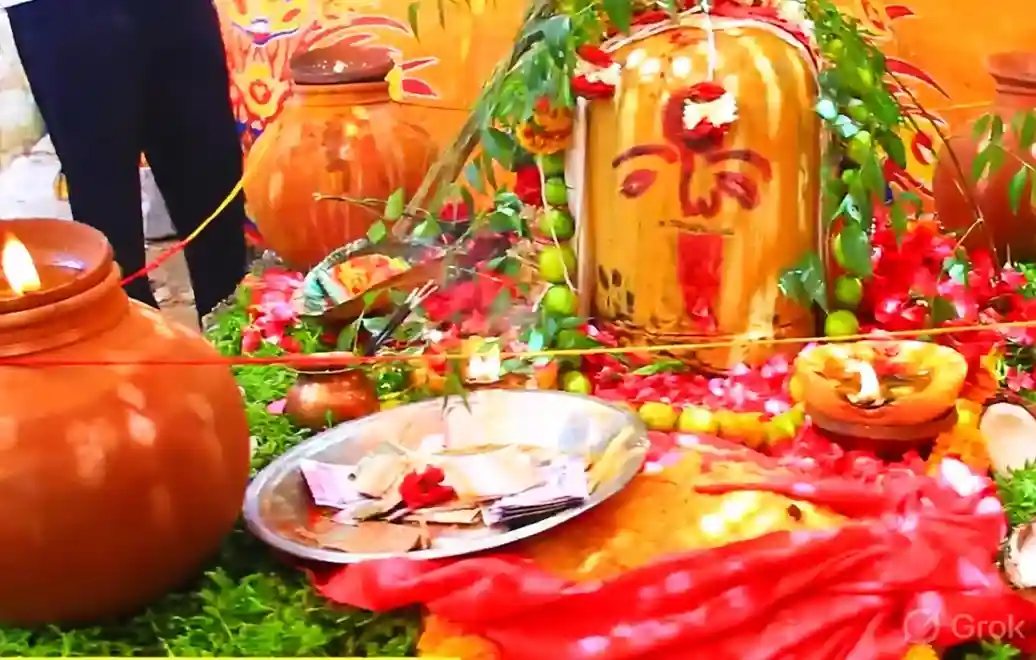
Stack dry wood, twigs, and cow dung cakes (upale) in a circular mound. Place a clay or cloth effigy of Holika at the centre. Wrap the entire mound with Mauli (sacred red thread) 3 or 7 times in a clockwise direction — this symbolises the binding and destruction of evil.
Step 3 — Sankalp (Sacred Vow)
Facing East, hold water, Akshat (unbroken rice), and flowers in your cupped palms. Speak the Sankalp aloud:
“I perform this Holika Dahan puja for the protection of my family, the destruction of all negativity, and the blessings of Lord Vishnu, Maa Lakshmi, and Lord Narasimha. May Dharma prevail.”
Pour the water gently on the ground to seal the vow.
Step 4 — Ganesh Puja & Kalash Sthapana
Begin all Hindu puja by invoking Lord Ganesha to remove obstacles. Establish a Kalash (copper or clay pot filled with water) beside the bonfire. Place inside: a betel nut (supari), coins, and mango leaves. Cover with a whole coconut and tie with Mauli. This Kalash represents the divine presence presiding over the ritual.
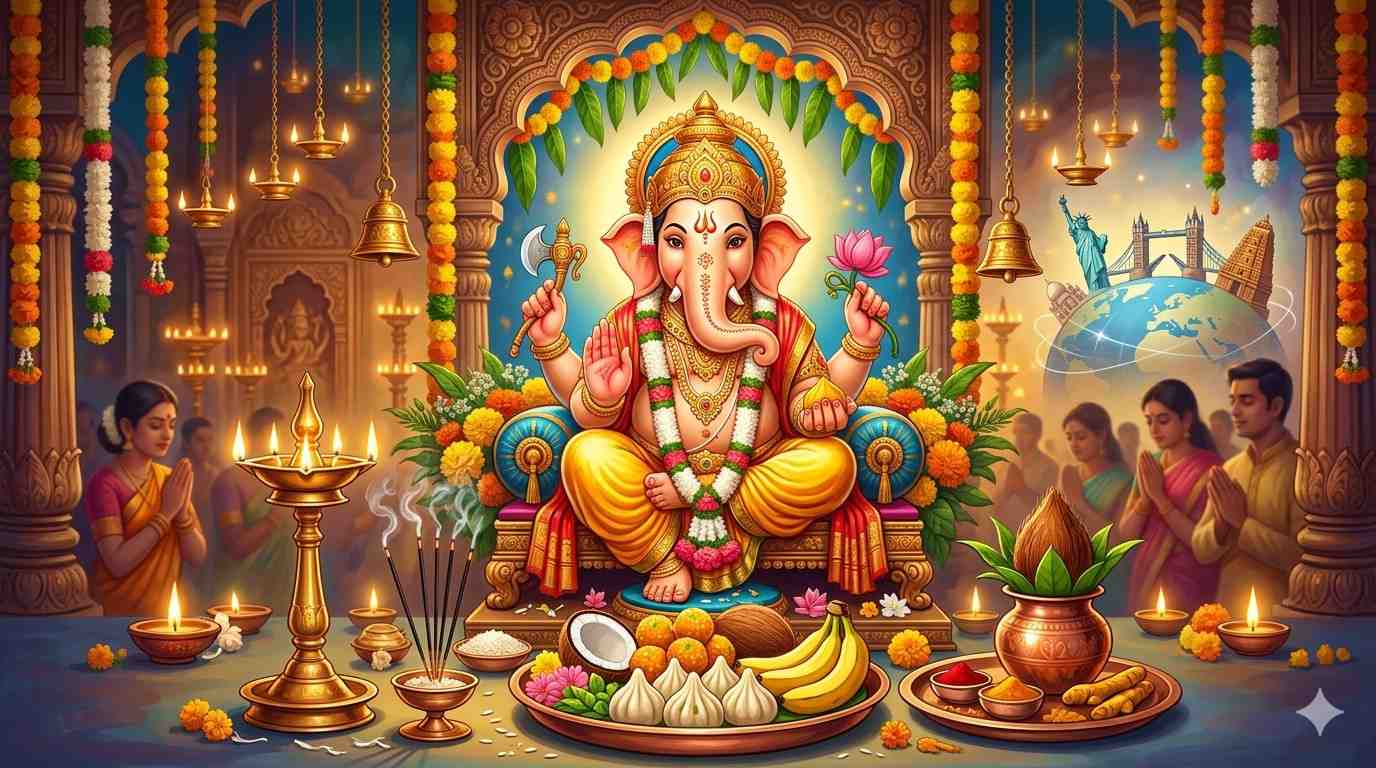
Step 5 — Puja & Upachar (Offerings)
Offer the following to the Holika effigy and bonfire in sequence:
- Flowers, Akshat (rice), Roli, Turmeric, Gulal, Chandan (sandalwood paste)
- Panchamrit — sprinkle gently
- Sesame seeds (Til) and raw barley stalks (Jau)
- Freshly harvested crops if available
- Light the Ghee Diya and wave it (aarti) three times
Chant the Holika Dahan Mool Mantra (see Mantras section) throughout.
Step 6 — Agni Pradip (Lighting the Sacred Fire)
At the exact shubh muhurat, light the bonfire from the East side using a flame from the Ghee Diya. The eldest male member traditionally lights it. The fire must be allowed to rise freely and high. Accompany the lighting with:
- Blowing of the Shankha (conch)
- Beating of Dhol (drums)
- Chanting of Vishnu Mantras and “Jai Sri Narasimha!”
Step 7 — Holika Parikrama (Circumambulation)
Walk around the burning bonfire 3 or 7 times in a clockwise direction (Pradakshina), chanting the Holika Dahan mantra continuously. Women traditionally carry a water pot (kalash) on their head during the parikrama. Children and elders also circumambulate with folded hands (Anjali mudra). This ritual purifies the body, mind, and soul, removes sins, and wards off all fears and negative energies.
Step 8 — Naivedya & Prasad Distribution
Hold stalks of barley, coconut pieces, and popcorn near the flames — allowing them to be gently roasted by the sacred fire. These become prasad (blessed food). Distribute to all family members and neighbours. Consuming fire-roasted offerings from Holika is believed to ward off diseases and bless the body with health and vitality throughout the coming year.
Step 9 — Holika Bhasma (Sacred Ash)
The next morning, collect the cooled ash (Bhasma) from the Holika fire site. This ash is considered sacred — equivalent to Vibhuti. Apply a small amount on the forehead as tilak. Mix some with water and sprinkle around doorways and corners of the home for protection. It is believed to grant divine protection, good health, and spiritual strength.
Step 10 — Daan (Charity) — Highly Auspicious
Charity performed on Phalguna Purnima multiplies good karma (Punya) manifold. Donate to:
- Temples and priests (Pandits)
- The poor and needy
- Feed cows (Go-daan or fodder)
- Donate sesame seeds (Til) and jaggery (Gur) to Brahmins
- Offer food grains to the underprivileged
Giving on this day is one of the highest virtuous acts in the Hindu calendar.
पवित्र मंत्र | Sacred Mantras for Holika Dahan & Holi
Chant each mantra with full Shraddha (devotion) and a pure heart. Repeat a minimum of 3, 11, or 108 times (use a Tulsi Mala for counting).
Mantra 1 — Holika Dahan Mool Mantra (Primary Mantra)
Sanskrit (Devanagari):
असृक्पाभयसंत्रस्तैः कृता त्वं होलि बालिशैः। अतस्त्वां पूजयिष्यामि भूते भूतिप्रदा भव॥
Transliteration:
Asṛkpābhayasaṁtrastaiḥ kṛtā tvaṁ holi bāliśaiḥ. Atastvaṁ pūjayiṣyāmi bhūte bhūtipradā bhava.
Meaning: “O Holika! You were created by ignorant beings frightened of evil. Therefore I worship you — O being! Be the bestower of prosperity and auspiciousness.”
When to chant: During Holika Sthapana, while making offerings, and throughout the Parikrama.
Mantra 2 — Prahlad Stotra | Vishnu Bhakti Mantra
Sanskrit (Devanagari):
ॐ नमो भगवते वासुदेवाय। नमः प्रह्लाद वरदाय विष्णवे नमः॥
Transliteration:
Oṁ namo bhagavate vāsudevāya. Namaḥ prahlāda varadāya viṣṇave namaḥ.
Meaning: “Om, salutations to Lord Vasudeva (Vishnu). Salutations to Vishnu, who granted boons to Prahlada and protected his supreme devotion.”
When to chant: At the start of the puja, during Sankalp, and after lighting the fire. Honors the central miracle of Holi.
Mantra 3 — Agni Dev Mantra (Fire God Invocation)
Sanskrit (Devanagari):
ॐ अग्नये नमः। अग्निं वर्चसे हवामहे महाशक्तिं शिखावलम्। अपां च त्वमग्ने सर्वेन भव सुमंगलम्॥
Transliteration:
Oṁ Agnaye Namaḥ. Agniṁ varccase havāmahe mahāśaktiṁ śikhāvalam. Apāṁ ca tvamagne sarvena bhava sumaṅgalam.
Meaning: “Om, salutations to Agni (the sacred fire). We invoke the fire of great power with brilliant flames. O Agni — be auspicious to all.”
When to chant: Precisely at the moment of lighting the Holika bonfire, and during the Parikrama.
Mantra 4 — Narasimha Kavach Mantra (Protection)
Sanskrit (Devanagari):
ॐ उग्रं वीरं महाविष्णुं ज्वलन्तं सर्वतोमुखम्। नृसिंहं भीषणं भद्रं मृत्युमृत्युं नमाम्यहम्॥
Transliteration:
Oṁ ugraṁ vīraṁ mahāviṣṇuṁ jvalantaṁ sarvatomukham. Nṛsiṁhaṁ bhīṣaṇaṁ bhadraṁ mṛtyumṛtyuṁ namāmyaham.
Meaning: “I bow to the fierce, heroic, great Vishnu — blazing and facing all directions — the terrible yet auspicious Narasimha, who is the death of death itself.”
When to chant: Lord Narasimha is the presiding deity (Adhidevata) of Holi. This powerful mantra destroys all fears, evil eyes, negative energies, and protects the family. Recite 108 times.
Mantra 5 — Radha-Krishna Holi Mantra (Rangwali Holi)
Sanskrit (Devanagari):
राधे राधे राधे बरसाने वाली राधे। ॐ श्री राधा-कृष्णाभ्यां नमः। होरी खेलत नंदलाल बिरज में॥
Transliteration:
Rādhe Rādhe Rādhe, Barsāne vālī Rādhe. Oṁ Śrī Rādhā-Kṛṣṇābhyāṁ Namaḥ. Horī khelat Nandlāl biraj meṁ.
Meaning: “Radhe Radhe! O Radha of Barsana — salutations to Shri Radha-Krishna. Lord Nandlala (Krishna) plays Holi in the sacred land of Braj.”
When to chant: On Rangwali Holi (4 March), before and while applying Gulal. Invoke the divine joy of Radha-Krishna’s eternal cosmic Holi.
Mantra 6 — Shanti Mantra (During Parikrama)
Sanskrit (Devanagari):
ॐ सर्वेष्वपि यदोष्माऽग्नि प्रविष्टस्त्वसि तत्र चेत्। तेनाऽग्ने कुरु शान्तिं मे त्वाहुती घृताहुती॥
Transliteration:
Oṁ sarveṣvapi yadoṣmā’gni praviṣṭastvasi tatra cet. Tenā’gne kuru śāntiṁ me tvāhutī ghṛtāhutī.
Meaning: “O Agni! You are present as warmth in all things — wherever that warmth exists, you are there. With that sacred fire, grant me peace, through these offerings of ghee.”
When to chant: Recite once during each round of the Parikrama. Invokes peace, good health, and prosperity for the entire household.
Mantra 7 — Rangwali Holi Aashirvad Mantra (Blessing Mantra)
Sanskrit (Devanagari):
ॐ होलिका देव्यै नमः। रंगों में रहे सदा प्रसन्नता, सत्य की हो जय, असत्य का नाश॥
Transliteration:
Oṁ Holikā Devyai Namaḥ. Raṅgoṁ meṁ rahe sadā prasannatā, Satya kī ho jaya, asatya kā nāśa.
Meaning: “Salutations to Goddess Holika. May joy always remain in life’s colors. Victory to truth, destruction to untruth.”
When to chant: On Rangwali Holi morning, before applying Roli-Tilak and seeking the Ashirvad (blessings) of elders.
Holi Celebrations Across India
Braj Holi — Mathura, Vrindavan, Barsana (Uttar Pradesh)
The most sacred and elaborate Holi in India. Celebrations begin 7–10 days before Dhulhandi. The world-famous Lathmar Holi of Barsana sees women playfully beat men with wooden sticks, reenacting Radha’s companions repelling Krishna’s Gopas. Phoolon ki Holi (Holi of Flowers) at Banke Bihari Temple in Vrindavan is a spiritually uplifting experience. Widow Holi at Vrindavan ashrams, added in recent decades, is a profoundly moving event. Rang Panchami (the 5th day after Holi) is the grand finale of Braj celebrations.
Rajasthan — Royal Holi
Jaipur holds the celebrated Elephant Festival on Holi eve at Chaugan Stadium with decorated elephants and polo. Udaipur’s Mewar Festival honours Goddess Gauri with folk performances, processions, and lamp-floating ceremonies. In Jaisalmer, Holi is celebrated against the magical backdrop of golden sand dunes and medieval sandstone forts.
Bengal — Dol Yatra & Basanta Utsav
Holi in Bengal is Dol Yatra (Dol Purnima), which also coincides with the birth anniversary of Sri Chaitanya Mahaprabhu. Idols of Radha-Krishna are placed on flower-decorated swings (Dols) and rocked to the accompaniment of kirtan and conch blowing. Devotees apply Abir (dry color). Shantiniketan’s Basanta Utsav, founded by Rabindranath Tagore, is a cultural celebration of spring with classical dance, music, and natural colors.
Punjab — Hola Mohalla (Anandpur Sahib)
Initiated by Guru Gobind Singh Ji in 1701, Hola Mohalla (March 3–5, 2026) at Sri Anandpur Sahib is a breathtaking display of Sikh martial spirit. It features Gatka (Sikh martial art), mock battles, horse riding, archery, wrestling, and continuous kirtan. Thousands of Sikhs from around the world gather in devotion and valor.
South India — Kamadahana
Known as Kama Dahanam, this commemorates Lord Shiva burning Kamadeva (god of desire) with his third eye when Kama tried to disturb Shiva’s meditation. Kama was later restored in a spiritual, bodiless form (Ananga) through Rati’s devotion. Bonfires symbolise burning away worldly desires. The following day (Rangwali Holi) celebrates the restoration of divine love.
Must Do | Must Avoid
Kartavya — What You Must Do
- Perform Holika Dahan strictly within the Shubh Muhurat (6:22–8:50 PM, March 3)
- Seek elders’ blessings with Roli-Tilak on Rangwali Holi morning
- Use only natural, organic, herbal Gulal — protects your skin and the environment
- Offer newly harvested grains and roasted barley to the Holika fire as prasad
- Distribute roasted coconut and Lahi (popcorn) as prasad to family and neighbours
- Perform Daan (charity) — donate grains, clothes, or food to the needy
- Collect the Holika Bhasma (sacred ash) next morning and apply as tilak
- Feed cows on this auspicious Purnima day
Varjit — What to Avoid
- Never perform Holika Dahan during Bhadra Kaal — strictly prohibited in scriptures
- Avoid chemical / synthetic colors — harmful to skin, eyes, and waterways
- Do not consume alcohol or tamasic food on the day of Holika Dahan
- Never burn plastic, rubber, or toxic materials in the sacred Holika fire
- Do not apply colors on those who have not consented — keep it joyful, not forceful
- Avoid quarrels, negativity, or harsh speech during this festival of love and harmony
Special Puja for Rangwali Holi (4 March 2026)
On the morning of Dhulhandi (Rangwali Holi), perform this short morning puja before playing colors:
- Wake up early, bathe, and wear clean clothes
- Offer water to the Sun (Surya Arghya) at sunrise
- Visit the nearest temple and offer Gulal to the deity
- Apply Roli-Tilak on your forehead and seek the Ashirvad of all elders in the family
- Chant the Radha-Krishna Holi Mantra (Mantra 5, above) 11 times
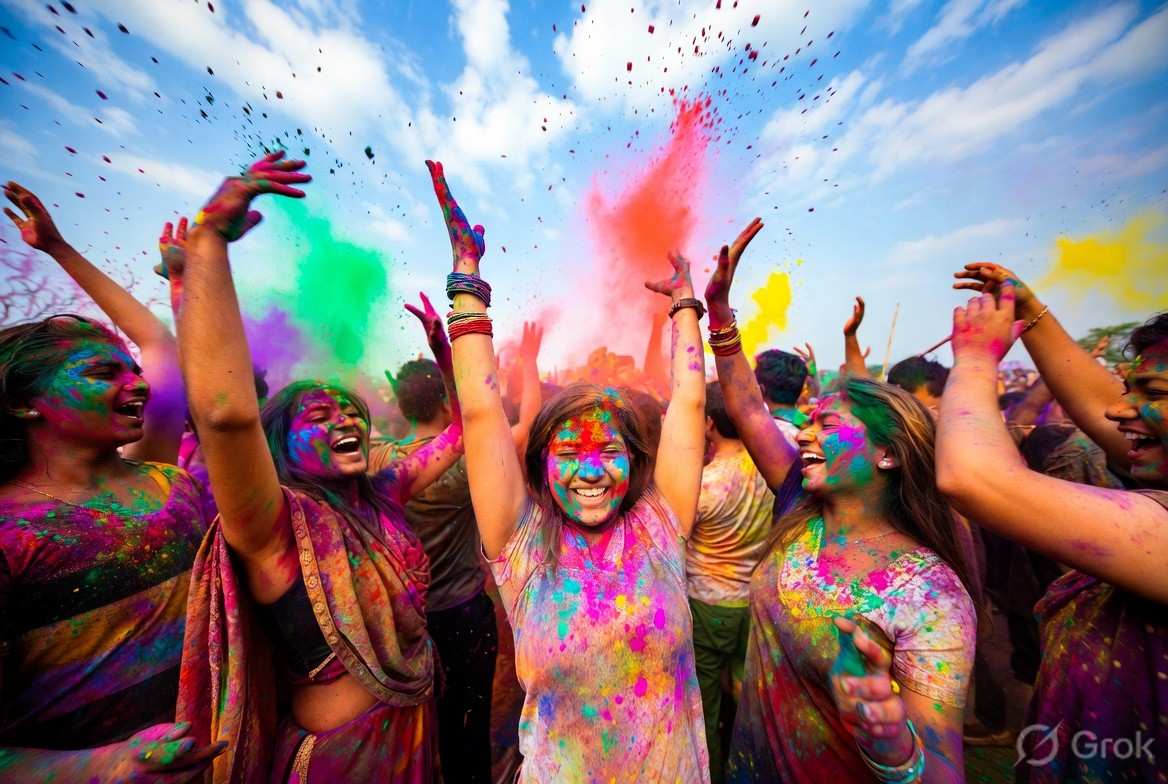
- Then begin the joyful celebration of colors with family
Final Blessings
होलिका की अग्नि में जलें सारे दुख और पाप, रंगों की होली में खिले जीवन का हर अध्याय। जय श्री राधे! जय श्री नरसिंह! जय श्री हरि!
“May all sorrows and sins burn in the flames of Holika. May every chapter of life bloom in the colors of Holi. Victory to Radha! Victory to Narasimha! Victory to Lord Hari!”
© 2026 HinduTone.com · All Rights Reserved Content based on Hindu Panchang Vikram Samvat 2082-83. Muhurat timings are in IST and applicable for most regions of India. Consult your local pandit for precise regional timings.
HinduTone.com — Preserving the Timeless Wisdom of Sanatan Dharma
Latest NRI News & Global Updates:
Health, Wellness & Lifestyle for NRIs
https://nriglobe.com/health-wellness/
Latest NRI News & Global Updates
https://nriglobe.com/news/
Business & Finance News for NRIs
https://nriglobe.com/business/
Investment Guides for NRIs
https://nriglobe.com/investment/
Jobs & Career Opportunities for NRIs
https://nriglobe.com/jobs/