
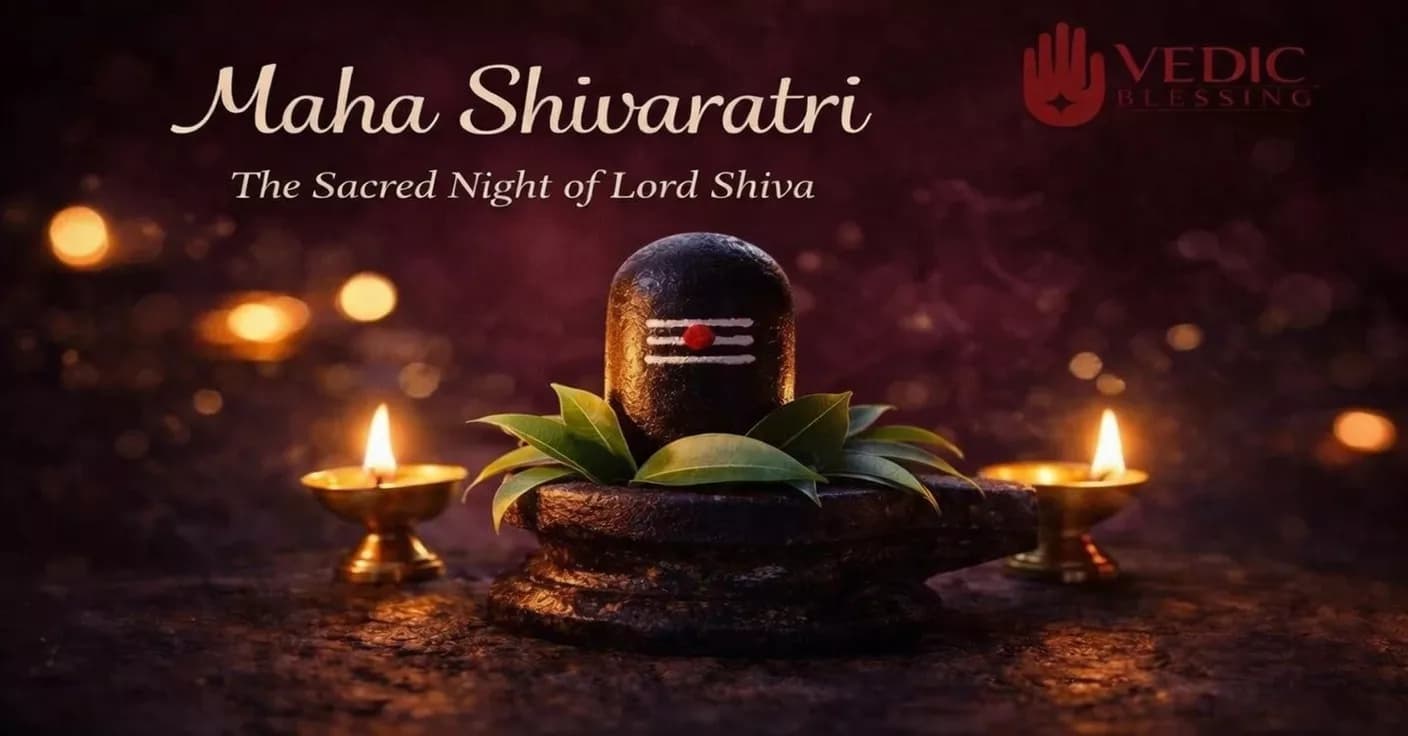
TL;DR
- Maha Shivaratri 2026 is expected to fall in mid-February across South Africa, with most community calendars pointing to Sunday, 15 February — confirm the exact date with your local temple or a current panchang closer to the time.
- Durban hosts the largest continuous worship at Umgeni Road Temple with 21-hour programs.
- Four prahara abhishekam sequence uses milk, yogurt, honey, and ghee.
- Communities in Johannesburg, Cape Town, and smaller provinces maintain distinct Shaiva traditions rooted in 1860s migration.
- Fasting guidelines and mantra resources help first-time observers participate fully.
Historical Roots of South African Shaivism
Indentured workers arrived from southern India and Mauritius starting in 1860. They carried Shaiva Siddhanta practices that evolved into the province-specific observances seen today. Durban's early temples became anchors for annual night-long vigils that later spread to Gauteng mining towns and Western Cape port communities.
That founding migration shaped more than ritual. It created a living chain of memory — recipes, mantras, and festival customs — transmitted through families who often had no written records beyond temple registers. Understanding this history helps explain why Maha Shivaratri carries such weight in South Africa: it is simultaneously a religious observance and an act of cultural preservation for a community that rebuilt its traditions on unfamiliar soil.
Shaiva Siddhanta, the philosophical tradition most of these early migrants carried, emphasises the direct relationship between the individual soul and Shiva as the supreme reality. Unlike some other Shaiva schools, it places considerable importance on temple ritual, priestly lineage, and the precise performance of abhishekam — the ceremonial bathing of the deity. This doctrinal emphasis on correct ritual form helps explain why the four-prahara structure has remained so consistent across South African communities even as other cultural practices have adapted over generations. For NRI families visiting South Africa or connecting with the diaspora from abroad, recognising this Shaiva Siddhanta foundation can provide useful context when comparing local observances with those familiar from Tamil Nadu, Sri Lanka, or other parts of the Indian subcontinent.
The theological framework underlying Shaiva Siddhanta also informs how South African communities approach the festival itself. Rather than viewing Maha Shivaratri as merely a day of fasting or a cultural celebration, practitioners within this tradition understand it as an opportunity for direct communion with the divine through properly executed ritual. This explains the meticulous attention to timing, materials, and sequence that characterises temple observances across the country. The precision is not pedantry but devotion — each element of the abhishekam carries theological weight that extends back through centuries of textual commentary and priestly practice.
KwaZulu-Natal Observances
Durban Temples
Umgeni Road Temple maintains the longest recorded program in the country. Devotees begin with dawn milk abhishekam and continue through four praharas until midnight ghee offering. Chatsworth's ISKCON centre adapts the same night into extended kirtan sessions that incorporate both Tamil and Sanskrit texts.
Phoenix and Reservoir Hills temples focus on family participation. Youth groups recite Rudram while elders prepare bilva leaf arrangements. North and South Coast gatherings remain smaller yet retain beach sunrise meditations that blend coastal landscapes with traditional chanting. The coastal setting adds a dimension that inland communities often travel specifically to experience — the sound of the ocean beneath Sanskrit recitation is, for many families, inseparable from the festival itself.
The Rudram recitation that features so prominently in KwaZulu-Natal temples deserves brief explanation for those unfamiliar with it. Sri Rudram is a Vedic hymn from the Krishna Yajurveda, traditionally chanted in eleven cycles known as ekadasa Rudram. In South African temples, the pace and style of recitation often reflect the particular lineage of the presiding priest, which may trace back to specific regions of Tamil Nadu or Andhra Pradesh. Visitors from other countries sometimes notice subtle differences in pronunciation or melodic pattern — these variations are not errors but markers of distinct priestly traditions that survived the migration intact.
Durban's temple infrastructure has expanded considerably over recent decades to accommodate growing attendance during Shivaratri. The Umgeni Road Temple, in particular, has developed a reputation for managing the logistics of all-night worship with remarkable efficiency. Volunteers coordinate staggered seating arrangements, manage the flow of devotees through the sanctum for darshan, and ensure that the kitchen operates continuously to provide prasadam and light refreshments. This organisational sophistication reflects both the scale of the event and the deep institutional knowledge accumulated through more than a century of continuous observance. For first-time attendees, arriving early enough to understand the layout and volunteer structure can significantly enhance the experience.
Pietermaritzburg and Inland Areas
University-linked groups in Pietermaritzburg organise heritage talks alongside vigils. These sessions often highlight migration stories that connect current families to the original 1860 arrivals. Younger attendees — many of them students encountering formal Shaiva theology for the first time — frequently describe these talks as the moment the ritual moved from inherited habit to conscious practice.
The heritage talk format has gradually spread to other inland centres as a way of addressing a generational challenge common to diaspora communities worldwide: how to transmit meaning, not just form. When a young person understands why bilva leaves are offered in sets of three, or what the four praharas represent in terms of cosmic time cycles, the ritual gains a dimension that pure repetition cannot supply. Temple committees in Pietermaritzburg have found that pairing theological explanation with active participation — inviting students to assist with the abhishekam rather than simply observe — produces stronger long-term engagement with the tradition.
The educational dimension of these heritage talks extends beyond theology into practical history. Speakers often recount specific details about the original migrants — which ships they arrived on, which plantations they worked, how they pooled resources to purchase land for temples. These narratives, preserved in family records and temple archives, create a tangible connection between contemporary observers and their ancestors. For NRI professionals visiting from India or elsewhere, these talks provide context that helps explain why Maha Shivaratri observance in South Africa carries emotional and cultural weight that may feel different from the festival as experienced in India itself.
Gauteng Programs
Johannesburg and Pretoria
Lenasia's Sri Siva Alayam runs multilingual recitations that serve both Tamil and Hindi speakers. Midrand's ISKCON venue extends kirtan into a 24-hour cycle with prasadam distribution at regular intervals. Pretoria's Laudium centres attract diplomatic families and students who combine Sai Baba bhajans with core Shiva mantras.
The Gauteng programs reflect the demographic reality of South Africa's Indian diaspora in the interior: communities are more dispersed, temple catchment areas are wider, and the congregations tend to be linguistically mixed. That diversity has pushed organisers toward formats that are accessible to worshippers whose Tamil or Telugu may be limited, without diluting the ritual core. The result is a style of observance that feels distinctly Johannesburg — urban, multilingual, and pragmatic — while remaining recognisably Shaiva.
For NRIs based in Gauteng on work assignments or long-term residence, the multilingual format can ease entry into the community. Many professionals arriving from India find that the Johannesburg temple environment, though different in flavour from what they knew at home, offers a familiar ritual scaffold — the same panchakshara mantra, the same abhishekam sequence, the same post-puja prasadam of vibhuti and kumkum. The social dimension is equally significant: Shivaratri gatherings in Gauteng frequently function as informal networks where recently arrived families meet established community members who can offer practical guidance on everything from school enrolment to accountants familiar with NRI tax situations.
The 24-hour kirtan format pioneered by some Gauteng venues represents an adaptation of traditional all-night vigil practice to contemporary urban conditions. Rather than the structured four-prahara sequence that dominates in Durban, the extended kirtan approach emphasises continuous devotional singing with flexible entry and exit points. This format has proven particularly effective for working professionals who may not be able to commit to a full 21-hour vigil but wish to participate meaningfully. The accessibility of this approach has contributed to stronger attendance among younger professionals and families with children, who might otherwise find the traditional format challenging to sustain.
Western Cape and Eastern Cape Gatherings
Cape Town's Rylands temple keeps intimate Tamil rituals inside modest halls. Stellenbosch student satsangs add reflective discussions on cosmic symbolism. In Gqeberha and East London, family homes host smaller pujas that sometimes include interfaith neighbours.
The Western Cape gatherings are notable for their scale relative to the community size. With a smaller Hindu population than KwaZulu-Natal or Gauteng, Western Cape temples have developed a culture of close-knit participation where almost every attendee knows the others by name. First-time visitors often remark on how quickly they are welcomed into the ritual, offered bilva leaves, and guided through the abhishekam sequence by experienced elders.
The inclusion of interfaith neighbours in Eastern Cape home pujas reflects a broader pattern of cultural openness that has characterised smaller South African Hindu communities for generations. When numbers are limited, the boundary between community event and neighbourhood gathering becomes porous in a way that larger urban temples rarely experience. This openness has sometimes introduced non-Hindu guests to Shaiva practice for the first time, and temple committees in these areas generally welcome such encounters as an opportunity for respectful cultural exchange rather than a dilution of tradition.
Cape Town's student satsang groups deserve particular attention as a model of how younger diaspora members are engaging with Shaiva philosophy. These gatherings typically combine traditional chanting with contemporary discussion of cosmological concepts drawn from Shaiva Siddhanta texts. Participants explore questions about the nature of consciousness, the relationship between individual and universal reality, and the role of ritual in spiritual development. For university students, many of whom are encountering formal Hindu philosophy for the first time in an academic context, these satsangs create a bridge between intellectual inquiry and devotional practice.
Smaller Provinces
Bloemfontein and Kimberley communities coordinate joint events despite limited numbers. These gatherings emphasise continuity rather than scale, preserving recipes for festival sweets passed down through generations. In some cases, families drive several hours to attend a combined event, treating the journey itself as part of the observance — a modern echo of the pilgrimages their ancestors made to coastal temples before inland communities had their own.
The festival foods prepared at these smaller gatherings deserve mention as a form of living heritage. Dishes such as pongal, vadai, and specific sweet preparations associated with Shivaratri are often made from recipes that have never been written down, existing only in the muscle memory of older women who learned them by standing beside their mothers in temple kitchens. Community organisers in Bloemfontein have begun recording these recipes as part of broader heritage documentation efforts, recognising that culinary knowledge is as vulnerable to generational loss as any other aspect of intangible cultural heritage.
The coordination between Bloemfontein and Kimberley demonstrates how smaller communities sustain observance through collaborative effort. Rather than each town attempting to mount a full festival independently, they pool resources, share transportation costs, and rotate hosting responsibilities. This practical cooperation has become a model that other small-population areas have adopted. For families in these regions, the annual Shivaratri gathering functions as both spiritual event and social anchor — often the largest gathering of the Hindu community in the entire year.
Practical Ritual Sequence
Observers follow the four-prahara structure regardless of location. Morning milk, afternoon yogurt, evening honey, and midnight ghee abhishekam mark each phase. Many households prepare simple fruit-based meals after sunset to maintain the fast. Those observing for the first time should note that the fast is traditionally broken only after the midnight offering and the morning puja on the following day, though individual health needs always take precedence — consult your family elders or a knowledgeable pandit if you are unsure about the appropriate approach for your circumstances.
| Phase | Offering | Typical Start |
|---|---|---|
| First | Milk | 06:00 |
| Second | Yogurt | 12:00 |
| Third | Honey | 18:00 |
| Fourth | Ghee | 00:00 |
The bilva leaf holds particular significance across all four phases. Traditionally offered in sets of three leaves joined at the stem, it is associated with Shiva's three eyes and the three aspects of time. Sourcing fresh bilva can be challenging outside KwaZulu-Natal; many Gauteng and Cape Town families order dried leaves from Durban suppliers weeks in advance, or substitute with leaves from community gardens that have been cultivated specifically for temple use.
Beyond the abhishekam offerings, the recitation of the panchakshara mantra — Na-Ma-Shi-Va-Ya — runs as a continuous thread through all four phases. In many South African temples, a designated group of chanters maintains this recitation without interruption from the first prahara to the last, creating an unbroken sonic environment that supports the meditation of other worshippers moving through the hall. First-time attendees who are unfamiliar with the full Rudram or other longer texts can participate meaningfully simply by joining this mantra, which requires no special initiation and is considered appropriate for all sincere observers regardless of background or linguistic ability.
The timing of each prahara is calculated according to the lunar calendar and the specific location's astronomical conditions. While the table above provides approximate start times, temples typically announce the precise schedule for each year based on calculations performed by qualified pandits. This precision reflects the Shaiva Siddhanta emphasis on correct timing as essential to ritual efficacy. For those attending multiple temples or comparing observances across different provinces, minor variations in prahara timing are normal and do not indicate error — they reflect legitimate differences in calculation methodology or local tradition.
Fasting and Dietary Considerations
The Shivaratri fast traditionally involves abstaining from grains and non-vegetarian foods. Many observers consume only fruits, milk products, and specific vegetables such as potatoes and sweet potatoes. Some communities permit light meals of sabudana (tapioca) or specific flour preparations. The fast is understood as a form of self-discipline that supports meditation and devotion rather than as a form of self-mortification.
For those with health conditions, dietary restrictions, or other concerns, the tradition permits modification of the fast according to individual circumstances. Pregnant women, nursing mothers, children, and those with medical conditions are generally encouraged to eat normally while maintaining the spiritual intention of the observance. This flexibility reflects the underlying principle that the fast serves the devotee's spiritual development rather than the reverse.
NRI families visiting South Africa for Shivaratri should plan their meals carefully, particularly if they are attending temple programs that extend through the night. Bringing appropriate snacks and beverages can help maintain energy levels during extended vigils. Many temples provide prasadam and light refreshments, but bringing personal supplies ensures that individual dietary needs and preferences are met.
First-Hand NRI Perspective
My family arrived in Durban in the late 1960s and has attended Umgeni Road Temple every Shivaratri since. The scent of bilva leaves and camphor still triggers the same sense of continuity I felt as a child. Over decades the temple added youth-led Rudram groups and online live streams, yet the core midnight aarti remains unchanged. Neighbours from Johannesburg now travel down for the longer program because their own local events finish earlier. These annual journeys have become quiet reunions where second-generation professionals discuss both career moves and the next generation's exposure to Sanskrit slokas. The experience shows how ritual time in South Africa functions as both spiritual anchor and social calendar for a dispersed diaspora.
The evolution of Umgeni Road Temple over the decades reflects broader patterns in how diaspora communities adapt tradition to contemporary circumstances. The addition of live streaming, for instance, has allowed family members living abroad to participate in real time, creating a form of virtual presence that would have been unimaginable to the original migrants. Yet this technological innovation has not displaced the physical gathering — if anything, the availability of online access has increased in-person attendance among those who wish to experience the full sensory and social dimensions of the event.
Resources for Further Information
For detailed information about Maha Shivaratri observance in South Africa, HinduTone provides comprehensive guides. The Maha Shivaratri 2026 South Africa guide offers specific details about temple programs and observance practices. Additional context on regional variations can be found in guides covering other locations, such as the Adelaide observance guide, which illustrates how diaspora communities in different countries maintain similar practices. For deeper theological understanding, the comprehensive guide to Maha Shivaratri significance, fasting rituals, and devotional practices explores the philosophical foundations underlying the festival.
Next steps
Confirm the exact date for 2026 with your local temple or a reliable panchang source, as lunar calendar dates can shift by a day depending on the authority consulted. Confirm exact temple opening hours directly with each venue two weeks before the date. Prepare fasting foods in advance and coordinate transport for late-night return journeys. If you are attending for the first time, reaching out to the temple committee beforehand is worthwhile — most are happy to explain the prahara sequence and suggest appropriate dress and offerings for newcomers. For NRI families planning to visit South Africa specifically for Shivaratri, booking accommodation near major temple centres well in advance is advisable, as hotel availability can become limited during the festival period.
Sources
Official temple websites and provincial Hindu associations publish annual schedules. Local community notice boards and printed pamphlets distributed at temples provide the most current details. For date verification, a current printed or digital panchang from a recognised South African Hindu body is the most reliable reference. Community elders and temple priests remain invaluable sources of information about local observance practices and historical context.
Related NRI Globe pillar guide: Returning to India — Complete Checklist for NRIs
Related NRI Globe Coverage
- Diwali 2026 Events Country-Wise — Global NRI Directory (White House, Leicester, London Trafalgar, Toronto, Auckland, Sydney Parramasala, Fiji, Mauritius, Trinidad, South Africa and More)
- Diwali / Deepavali 2026 Country-Wise NRI Celebrations — Complete Global Guide (USA, UK, Canada, Australia, Fiji, Mauritius, Trinidad, South Africa, UAE and 30+ Countries)
- Krishna Janmashtami 2026 Around the World: NRI Global Guide (UAE, Singapore, Malaysia, New Zealand, South Africa, Europe & More)
- USA's Hindu Communities Celebrate Maha Shivaratri 2026 with Devotion and Vibrancy
- Canada's Hindu Communities Celebrate Maha Shivaratri 2026 with Deep Devotion and Community Spirit
- Maha Shivaratri 2026 in New Zealand Guide
- Maha Shivaratri 2026 in Nepal: Complete Guide
- Maha Shivaratri 2026 in India: Complete Guide
Fresh from NRI Globe
- YouTuber Nandu's World (Rama Nandana) UK Visa & Job Fraud Case: Full Details + Key Lessons for NRIs (2026)
- Dussehra / Vijayadashami 2026 Events Country-Wise — Global NRI Directory (Ram Lila, Ravana Dahan, Durga Puja Pandals, Ayudha Puja Venues + Booking)
- Dussehra / Vijayadashami 2026 Country-Wise NRI Celebrations — USA, UK, Canada, Australia, New Zealand, UAE, Singapore, Germany, Netherlands and More
- US Crime News 2026 — Top Trend Categories NRIs Are Watching (Organized Retail Theft, Auto Theft, Cybercrime, Hate Crimes, Fentanyl, AI-Enabled Fraud)