
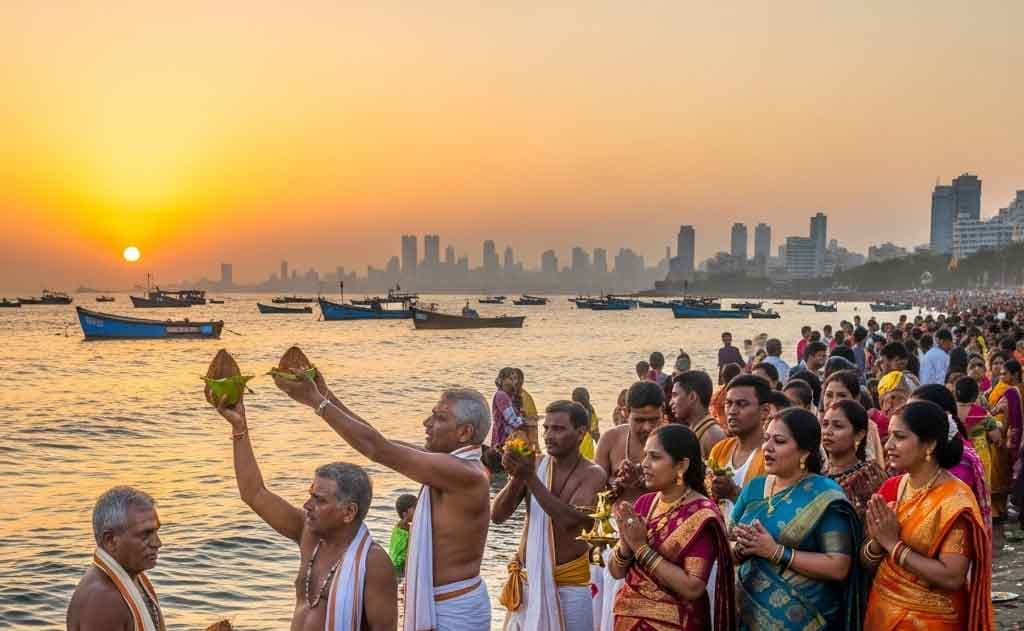
Narali Purnima falls on the full moon of Shravan. Coastal families mark the close of the monsoon fishing ban and seek safe voyages ahead.
TL;DR
- Fishermen in Maharashtra and Goa offer coconuts to Varuna on Shravan Purnima.
- The ritual ends the seasonal ban and opens the new fishing cycle.
- Boats receive fresh paint, flags, and lamps before the first sail.
- Sweet coconut rice and community feasts form the shared meal.
- The date aligns with Raksha Bandhan in many coastal villages.
Origins of the Festival
The Koli and Kharvi communities trace the practice to ancient Vedic reverence for Varuna as lord of waters. Monsoon storms once kept boats ashore for four months. The full-moon offering signals that tides have calmed enough for safe return to the sea.
A first-hand account from an NRI who grew up in Versova illustrates the shift. My family left Mumbai in 1998. Each July my father still phones the local koliwada to confirm the exact tide time. He describes the same boat he painted in 1987 now handled by his nephew. The call always ends with the reminder that the coconut must be thrown at the crest of the third wave. That single instruction carries the memory of four generations who never missed the date. The practice survived relocation because the sea remains the family livelihood even when the household address changed to another continent. Younger relatives in the diaspora now schedule annual leave around the lunar calendar so they can stand on the same shore and repeat the gesture their grandparents performed. The continuity is maintained through phone calls, shared photos of the decorated boats, and the insistence that the coconut chosen must have three clear eyes.
Similar observances appear among fishing groups along other Indian coasts where seasonal weather dictates work cycles. Families compare notes on tide tables published by port authorities. These records help time departures after the ban lifts. NRIs use the same data when planning visits. They cross reference lunar dates with official harbor schedules to avoid missing the window. The festival therefore functions as both religious marker and practical signal for seasonal labor.
Meaning of the Coconut Offering
The coconut’s three eyes evoke Shiva while its water represents purity. Throwing it into the waves is understood as both thanks and request. No written scripture dictates the exact motion; the gesture is transmitted by watching elders on the shore.
Original observation shows the biodegradable shell returns to the same waters that supply the catch, closing a visible loop between gift and livelihood. Communities also plant coconut saplings along the beach on the same day, extending the offering from one fruit to future shade and soil stability.
Selection of the coconut follows quiet rules passed within households. Elders check for firmness and clear eyes before purchase. The throw itself occurs without fanfare. Children watch from the sand and later repeat the motion in play. Over time this repetition builds recognition of seasonal rhythms that persist regardless of where the family now lives. For NRIs the act also transmits an environmental message about returning organic material to its source.
Regional Customs Compared
Coastal states adapt the core ritual to local produce and boat designs. Maharashtra groups emphasize golden coconuts and bright flags. Goa adds mango leaves to the mast. Southern villages float small lamps on simple rafts. These differences reflect available materials rather than separate beliefs.
| Region | Boat Ritual | Special Coconut | Shared Dish |
|---|---|---|---|
| Maharashtra | Flags and oil lamps | Golden “Sonyacha Naaral” | Narali Bhaat |
| Goa | Mango leaves and flags | Standard offering | Patoleo |
| South India | Simple lamp float | Standard offering | Coconut payasam |
Visitors from one region to another note how the shared meal changes with local rice varieties. The underlying purpose remains identical: gratitude for safe passage and hope for abundant catches. NRIs who travel between states during the festival often carry ingredients for both Narali Bhaat and payasam to share with relatives.
Modern Observance by NRIs
Many families living abroad recreate the offering at local beaches or temple tanks. They carry a single coconut from an Indian grocery and time the throw with live video from relatives in India. The act keeps children connected to a calendar that does not appear on most Western planners.
Some households in the United States and Canada organize small gatherings at state parks with ocean access. They coordinate the date through community WhatsApp groups that also list tide charts from Indian ports. Parents explain the three-wave rule to teenagers who have never fished yet still recognize the importance of the gesture. Photos posted afterward circulate among extended family members who could not attend. Over successive years these images form an informal archive of continuity. The practice therefore supports both religious observance and intergenerational language transmission when younger members ask questions about the chosen coconut or the painted boat visible on screen.
Next steps
Check the lunar calendar for the next Shravan Purnima. Contact a coastal temple or community group to learn exact tide timing before travel.
Sources
Tourism of India Wikipedia entry on Narali Poornima
Related NRI Globe pillar guide: Returning to India — Complete Checklist for NRIs
Related NRI Globe Coverage
- Significance of Sravana Purnima in Hinduism: A Sacred Day of Devotion and Rituals
- 10 Diwali Sweet Recipes for NRI Families in the USA (2026) — From Coconut Ladoo to Motichoor
- Modak & Festival Sweets Abroad 2026 — Ingredients You Can Find Locally
- Tulsi Pooja Vidhi for NRIs – How to Worship the Sacred Basil Plant Abroad
- Bodrai Festival 2026: NRI Guide to Telangana
- Holi 2026 in Amsterdam: Netherlands' Vibrant Hub for the Festival of Colors, Tech Diaspora, and Multicultural Joy
- Holi 2026 in Berlin: Germany's Capital of Colors, Tech-Driven Diaspora, and Growing Desi Vibrancy
- Holi 2026 in Birmingham: The Midlands' Vibrant Festival of Colors, Desi Beats, and Community Unity
Fresh from NRI Globe
- YouTuber Nandu's World (Rama Nandana) UK Visa & Job Fraud Case: Full Details + Key Lessons for NRIs (2026)
- Dussehra / Vijayadashami 2026 Events Country-Wise — Global NRI Directory (Ram Lila, Ravana Dahan, Durga Puja Pandals, Ayudha Puja Venues + Booking)
- Diwali 2026 Events Country-Wise — Global NRI Directory (White House, Leicester, London Trafalgar, Toronto, Auckland, Sydney Parramasala, Fiji, Mauritius, Trinidad, South Africa and More)
- Diwali / Deepavali 2026 Country-Wise NRI Celebrations — Complete Global Guide (USA, UK, Canada, Australia, Fiji, Mauritius, Trinidad, South Africa, UAE and 30+ Countries)