
Last verified: August 31, 2026. Practical planning guide for NRI organizers ahead of Vinayaka Chavithi on September 14, 2026.
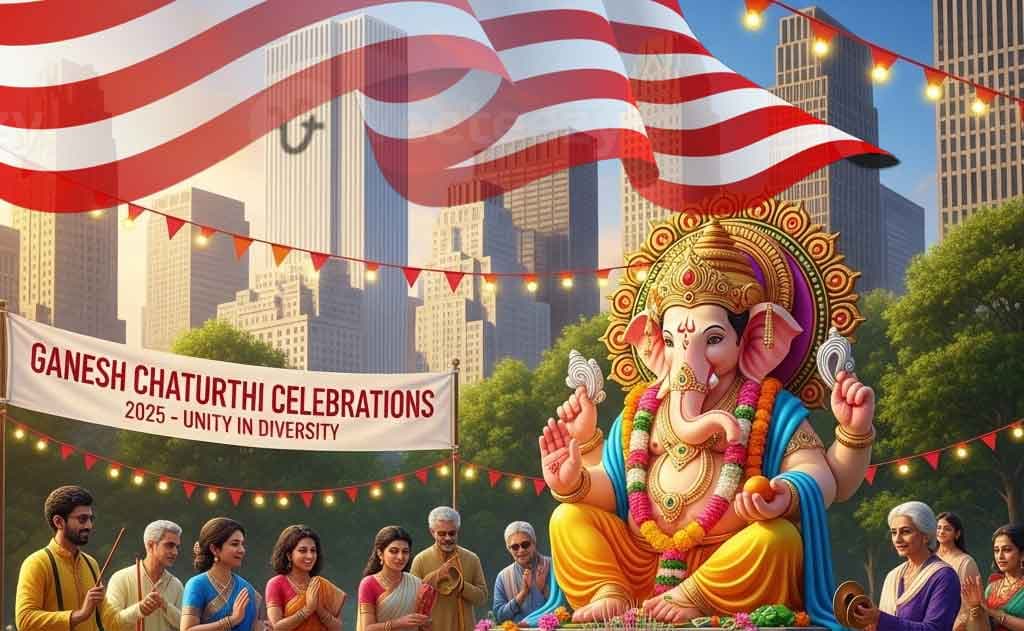
Setting up a Vinayaka Chavithi (Ganesh Chaturthi) Mandapam or community pandal in the United States requires careful planning around local permits and regulations. Unlike India, where municipal corporations and police stations handle standardized festival permissions, the USA has no single national rule for temporary religious structures. Requirements vary significantly by city, county, and state.
This guide helps NRI organizers, temples, and cultural associations navigate the process for safe, legal, and successful community celebrations.
Why Permissions Matter for Community Mandapams
A "Mandapam" or pandal typically involves a temporary tent or structure for the Ganesha idol, daily pujas, cultural programs, prasad distribution, and sometimes processions or visarjan. When the event is public, uses public property, involves a large tent, amplified sound, generators, food service, or street activity, multiple local agencies may require approvals.
Failing to obtain proper permits can lead to event shutdowns, fines, or liability issues. Planning early protects both the community and the organizers.
Common Permits Required in the USA
1. Special Event / Public Assembly Permit
Most cities require this for gatherings on public property (parks, streets, sidewalks) or private property open to the public when attendance exceeds a certain number (often 50–250 people, depending on the jurisdiction).
Applications usually need site plans, expected crowd size, security plans, and emergency procedures. Submit 30–90 days in advance.
2. Temporary Structure / Tent Permit (Fire Department)
Under the widely adopted International Fire Code (IFC), tents and membrane structures larger than 400 square feet generally require a permit from the local fire code official. Open-sided canopies may have a higher threshold (often 700 sq ft).
Requirements typically include:
- Flame-resistant material certification
- Detailed site and floor plans showing exits, seating, and fire extinguishers
- Anchoring and weather resistance details
- Clearances from buildings and other structures
Larger stages or special event structures may need additional structural review.
3. Noise / Amplified Sound Permit
Many cities regulate loudspeakers, dhol-tasha, and cultural performances. Evening cutoff times (often 10 or 11 p.m.) are common. Separate sound permits are frequently required from the police department.
4. Street Closure or Right-of-Way Permit
Needed if the mandapam, procession, or parking affects public roads or sidewalks.
5. Park Use or Facility Rental Permit
If using a public park or community center.
6. Temporary Food Service / Health Department Permit
Required if serving or selling food beyond simple packaged prasad.
7. Electrical / Generator Approvals
Temporary power connections or generators often need inspection or certification, especially larger units.
8. Liability Insurance
Most public or large private events require a Certificate of Insurance naming the city or property owner as additional insured.
Private Property vs Public Space
- Small home or private backyard setups (family or close friends, small tent): Often no formal permits are needed, but check HOA rules and local noise ordinances.
- Apartment complex or society common areas: Obtain written permission from the management or association board in advance.
- Public parks, streets, or large community venues: Full special event and tent permitting process applies.
City / Region-Specific Notes (Major NRI Hubs)
Requirements differ widely. Always verify with the local authority:
- New Jersey (Edison, Iselin, Jersey City, Woodbridge): High concentration of Indian communities. Established organizations and temples often coordinate group permits. Fire and special event rules are strictly enforced for larger tents. Some townships have experience with annual cultural events.
- California (Bay Area, Los Angeles, Orange County): Strict tent and fire safety rules. Park permits and noise restrictions are common. Eco-friendly practices are strongly encouraged.
- Texas (Houston, Dallas, Austin): Generally more flexible for community events, but large outdoor assemblies and tents still require fire and special event approvals.
- New York / Long Island: Religious events on streets may fall under specific city event categories. Sound permits from NYPD are frequently needed. Public water immersion is heavily restricted.
- Illinois (Chicago area), Georgia (Atlanta), Florida: Follow local special event and fire codes. Temples and Maharashtra/Telugu associations often guide first-time organizers.
Step-by-Step Process for Organizers
- Decide the location and expected attendance early.
- Contact the local city or county special events office, fire marshal, and police department 60–90 days before the festival.
- Prepare a site plan, insurance certificate, and description of activities (puja, cultural programs, food, immersion plans).
- Apply for tent/temporary structure and special event permits as required.
- Secure any additional sound, electrical, or food permits.
- Coordinate with local temples or established cultural associations — many already have relationships with authorities and can advise or co-host.
- Plan for eco-friendly clay or seed idols and home/community tank visarjan to avoid environmental violations.
- Keep all permits on-site during the event and follow fire safety, exit, and noise rules strictly.
Practical Tips for NRI Communities
- Partner with existing Hindu temples, Maharashtra Mandals, Telugu associations (NATS/MATA), or cultural centers — they often handle permits for larger events.
- Keep the mandapam modest in size when possible to stay under tent permit thresholds.
- Use flame-retardant tents and maintain clear exits and fire extinguishers.
- Avoid street processions or loud outdoor music without proper approvals.
- Document everything and designate a responsible point of contact.
- For visarjan, prioritize home bucket immersion or temple-organized artificial tanks rather than natural water bodies.
2026 Timeline Recommendation
Vinayaka Chavithi falls on Monday, September 14, 2026. Begin permit discussions and applications no later than June or July. Popular venues and park dates fill quickly.
Final Advice
Local rules change and enforcement varies. The safest approach is to contact your city or county special events office, fire department, and police early and follow their guidance. Established community organizations are invaluable resources.
By securing the right permissions, NRI communities can celebrate Vinayaka Chavithi with full devotion, cultural pride, and complete legal compliance — creating memorable, safe, and harmonious events across America.
Companion Reading
- Vinayaka Chavithi 2026 — Date, Puja Muhurat, Timings, Rituals — Complete Guide for NRIs
- Eco-Friendly Ganesh Visarjan in the USA — Home + Community Tank Guide
- Where to Buy Eco-Friendly Ganesha Idols in the USA — 2026 Sources
- Hosting Ganesh Chaturthi in an Apartment Abroad — Practical Playbook
Ganpati Bappa Morya!
Related NRI Globe pillar guide: Returning to India — Complete Checklist for NRIs
Deeper Devotional Reading on Hindutone
For the ritual, scriptural and spiritual side of Ganesh Chaturthi — mantras, katha, spiritual meaning, temple lore and community devotion — our sister publication Hindutone covers Ganesh Chaturthi in depth:
- Ganesh Chaturthi Hub on Hindutone — the complete festival category with pujas, aartis, katha and rituals.
- Ganesh Mandapam Dos and Don’ts — a traditional guide to correct mandapam setup and worship etiquette.
- Ganesh Nimajjanam in Mumbai — the world’s largest Visarjan and its living traditions.
- Ganesh Nimajjanam in Hyderabad — Khairatabad, Tank Bund and the Telangana Visarjan story.
- The Deeper Spiritual Meaning of the Syamantaka Story — a contemplative reading of the moon-viewing avoidance and mithya dosha.
- Importance of the Ganesh Mantra “Vakratunda Mahakaya” — the meaning and power of the foundational Ganesh sloka.
- The Birth Story of Lord Ganesha — the classical Puranic account of the elephant-headed God.
- The Five Stories of Ganesh Chaturthi — the myths and legends behind the ten-day festival.
- Ganesh Festival’s Role in India’s Freedom Struggle — how Lokmanya Tilak transformed it into a public celebration.
- Shree Siddhivinayak Temple — the story and darshan of Mumbai’s most-visited Ganesh shrine.
NRI Globe focuses on diaspora practicalities — permissions, kits, community celebrations, recipes, songs and city guides. Hindutone focuses on the deeper devotional side — mantras, katha, temples and rituals. Together they cover the full Ganesh Chaturthi experience for Hindu families around the world.
Related NRI Globe Coverage
- Top Telugu, Tamil and Kannada Ganesh Songs for NRI Families | Ganesh Chaturthi 2026
- Sri Vinayaka Chavithi vs Ganesh Chaturthi — Regional Differences (Telugu, Tamil, Marathi, Gujarati) for NRIs 2026
- Vinayaka Chavithi 2026: Date, Puja Muhurat, Timings, Rituals & Complete Guide for NRIs
- Ganesh Visarjan Permissions for NRIs 2026 — State-by-State City Guide (USA, UK, Canada & Australia)
- 50+ Creative Ganesh Mandapam Ideas: Transform Your Home into a Divine Paradise (NRI Perspective)
- Step-by-Step Guide to Ganesh Chavithi Puja for NRIs: Rituals, Meaning, and Easy Practice Abroad
- Dussehra / Vijayadashami 2026 Events Country-Wise — Global NRI Directory (Ram Lila, Ravana Dahan, Durga Puja Pandals, Ayudha Puja Venues + Booking)
- Diwali 2026 Events Country-Wise — Global NRI Directory (White House, Leicester, London Trafalgar, Toronto, Auckland, Sydney Parramasala, Fiji, Mauritius, Trinidad, South Africa and More)
Fresh from NRI Globe
- YouTuber Nandu's World (Rama Nandana) UK Visa & Job Fraud Case: Full Details + Key Lessons for NRIs (2026)
- Diwali / Deepavali 2026 Country-Wise NRI Celebrations — Complete Global Guide (USA, UK, Canada, Australia, Fiji, Mauritius, Trinidad, South Africa, UAE and 30+ Countries)
- Dussehra / Vijayadashami 2026 Country-Wise NRI Celebrations — USA, UK, Canada, Australia, New Zealand, UAE, Singapore, Germany, Netherlands and More
- US Crime News 2026 — Top Trend Categories NRIs Are Watching (Organized Retail Theft, Auto Theft, Cybercrime, Hate Crimes, Fentanyl, AI-Enabled Fraud)