
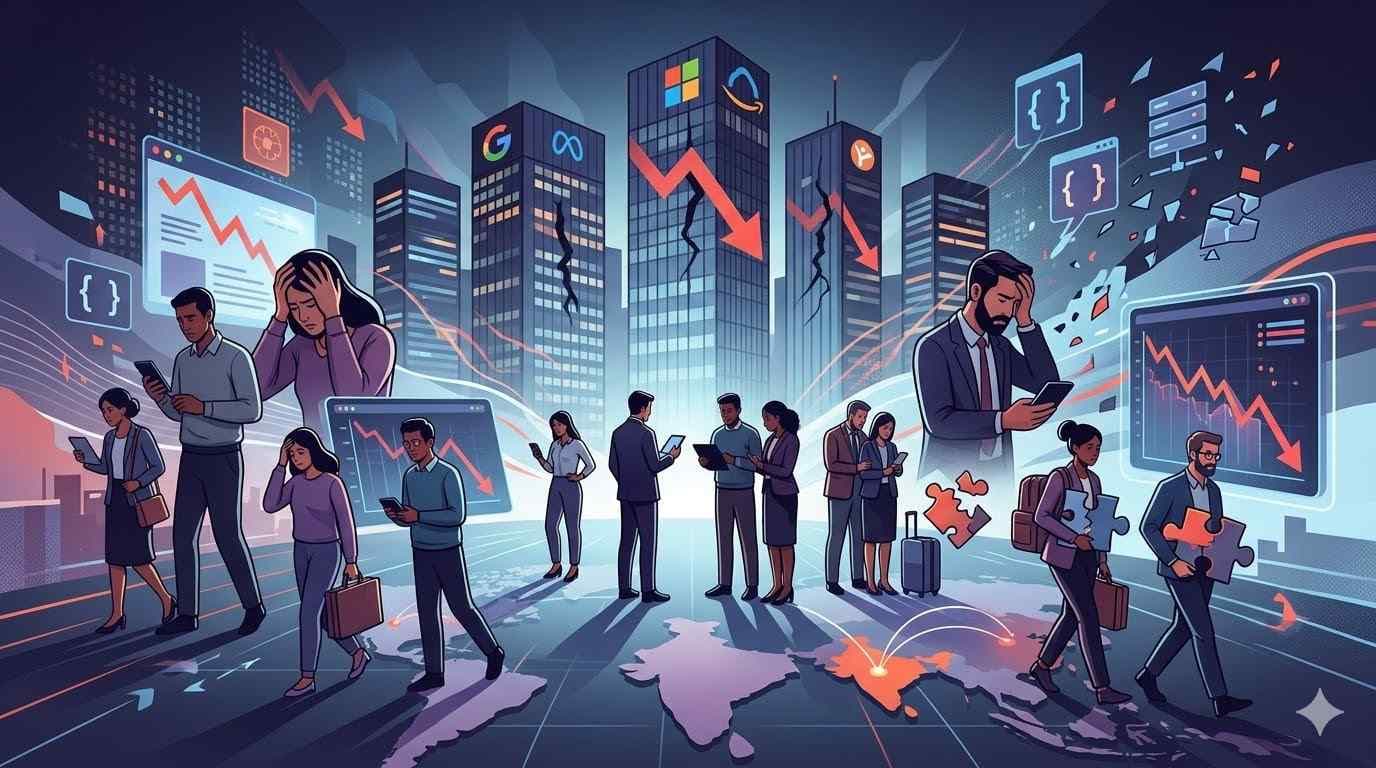
Coverage of Bill Gates' late-August 2026 essay on Gates Notes. Last verified August 30, 2026.
In a major new essay published in late August 2026, Microsoft co-founder Bill Gates has issued one of his strongest warnings yet about artificial intelligence. He argues that governments must act now to protect certain roles from being taken over by AI and robots — a concept he calls "Human Reserved" jobs.
Gates compares the idea to nature reserves: places society could develop with buildings and roads, but deliberately chooses not to because the loss would be too great. In the same way, he believes some jobs should remain exclusively human even when machines become technically capable of performing them.
What Are "Human Reserved" Jobs?
According to Gates, these would be occupations or tasks that society decides should stay in human hands for two main reasons:
- Economic protection — To prevent large-scale displacement of workers who cannot easily retrain (for example, a 55-year-old construction worker).
- Human values — Situations where the human element is irreplaceable, such as delivering difficult medical news, providing elderly care, or serving on a jury.
Gates shared a personal example. The caregivers who looked after his father during his battle with Alzheimer's offered something "irreplaceably human" that no robot should replace. He asked readers to imagine a robot telling a patient they have an incurable disease: "There's no technical reason why it couldn't. Yet it shouldn't."
He suggested that in an extreme scenario, up to 40% of jobs could initially be designated as Human Reserved, though the exact number would evolve over time. Some protections could be permanent; others could phase in AI slowly over years or decades.
The Bigger Warning: A "Turbulent AI Era"
In the nearly 6,000-word essay titled "The turbulent AI era is here. The choices we make are critical," Gates stated that many jobs will disappear forever. Unlike previous technological shifts that unfolded over decades, AI is advancing rapidly and could disrupt both white-collar and blue-collar work within a single generation.
Roles likely to feel early pressure include customer service, sales, software engineering, paralegal work, and certain administrative positions. Over time, robotics could extend the impact to manufacturing and other physical jobs.
Gates expressed concern that governments are not preparing adequately. He noted that AI will affect almost every area of policy — employment, taxation, education, national security, healthcare, and more — and questioned whether current institutions are ready for the scale of change.
Additional Proposal: Tax AI and Robots
Alongside Human Reserved jobs, Gates revived and expanded an earlier idea: taxing AI tokens (the units AI models use to process information) and robots. The goal would be twofold:
- Slow the economic incentive to replace human workers too quickly.
- Generate revenue for worker retraining and a stronger social safety net.
He argued that today's tax systems often make it cheaper to automate than to employ people, creating a built-in bias against human labor.
Why This Matters for Indian Professionals and NRIs
For the large Indian diaspora working in technology, finance, healthcare, education, and professional services across the US, UAE, UK, Canada, and elsewhere, Gates' proposals raise important questions:
- Will governments in major destinations create protected categories of work?
- How will H-1B and other skilled visa programs adapt if certain roles become "Human Reserved"?
- What new opportunities will emerge in human-centered fields such as caregiving, education, mental health, and complex client-facing roles?
- How should mid-career professionals plan reskilling strategies?
Many Indian professionals already work in high-skill areas that AI is beginning to touch. At the same time, India itself is investing heavily in AI talent and infrastructure. The balance between automation and human roles will shape career paths for the next decade.
The intersection with the current US H-1B environment matters more than usual. Late-August 2026 tech-industry restructuring — PagerDuty, Apple, TikTok, Even Healthcare and others — has explicitly cited AI as a factor. Our companion analysis, H-1B Rules & USA Tech Layoffs: Late August 2026 Update, covers the immigration side of the same story.
The Road Ahead
Gates acknowledged that deciding which jobs should be Human Reserved will be complex and may differ between countries. A nation with an aging population, for example, might welcome caregiving robots, while another might insist on human caregivers.
He called for international coordination, including with China, and said he plans to lobby policymakers "before unemployment rises sharply."
Whether governments adopt the "Human Reserved" concept or pursue different approaches, one message is clear: the AI transition will not manage itself. Deliberate policy choices will determine whether the technology becomes a broad source of prosperity or deepens inequality.
NRI Globe will continue tracking how these ideas evolve and what they mean for Indian professionals worldwide. The decisions made in the coming years will shape the future of work for millions.
Source: Bill Gates' essay published on Gates Notes, August 2026, and subsequent coverage in major international media.
Continue reading — NRI Globe pillar guide: Returning to India — Complete Checklist
Related NRI Globe Coverage
- AI Impact on Hollywood & Indian VFX Workforce 2026: How AI Is Reshaping DNEG, MPC, Prime Focus Jobs & NRI Creative Careers
- GPT-6 Astra Impact on NRIs and NRI Jobs 2026: H-1B, Tech Careers & AGI-Era Diaspora Guide
- Uber, PayPal & Trade Desk Layoffs Sep 2026 — What It Means for NRIs and H-1B Visa Holders
- Prince Harry and Meghan Markle Return to the UK After Six Years — Impact on Royal Family, William, Kate, and Global Headlines
- Strait of Hormuz Crisis: How Tensions Are Hitting Indian Wallets and NRI Households
- May 2026 US Tech & Federal Layoffs: What It Means for NRIs in America
- March 2026 US News: What NRIs Need to Know
- US Job Losses 2026: Impact on NRIs & Global Economy
Fresh from NRI Globe
- YouTuber Nandu's World (Rama Nandana) UK Visa & Job Fraud Case: Full Details + Key Lessons for NRIs (2026)
- Dussehra / Vijayadashami 2026 Events Country-Wise — Global NRI Directory (Ram Lila, Ravana Dahan, Durga Puja Pandals, Ayudha Puja Venues + Booking)
- Diwali 2026 Events Country-Wise — Global NRI Directory (White House, Leicester, London Trafalgar, Toronto, Auckland, Sydney Parramasala, Fiji, Mauritius, Trinidad, South Africa and More)
- Diwali / Deepavali 2026 Country-Wise NRI Celebrations — Complete Global Guide (USA, UK, Canada, Australia, Fiji, Mauritius, Trinidad, South Africa, UAE and 30+ Countries)