
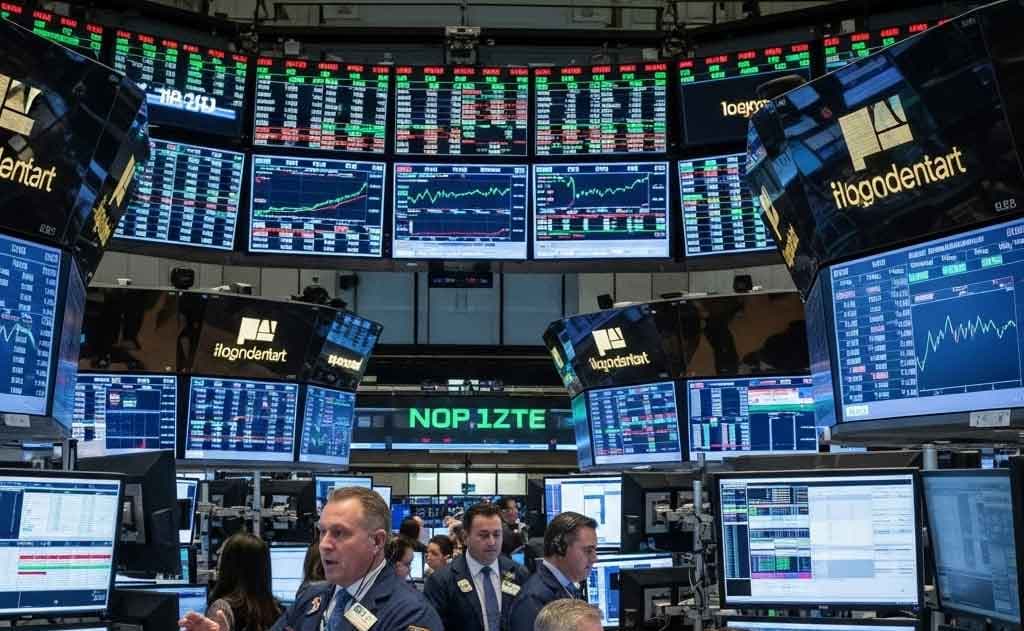
Market Performance
Wall Street has entered August 2025, a month historically known for weak stock performance, on a turbulent note. The major U.S. indices closed the previous week with significant declines, reflecting growing investor unease. The Dow Jones Industrial Average fell by 3.1%, marking its largest weekly loss in four months. The S&P 500 dropped 2.4%, its worst weekly performance since mid-May, while the Nasdaq Composite declined by 2.2%, also recording its weakest week since May. These losses follow a period of record highs in July, driven by strong corporate earnings and economic data, but the mood has shifted as multiple headwinds converge. Elevated valuations, softening labor market data, and new tariff policies from the Trump administration are cited as primary pressures fueling the downturn. The Cboe Volatility Index (VIX), often referred to as Wall Street’s “fear gauge,” spiked to 46.98 on August 1, its highest close in five years, signaling heightened market anxiety.
Tariff Impact
President Donald Trump’s latest tariff announcements have significantly contributed to the market’s volatility. On July 31, 2025, Trump issued an executive order imposing tariffs ranging from 10% to 41% on imports from dozens of countries, pushing the effective U.S. tariff rate to an estimated 15–20%. This is notably higher than the 10% rate markets had anticipated, catching investors off guard. The tariffs, part of Trump’s “Liberation Day” trade policy, aim to reshape the U.S. trade landscape but have reignited fears of a global trade war. Notably, trade negotiations with China, particularly concerning rare earth metals critical for technology and manufacturing, remain a focal point. China’s retaliatory tariffs, including a 34% levy on U.S. products announced in April, have heightened tensions, impacting companies with significant exposure to the Chinese market, such as Apple, Nvidia, and Caterpillar. While a 90-day tariff reprieve for Mexico and a new trade deal with South Korea offered some relief, the uncertainty surrounding ongoing negotiations continues to weigh heavily on investor sentiment.
Earnings Season
Despite the market’s struggles, the Q2 2025 earnings season has provided a silver lining. Over 82% of S&P 500 companies reported positive earnings surprises, with blended earnings growth tracking at an impressive 10.2% year-over-year. This follows a strong Q1, where high margins supported market resilience. Key performers included Meta Platforms and Microsoft, which reported robust results driven by their AI investments, boosting investor confidence in the tech sector’s growth potential. However, not all results were positive—Amazon’s AWS cloud unit underperformed expectations, and Apple faced pressure from tariff-related cost concerns despite beating earnings forecasts. This week, investors are closely watching earnings reports from Advanced Micro Devices (AMD), Disney, and Caterpillar, which are expected to offer further insights into the health of the U.S. economy and the impact of tariffs on corporate profitability. AMD’s report is particularly anticipated following its raised pricing on the Instinct MI350 AI chip, signaling confidence in its competitive position.
Economic and Policy Context
The broader economic backdrop adds complexity to the market’s challenges. The July jobs report, released on August 1, 2025, revealed weaker-than-expected hiring, with only 73,000 jobs added compared to the anticipated 104,000. Downward revisions to prior months’ data and an unemployment rate increase to 4.2% underscored a slowing labor market, prompting speculation about Federal Reserve rate cuts. Expectations for a 25-basis-point cut in September rose to 84%, with markets pricing in over two cuts for the year. Treasury yields also declined, with the 10-year Treasury note dropping to 4.253% after falling below 4% earlier in the week, reflecting investor flight to safer assets amid economic uncertainty. Additionally, concerns about a potential U.S. recession have grown, with Goldman Sachs raising its recession probability to 35% from 20% due to tariff-related disruptions and weaker economic data.
Sector and Company Impacts
The tariff-driven volatility has had a pronounced impact on specific sectors. Technology stocks, particularly those with exposure to China like Nvidia and Apple, have faced significant sell-offs, with Nvidia dropping over 8% and Apple declining 7% in recent sessions. Industrials, such as Caterpillar and Boeing, have also been hit hard due to their reliance on global supply chains and exports. Conversely, some sectors showed resilience—consumer staples remained relatively stable, and companies like Deckers Outdoor and Nike saw rebounds as tariff negotiations with countries like Vietnam progressed. The energy sector, however, faced pressure from declining oil prices, with Brent and WTI benchmarks hitting four-year lows amid fears of reduced global demand.
Outlook
As August unfolds, investors are bracing for continued volatility. Historically a weak month for stocks, August 2025 is shaping up to be particularly challenging due to the combination of tariff uncertainties, softening economic indicators, and high valuations. While strong corporate earnings provide some support, the unresolved trade tensions, particularly with China, and the potential for further retaliatory measures keep markets on edge. Analysts at Goldman Sachs have lowered their S&P 500 year-end target to 5,700, forecasting a potential 5% decline in the next three months if economic growth weakens further. However, optimism persists in some quarters, with strategists suggesting that technology stocks could offer long-term buying opportunities despite short-term volatility. Investors are advised to stay diversified and monitor upcoming economic data, including the Consumer Price Index and further earnings reports, to navigate this turbulent period.
Continue reading — NRI Globe pillar guide: NRI Taxation India — NRE/NRO/DTAA/FBAR
Related NRI Globe Coverage
- India Stock Market for NRIs 2026 — PIS Account, NRE/NRO Demat, Repatriation Complete Guide
- Market Volatility June 2026: Stock Selloff, Tariffs, and Safe Investment Strategies for NRIs
- US Stock Market 2026: Smart Moves for Indian Investors Abroad
- Tucson City Council Rejects Amazon’s $3.6 Billion Data Center Project Amid Water and Energy Concerns
- U.S. Stock Markets Plummet, Losing Over $1.1 Trillion as Weak Jobs Report and Trump Tariffs Shake Wall Street
- Peter Thiel's New Zealand Investment: A Strategic Move Amid Economic Concerns
- Jeff Bezos’s Amazon Stock Sell-Off: Strategic Move or Market Warning?
- BofA Bear-Market Indicators at 70%: What NRIs Need to Do With Their US Portfolios
Fresh from NRI Globe
- YouTuber Nandu's World (Rama Nandana) UK Visa & Job Fraud Case: Full Details + Key Lessons for NRIs (2026)
- Dussehra / Vijayadashami 2026 Events Country-Wise — Global NRI Directory (Ram Lila, Ravana Dahan, Durga Puja Pandals, Ayudha Puja Venues + Booking)
- Diwali 2026 Events Country-Wise — Global NRI Directory (White House, Leicester, London Trafalgar, Toronto, Auckland, Sydney Parramasala, Fiji, Mauritius, Trinidad, South Africa and More)
- Diwali / Deepavali 2026 Country-Wise NRI Celebrations — Complete Global Guide (USA, UK, Canada, Australia, Fiji, Mauritius, Trinidad, South Africa, UAE and 30+ Countries)