
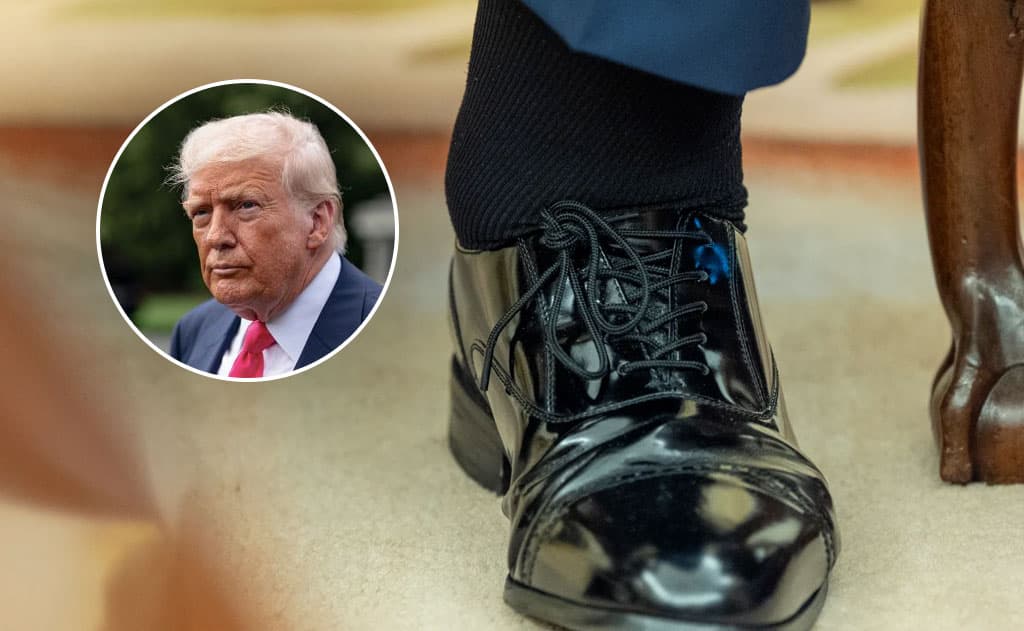
July 18, 2025 – The White House announced on Thursday that President Donald Trump, 79, has been diagnosed with chronic venous insufficiency (CVI), a common and benign circulatory condition, following a medical examination prompted by mild swelling in his lower legs. The disclosure, made by White House Press Secretary Karoline Leavitt, comes amid public speculation fueled by recent photographs showing swollen ankles and bruising on Trump’s hands during public appearances. The administration has emphasized that the condition is not life-threatening and that Trump remains in excellent health, capable of fulfilling his duties as Commander-in-Chief.
Medical Examination and Diagnosis
The diagnosis followed Trump’s observation of mild swelling in his lower legs in recent weeks, which prompted a comprehensive evaluation by the White House Medical Unit. According to a memo from Trump’s physician, Dr. Sean Barbabella, the president underwent diagnostic vascular studies, including bilateral lower extremity venous Doppler ultrasounds. These tests confirmed chronic venous insufficiency, described as a benign condition prevalent among individuals over 70. Importantly, the exams found no evidence of deep vein thrombosis (DVT), arterial disease, heart failure, renal impairment, or systemic illness. An echocardiogram further confirmed normal cardiac structure and function, with all laboratory results within normal limits.
Chronic venous insufficiency occurs when the valves in the leg veins fail to efficiently pump blood back to the heart, causing blood to pool in the lower extremities. This can lead to symptoms such as swelling, aching, cramping, varicose veins, or skin discoloration. According to the Cleveland Clinic, CVI affects about 1 in 20 adults, with risk factors including age, being overweight, a sedentary lifestyle, or prolonged periods of standing or sitting.
Public Speculation and Hand Bruising
The announcement was partly in response to social media and media speculation about Trump’s health, sparked by images from the FIFA Club World Cup final in East Rutherford, New Jersey, on July 13, 2025, showing noticeable swelling in his ankles. Additional photos, including one from a July 16 meeting with Bahrain’s Crown Prince Salman bin Hamad Al Khalifa, revealed bruising on the back of Trump’s hand, sometimes covered with makeup. Leavitt addressed these concerns, attributing the bruising to “minor soft tissue irritation from frequent handshaking” combined with Trump’s use of aspirin, a standard cardiovascular preventive medication that can increase bruising susceptibility. Dr. Matthew Edwards, chair of vascular surgery at Wake Forest University, supported this explanation, noting that bruising is common in older individuals taking aspirin.
Expert Insights on Chronic Venous Insufficiency
Medical experts have emphasized that CVI is not inherently dangerous but can cause discomfort or, in advanced cases, complications such as leg ulcers or an increased risk of blood clots. Dr. Lee Kirksey, a vascular surgeon at the Cleveland Clinic, noted that the condition raises a “yellow flag” to examine underlying factors like body weight or a sedentary lifestyle. Dr. Monara Dini from the University of California, San Francisco, highlighted that severe cases could lead to painful ulcers requiring wound care. However, Trump’s physician reported no discomfort, and Leavitt reiterated that the president is “working around the clock” without issue.
Treatment for CVI typically involves conservative measures such as wearing compression stockings, elevating the legs, maintaining a healthy weight, and regular exercise like walking to improve blood flow. In more severe cases, procedures like sclerotherapy or vein stripping may be considered, though the White House has not disclosed specific treatment plans for Trump.
Context and Transparency
The White House’s disclosure marks a departure from Trump’s historical reluctance to share detailed medical records, particularly during the 2024 election cycle. His April 2025 physical at Walter Reed National Military Medical Center, conducted by Dr. Barbabella, reported “excellent health” with unimpaired blood flow to extremities but did not mention CVI. The recent announcement appears to address public concern proactively, with Leavitt stating that Trump chose to share the diagnosis to quell speculation.
Posts on X reflected mixed sentiments, with some users expressing concern about Trump’s health while others speculated about the condition’s severity, though these remain inconclusive without further medical details.
Implications for Trump’s Presidency
The White House has stressed that Trump’s diagnosis does not affect his ability to lead, with Dr. Barbabella concluding that he “exhibits excellent cognitive and physical health.” As the oldest person elected to the presidency in November 2024, Trump’s health remains a point of public interest, particularly given his high-profile role and demanding schedule. The administration’s focus on transparency in this instance aims to reassure the public, though questions about underlying causes or long-term management of CVI may persist.
As the 2025 NFL season approaches, the timing of this health update coincides with other news affecting the NFL community, such as the resignation of NFLPA Executive Director Lloyd Howell. While unrelated, these events underscore the intersection of public figures’ health and leadership roles in shaping public discourse. For NRIs following U.S. politics, Trump’s diagnosis is a reminder of the importance of health management in high-stakes roles, with no immediate impact on his policy agenda or leadership capacity.
Related NRI Globe Coverage
- Trump Diagnosed with Chronic Venous Insufficiency: White House Health Update
- Trump Moves Obama and Bush Portraits to Obscure White House Stairwell
- Trump Announces $200 Million Golden Ballroom for White House
- Protests Erupt Outside White House During Netanyahu-Trump Meeting
- Trump Escalates Chicago Threats with Military Post, Sparking Protests and Constitutional Concerns
- India’s PMO Cites “Trust Deficit” in Refusing Talks with White House, Confirms Dainik Jagran
- White House Jumps on TikTok Bandwagon: A Bold Move Amid Security Fears and China Tensions
- Trump Orders Federal Takeover of D.C. Police, National Guard Deployment Amid Crime Concerns
Fresh from NRI Globe
- YouTuber Nandu's World (Rama Nandana) UK Visa & Job Fraud Case: Full Details + Key Lessons for NRIs (2026)
- Dussehra / Vijayadashami 2026 Events Country-Wise — Global NRI Directory (Ram Lila, Ravana Dahan, Durga Puja Pandals, Ayudha Puja Venues + Booking)
- Diwali 2026 Events Country-Wise — Global NRI Directory (White House, Leicester, London Trafalgar, Toronto, Auckland, Sydney Parramasala, Fiji, Mauritius, Trinidad, South Africa and More)
- Diwali / Deepavali 2026 Country-Wise NRI Celebrations — Complete Global Guide (USA, UK, Canada, Australia, Fiji, Mauritius, Trinidad, South Africa, UAE and 30+ Countries)