By NRIGlobe.com Desk | April 23, 2026
WASHINGTON / NEW DELHI – The United States economy posted sluggish growth in the final quarter of 2025, with real GDP expanding at just 0.5% annualized rate — revised downward and heavily impacted by a government shutdown. While early 2026 estimates suggest a modest rebound near 2%, fresh uncertainties from the US-Iran naval blockade and ship seizures in the Strait of Hormuz are pushing up global oil prices, creating worries for Indian professionals and families worldwide.
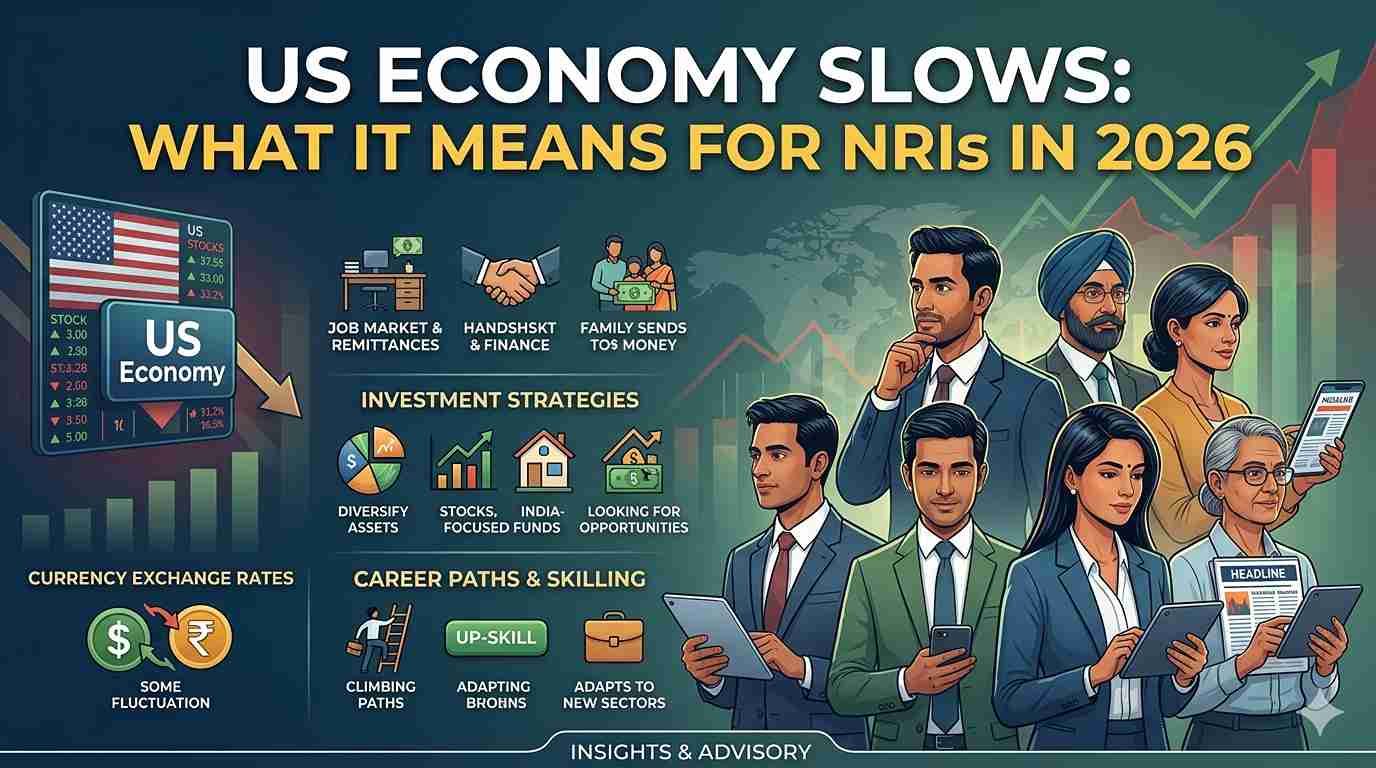
For Non-Resident Indians (NRIs), PIOs, and Indian expats in the US, Gulf, Europe, and elsewhere, these developments carry direct implications: higher energy costs in India, potential pressure on the Indian Rupee, volatility in US and Indian stock markets, and effects on remittances, air travel, and investments.
Sluggish US Growth and Its Ripple Effects
According to the Bureau of Economic Analysis, US real GDP grew at only 0.5% in Q4 2025 (October–December), down sharply from 4.4% in Q3. The slowdown stemmed largely from reduced government spending during the shutdown, weaker exports, and cooling consumer activity. For the full year 2025, US GDP expanded by about 2.1%.
Private forecasts now point to Q1 2026 growth recovering to around 1.6–2.2%, helped by steady consumer spending in some areas. However, escalating tensions in the Strait of Hormuz — which handles nearly 20% of global oil trade — are adding significant risks through higher energy prices and supply chain disruptions.
Iran Standoff Pushes Oil Prices Higher – Impact on India and NRIs
Recent incidents of Iranian forces seizing vessels in the Strait of Hormuz, combined with the ongoing US naval blockade, have caused oil prices to surge (Brent crude showing volatility and recent jumps of 5–6%). This directly affects India, which imports over 50–60% of its crude oil from the Gulf region via this critical route.
Key concerns for NRIs and families in India:
- Petrol, Diesel & LPG Prices: Expect possible hikes in fuel costs across Indian cities, increasing transportation, auto, and household cooking expenses for your parents and relatives.
- Rupee Volatility: Higher oil import bills could widen India’s current account deficit, putting downward pressure on the INR vs USD. This may temporarily benefit NRIs sending remittances (more rupees per dollar), but sustained weakness adds uncertainty.
- Inflation Back Home: Rising energy costs feed into higher prices for groceries, goods, and services — especially affecting middle-class families.
- Gulf Jobs: Many Indian NRIs work in oil & gas, construction, and related sectors in UAE, Saudi Arabia, Kuwait, and Qatar. Prolonged disruptions could impact regional economies and job stability, though the ceasefire extension offers some short-term relief.
- Travel Costs: Airfares between the US/Gulf and India may rise due to higher jet fuel prices.
Spirit Airlines Nears $500 Million Federal Bailout
Low-cost US carrier Spirit Airlines is in advanced talks for a $500 million federal financing package from the Trump administration. The deal, which could include government warrants and a potential ownership stake, aims to prevent liquidation amid the airline’s second bankruptcy in recent years and surging fuel costs from the Middle East tensions.
For NRIs who frequently travel between the US and India or within the US for work/family visits, this could influence ticket prices and route availability in the ultra-low-cost segment. A successful bailout may stabilize fares in the short term, but broader industry fuel pressures could still push costs higher.
Cooling Labor Market and Broader Concerns
Recent JOLTS data show US job openings declining to around 6.9 million, indicating some softening in labor demand. While unemployment remains relatively stable, the combination of slower growth and energy-driven inflation is creating challenges.
Additional headwinds include potential tariff or trade issues with partners like Canada. The Federal Reserve is holding interest rates steady for now, with possible cuts later in 2026 depending on inflation trends.
Consumer sentiment in the US is holding up but shows signs of caution, particularly in regions facing higher gas prices (nearing or above $4 per gallon in many areas).
Practical Advice for NRIs in 2026
- Remittances: Monitor USD-INR rates closely. Apps like Wise or bank transfers can help lock in favorable rates during volatility.
- Investments: Review exposure in US stocks, Indian mutual funds, or energy-related sectors. Diversification is key amid geopolitical risks.
- Family Budgeting: Discuss with family in India how rising fuel and grocery costs might affect monthly expenses.
- Travel Planning: Book flights early if possible, as fuel surcharges could increase costs for visits home.
- Job & Sector Watch: Gulf-based NRIs in energy or logistics should stay updated on regional developments.
NRIGlobe.com continues to track these stories with a special focus on how US and global economic shifts affect the Indian diaspora.
What concerns you most as an NRI — rising fuel prices in India, rupee fluctuations, impact on Gulf jobs, or higher travel costs? Share your views and experiences in the comments.
Last updated: April 23, 2026. This report draws from official US data (BEA, BLS), international energy reports, and verified news sources. NRIGlobe.com delivers experienced, authoritative coverage tailored for NRIs, PIOs, and the global Indian community with transparent sourcing.
Related Stories for NRIs:
- How Strait of Hormuz Tensions Could Raise Petrol Prices and Affect Your Family Budget in India
- US GDP Slowdown 2025–2026: Implications for NRI Investments and Remittances
- Spirit Airlines Bailout: What It Means for Air Travel Between US, Gulf & India
- Fed Rate Outlook and Its Effect on Home Loans or Dollar Strength for NRIs
Bookmark nriglobe for daily news on USA, economy, geopolitics, Gulf jobs, India, and lifestyle updates that matter to the Indian diaspora worldwide.