
Quick Summary
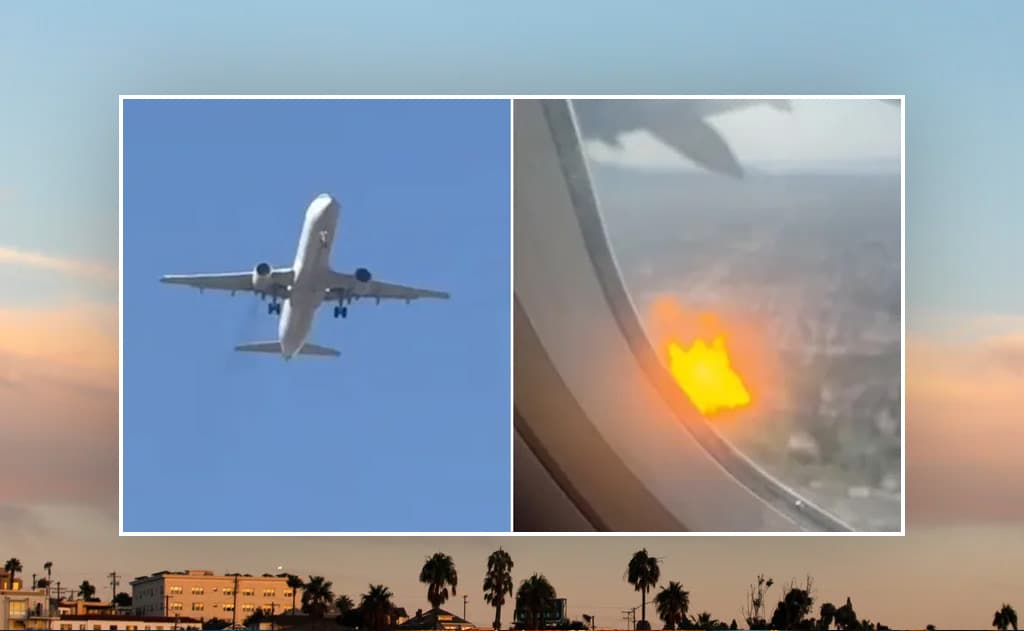
- American Airlines flight experienced mid-air engine fire and made emergency landing at Las Vegas
- All passengers evacuated safely with zero injuries reported
- Federal Aviation Administration (FAA) launched investigation into mechanical failure
- Incident raises fresh concerns among NRI travelers about U.S. aviation safety standards
- Pilot's decisive action and crew training prevented potential catastrophe
Engine Fire Forces Emergency Landing at Las Vegas Airport
An American Airlines aircraft operating a domestic U.S. route encountered a sudden engine fire during flight, forcing the pilot to divert immediately to Harry Reid International Airport in Las Vegas. Passengers reported visible flames and thick smoke emanating from one side of the aircraft, triggering emergency protocols across the cabin. The experience was frightening for those aboard, though the crew's professionalism and the aircraft's safety systems functioned as designed to protect everyone on board.
Ground crews observed the aircraft descending rapidly with visible fire. Emergency response teams were mobilized before the aircraft touched down. The Federal Aviation Administration (FAA) confirmed the incident and initiated a formal investigation into the mechanical failure. Such investigations are standard procedure whenever commercial aircraft experience mechanical emergencies, regardless of outcome.
Harry Reid International Airport serves as a critical hub for both domestic and international travel, processing significant numbers of passengers annually, including a substantial portion of the Indian diaspora traveling between India and the United States. The airport's location in southern Nevada makes it a frequent diversion point for aircraft experiencing emergencies across the western United States. The airport's emergency response infrastructure, including dedicated fire suppression equipment and trained personnel, proved essential to the safe resolution of this incident.
Engine fires represent one of the most serious emergencies that can occur during flight, which is why commercial aircraft are equipped with multiple detection and suppression systems. Modern engines include fire detection loops that sense temperature changes and automatically trigger fire suppression agents in engine compartments. These systems operate independently of pilot input, providing automatic protection even if crew members are incapacitated or unable to respond immediately.
Pilot's Swift Decision-Making Prevents Disaster
The pilot maintained calm communication with air traffic control while executing a controlled descent toward the nearest suitable airport. Rather than attempting to continue toward the original destination, the pilot made the critical decision to land immediately at Las Vegas, minimizing time in the air with an active engine fire. This decision-making process reflects years of training and the ability to assess risk under extreme pressure.
Upon touchdown, emergency evacuation procedures commenced without delay. Fire suppression crews were already positioned and responded within minutes. All passengers and crew members were evacuated safely, with no injuries reported. The crew's adherence to emergency protocols and extensive training prevented what could have resulted in significant loss of life. Commercial airline crews undergo recurrent training on emergency procedures, including engine fire response, evacuation techniques, and passenger management during crises.
Aviation safety experts emphasize that successful emergency landings depend on three factors: pilot training, aircraft design redundancy, and ground crew readiness. This incident demonstrated all three working in coordination. Modern commercial aircraft include multiple redundant systems—dual engines, backup hydraulics, and independent electrical systems—designed to ensure that single mechanical failures do not cascade into catastrophic events. The redundancy principle means that loss of one system does not compromise the aircraft's ability to operate safely or land under controlled conditions.
Pilot training for emergency scenarios involves simulator sessions where pilots practice engine fire procedures repeatedly. These simulations expose pilots to the sensory experience of alarms, instrument readings, and communication challenges they will face during actual emergencies. The repetition builds muscle memory and decision-making patterns that allow pilots to respond effectively when real emergencies occur. Commercial airline pilots typically complete emergency procedure training annually, with additional training required whenever aircraft types change or procedures are updated.
Initial Investigation Points to Mechanical Failure
The FAA launched a comprehensive investigation into the root cause of the engine fire. Preliminary findings suggest mechanical failure rather than pilot error or external factors. The investigation process involves detailed examination of engine components, maintenance records, and operational data from the aircraft's flight systems. Investigators will reconstruct the sequence of events leading to the fire, examining what warning signs may have been present and whether detection systems functioned properly.
American Airlines maintenance records for the aircraft are being reviewed by FAA inspectors. The agency is examining whether the airline followed prescribed maintenance intervals and whether any warning systems failed to alert the crew before the fire became visible. Engine condition monitoring systems on modern aircraft continuously track parameters like temperature, pressure, and vibration to detect degradation before critical failures occur. These systems generate data that maintenance teams analyze to predict component failures and schedule preventive replacements.
Engine fires in commercial aviation are rare due to modern design safeguards, but when they occur, they demand immediate investigation. The FAA typically issues airworthiness directives if systemic issues are discovered across an aircraft type. These directives mandate corrective actions across the entire fleet of affected aircraft, ensuring that identified problems do not recur on other planes. Airworthiness directives represent binding regulatory requirements that airlines must comply with within specified timeframes or ground affected aircraft.
The investigation will examine maintenance facility procedures, parts supplier documentation, and component manufacturing records. If the fire resulted from a defective component, investigators will trace that component's production history to determine whether other aircraft received similarly defective parts. This traceability is essential for identifying systemic manufacturing or design issues that could affect multiple aircraft. Airlines maintain detailed records of every component installed on each aircraft, allowing investigators to identify all potentially affected planes if a defect is discovered.
Context: Recent Aviation Safety Incidents
This emergency landing occurs within a broader context of aviation incidents that have generated public attention and regulatory scrutiny. The aviation industry has experienced multiple mechanical and operational emergencies across North American carriers in recent years, each prompting detailed investigation and analysis. While individual incidents receive significant media attention, the overall safety record of commercial aviation continues to improve as technology advances and regulatory standards become more stringent.
Each incident generates renewed scrutiny of maintenance standards, pilot training requirements, and aircraft design. The National Transportation Safety Board (NTSB) and FAA coordinate on investigations to identify systemic risks versus isolated mechanical failures. This distinction is critical: a single engine fire may reflect a random component failure, while multiple similar incidents across different aircraft would suggest a design or manufacturing defect requiring fleet-wide corrective action. The investigation process is designed to extract maximum learning from each incident to prevent recurrence.
Industry analysts note that while aviation remains statistically one of the safest transportation modes, public perception shifts rapidly following high-visibility incidents. Media coverage of emergency landings can temporarily increase passenger anxiety despite the industry's strong safety record. Statistical data consistently shows that commercial aviation has lower accident rates per passenger-mile than automobile travel, though dramatic incidents receive disproportionate media attention. Understanding this statistical context helps passengers maintain perspective about aviation safety when individual incidents occur.
Regulatory agencies worldwide have implemented increasingly rigorous safety standards over the past decades. These standards address aircraft design, manufacturing processes, maintenance procedures, pilot training, and operational protocols. The cumulative effect of these standards has been a dramatic reduction in aviation accidents and incidents. Modern commercial aircraft are engineered with safety margins far exceeding what is required for normal operations, providing substantial protection against unexpected failures or adverse conditions.
Implications for NRI Travelers and Indian Diaspora
The Indian diaspora maintains frequent travel patterns between India and the United States, with Las Vegas serving as a popular destination for business conferences, leisure travel, and family visits. The Las Vegas metropolitan region hosts a significant Indian-American population, with thousands of NRIs maintaining residences or conducting regular business in the area. Travel between India and the United States represents one of the highest-volume international travel corridors, with hundreds of thousands of Indian nationals and NRIs traveling annually.
Social media discussions within Indian-American communities reflected both appreciation for the pilot's professionalism and questions about whether U.S. carriers maintain equivalent safety standards to international carriers. Some travelers expressed concerns about booking future flights on American Airlines, though safety experts emphasize that single incidents do not indicate systemic problems. Aviation safety data shows that major U.S. carriers maintain rigorous maintenance standards comparable to international carriers operating between India and the United States. The FAA's regulatory oversight and enforcement mechanisms ensure that all carriers operating in U.S. airspace maintain consistent safety standards.
Travel advisories from Indian government sources and diaspora organizations typically recommend passengers verify airline safety ratings through independent sources like AirSafe.com and review FAA safety records before booking. The incident prompted several travel forums to resurface discussions about airline selection criteria. Passengers can access FAA safety data and incident reports through public databases, allowing informed comparison of carrier safety records and maintenance practices. This transparency empowers travelers to make decisions based on objective data rather than emotional reactions to individual incidents.
NRI travelers often balance multiple factors when selecting airlines, including price, schedule convenience, and safety considerations. For those prioritizing safety, reviewing carrier safety records and incident history provides valuable information. However, it is important to contextualize individual incidents within broader safety statistics. A single emergency landing, even one involving an engine fire, does not indicate that a carrier's overall safety record is compromised. Carriers with strong safety records may still experience occasional mechanical failures, which is why investigation and corrective action processes exist.
What Aviation Safety Experts Recommend
Following this incident, aviation safety professionals emphasize several priorities for both airlines and passengers. Airlines should conduct comprehensive audits of engine maintenance procedures, focusing on early detection systems for mechanical degradation. Proactive maintenance—identifying and replacing components showing signs of wear before they fail—represents the most effective strategy for preventing engine fires and other mechanical emergencies. This approach reduces both safety risks and operational disruptions from unexpected failures.
Recommended safety improvements include:
- Enhanced predictive maintenance using real-time engine monitoring data to identify potential failures before they become critical
- Modernized fire detection and suppression systems in engine compartments
- Increased transparency in maintenance reporting to regulatory agencies
- Regular crew training updates on emergency procedures specific to engine fires
- Independent audits of maintenance facilities by third-party safety inspectors
For passengers, experts recommend reviewing airline safety records, understanding emergency procedures during the safety briefing, and selecting airlines with strong maintenance track records. The FAA publishes safety data that allows informed comparison across carriers. Passengers can also review incident history and maintenance records through public databases before selecting flights, though the vast majority of flights operate without incident. Familiarity with emergency procedures—knowing where exits are located, understanding how to use oxygen masks, and knowing evacuation procedures—increases passenger preparedness should an emergency occur.
Airlines continue investing in advanced technologies for engine monitoring, fire detection, and suppression. These investments reflect both regulatory requirements and competitive pressures, as carriers recognize that safety performance influences passenger confidence and booking decisions. The industry's commitment to continuous improvement means that each incident, regardless of outcome, contributes to enhanced safety standards across the entire aviation system.
Next Steps
The FAA investigation will require several weeks to several months to complete, depending on the complexity of findings and the need for additional testing or analysis. The agency will issue a final report detailing findings and any recommended corrective actions. During this period, investigators will conduct interviews with crew members, analyze maintenance records spanning years of operation, and conduct laboratory testing on recovered engine components. The investigation process is thorough and methodical, prioritizing accuracy over speed.
American Airlines is cooperating fully with investigators. The airline may issue statements regarding maintenance procedures and any corrective actions taken in response to this incident. Airlines typically implement immediate corrective measures while investigations proceed, addressing any identified risks even before final investigation reports are released. This proactive approach demonstrates commitment to safety and helps prevent similar incidents on other aircraft in the fleet.
Passengers affected by this incident may have options to file claims or seek compensation through American Airlines' incident response procedures. Those seeking legal guidance should consult an attorney specializing in aviation law. Airlines maintain insurance coverage for passenger incidents, and established legal frameworks govern compensation for flight disruptions and passenger injuries. The airline's incident response team typically contacts affected passengers to provide support and information about available options.