
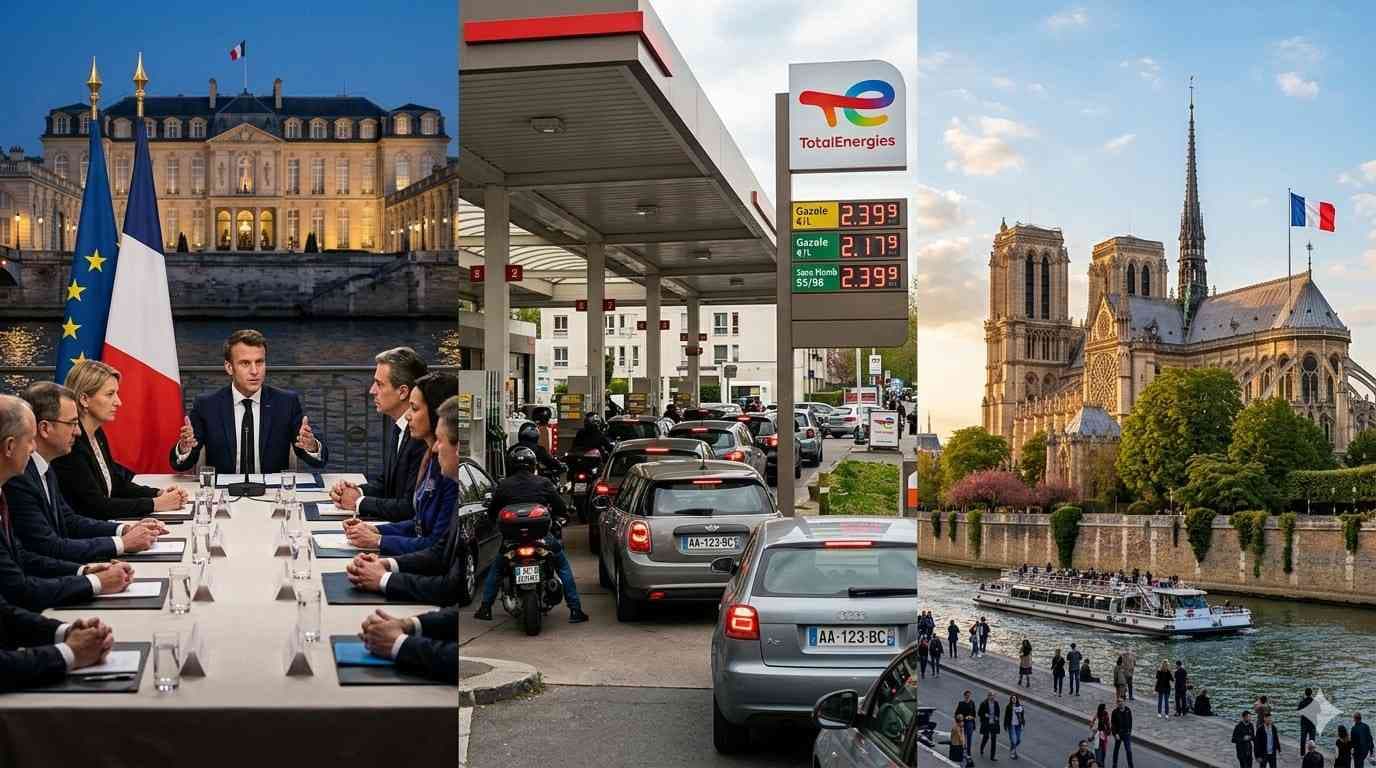
As April unfolded with the first hints of spring across the French countryside, the week brought a mix of high-stakes international diplomacy, domestic economic pressures, and cultural milestones. France found itself navigating a delicate global landscape dominated by the ongoing US-Iran conflict, while at home, households grappled with surging fuel prices and the nation prepared for seasonal changes and Easter celebrations. President Emmanuel Macron remained at the center of the action, balancing assertive European diplomacy with firm pushback against transatlantic tensions.
Macron Draws a Firm Line on the Iran Conflict: “Let’s Be Serious”
The US-Iran war continued to overshadow international affairs, and France positioned itself as a voice of caution and strategic autonomy. President Emmanuel Macron, speaking during a visit to South Korea, sharply responded to criticisms from US President Donald Trump regarding NATO and the conflict. Macron urged seriousness in diplomacy, stating, “When we want to be serious, we don’t say each day the opposite of what we said the day before.” He reiterated that France would not join military operations in the Iran campaign and described forcing open the Strait of Hormuz as “unrealistic.”
France joined Russia and China in vetoing a UN Security Council resolution that would have authorized military force linked to reopening the strait. At the same time, Paris condemned Iranian attacks and worked alongside South Korea and other partners to promote freedom of navigation and de-escalation. Macron’s government has maintained that France is “not involved” in the offensive strikes, focusing instead on protecting French interests, nationals, and bases in the region. The French aircraft carrier Charles de Gaulle participated in separate Mediterranean exercises (Neptune Strike) with Italian and Spanish allies, underscoring European defense cooperation amid broader uncertainties.
This stance highlighted France’s traditional emphasis on multilateralism and international law, even as rising oil prices from the conflict rippled through the global economy and directly affected French consumers.
Fuel Prices Surge: Government Explores Targeted Aid and Green Investments
The Middle East conflict drove global energy costs higher, pushing French petrol and diesel prices to levels not seen since the early days of the Ukraine war. Many stations reported gasoline averaging around €2 per liter, with diesel climbing even steeper in some areas.
Prime Minister Sébastien Lecornu instructed ministers to prepare “targeted measures” to support the most affected households and sectors, with proposals expected early the following week. The government also examined redirecting any surplus tax revenue generated by higher fuel consumption toward accelerating the country’s energy transition — including electrification and reducing dependence on imported fossil fuels.
Budget Minister David Amiel noted that while March brought an extra €270 million in fuel tax receipts, rising government borrowing costs linked to global market volatility largely offset these gains. Opposition voices, including from Marine Le Pen’s National Rally, called for direct cuts to VAT or excise duties on fuel to provide immediate relief. The debate underscored ongoing tensions between short-term cost-of-living pressures and long-term environmental goals.
Domestic Politics and Institutional Updates
French political life remained relatively stable this week following earlier turbulence, with focus shifting toward practical governance. Tax season officially opened in April, bringing the annual déclaration de revenus for 2025 income, alongside increases in certain social benefits. A new injectable preventative treatment for HIV also became available, marking a step forward in public health.
In a notable cultural development, the Paris Catacombs were set to reopen in spring 2026 after several months of major safety and structural renovations aimed at better protecting both visitors and the historic remains. The upgrades promised an improved experience for the thousands of tourists who visit the underground ossuary each year.
Elsewhere, a French MEP from La France Insoumise, Rima Hassan, faced brief custody over a social media post investigated under terrorism-related laws, sparking debates about free speech and political motivations.
International Engagement and Bilateral Ties
President Macron’s Asia tour included high-level talks in South Korea, where France and Seoul upgraded relations to a “global strategic partnership.” Discussions covered trade, investment, artificial intelligence, and joint efforts on issues like the Strait of Hormuz. Macron also paid tribute at the Korean War Memorial, reinforcing historical ties.
France continued Mediterranean naval activities with European partners, demonstrating commitment to regional security without direct entanglement in the Iran theater.
Everyday Life and Seasonal Events in France
As Easter approached, many French families prepared for the long weekend (Easter Sunday and Monday are public holidays). Traditional chocolate eggs and bunnies filled pâtisserie windows, while regions like Arles hosted the lively Easter Feria with bull-related events, music, and street festivities.
April Fool’s Day (poisson d’avril) brought the usual lighthearted pranks on April 1. Looking further ahead, the International Kite Festival in Berck-sur-Mer (mid-April) promised colorful displays along the northern beaches.
Weather-wise, early April offered mixed conditions typical of the season, with preparations underway for potential spring showers.
Looking Ahead: Balancing Autonomy and Pressures
This week illustrated France’s ongoing effort to chart an independent course on the world stage while addressing the pocketbook concerns of ordinary citizens. As the Iran conflict’s economic fallout lingers and global alliances are tested, President Macron’s government must balance diplomatic principles with pragmatic support for households facing higher energy costs.
For an international audience, France’s positions — from its nuanced Iran policy to its push for green investments amid crisis — reflect broader European debates on energy security, strategic autonomy, and multilateral cooperation in an unpredictable world.
The coming weeks may bring clearer details on fuel relief measures, further developments in the Middle East, and the full reopening of iconic sites like the Paris Catacombs, offering both practical relief and cultural renewal.
Related NRI Globe Coverage
- Canada News This Week: April 2026 – Pride in Space, Political Pressure at Home, and Global Ripples from the Iran Conflict
- US News Weekly: Trump-Iran Tensions & Weather Chaos
- GCC News This Week: April 2026 – Under Siege in the Strait of Hormuz Crisis, Rising Oil Prices, and Urgent Calls for Global Action
- Canada Weekly News: Job Market Shifts and Diplomatic Updates
- US-Iran Nuclear Talks Begin in Oman Amid Rising Tensions
- This Week in America: Economy, Policy and NRIs
- The week of january 12-18 2026 canada major news:
- New Zealand Protest Targets Sikh Procession: Rising Tensions
Fresh from NRI Globe
- YouTuber Nandu's World (Rama Nandana) UK Visa & Job Fraud Case: Full Details + Key Lessons for NRIs (2026)
- Dussehra / Vijayadashami 2026 Events Country-Wise — Global NRI Directory (Ram Lila, Ravana Dahan, Durga Puja Pandals, Ayudha Puja Venues + Booking)
- Diwali 2026 Events Country-Wise — Global NRI Directory (White House, Leicester, London Trafalgar, Toronto, Auckland, Sydney Parramasala, Fiji, Mauritius, Trinidad, South Africa and More)
- Diwali / Deepavali 2026 Country-Wise NRI Celebrations — Complete Global Guide (USA, UK, Canada, Australia, Fiji, Mauritius, Trinidad, South Africa, UAE and 30+ Countries)