
Introduction
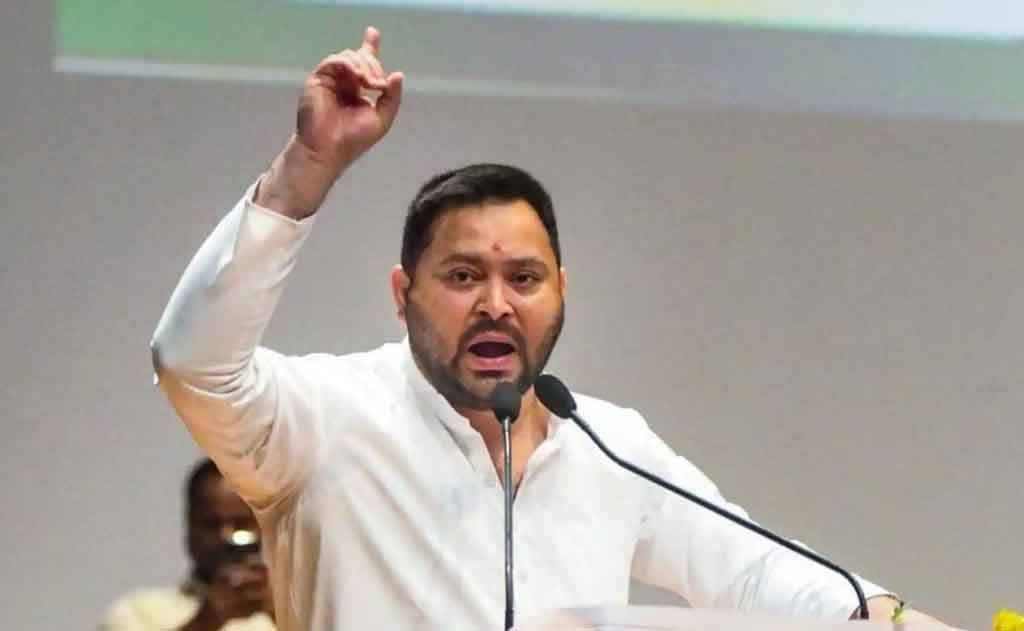
Tejashwi Prasad Yadav, the Leader of the Opposition in the Bihar Assembly and a prominent leader of the Rashtriya Janata Dal (RJD), has been vocal in his demand to increase the reservation quota in Bihar to 85% for government jobs and educational institutions. This proposal, which aligns with the RJD’s long-standing advocacy for social justice and empowerment of marginalized communities, has sparked intense debate in Bihar’s political landscape, especially with the 2025 Bihar Assembly elections approaching. Yadav’s push for an 85% quota is rooted in the state’s caste-based survey and aims to address systemic inequalities faced by Scheduled Castes (SCs), Scheduled Tribes (STs), Other Backward Classes (OBCs), Extremely Backward Classes (EBCs), and Economically Weaker Sections (EWS). However, the proposal has faced legal hurdles, political opposition, and skepticism regarding its feasibility and intent.
Background
Bihar has a history of leveraging reservation policies to uplift marginalized communities, a legacy shaped by leaders like Tejashwi’s father, Lalu Prasad Yadav, during his tenure as Chief Minister. In 2023, the Mahagathbandhan government, which included the RJD, conducted a caste-based survey that revealed 63% of Bihar’s population belongs to OBCs and EBCs, with SCs and STs comprising a significant portion. Based on this data, the state government passed legislation in November 2023 to increase the reservation quota from 50% to 65% for SCs, STs, OBCs, and EBCs, with an additional 10% for EWS, effectively raising the total quota to 75%. However, this law was struck down by the Patna High Court in June 2024, citing a lack of empirical data to justify exceeding the 50% cap set by the Supreme Court. The Supreme Court upheld the High Court’s ruling in July 2024, dealing a blow to the state’s reservation ambitions.
Undeterred, Tejashwi Yadav has since escalated his demand, calling for an 85% reservation quota and urging the Nitish Kumar-led National Democratic Alliance (NDA) government to enact new legislation. He has also proposed including such a law in the Ninth Schedule of the Indian Constitution to shield it from judicial review, citing Tamil Nadu’s 69% reservation model as a precedent.
Tejashwi’s Proposal and Rationale
On November 26, 2024, during the 75th Constitution Day celebrations, Tejashwi Yadav made a bold demand in the Bihar Assembly for a new bill to increase the reservation quota to 85%. He argued that Bihar’s Bahujan population (comprising OBCs, EBCs, SCs, STs, and EWS) constitutes 85% of the state’s population, yet their representation in government jobs and educational institutions remains inadequate. He criticized the NDA government for failing to protect the earlier 65% quota law and accused the central government, led by the Bharatiya Janata Party (BJP), of undermining reservation policies.
In a letter to Chief Minister Nitish Kumar on June 5, 2025, Yadav reiterated his demand, calling for a special session of the Bihar Assembly to pass a new reservation bill. He suggested forming an all-party committee to conduct a study on caste-wise representation in jobs and education, which would provide the empirical basis needed to justify the 85% quota. He emphasized that including the law in the Ninth Schedule would protect it from judicial challenges, ensuring long-term benefits for marginalized communities. Yadav warned that failure to act would prompt the RJD to launch a mass movement across Bihar.
At the Samvidhaan Suraksha Sammelan in Motihari on August 28, 2025, Yadav invoked his father’s legacy, stating, “Lalu Ji ka khoon hai mere andar” (Lalu Ji’s blood runs in my veins), and vowed to fight for the 85% quota. He accused the BJP-led central government of undermining the Constitution and warned that inaction on reservations could lead to the erosion of democratic rights.
Yadav has also linked the reservation issue to broader economic concerns, arguing that the rollback of the 65% quota has deprived marginalized communities of approximately 50,000 job opportunities. He has promised that an RJD-led government would prioritize job creation and ensure 85% of government jobs are reserved for Bihar’s youth, with free application forms and an increased age limit for competitive exams.
Political Context
The demand for an 85% quota comes at a critical juncture, with the Bihar Assembly elections looming in 2025. The RJD, a key constituent of the Indian National Developmental Inclusive Alliance (INDIA), has faced electoral setbacks, including losses in three critical bypolls in November 2024. The NDA, led by Nitish Kumar’s Janata Dal (United) and the BJP, has maintained a strong position, leading in 177 of Bihar’s 243 assembly segments during the 2024 Lok Sabha elections. Analysts view Yadav’s reservation push as a strategic move to consolidate the RJD’s traditional Muslim-Yadav (M-Y) vote bank and regain support among OBCs and EBCs, which have shown signs of fragmenting.
Yadav’s proposal also reflects the RJD’s broader electoral strategy. In 2020, as the chief ministerial candidate of the Mahagathbandhan, he promised 85% job reservations for local youth and 10 lakh jobs, emphasizing economic empowerment over caste politics. Although the alliance won 110 seats, it fell short of the 122 needed to form the government. Exit polls in 2020 projected a potential win for the RJD-led alliance, but the NDA retained power, partly due to the BJP’s strong performance. Yadav’s current campaign, including initiatives like the Voter Adhikar Yatra, aims to rally young and marginalized voters around the reservation issue.
Opposition and Criticism
The proposal for an 85% quota has met with significant opposition. The BJP has dismissed it as “vote-bank politics,” accusing the RJD of exploiting caste divisions for electoral gains. BJP leaders, including Union Minister Giriraj Singh and Deputy Chief Minister Samrat Choudhary, have criticized Yadav’s moral authority, pointing to allegations of corruption against his family. They argue that the NDA, under Nitish Kumar, is committed to social justice and that the BJP played a key role in implementing the Mandal Commission recommendations.
Critics on platforms like Reddit have expressed concerns that an 85% quota could restrict opportunities to caste-based criteria, potentially driving away private sector investment and exacerbating Bihar’s economic challenges. Some argue that the RJD’s focus on reservations is a tactic to distract from governance failures during its 1990–2005 rule. Others question the legal viability of the proposal, given the Supreme Court’s 50% cap on reservations and the lack of empirical data to support an 85% quota.
The NDA government has countered with its own policies. In August 2025, Nitish Kumar’s cabinet approved a policy ensuring over 85% reservation for local residents in teacher recruitment, a move seen as a response to Yadav’s demands. However, Yadav has accused Kumar of remaining silent on the broader 85% quota issue and failing to push for its inclusion in the Ninth Schedule.
Supporters’ Perspective
Supporters of Yadav’s proposal argue that it addresses systemic inequalities in Bihar, where marginalized communities face significant barriers to education and employment. The caste-based survey provides empirical evidence of the need for higher quotas, they claim, and Tamil Nadu’s 69% reservation model demonstrates that such policies can be legally sustained if properly structured. RJD supporters see Yadav as a champion of social justice, continuing his father’s legacy of empowering backward classes.
Challenges and Implications
The legal and practical challenges to implementing an 85% quota are formidable. The Supreme Court’s 50% cap on reservations, established in the 1992 Indra Sawhney case, poses a significant hurdle. The Patna High Court’s 2024 ruling against the 65% quota emphasized the need for robust empirical data, which Yadav’s proposed all-party committee aims to address. However, even if a new bill is passed, its inclusion in the Ninth Schedule requires central government approval, which the BJP-led NDA may not support.
Economically, critics warn that an 85% quota, especially if extended to the private sector as Yadav has suggested, could deter investment and exacerbate Bihar’s unemployment crisis. Socially, the proposal risks deepening caste divisions, with upper-caste groups expressing concerns about reduced opportunities.
Politically, the quota issue could reshape alliances and voter sentiment. Yadav’s rejection of any alliance with Nitish Kumar ahead of the 2025 elections signals a confrontational approach, with the RJD positioning itself as the primary advocate for marginalized communities. The outcome of this debate could determine the RJD’s ability to challenge the NDA’s dominance in Bihar.
Conclusion
Tejashwi Yadav’s push for an 85% reservation quota in Bihar is a bold and polarizing move, blending social justice rhetoric with electoral strategy. While it resonates with the RJD’s core voters and addresses real inequalities, it faces
Related NRI Globe Coverage
- YouTuber Nandu's World (Rama Nandana) UK Visa & Job Fraud Case: Full Details + Key Lessons for NRIs (2026)
- US Crime News 2026 — Top Trend Categories NRIs Are Watching (Organized Retail Theft, Auto Theft, Cybercrime, Hate Crimes, Fentanyl, AI-Enabled Fraud)
- US Crime & Safety This Week — September 17-21, 2026 (NRI Family Guide, FBI Alerts, H-1B/Immigration Scams, Tech Support Fraud, Emergency Resources)
- Japan's Centenarian Population Surpasses 100,000 for the First Time in History
- Major US News This Week (September 14-15, 2026): Supreme Court Blocks Trump Mail Voting Rules, AI Debate Explodes, Space Weapons Confirmed
- How AI Is Changing NRI Life 2026 — Visas, Jobs, Money, Family and the New Frauds
- $5,000 Trump Dividend Proposal — Complete Details, Feasibility & NRI Impact Analysis (Nov 2026 Midterms)
- Trump Urges Support for AI Data Centers on Fox News — US-China Race, Stocks, Local Opposition (NRI Perspective)
Fresh from NRI Globe
- Dussehra / Vijayadashami 2026 Events Country-Wise — Global NRI Directory (Ram Lila, Ravana Dahan, Durga Puja Pandals, Ayudha Puja Venues + Booking)
- Diwali 2026 Events Country-Wise — Global NRI Directory (White House, Leicester, London Trafalgar, Toronto, Auckland, Sydney Parramasala, Fiji, Mauritius, Trinidad, South Africa and More)
- Diwali / Deepavali 2026 Country-Wise NRI Celebrations — Complete Global Guide (USA, UK, Canada, Australia, Fiji, Mauritius, Trinidad, South Africa, UAE and 30+ Countries)
- Dussehra / Vijayadashami 2026 Country-Wise NRI Celebrations — USA, UK, Canada, Australia, New Zealand, UAE, Singapore, Germany, Netherlands and More