
TL;DR:
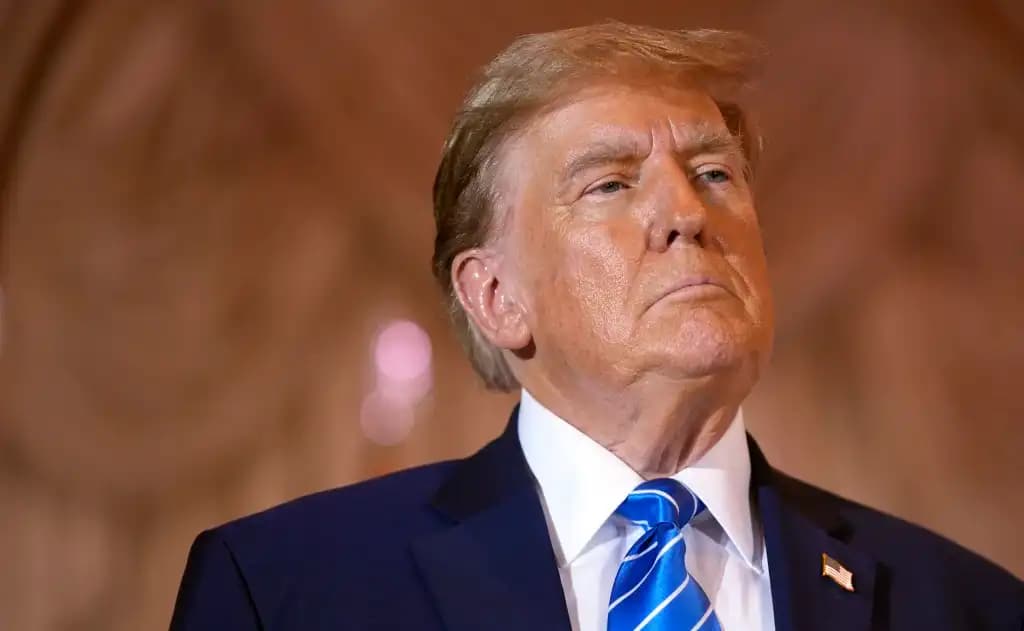
- President Trump announced a 25% tariff on all Indian goods effective August 1, 2025, citing India's high tariffs and Russian energy purchases.
- Pharmaceuticals, automobiles, textiles, gems, and electronics face significant tariff exposure, with potential 0.2–0.5% GDP impact.
- India is negotiating a bilateral trade agreement; Commerce Minister Piyush Goyal meets U.S. Trade Representative Jamieson Greer in late August 2025.
- Indian diaspora consumers may face higher prices on imported goods; U.S. consumers could see increased healthcare costs.
- Global markets have reacted negatively; IMF and OECD downgraded 2025 growth forecasts.
Why Trump Imposed Tariffs on Indian Goods
On July 30, 2025, President Trump announced a 25% tariff on all Indian imports, effective August 1, 2025. According to BBC News, Trump cited India's "unfair" trade practices and high tariff barriers as justification. In a statement on Truth Social, Trump stated that India maintains "the most strenuous and obnoxious non-monetary trade barriers of any country." He also criticized India's continued purchases of Russian energy and military equipment, framing this as inconsistent with global efforts to isolate Russia over Ukraine.
The U.S. trade deficit with India reached approximately $45.7 billion in 2024, according to Business Today. The U.S. imported $87.4 billion in Indian goods while exporting only $41.8 billion, with key Indian exports including pharmaceuticals, communications equipment, and apparel. Trump's tariff strategy reflects his broader "America First" trade policy, which prioritizes reducing bilateral deficits through reciprocal tariffs. An additional unspecified penalty tied to India's trade with Russia further complicates the tariff structure.
Sector-by-Sector Impact Analysis
Economists estimate the tariffs could reduce India's GDP growth by 0.2–0.5% if sustained through fiscal year 2026. Export-driven micro, small, and medium enterprises (MSMEs) and manufacturing hubs in western and southern India face the most immediate pressure.
Pharmaceuticals and Active Pharmaceutical Ingredients
India's pharmaceutical sector exports exceed $10 billion annually to the U.S., with Indian generics comprising 40% of the U.S. generic drug market. While initial reports suggested pharmaceuticals might receive exemptions, Business Standard clarified that active pharmaceutical ingredients (APIs) and generic drugs could face tariff inclusion in future revisions. A 25% tariff on these products would increase production costs for U.S. pharmaceutical manufacturers reliant on Indian APIs, potentially raising drug prices for American consumers and straining healthcare budgets.
Indian pharmaceutical companies with significant U.S. revenue exposure face margin compression and reduced export competitiveness. Industry sources indicate that major manufacturers are assessing mitigation strategies, including potential price adjustments, production efficiency improvements, and supply chain optimization. The tariffs could accelerate pharmaceutical supply chain diversification away from India, threatening employment in pharmaceutical manufacturing hubs like Hyderabad and Pune. Reports suggest that companies in the sector are exploring alternative markets and cost-reduction measures to maintain profitability amid tariff pressures. The pharmaceutical industry's response will likely shape broader manufacturing competitiveness in India over the coming months.
Automobiles and Auto Components
The automobile sector already faces a 25% Section 232 tariff on vehicle imports. The new reciprocal tariffs compound this burden for Indian automakers exporting to the U.S. Tata Motors and Samvardhana Motherson, major exporters of vehicles and components, will experience reduced competitiveness as tariffs increase their landed costs. Groww reported that the Nifty Auto index declined 0.64% immediately following the tariff announcement, signaling investor concern about sector profitability.
Supply chain disruptions and potential layoffs loom as manufacturers reassess production economics. Indian auto-component suppliers, which serve global OEMs with U.S. operations, may lose orders if tariffs make Indian sourcing uncompetitive relative to domestic or other offshore alternatives. The tariffs could also delay India's ambitions to become a major EV exporter to the U.S. market. Automakers are reportedly evaluating production relocation, cost-sharing arrangements with suppliers, and strategic partnerships to offset tariff impacts. The sector's response will influence India's broader manufacturing strategy and competitiveness in the global automotive supply chain.
Textiles, Apparel, and Gems
Textiles face an additional 1.4% tariff burden on top of existing duties, eroding margins for Indian apparel exporters already operating on thin profit margins. The gems and jewelry sector, with exports exceeding $9 billion annually, faces a 25% tariff that could significantly reduce demand from U.S. retailers and consumers. Reuters noted that these labor-intensive sectors employ millions in India, making tariff-driven export declines a concern for employment and rural livelihoods.
Exporters in these sectors are reportedly exploring tariff mitigation strategies, including value-addition initiatives, market diversification to non-U.S. buyers, and efficiency improvements. The gems and jewelry industry, in particular, faces pressure to maintain competitiveness while absorbing higher costs. Regional manufacturing clusters in Gujarat, Tamil Nadu, and Rajasthan may experience employment challenges if export volumes decline significantly. Industry adaptation will determine whether these sectors can sustain growth despite tariff headwinds.
Electronics and Smartphones
India's emergence as a major iPhone exporter to the U.S., surpassing China in Q2 2025 according to Business Standard, faces jeopardy from the tariffs. Apple's India manufacturing expansion, part of its supply chain diversification strategy, could slow if tariffs make Indian-assembled devices uncompetitive in the U.S. market. The tariffs threaten to undermine India's tech manufacturing ambitions and could push Apple to reassess its India production footprint.
The electronics sector's vulnerability extends beyond smartphones to components, semiconductors, and consumer electronics. Manufacturing facilities in Bangalore, Chennai, and Pune may face reduced orders if tariffs persist. Reports suggest that manufacturers are evaluating automation investments and quality enhancements to justify continued U.S. sourcing despite tariff costs. India's position as a smartphone manufacturing hub remains contingent on tariff resolution or tariff-mitigation agreements.
Marine Products and Food Exports
Dairy, processed food, tea, and marine products now face 25–27% tariff slabs. These sectors, critical for rural India's export earnings, must either absorb steep margin losses or exit the U.S. market. Business Today reported that exporters are actively exploring alternative markets in Europe, Southeast Asia, and Africa to compensate for reduced U.S. demand. Seafood exporters from Kerala and Andhra Pradesh, dairy producers from Gujarat, and tea estates from Assam and Darjeeling face particular pressure. Market diversification efforts are underway, though establishing new trade relationships requires time and investment. The long-term viability of these export-dependent rural sectors depends on successful market reorientation and tariff resolution timelines.
Currency and Market Reactions
The Indian rupee weakened to a four-month low following the tariff announcement, reflecting expectations of reduced dollar inflows from exports. Export-driven sectors face potential 10–20% declines in U.S. shipments, risking job cuts and slower GDP growth. The Nifty IT index tumbled over 3% on tariff concerns, as investors feared reduced U.S. demand for Indian IT services and technology exports. Groww analysts warned that sustained tariffs could trigger inflationary pressures in the U.S., deter foreign direct investment in India, and further weaken the rupee.
Currency depreciation carries implications for Indian importers, who face higher costs for foreign raw materials and components. Companies with dollar-denominated debt face increased repayment burdens. The broader economic impact extends to inflation, as imported goods become costlier for Indian consumers. Market volatility has prompted investors to reassess India exposure, potentially affecting equity valuations and capital flows. The rupee's trajectory will influence India's export competitiveness and macroeconomic stability in coming quarters.
India's Negotiation Strategy and Trade Response
India is actively pursuing a bilateral trade agreement (BTA) with the U.S. to mitigate tariff impacts. Commerce Minister Piyush Goyal is scheduled to meet U.S. Trade Representative Jamieson Greer in late August 2025 for the sixth round of negotiations, with a U.S. delegation visiting New Delhi. Times of India reported that Indian officials view the tariffs as a negotiating tactic and remain hopeful for a rollback or reduction by fall 2025.
To counter the tariffs, India is considering duty reductions on $23 billion worth of U.S. imports, including agricultural products, technology goods, and energy imports. However, India's firm stance on protecting its agriculture and dairy sectors remains a sticking point, as these are vital for domestic food security and farmer livelihoods. India is simultaneously diversifying its export base by exploring markets in Europe, Southeast Asia, Africa, and Latin America. Reuters reported that Trump indicated the deal remains unfinalised and higher tariffs are possible if negotiations stall. The timeline for bilateral agreement resolution remains uncertain, with reports suggesting negotiations could extend into fall 2025 or beyond depending on both parties' negotiating positions and domestic political pressures.
Impact on the Indian Diaspora and U.S. Consumers
The tariffs carry direct consequences for the Indian diaspora in the U.S. Higher tariffs on Indian pharmaceuticals, textiles, spices, and food products will increase prices for imported goods, affecting affordability for diaspora communities that rely on these imports. U.S. consumers, particularly those dependent on affordable Indian generic medications, may face increased healthcare costs if pharmaceutical tariffs are fully implemented.
Beyond economics, the tariffs could strain India-U.S. strategic ties, including cooperation within the Quad framework (India, U.S., Japan, Australia). India Briefing noted that trade friction could push India closer to BRICS allies, potentially reshaping geopolitical alignments in the Indo-Pacific. For diaspora professionals in U.S. tech and finance sectors, reduced India-U.S. trade could dampen job growth in India-focused roles. The diaspora's economic interests and broader geopolitical considerations create competing pressures for policymakers on both sides.
Global Trade Context and Market Volatility
Trump's tariff policy extends far beyond India. Reciprocal tariffs ranging from 10% to 49% have been imposed on over 180 countries, including 34% on China, 24% on Japan, and 20% on the European Union. Wikipedia's tariffs tracker documents the scope of these measures. Global stock markets experienced significant volatility, with the S&P 500 and Nasdaq Composite declining substantially after tariff announcements.
The International Monetary Fund (IMF) and Organization for Economic Co-operation and Development (OECD) have downgraded global economic growth forecasts for 2025, citing Trump's protectionist policies as a headwind. BBC News reported that economists warn sustained tariffs could trigger inflationary spirals in the U.S. and slow global growth. For India, reduced U.S. demand compounds domestic economic challenges, including inflation and currency depreciation. The broader tariff environment creates uncertainty for multinational corporations with operations in multiple tariff-affected jurisdictions, potentially prompting supply chain reorientation on a global scale.
Long-Term Strategic Considerations
The tariffs may accelerate supply chain reorientation away from India toward other low-cost manufacturing hubs in Vietnam, Indonesia, and Bangladesh. However, India's scale in pharmaceuticals, IT services, and automotive components offers some resilience. Companies investing in automation, quality upgrades, and market diversification may emerge stronger post-tariff normalization.
India's government is also exploring manufacturing incentives to boost domestic consumption of export-oriented goods, reducing reliance on U.S. markets. The Production-Linked Incentive (PLI) scheme, which offers subsidies for domestic manufacturing, may accelerate India's shift toward self-reliance in key sectors. Additionally, India's participation in regional trade agreements like the Regional Comprehensive Economic Partnership (RCEP) provides alternative export corridors to offset U.S. market losses. Long-term competitiveness will depend on India's ability to maintain cost advantages while upgrading technology and quality standards. Strategic investments in infrastructure, workforce development, and innovation will shape India's manufacturing trajectory beyond the current tariff cycle.
Next Steps
Indian exporters should monitor bilateral trade negotiations closely and prepare contingency plans for tariff persistence. Diversifying export markets, investing in automation to offset tariff costs, and exploring tariff-free trade agreements with other nations are critical priorities. The Indian government should accelerate BTA negotiations while strengthening ties with alternative trading partners. Reports suggest that ongoing discussions between Indian Commerce Ministry and U.S. trade officials are exploring potential tariff suspension timelines and bilateral trade agreement frameworks, though official confirmation of specific negotiation outcomes remains pending. U.S. consumers and healthcare providers should prepare for potential price increases on imported pharmaceuticals and goods. Monitoring official announcements from both governments regarding tariff suspension possibilities and bilateral trade progress will be essential for stakeholders planning medium-term strategy.
Sources
- BBC News — Trump India Tariff Announcement
- Business Today — Trump 25% Tariff Explained
- Business Standard — Export Sectors Hit Hardest
- Groww — Impact of Trump Tariff on Indian Imports
- Reuters — How Will Trump's Reciprocal Tariffs Impact Indian Exports
- Times of India — India-U.S. Trade Deal Overview
- India Briefing — India-U.S. Trade Relations Under Trump's Tariffs
- Wikipedia — Tariffs in the Second Trump Administration
- BBC News — Global Economic Growth Downgrade