
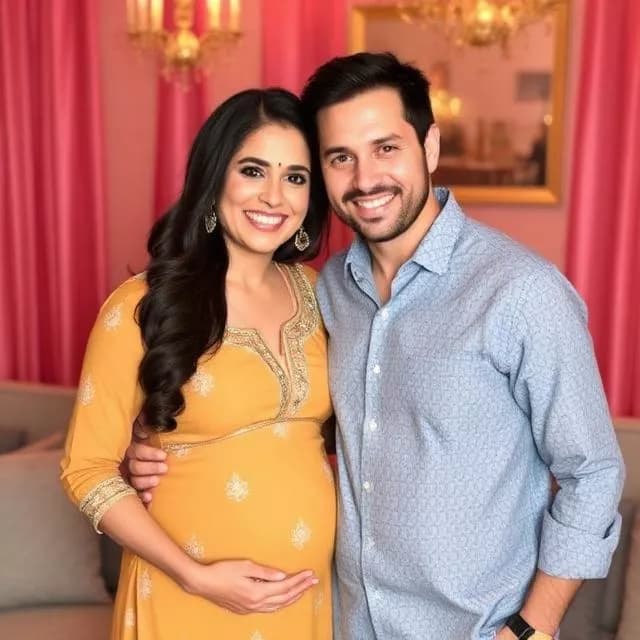
Second Lady Usha Vance, wife of Vice President JD Vance, has announced that she is pregnant with the couple's fourth child—a boy—expected to arrive in late July 2026. The announcement, made public on January 20, 2026, marks a significant moment in American political history and carries particular resonance for Indian diaspora communities following the Vice President's Indian heritage and family background.
The Announcement and Family Statement
The couple shared the joyful news through a joint statement posted on social media on January 20, 2026. "We're very excited to share the news that Usha is pregnant with our fourth child, a boy," the statement read. "Usha and the baby are doing well, and we are all looking forward to welcoming him in late July."
In their announcement, the Vances expressed heartfelt thanks for the support during this busy period: "During this exciting and hectic time, we are particularly grateful for the military doctors who take excellent care of our family and for the staff members who do so much to ensure that we can serve the country while enjoying a wonderful life with our children." This acknowledgment of military medical personnel reflects the unique healthcare arrangements available to the Vice President's family, a detail that underscores the intersection of public service and private family life at the highest levels of U.S. government.
Historic Significance for a Second Lady
This pregnancy holds historic significance, as it appears to be the first time a Second Lady has been pregnant while serving in the role alongside her husband as Vice President. The milestone carries symbolic weight in American political history, representing an evolution in how the nation's second family navigates both public duties and personal milestones. For NRI communities, particularly those with ties to Indian-American political figures, the announcement resonates as a representation of Indian-American families achieving prominence at the highest levels of U.S. governance while maintaining traditional family values and expansion.
The timing of the announcement—during the early months of the current administration—also reflects a modern approach to family transparency in public life, where major personal developments are shared openly with the public rather than kept private until later stages of pregnancy.
The Vance Family Background and Journey
JD Vance, 41, and Usha Vance, 40 (born January 6, 1986), met at Yale Law School and married in 2014. Their union represents a notable pairing within American legal and political circles, combining Vance's Appalachian background and memoir-driven public profile with Usha's accomplished legal career and Indian heritage. The couple's relationship, forged during their law school years, has become emblematic of modern American professional partnerships where both spouses maintain high-profile careers while building a family.
The couple are already parents to three young children: son Ewan (8 years old), son Vivek (5 years old), and daughter Mirabel (4 years old). The names of their children reflect a blend of cultural influences—Vivek, in particular, carries Sanskrit origins and is common among Indian families. The spacing of their children over the past eight years suggests a deliberate approach to family planning while managing demanding professional responsibilities.
Usha Vance's Role and Career Trajectory
Usha Vance, formerly a practicing litigator, has embraced her responsibilities as Second Lady following the inauguration of the current administration. Before assuming her role in the Vice President's household, she maintained an active legal practice, demonstrating the kind of professional commitment that many NRI women in the United States have pursued across law, medicine, finance, and technology sectors. Her transition from full-time litigation to the role of Second Lady represents a significant life change, one that many professional women—particularly those in the diaspora—navigate when their spouses assume high-profile public positions.
The announcement of her fourth pregnancy during her tenure as Second Lady raises questions about work-life balance and the evolving expectations placed on spouses of high-ranking government officials. Unlike previous eras when such roles were largely ceremonial and domestic, modern Second Ladies often maintain intellectual and professional engagement with policy matters, making Usha Vance's pregnancy a contemporary example of how women in these positions manage multiple responsibilities simultaneously.
JD Vance's Vice Presidential Role and Family Life
JD Vance continues to serve as Vice President, with the family navigating their public duties amid this exciting personal milestone. The Vice Presidency is one of the most demanding positions in American government, requiring extensive travel, public appearances, and engagement with complex policy matters. The announcement of a fourth child during this period demonstrates the Vances' commitment to family expansion despite the extraordinary demands of their current roles.
For NRI audiences, Vance's position as Vice President carries particular significance given his Indian-American wife and mixed-heritage family. The visibility of Indian-American families at the highest echelons of U.S. government has grown substantially over the past two decades, reflecting the increasing political and economic influence of the Indian diaspora in American society. The Vance family represents one of the most prominent examples of this trend.
Implications for the Second Family During an Active Administration
The timing of this pregnancy—announced in January 2026, with a due date in late July—means that Usha Vance will be in her second and third trimesters during a period of significant national and international focus. The Vice President's family typically maintains a public schedule that includes state dinners, diplomatic functions, and ceremonial duties. Managing these obligations while pregnant presents logistical and personal challenges that modern Second Ladies must navigate.
The couple's explicit gratitude toward military doctors in their announcement suggests that Usha Vance will receive her prenatal care through military medical facilities, a privilege extended to the families of senior government officials. This access to specialized healthcare represents one of the tangible benefits of high office, though it also underscores the unique circumstances surrounding pregnancies in the Vice President's household.
Public Reception and Broader Context
The announcement has garnered widespread congratulations from political leaders, supporters, and the public, with many viewing it as a positive and uplifting development for the second family during a time of national focus. In an era often characterized by political polarization, announcements of personal milestones—particularly pregnancies and births—frequently transcend partisan lines and generate genuine expressions of goodwill.
For the Indian-American community specifically, the news carries additional significance. The visibility of successful Indian-American families navigating high-profile roles in American society serves as a point of pride and representation. Usha Vance's prominence as Second Lady, combined with her professional accomplishments and her role as a mother of four, represents a multifaceted achievement that resonates across different segments of the diaspora.
The Broader Narrative of Work-Life Balance in Public Service
The Vances' decision to expand their family while serving in one of the nation's most demanding roles speaks to contemporary conversations about work-life balance, particularly for professional women. Unlike previous generations, where women in the spouses of high-ranking officials often stepped back from professional engagement, Usha Vance has maintained intellectual and public presence while managing family responsibilities. Her pregnancy announcement, rather than being treated as a reason to withdraw from public life, is presented as a normal part of her ongoing role as Second Lady.
This approach aligns with broader trends among NRI women in the United States, many of whom have pursued demanding professional careers while raising families. The normalization of pregnancy and motherhood within high-profile public roles represents a cultural shift that extends beyond the Vance family to encompass changing expectations about women's roles in American society.
Looking Ahead to July 2026
With the due date set for late July 2026, the nation will be in the midst of summer, a period that typically sees reduced congressional activity and a slower pace of official business in Washington. This timing may provide some respite for the Vice President's family during the immediate postpartum period, though the demands of the Vice Presidency rarely pause entirely.
The birth of the fourth Vance child will occur approximately eighteen months into the current administration, a period that will have established patterns and routines for how the Vice President's household manages its public and private responsibilities. By that time, the family will have navigated the unique challenges of holding high office while raising young children, providing a tested framework for welcoming a new family member.
Latest NRI News & Global Updates:
Health, Wellness & Lifestyle for NRIs
https://nriglobe.com/lifestyle/
Latest NRI News & Global Updates
https://nriglobe.com/news/
Business & Finance News for NRIs
https://nriglobe.com/business/
Investment Guides for NRIs
https://nriglobe.com/investment/
Jobs & Career Opportunities for NRIs
https://nriglobe.com/jobs/
Related NRI Globe Coverage
- Arrest Warrant Issued for Actor Timothy Busfield on Child Sex Abuse Allegations
- Former Gymnastics Coach Arrested on Child Pornography Charges in FBI Raid
- Vance Urges Elon Musk to Rejoin MAGA Before 2026 Midterms: A Call for Unity Amid Trump Feud
- Trump Fires Labor Chief After Disappointing July Jobs Report: Economic and Political Fallout
- xAI Announces Baby Grok: A Kid-Friendly AI App for Safe Digital Learning
- Gaza Starvation Crisis: Child Malnutrition Soars Amid Ongoing Conflict
- Tower Air Fryer Recall in Ireland: 60,000 Units Affected Due to Fire Risk
- Will JD Vance Become the Next U.S. President?
Fresh from NRI Globe
- YouTuber Nandu's World (Rama Nandana) UK Visa & Job Fraud Case: Full Details + Key Lessons for NRIs (2026)
- Dussehra / Vijayadashami 2026 Events Country-Wise — Global NRI Directory (Ram Lila, Ravana Dahan, Durga Puja Pandals, Ayudha Puja Venues + Booking)
- Diwali 2026 Events Country-Wise — Global NRI Directory (White House, Leicester, London Trafalgar, Toronto, Auckland, Sydney Parramasala, Fiji, Mauritius, Trinidad, South Africa and More)
- Diwali / Deepavali 2026 Country-Wise NRI Celebrations — Complete Global Guide (USA, UK, Canada, Australia, Fiji, Mauritius, Trinidad, South Africa, UAE and 30+ Countries)