
TL;DR:
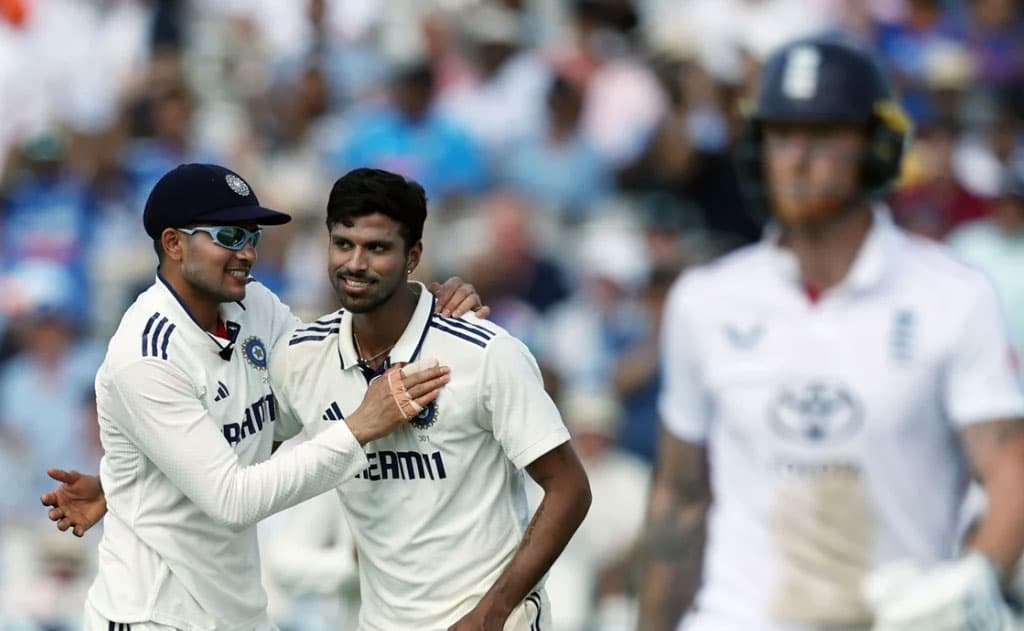
- India's pace attack, led by Jasprit Bumrah, reduced England to 98/4 by lunch on Day 4 at Lord's.
- Washington Sundar's unexpected heroics and Mohammed Siraj's fiery spell complemented Bumrah's strong performance from Day 3.
- England's lead remains precarious; India eyes a historic chase of approximately 190 runs on Day 5.
- The Lord's pitch evolved from a green top into a balanced surface favoring both pace and spin by Day 4.
- Shubman Gill and India's young batting lineup carry the nation's hopes for a landmark victory at cricket's cathedral.
A Fiery Morning at the Home of Cricket
On the fourth morning of the third Test between India and England, Lord's witnessed an extraordinary display of pace bowling. By lunch, England had collapsed to 98/4, their batting lineup dismantled by India's relentless attack. Jasprit Bumrah, continuing his dominance from Day 3, led the charge with surgical precision. The iconic Lord's pitch—with its notorious 2.5-meter slope—amplified the movement available to India's seamers, creating conditions that tested England's resolve at every turn.
The overcast conditions and the pitch's increasing deterioration provided India's bowlers with the perfect platform. According to NDTV Sports, the surface had evolved significantly from Day 1, offering both lateral movement and variable bounce. What began as a green top had transformed into a pitch that punished poor technique and rewarded disciplined bowling. India's bowlers exploited every advantage, keeping England's batsmen under constant pressure throughout the morning session.
India's Bowling Masterclass: Bumrah, Sundar, and the Supporting Cast
Jasprit Bumrah's performance on Day 4 extended his dominance from the previous day. His unorthodox action and searing pace created problems that England's batsmen struggled to solve. The combination of movement off the seam and subtle variations in pace kept the England lineup off-balance. Washington Sundar emerged as an unexpected catalyst, breaking through England's middle order with intelligent bowling that suggested India's attack had multiple dimensions.
Mohammed Siraj's contribution deserves particular attention. His fiery spell drew comparisons to his memorable performances at Lord's in previous encounters, when he played a crucial role in India's Test victories. Ravindra Jadeja provided additional pressure, and his presence hinted at the role spinners would play as the pitch continued to deteriorate. ESPNcricinfo's historical records show that Lord's has historically favored teams that can combine pace and spin effectively, and India's balanced attack demonstrated this principle on Day 4.
The Indian bowlers' discipline was evident in their line and length. Rather than relying solely on pace, they built pressure through sustained accuracy, forcing England's batsmen into error-prone positions. The overcast skies provided natural assistance, but it was the bowlers' execution that converted these conditions into tangible success. Bumrah's ability to maintain consistency across multiple spells proved particularly valuable as the match progressed.
The bowling attack's success also reflected India's preparation and understanding of Lord's conditions. Each bowler—whether Bumrah, Siraj, Sundar, or Jadeja—contributed meaningfully to the collapse of England's innings. This collective effort underscored the importance of a well-balanced attack in Test cricket, particularly on a ground as demanding as Lord's.
England's Precarious Position: Resilience Against the Odds
England began Day 4 with a slender 2-run lead—a position that demanded caution and careful batting. Zak Crawley and Ben Duckett, who had survived a tense final over on Day 3, could not replicate that resilience. The early loss of wickets shifted momentum decisively toward India. Joe Root, among England's most accomplished batsmen at Lord's, fought valiantly but could not anchor England's innings against India's relentless bowling.
The tension from Day 3—when Crawley faced accusations of time-wasting and Shubman Gill responded with visible frustration—lingered in the background. This context added psychological weight to England's struggle. Times of India's match report documented how the Day 3 controversy had set the tone for a more intense contest. England's middle order showed flashes of resistance, but India's disciplined bowling prevented any meaningful partnership from developing.
Despite the early collapse, England's coaching staff and players maintained focus on the task ahead. Their lead, though modest, remained a tangible advantage. However, the manner of their batting collapse suggested that India's bowlers had found a formula that would be difficult to counter on Day 5. The psychological impact of such a swift collapse cannot be underestimated in Test cricket, where momentum often proves as valuable as technical skill.
The Lord's Pitch: Evolution and Unpredictability
The Lord's pitch underwent a remarkable transformation across the first four days. Initially described as a green top favoring seamers, it had evolved into a surface offering bounce, movement, and—increasingly—turn. The unique slope that defines Lord's added complexity to both batting and bowling. Bowlers like Bumrah used the slope to generate prodigious swing, while batsmen struggled to adjust to the variable bounce.
By Day 4, cracks had begun to appear in the surface, signaling that spinners would play a more prominent role in the match's conclusion. Ravindra Jadeja's presence became more significant as the pitch deteriorated. The interplay between pace and spin—a hallmark of Test cricket at Lord's—was beginning to shift in favor of India's overall bowling attack. NDTV's pitch analysis indicated that Day 5 would present significantly different challenges from Day 4, with spin likely to become a decisive factor.
The pitch's personality—its unpredictability and the way it evolved—became a character in the match itself. Neither team could take anything for granted; conditions changed hour by hour. This uncertainty added drama to an already compelling contest. Pitch management and the ability to adapt to changing conditions have long been hallmarks of successful Test cricket at Lord's, and both teams recognized this reality as the match approached its climax.
India's Chase: The Path to Historic Victory
With England reeling at 98/4, India's path to victory became clearer. A target in the range of 190 runs loomed as both achievable and daunting. India's young batting lineup, led by Shubman Gill, carried the nation's hopes. Reports from Day 3 indicated strong performances from India's middle order, with key contributions that provided momentum heading into the chase, but a Lord's chase demands more than momentum; it demands technique, temperament, and tactical acumen.
Gill's aggressive approach throughout the match suggested he possessed the mindset required for such a chase. His confrontation with Crawley on Day 3 had added an edge to his performance—a psychological sharpness that often accompanies great batting displays. The Indian batting order would need to combine aggression with caution, understanding when to attack and when to consolidate.
Lord's has witnessed numerous historic chases, but India's pursuit of victory on Day 5 would carry particular weight. The ghosts of previous Lord's encounters—India's memorable Test victories and near-misses at the ground—provided context. Hindustan Times' analysis captured the unique atmosphere of Test cricket at Lord's, noting how the ground's history and tradition elevate every contest played there. India's young brigade would be acutely aware of this context as they prepared for Day 5.
The chase would require not only technical proficiency but also mental resilience. England's bowling attack, particularly the pace bowlers and spinners, would seek to exploit any hesitation or technical weakness. India's batsmen would need to assess the pitch conditions quickly and adapt their approach accordingly. The margin between success and failure in such a chase often comes down to individual moments of brilliance or lapses in concentration.
Why Day 4 Proved Decisive
Day 4 at Lord's encapsulated everything that makes Test cricket compelling. Bumrah's precision, Sundar's unexpected heroics, and Siraj's intensity created a bowling performance that will be remembered. England's desperate resistance, while ultimately unsuccessful, demonstrated the competitive spirit that defines cricket at this level. The pitch's evolution, the overcast conditions, and the psychological momentum all converged to create a match situation that promised a thrilling conclusion.
The electric atmosphere at Lord's—fueled by India's aggressive bowling and the knowledge that a historic victory was within reach—elevated the contest beyond mere cricket. Fans from both nations recognized they were witnessing a moment that could define this series and potentially influence the broader Test cricket landscape. The intensity of the bowling and the vulnerability of England's batting lineup created a narrative that transcended the sport itself.
From a tactical perspective, India's bowling strategy on Day 4 demonstrated sophisticated understanding of match situations. The bowlers rotated effectively, maintained pressure through disciplined line and length, and capitalized on the conditions available to them. This approach—combining aggression with control—has become a hallmark of successful Indian Test cricket in recent years.
Next Steps
Day 5 will determine whether India can convert their dominant position into a historic victory. The Indian batting lineup must navigate England's bowling attack to reach their target. England, despite their precarious position, will seek to exploit the pitch's deterioration and any early mistakes from India's batsmen. The outcome will hinge on execution, temperament, and the ability of both teams to adapt to rapidly changing conditions.
Sources
- NDTV Sports - Lord's Pitch and Weather Report
- Times of India - Day 3 Match Report
- ESPNcricinfo - Lord's Test Match Records
- Hindustan Times - Test Cricket at Lord's Analysis
Related NRI Globe Coverage
- India's Cricket Teams Set for Historic 2026 England Tour
- Gabriel Jesus Set for Barcelona Move from Arsenal — £8.6m Deal Agreed as Transfer Deadline Nears
- Miami Hurricanes Edge Ole Miss Rebels 31-27 in Thrilling Vrbo Fiesta Bowl: Advance to CFP National Championship – A Proud Moment for NRI Fans!
- India’s ODI and T20I Squads for Australia Tour: Kohli and Rohit Return, Bumrah Rested for ODIs
- Jadeja, Siraj Demolish West Indies: India Cruises to Dominant Innings Victory on Day 3
- Cheteshwar Pujara Retires: India’s Test Cricket Legend Bows Out with Grace
- Jake Paul vs. Gervonta Davis: A Blockbuster Boxing Exhibition Set for November 14 in Atlanta
- Isak’s Explosive Exit Demand Rocks Newcastle: A Transfer Saga Unfolds
Fresh from NRI Globe
- YouTuber Nandu's World (Rama Nandana) UK Visa & Job Fraud Case: Full Details + Key Lessons for NRIs (2026)
- Dussehra / Vijayadashami 2026 Events Country-Wise — Global NRI Directory (Ram Lila, Ravana Dahan, Durga Puja Pandals, Ayudha Puja Venues + Booking)
- Diwali 2026 Events Country-Wise — Global NRI Directory (White House, Leicester, London Trafalgar, Toronto, Auckland, Sydney Parramasala, Fiji, Mauritius, Trinidad, South Africa and More)
- Diwali / Deepavali 2026 Country-Wise NRI Celebrations — Complete Global Guide (USA, UK, Canada, Australia, Fiji, Mauritius, Trinidad, South Africa, UAE and 30+ Countries)