
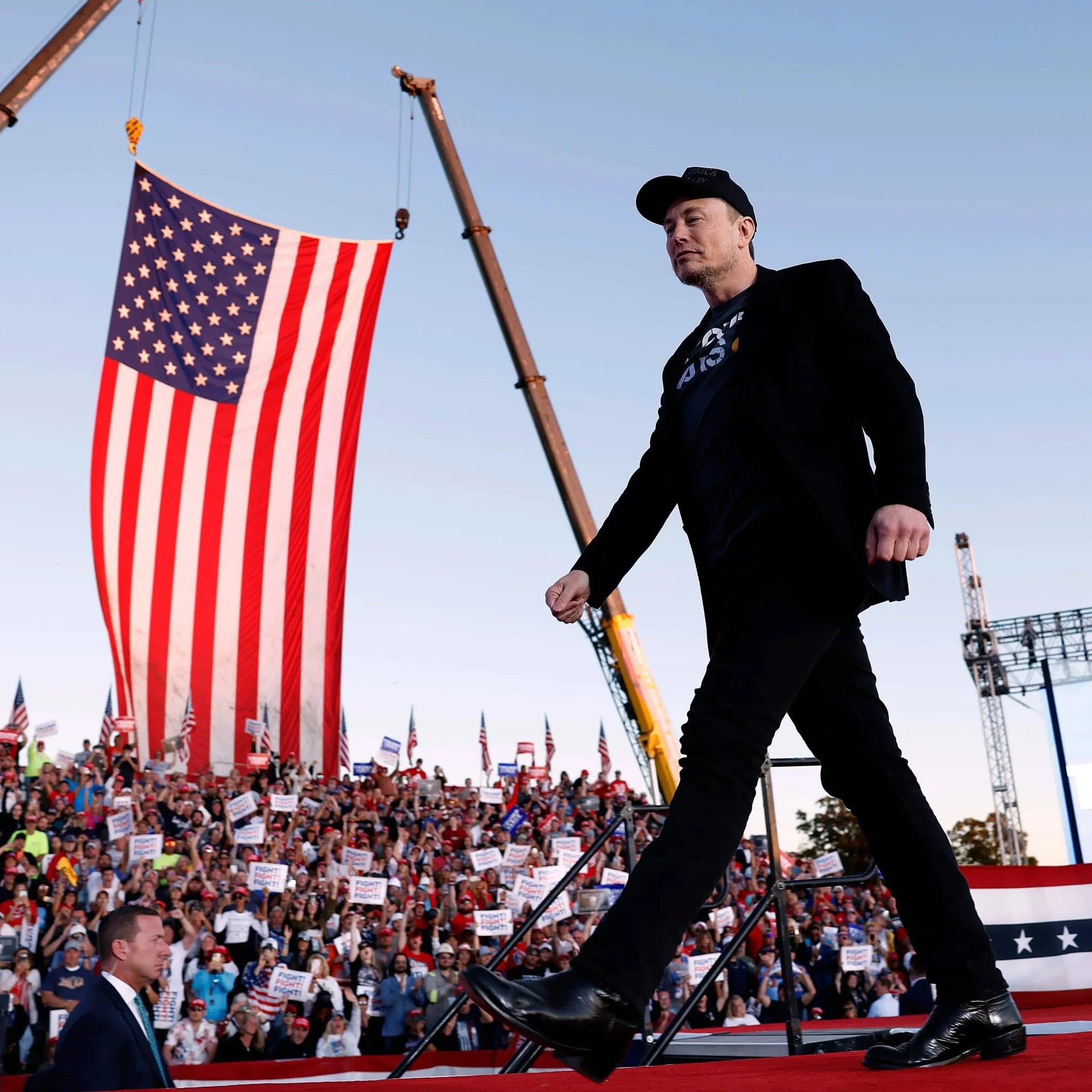
Elon Musk has publicly accused Apple of engaging in antitrust violations by allegedly manipulating App Store rankings to favor OpenAI's ChatGPT, making it "impossible" for other artificial intelligence companies, including his own xAI, to reach the top spot. In a post on his social media platform X at 06:37 IST on August 12, 2025, Musk stated, "Apple is behaving in a manner that makes it impossible for any AI company besides OpenAI to reach #1 in the App Store, which is an unequivocal antitrust violation. xAI will take immediate legal action."
The App Store Rankings Dispute
Musk's accusation centers on the App Store's ranking system and its "Must Have" section, which he claims unfairly excludes xAI's Grok AI chatbot and X, despite their strong performance. Earlier that day, at 04:49 IST, Musk questioned Apple's editorial practices, writing, "Hey @Apple App Store, why do you refuse to put either 𝕏 or Grok in your 'Must Have' section when 𝕏 is the #1 news app in the world and Grok is #5 among all apps? Are you playing politics? What gives? Inquiring minds want to know."
According to industry data, OpenAI's ChatGPT currently holds the top spot in the U.S. App Store's "Top Free Apps" section, while xAI's Grok ranks fifth, and Google's Gemini chatbot lags at 57th. Apple's recent partnership with OpenAI, which integrates ChatGPT into iPhones, iPads, and Macs, has deepened ties between the two companies, prompting Musk to allege preferential treatment. Musk, who co-founded OpenAI in 2015 but left its board in 2018, has been a vocal critic of the company's direction and its alliances with Apple and Microsoft.
Regulatory Context and Prior Enforcement Actions
Musk's threat of legal action adds to ongoing scrutiny of Apple's App Store policies. In April 2025, the European Union fined Apple €500 million for violating the Digital Markets Act by imposing restrictions that prevented app developers from directing users to cheaper alternatives outside the App Store. Additionally, a U.S. judge recently ruled that Apple violated a court order in a case brought by Epic Games, referring the company to federal prosecutors for a criminal contempt investigation.
The U.S. Department of Justice and the European Commission have both intensified scrutiny of major technology platforms' control over digital marketplaces. These enforcement actions underscore the regulatory environment in which Musk's accusations emerge, suggesting that antitrust concerns around app distribution are not isolated to xAI's complaint.
Company Responses and Industry Reaction
Neither Apple, OpenAI, nor xAI immediately responded to requests for comment from Reuters and other outlets. Musk did not provide specific evidence to support his claims in his posts, but his statements suggest xAI will pursue legal avenues to challenge Apple's practices. The departure of xAI's head of legal, Robert Keele, last week for personal reasons adds an intriguing layer to the timing of this legal threat.
In response to Musk's accusations, OpenAI CEO Sam Altman called the claims "remarkable" on X, hinting at Musk's alleged manipulation of X to favor his own business interests. This public spat underscores the growing tensions between tech giants over control of AI distribution channels, with Musk's xAI positioning itself as a competitor to OpenAI's dominance.
Implications for the AI Sector and App Ecosystem
As of early August 12, 2025, no formal lawsuit has been filed by xAI, but regulators and industry watchers are likely to closely monitor any legal action, given Apple's history of antitrust disputes. The outcome could have significant implications for competition in the AI sector and the broader app ecosystem. Legal experts note that app store ranking practices have become a focal point in antitrust discussions, with questions about whether editorial curation constitutes anti-competitive behavior or legitimate business judgment.
The Broader Context: A Battle of Titans in the AI Arena
The dispute between Musk and Apple reflects deeper tensions in the technology industry over control of AI distribution channels. Imagine a digital marketplace where tech giants clash not with swords, but with algorithms, apps, and accusations. At the center of this modern arena stands Elon Musk, the billionaire entrepreneur behind Tesla, SpaceX, and xAI, hurling a bold challenge at Apple, the tech behemoth known for its sleek devices and tightly controlled App Store. On August 12, 2025, Musk's accusation reverberated across the tech world, with his declaration that xAI would pursue legal action representing a significant escalation in competitive tensions.
The App Store functions as a bustling marketplace where apps jostle for visibility. The top spots—especially the #1 rank and the coveted "Must Have" section—represent prime real estate, driving downloads and user attention. Musk claims Apple is playing gatekeeper with a heavy hand, ensuring that OpenAI's ChatGPT reigns supreme while other AI apps, like xAI's Grok, are stuck in the shadows. Grok, launched by xAI, has been climbing the charts, hitting #5 among all apps and even outperforming Google's offerings, according to Musk's own posts on X. Yet, despite this success, Grok and X are conspicuously absent from Apple's editorial spotlight.
The history between these companies adds complexity to the dispute. Apple and OpenAI struck a deal to weave ChatGPT into the fabric of iPhones, iPads, and Macs—a move that Musk once called a "security violation" so severe he threatened to ban Apple devices from his companies. This partnership represents more than a technical collaboration; it is a strategic alliance that has raised eyebrows among competitors like xAI. Musk, who helped establish OpenAI in 2015 before parting ways in 2018, has been locked in a bitter feud with the company and its CEO, Sam Altman. He has even sued OpenAI, accusing it of straying from its mission to advance humanity in favor of profit-driven partnerships with giants like Apple and Microsoft.
Why This Matters for NRIs and Indian-Americans
For the Indian diaspora and NRI technology professionals, this dispute carries significant implications. Many NRIs work in artificial intelligence, software development, and technology management roles at companies including Apple, OpenAI, Google, and emerging AI firms like xAI. The outcome of antitrust scrutiny on app distribution could shape career opportunities, compensation structures, and the competitive landscape for tech talent globally.
Additionally, Indian-American entrepreneurs and venture capitalists have substantial investments in AI startups and technology infrastructure. If Apple's App Store practices are found to be anti-competitive, it could create new opportunities for alternative distribution channels and emerging AI companies—sectors where Indian entrepreneurs have been increasingly active. The U.S. Citizenship and Immigration Services data shows that Indian nationals represent a significant portion of H-1B visa holders in technology roles, making regulatory changes in tech competition directly relevant to NRI career prospects and business opportunities.
Furthermore, the broader question of fair competition in AI development resonates with India's own technology sector. As India's Ministry of External Affairs and technology bodies work to position India as a global AI hub, the precedents set by U.S. antitrust enforcement could influence how Indian tech companies navigate international markets and compete with established players. NRIs working in policy, venture capital, and technology strategy should monitor this case closely, as it may reshape the competitive dynamics of the global AI industry.
Looking Ahead
For the average person, this dispute is not merely about apps or rankings—it concerns fairness in a world increasingly shaped by artificial intelligence. If Apple is indeed tilting the scales, it could mean fewer choices for users and a harder road for innovators like xAI. However, Musk's claims are not without skepticism. He has not yet provided concrete evidence of Apple's bias, and his history of bold statements means some observers will take his accusations with caution. Still, if xAI follows through with a lawsuit, it could spark a broader reckoning for how tech giants control the digital marketplace.
The tech world watches with attention as this dispute unfolds. Will Musk's legal gambit force Apple to rethink its App Store practices? Or will it become another chapter in his ongoing engagement with technology industry leadership? One certainty remains: in the battle for AI supremacy, the stakes are substantial, and the competitive dynamics continue to evolve. Stakeholders including regulators at the Federal Trade Commission, international competition authorities, and industry participants will likely track developments closely as they signal broader trends in technology competition and digital platform governance.
Related NRI Globe Coverage
- Elon Musk Crosses $852B Net Worth in Historic Milestone
- Elon Musk 2026: Tesla Robotaxis and Neuralink Reality Check
- Elon Musk 2026 Vision: Robotaxis & Neuralink Breakthroughs
- Elon Musk Unveils Grokipedia: A Bold New Rival to Wikipedia
- iPhone 17 Pro and 17 Pro Max for NRIs 2026 — Complete Guide (US vs India Price, Warranty, Apple Intelligence, Sending as Gift)
- iPhone Duo Complete Review — Apple's First Foldable iPhone (2026) + India Price & NRI Buying Guide
- Grok Beta Upgrade: xAI Grok 4.20 for NRIs
- Apple 2026 Product Blitz: Smarter Hardware & AI
Fresh from NRI Globe
- YouTuber Nandu's World (Rama Nandana) UK Visa & Job Fraud Case: Full Details + Key Lessons for NRIs (2026)
- Dussehra / Vijayadashami 2026 Events Country-Wise — Global NRI Directory (Ram Lila, Ravana Dahan, Durga Puja Pandals, Ayudha Puja Venues + Booking)
- Diwali 2026 Events Country-Wise — Global NRI Directory (White House, Leicester, London Trafalgar, Toronto, Auckland, Sydney Parramasala, Fiji, Mauritius, Trinidad, South Africa and More)
- Diwali / Deepavali 2026 Country-Wise NRI Celebrations — Complete Global Guide (USA, UK, Canada, Australia, Fiji, Mauritius, Trinidad, South Africa, UAE and 30+ Countries)