
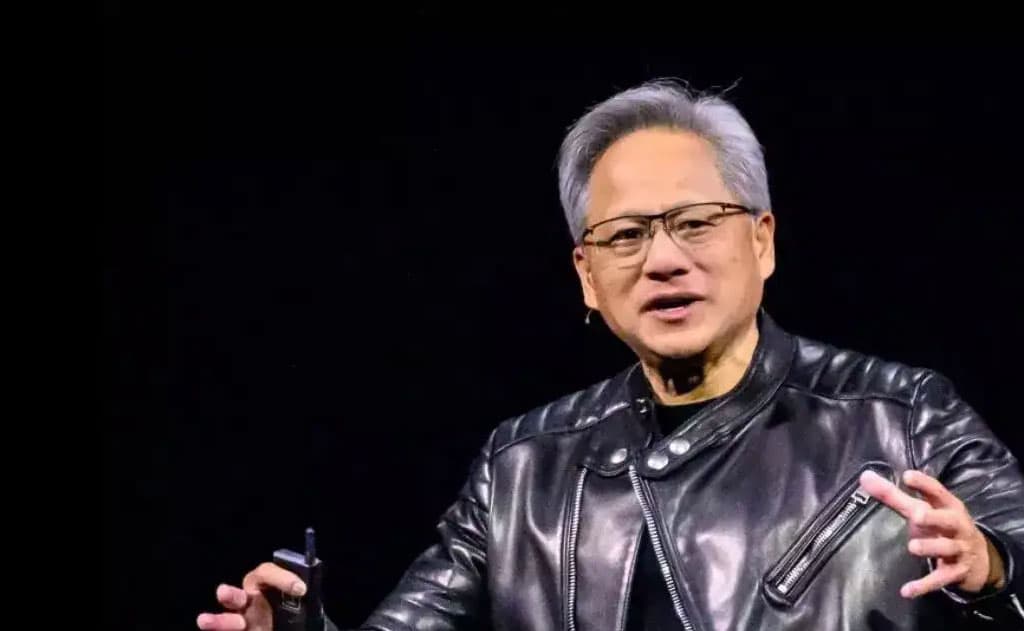
July 15, 2025 – Nvidia CEO Jensen Huang recently shared his insights on the transformative impact of artificial intelligence (AI) on the job market, sparking widespread discussion. Speaking with CNN’s Fareed Zakaria, Huang emphasized AI’s potential to act as a “technology equalizer” while warning that job losses could occur if innovation stalls. This article explores Huang’s perspective, the implications for the workforce, and what it means for the future of work.
AI as a Productivity Powerhouse and Equalizer
Jensen Huang, the head of Nvidia, a leading chipmaker powering the AI revolution, described AI as “the greatest technology equalizer we’ve ever seen.” He highlighted how AI tools, such as ChatGPT and chatbots, are already being used for creative tasks like drafting job posts, press releases, and marketing campaigns. These tools empower individuals, particularly those less familiar with technology, to enhance their productivity and skills. Huang believes AI can augment jobs, creating opportunities for workers to adapt and thrive in an AI-driven world.
In an interview with Axios, Huang countered warnings of a “white-collar apocalypse” from Anthropic CEO Dario Amodei, asserting that AI will create “vastly more and superior jobs” if industries continue to innovate. He urged workers to embrace AI, likening it to consulting multiple doctors for a medical diagnosis, emphasizing that critical thinking and analytical skills are enhanced when interacting with AI.
The Risk of Job Losses Without Innovation
While optimistic about AI’s potential, Huang acknowledged the risk of job displacement. In his CNN interview, he cautioned, “If the world runs out of ideas, then productivity gains translate to job loss.” This statement was in response to concerns raised by Amodei, who warned of potential mass employment disruptions due to AI. Huang’s perspective underscores the importance of continuous innovation to create new roles and industries, ensuring that AI’s productivity gains benefit society as a whole.
A 2024 study by Adecco Group revealed that 41% of corporate leaders expect to reduce their workforce by 2030 due to AI, highlighting the stakes of Huang’s call for innovation. He noted that while some jobs will become obsolete, many new roles will emerge, potentially lifting industries and society.
Nvidia’s Role in Shaping the AI Future
Nvidia, which briefly reached a $4 trillion market valuation, is at the forefront of the AI revolution, with its GPUs powering major AI platforms. Huang’s vision extends beyond job market impacts, as he advocates for onshoring manufacturing to reduce reliance on foreign chipmakers and create high-paying jobs for workers without advanced degrees. This approach, he argues, strengthens national security and fosters economic growth.
Huang’s recent meetings with U.S. policymakers, including President Trump, and his upcoming media briefing in Beijing on July 16, 2025, highlight Nvidia’s global influence in shaping AI’s future. Despite U.S. export restrictions on advanced chips to China, Huang emphasized the importance of the Chinese market, which accounted for 13% of Nvidia’s revenue in the last fiscal year.
Adapting to the AI Revolution
Huang’s message is clear: AI will transform every job, including his own, but the outcome depends on how society adapts. He encourages workers to “jump on the AI train” and learn to use AI tools to enhance their work, warning that those who don’t may be outpaced by AI-savvy competitors.
As AI continues to reshape industries, Huang’s call for innovation and adaptation resonates globally. Companies that leverage AI to enhance productivity, rather than replace workers, are likely to drive job creation and economic growth. For individuals, upskilling and embracing AI tools will be key to staying competitive in the evolving job market.
Conclusion
Nvidia CEO Jensen Huang’s perspective on AI’s impact on the job market offers both optimism and caution. While AI promises to boost productivity and create new opportunities, the risk of job losses looms if innovation falters. As the world navigates this AI-driven era, Huang’s insights serve as a clarion call for businesses, workers, and policymakers to embrace change and drive progress.
For more on AI’s impact on the workforce and Nvidia’s role in the AI revolution, stay tuned to NRIGlobe.com.
Tags: Nvidia, Jensen Huang, AI job market, artificial intelligence, job displacement, innovation, technology equalizer, AI revolution, future of work
Related NRI Globe Coverage
- NVIDIA CEO Jensen Huang Urges Students to Study Physics for the Future of AI and Robotics
- NVIDIA CEO: English Could Be Future Programming Language
- Latest AI Breakthroughs January 2026: How OpenAI, Nvidia, & Gemini Affect NRIs in US Tech Jobs & Innovation
- AI Data Center Cooling Methods Explained — Air vs Direct-to-Chip Liquid vs Immersion (2026 Rack Density Guide)
- Anthropic CEO Warns AI Capabilities Are Advancing Fast Enough to Threaten Control — Calls for Industry Slowdown
- AI's Impact on H-1B Tech Jobs in 2026 — What Indian Tech Workers in USA Need to Know
- AI Jobs for Returning NRIs in 2026: The Reverse-Brain-Drain Has Structural Drivers
- Uber Cuts 23% of HR & People Division Jobs: Efficiency Drive or AI Shadow?
Fresh from NRI Globe
- YouTuber Nandu's World (Rama Nandana) UK Visa & Job Fraud Case: Full Details + Key Lessons for NRIs (2026)
- Dussehra / Vijayadashami 2026 Events Country-Wise — Global NRI Directory (Ram Lila, Ravana Dahan, Durga Puja Pandals, Ayudha Puja Venues + Booking)
- Diwali 2026 Events Country-Wise — Global NRI Directory (White House, Leicester, London Trafalgar, Toronto, Auckland, Sydney Parramasala, Fiji, Mauritius, Trinidad, South Africa and More)
- Diwali / Deepavali 2026 Country-Wise NRI Celebrations — Complete Global Guide (USA, UK, Canada, Australia, Fiji, Mauritius, Trinidad, South Africa, UAE and 30+ Countries)