
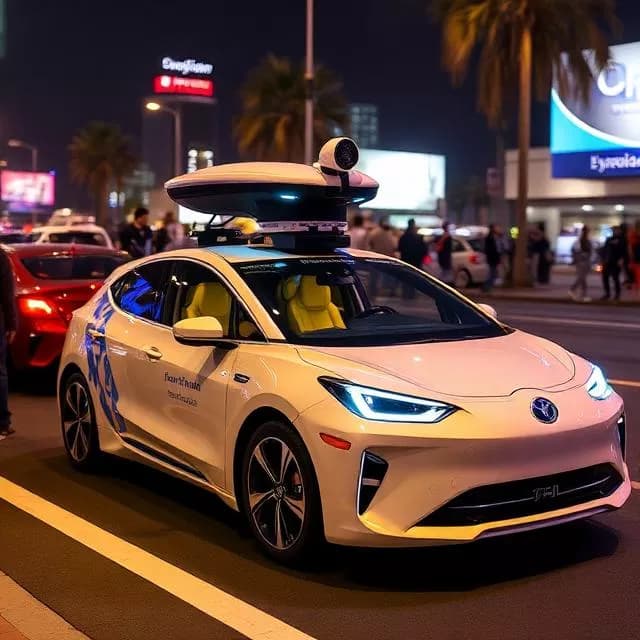
Revolution on Wheels: CES 2026 Breakthroughs in AI Self-Driving Tech Bring New Hope to NRIs and Global Indians
It was a foggy winter evening on Highway 401 near Toronto when the Singh family’s hearts nearly stopped. Arjun Singh, a 42-year-old software engineer who moved from Punjab to Canada fifteen years ago, was driving his wife Priya and their two teenage children home from a weekend getaway. Heavy traffic, slick roads, and sudden brake lights ahead created a dangerous pile-up scenario. Arjun gripped the wheel tightly, but before he could react fully, their prototype BMW iX equipped with next-generation AI self-driving tech took over—gently braking, steering into a safe gap, and avoiding a multi-car crash. "In that moment, I felt helpless, but the car saved us," Arjun later shared, his voice thick with emotion. "My kids hugged me tighter that night. This technology gave us a second chance at life." This real-life incident involving a CES 2026 breakthrough prototype resonates deeply with millions of NRIs who spend long hours commuting in foreign cities, far from extended family support. As CES 2026 breakthroughs showcase revolutionary AI self-driving tech, they offer not just convenience but profound safety and freedom to the global Indian diaspora.
CES 2026 in Las Vegas has electrified the world with AI-integrated mobility solutions, shifting focus from pure electric vehicles to intelligent, autonomous transportation. For NRIs juggling demanding jobs, long commutes, and family responsibilities across time zones, these CES 2026 breakthroughs signal a transformative future of transportation—one that’s safer, smarter, and more connected to home.
Life-Saving Innovations: How CES 2026 Breakthroughs Touch NRI Lives
The dazzling demos at CES 2026 brought tears and cheers, illustrating how AI self-driving tech can protect families thousands of miles from India.
NVIDIA’s keynote stole the show when CEO Jensen Huang unveiled Alpamayo, an advanced reasoning AI model for autonomous vehicles. In a gripping live demonstration, a Mercedes-Benz CLA powered by Alpamayo navigated chaotic simulated traffic—predicting erratic drivers, sudden pedestrians, and adverse weather with human-like foresight. Production versions are slated for the 2026 Mercedes CLA lineup. For NRIs in snowy Canada, rainy UK, or congested US highways, this means fewer accidents during harsh commutes. One Indian-origin attendee, a doctor from New Jersey, said, “I drive 90 minutes each way—this tech could let me video-call my parents in Hyderabad without worry.”
Another emotional highlight: Uber, Nuro, and Lucid revealed a stunning Lucid Gravity SUV robotaxi prototype. Off-site rides gave attendees a glimpse of fully driverless travel. An elderly NRI couple from Melbourne, originally from Kerala, rode together and shared, “We miss driving to temple events, but age makes it hard. This robotaxi means we can stay independent and still attend community gatherings.” With plans for public deployment by late 2026, these CES 2026 breakthroughs promise newfound mobility for aging parents and grandparents in the diaspora.
Sony Honda Mobility premiered the AFEELA 2026 prototype, emphasizing passenger comfort and spatial intelligence. Demos showed the car sensing occupant needs—adjusting climate for a child feeling carsick or playing soothing bhajans when detecting stress. A young Indian tech professional from Silicon Valley noted, “After long hours at work, this car could become my peaceful sanctuary on the drive home.”
NVIDIA’s Game-Changing Role in CES 2026 Breakthroughs
Powering many of these CES 2026 breakthroughs is NVIDIA’s ambitious roadmap. The newly announced Rubin platform and Alpamayo model enable Level 4 autonomy—full self-driving in most conditions—bringing robotaxis and personal autonomous vehicles closer to reality.
NVIDIA also showcased physical AI applications, training humanoid robots with the same models used for cars. For the global Indian community, this hints at future smart homes and assisted living solutions—perhaps a robot companion helping elderly parents in India while children monitor remotely from abroad.
The human impact is immense: With road accidents claiming thousands of NRI lives annually due to fatigue and unfamiliar roads, these advancements offer hope. “Seeing AI anticipate danger before I could felt like having a guardian angel,” shared Arjun Singh.
Robotaxis and Smart Mobility: Redefining the Future of Transportation for NRIs
CES 2026 breakthroughs featured cutting-edge sensors—thermal cameras certified for safety and terahertz vision that pierce fog and darkness. Concepts with foldable steering wheels signaled confidence in full autonomy, turning drivers into relaxed passengers.
Hyundai’s autonomous platforms and synchronized robotics demos sparked visions of seamless multi-modal travel—cars deploying delivery bots for late-night groceries or medical supplies to NRI households.
Key benefits tailored to the diaspora:
- Enhanced Road Safety: AI reasoning tackles edge cases, potentially reducing accidents during long NRI commutes or family road trips.
- Greater Independence: Robotaxis empower elderly NRIs and new immigrants without licenses to attend cultural events, mandirs, or community iftars/Diwali parties.
- Time Reclaimed: Autonomous driving frees hours for calling family in India, learning languages, or simply resting.
- Lower Emissions: Optimized routes cut fuel use, aligning with sustainable values many NRIs carry from back home.
- Connected Ecosystem: Cars integrating with smart homes mean arriving to pre-cooled rooms or cooked meals via linked appliances.
These CES 2026 breakthroughs paint a future where distance from India feels smaller, and daily life abroad feels safer.
Smart Devices Complementing the Mobility Revolution
CES 2026 also showcased interconnected smart devices that extend the vehicle experience. Samsung’s AI appliances sync with cars, while enhanced voice assistants in BMWs understand multilingual commands—perfect for NRIs switching between English, Hindi, Tamil, or Punjabi.
Health-monitoring wearables detect driver fatigue and seamlessly hand control to autonomous mode, adding another layer of protection for those burning the midnight oil to support families back home.
A Brighter Road Ahead: Embracing CES 2026 Breakthroughs
As CES 2026 concludes, the excitement is palpable—these breakthroughs in AI self-driving tech are accelerating toward everyday reality. From Arjun Singh’s family saved on a Canadian highway to elderly couples regaining independence, the future of transportation promises to make life abroad easier, safer, and more connected for the global Indian community.
Production cars with reasoning AI arrive in 2026, robotaxis soon after. This isn’t just innovation; it’s peace of mind for every NRI parent, professional, and family.
If these CES 2026 breakthroughs spark hope for safer journeys and stronger family bonds, like and share this story with your community. What AI driving feature excites you most for life abroad? Comment below!
Stay connected with more inspiring global updates on www.nriglobe.com.
Continue reading — NRI Globe pillar guide: Canada Express Entry for Indians
Related NRI Globe Coverage
- AI's Impact on H-1B Tech Jobs in 2026 — What Indian Tech Workers in USA Need to Know
- AI Breakthroughs 2026: What NRIs in Tech Must Know
- Latest AI Breakthroughs January 2026: How OpenAI, Nvidia, & Gemini Affect NRIs in US Tech Jobs & Innovation
- Top 10 AI and Tech Breakthroughs to Watch in 2026 for NRIs
- Tech-Powered New Year's Resolutions for 2026: AI, Green Tech, and EVs Perfect for NRIs Abroad
- Quantum Valley: L&T, IIT-Madras, and the Rise of India’s Deep-Tech Revolution in Amaravati
- NYC Passes SF as Largest US Tech Talent Hub 2026 — CBRE NRI Guide
- Google Gemini 4 "Performing Well" in Pretraining — 2026 AI Race Update
Fresh from NRI Globe
- YouTuber Nandu's World (Rama Nandana) UK Visa & Job Fraud Case: Full Details + Key Lessons for NRIs (2026)
- Dussehra / Vijayadashami 2026 Events Country-Wise — Global NRI Directory (Ram Lila, Ravana Dahan, Durga Puja Pandals, Ayudha Puja Venues + Booking)
- Diwali 2026 Events Country-Wise — Global NRI Directory (White House, Leicester, London Trafalgar, Toronto, Auckland, Sydney Parramasala, Fiji, Mauritius, Trinidad, South Africa and More)
- Diwali / Deepavali 2026 Country-Wise NRI Celebrations — Complete Global Guide (USA, UK, Canada, Australia, Fiji, Mauritius, Trinidad, South Africa, UAE and 30+ Countries)