
TL;DR:
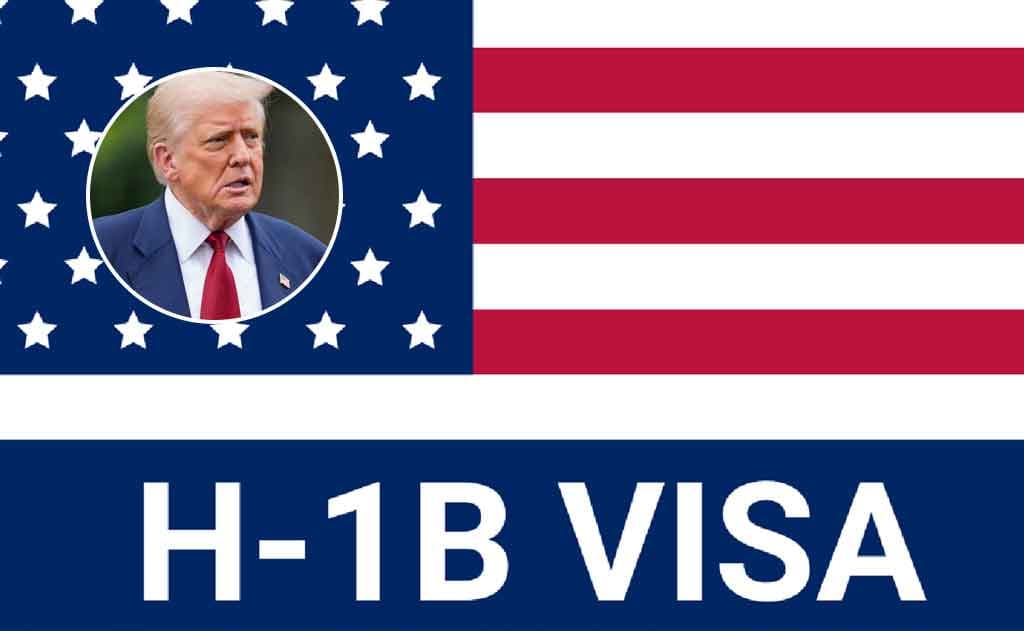
- Trump's White House approved a wage-based H-1B selection system in 2025, replacing the random lottery with priority for higher earners.
- Indian nationals represent a significant majority of H-1B visa recipients; the change could disadvantage entry-level workers while favoring senior professionals earning $150,000+.
- The policy affects green card backlogs (1+ million Indian petitions pending) and children of H-1B holders who may "age out" at 21.
- Legal challenges and public comment periods will determine implementation; Canada and other nations may benefit from displaced Indian tech talent.
- U.S. tech companies face higher wage floors; startups and nonprofits may struggle to compete for skilled foreign workers.
The H-1B Visa: A Lifeline for Indian Talent
The H-1B visa has long served as a pathway for skilled foreign workers to enter the U.S. labor market. In recent years, U.S. Citizenship and Immigration Services (USCIS) data shows that Indian nationals have consistently represented a substantial portion of H-1B visa recipients, with estimates suggesting they account for the majority of approvals. The annual cap stands at 85,000 visas—65,000 for general occupations and 20,000 for advanced-degree holders—making it a critical pipeline for America's technology, finance, and healthcare sectors.
For decades, the program operated under a random lottery system. Employers submitted petitions, and USCIS selected recipients by chance, regardless of salary, experience, or employer size. This approach created a paradox: a Fortune 500 company and a struggling startup had equal odds of securing workers. Entry-level engineers competed with senior architects. Luck, not merit, determined outcomes.
In 2025, the Trump administration fundamentally altered this framework. The White House approved a wage-based selection process that prioritizes applicants earning above the median salary for their occupation and experience level. For technology roles, this typically means $150,000 or higher. The shift represents a return to Trump's "Buy American, Hire American" executive order from his first term, which attempted similar reforms in 2021 but faced legal challenges.
Trump's "America First" Rationale and Policy Mechanics
Trump has consistently framed H-1B reform through a nationalist lens. During his first term, he called the program a "theft" of American jobs, arguing that companies exploited it to replace domestic workers with lower-paid foreign labor. His 2021 proposal would have raised the minimum H-1B salary significantly, effectively pricing out junior positions and smaller employers.
The 2025 overhaul operates similarly but with refinements. Rather than a fixed dollar threshold, the new system uses the "prevailing wage" standard—the average salary for a given role in a specific geographic area. A junior software engineer in San Francisco might need to earn substantially more to qualify than the same role in a lower-cost region. This approach claims to reward "merit" while maintaining geographic flexibility. The exact methodology and implementation timeline remain subject to regulatory publication and public review processes.
Officials defending the change have stated that wage-based selection ensures "immigration is a net positive for the U.S. economy and doesn't displace American workers." However, critics argue the logic conflates correlation with causation. Research cited by immigration policy analysts suggests that raising minimum H-1B salary thresholds significantly would shrink the program, potentially harming startups and nonprofits that cannot afford such wage floors. A 2021 analysis by policy researchers estimated that substantial salary increases would reduce H-1B approvals by a considerable percentage, shrinking the program substantially.
Impact on Indian Professionals: A Tale of Two Tiers
For Indian tech workers, the wage-based system creates a bifurcated outcome. Senior professionals—architects, AI specialists, and managers earning $180,000+—gain a competitive advantage. Entry-level and mid-career workers face steeper odds.
Consider two hypothetical cases: Arjun, a 28-year-old software engineer from Bengaluru with 3 years of experience, secures a job offer at $95,000 from a Silicon Valley startup. Under the lottery system, he had a reasonable chance of selection. Under the wage-based system, his application likely falls below the prevailing wage threshold and may be rejected outright. Priya, a 38-year-old AI specialist with a $200,000 offer from a Fortune 500 company, moves to the front of the queue.
This stratification has profound implications for the Indian diaspora. India accounts for a substantial portion of the employment-based green card backlog, with over 1 million petitions pending. The average wait time for an Indian national to obtain an employment-based green card extends for many decades in certain categories. The wage-based H-1B system could exacerbate this bottleneck by reducing the number of entry-level workers who transition into green card sponsorship pipelines.
Additionally, the Trump administration rolled back a Biden-era policy that protected children of H-1B holders from "aging out" at age 21. Under U.S. immigration law, derivative beneficiaries (spouses and unmarried children under 21) can remain in the country while their parents' green card applications are pending. Once they turn 21, they must leave unless they secure independent visa status. For Indian families facing multi-decade green card waits, this policy change forces an impossible choice: leave the U.S. or apply for independent visas while their parents' sponsorship remains frozen.
Controversy and Competing Narratives
The H-1B overhaul has ignited fierce debate across political lines, with competing claims about its economic impact.
The "American Workers First" Camp: Lawmakers and advocates have called for restricting or eliminating H-1B visas, claiming they displace U.S. workers. Social media accounts and political figures amplify narratives that foreign workers dominate tech hiring while American unemployment rises. Some Trump administration officials have accused visa programs of "undermining U.S. interests" through potential abuse.
The "Global Talent" Camp: Immigration advocates argue that wage-based selection will backfire. "The best and brightest" often start in junior roles, they contend. Raising wage floors will exclude promising young engineers who later become leaders. Tech industry groups, including the Technology Network, have warned that the policy will increase labor costs and reduce hiring.
The India-Trump Paradox: Trump's rhetoric toward India and Indian professionals remains contradictory. He has praised Prime Minister Narendra Modi and spoken favorably of U.S.-India trade partnerships. Some analysts predict that stronger geopolitical ties could offset visa restrictions through increased outsourcing and tech partnerships. Others view the wage-based system as a protectionist measure targeting Indian workers specifically.
Green Card Backlogs and Family Separation Risks
The wage-based H-1B system does not exist in isolation. It intersects with the broader employment-based green card system, where Indian nationals face extraordinary delays.
Employment-based green cards are allocated by country of birth, not citizenship. India and China, with large populations, face per-country caps. As a result, Indian nationals in the EB-2 and EB-3 categories (skilled workers and professionals) wait many years for visa availability. The U.S. State Department's visa bulletin shows that Indian nationals in employment-based categories face extended waits, with some applicants experiencing delays measured in decades.
During this wait, H-1B status serves as a holding pattern. Workers remain in the U.S., contribute to the economy, and maintain legal status while their green card petitions inch forward. A wage-based H-1B system that reduces approvals for entry-level workers will shrink this holding pool, forcing some to return to India or seek alternative visa categories (L-1, O-1, EB-5 investor visas) that are more expensive or restrictive.
For families, the stakes are even higher. The rollback of the "aging out" protection means that Indian-American children of H-1B workers face deportation once they turn 21, even if their parents' green card applications remain pending. Advocacy groups have called this "a devastating blow" that separates families and forces American-raised children to leave the country.
Economic Ripple Effects: Who Wins and Who Loses
The wage-based system will reshape hiring patterns across sectors.
Winners: Large tech companies and established firms can absorb higher wage floors. Senior professionals gain a faster path to visas. U.S. workers in entry-level roles may face less competition, though evidence suggests H-1B workers and U.S. workers often fill different niches.
Losers: Startups and nonprofits cannot compete for talent at elevated salary levels. Early-career Indian engineers lose access to the U.S. market, redirecting talent to Canada, Australia, and the UK. Companies in lower-cost regions face higher wage pressures to attract H-1B workers. India's tech services industry may lose a key recruitment pipeline.
Research cited by immigration policy analysts suggests that substantially raising minimum H-1B salary requirements would reduce program approvals significantly, potentially shrinking the program by a substantial margin. If the Trump administration implements similar thresholds, the U.S. tech sector could face a talent shortage, driving wages up and innovation down. The Institute for Progress has published analysis on wage-based H-1B impacts on program size and employer participation.
Legal Challenges and Uncertainty Ahead
The Trump administration's 2021 H-1B wage increase faced immediate legal challenges. The American Immigration Lawyers Association (AILA) and tech industry groups sued, arguing the rule exceeded executive authority and violated the Administrative Procedure Act. A federal judge blocked implementation pending review.
The 2025 overhaul will likely face similar litigation. The rule must be published in the Federal Register and undergo a public comment period. During this window, stakeholders can file objections. Legal experts predict a prolonged court battle, with implementation delayed by months or longer.
Until litigation concludes, H-1B applicants operate under uncertainty. Employers may delay hiring. Workers may pursue alternative visas or relocate. The policy's ultimate scope—whether it applies to renewals, cap-exempt visas, or only new petitions—remains undefined.
Global Implications: A Brain Drain Opportunity for Competitors
The U.S. has long attracted global talent through H-1B and other visa programs. A wage-based system that prices out junior workers will redirect talent elsewhere.
Canada's International Mobility Program and Express Entry system offer faster pathways for skilled workers, including those with lower salaries. Australia's skilled migration program and the UK's points-based system similarly attract Indian tech talent. Germany's EU Blue Card and Singapore's Tech.Pass visa are additional alternatives.
If the U.S. restricts H-1B access, Indian professionals may build careers in Toronto, Vancouver, London, or Singapore instead of San Francisco. This talent redirection benefits competitors and weakens the U.S. tech sector's global competitiveness.
Next Steps
Indian professionals and employers should monitor the following developments:
- Federal Register Publication: Watch for the official rule in the Federal Register. This triggers the public comment period and legal review timeline.
- Public Comment Submission: Employers, immigration lawyers, and advocacy groups will file comments. Consider submitting your own if you are affected.
- Legal Challenges: Monitor federal court filings. Injunctions could delay or block implementation.
- Prevailing Wage Calculations: Once published, USCIS will release prevailing wage guidance by occupation and region. Review these to assess your eligibility.
- Alternative Visa Options: Explore L-1 (intracompany transfer), O-1 (extraordinary ability), EB-5 (investor), or international relocation to Canada, Australia, or the UK.
- Green Card Strategy: If you are in the green card queue, consult an immigration attorney about priority dates, category changes, and family protection strategies.
Sources
- U.S. Citizenship and Immigration Services (USCIS) – H-1B Visa Information
- U.S. State Department – Visa Bulletin and Statistics
- Hindustan Times – Trump's H-1B Visa Overhaul Approved
- Indian Express – Trump's H-1B Visa Reforms and USCIS Updates
- Federal Register – Official U.S. Government Documents
- Institute for Progress – H-1B Wage Analysis
- Technology Network – Tech Industry Policy Advocacy
- Government of Canada – International Mobility Program
Continue reading — NRI Globe pillar guide: H-1B Complete Guide for Indians 2026
Related NRI Globe Coverage
- UAE Golden Visa 2026 for Indians — Complete Guide (Eligibility, Application, Investment)
- H-1B Visa Fee Hike to $100,000: How It Hits Indian Tech Professionals in the US in 2026
- White House Approves Major H-1B Visa Overhaul: Wage-Based System to Replace Lottery
- Australia Skilled Migration 2026 for Indians — Complete Points-Based Visa Guide (189, 190, 491)
- F-1 Student Visa 2026 — Complete Indian Applicant Guide (DS-160, I-20, Interview, USA)
- B-1/B-2 US Tourist Visa 2026 — Complete Guide for Indian Family Visiting NRIs (Parents, Siblings, Friends)
- September 2026 Visa Bulletin Analysis for Indian NRIs — EB-2, EB-3 & Family-Based Priority Date Movement
- H-1B FY 2027 Lottery Registration Preparation Guide — What NRI Indian Tech Workers Need to Know
Fresh from NRI Globe
- YouTuber Nandu's World (Rama Nandana) UK Visa & Job Fraud Case: Full Details + Key Lessons for NRIs (2026)
- Dussehra / Vijayadashami 2026 Events Country-Wise — Global NRI Directory (Ram Lila, Ravana Dahan, Durga Puja Pandals, Ayudha Puja Venues + Booking)
- Diwali 2026 Events Country-Wise — Global NRI Directory (White House, Leicester, London Trafalgar, Toronto, Auckland, Sydney Parramasala, Fiji, Mauritius, Trinidad, South Africa and More)
- Diwali / Deepavali 2026 Country-Wise NRI Celebrations — Complete Global Guide (USA, UK, Canada, Australia, Fiji, Mauritius, Trinidad, South Africa, UAE and 30+ Countries)